• Skip to primary navigation
  • Skip to main content
  • Skip to primary sidebar

Earth Wise

A look at our changing environment.

  • Home
  • About Earth Wise
  • Where to Listen
  • All Articles
  • Show Search
Hide Search
You are here: Home / Archives for beekeeping

beekeeping

Superfood for honeybees

October 3, 2025 By EarthWise Leave a Comment

Honeybee populations have been declining for a combination of interacting factors.  There is the parasitic Varroa mite that spreads disease; there is widespread exposure to pesticides; there is diminishing natural forage and nesting habitats as land is developed; and there is climate change.  

Researchers at Oxford University looked at the impact of climate change and land use changes on the floral diversity honeybees need to thrive.  Pollen, which forms much of their diet, contains specific lipids called sterols that are necessary for the bees’ development.  But there is increasingly too little of the pollen they need.

Many beekeepers feed artificial pollen substitutes to their bees, but these commercial substitutes lack the necessary sterol compounds, making them nutritionally incomplete.

The Oxford researchers, along with several collaborators, succeeded in engineering a specific yeast species that produces a precise mixture of six key sterols that bees need.  This mixture was incorporated into diets fed to bees over a three-month trial in which the bees were kept in enclosed greenhouses and fed only the treatment diet.

Colonies fed with the treatment diet reared up to 15 times more larvae compared with control diets.  The sterol profile of larvae fed the engineered yeast matched that found in naturally foraged colonies, showing that the bees selectively transfer only the biologically important sterols to their young.

Further large-scale trials are needed to assess the long-term impacts on colony health and reproduction.  Potentially, the supplement could be available to beekeepers within two years.

**********

Web Links

Saving bees with ‘superfoods’: new engineered supplement found to boost colony reproduction

Photo, posted August 5, 2012, courtesy of Jennifer C. via Flickr.

Earth Wise is a production of WAMC Northeast Public Radio

Fighting honey fraud

May 12, 2025 By EarthWise Leave a Comment

Using artificial intelligence to fight honey fraud

Honey fraud is a significant issue for the food industry.  What is honey fraud?  Typically, it involves mislabeling where honey was produced or what types of flowers the bees collected nectar from.  Honey made from a single type of flower is often more expensive because of the unique flavor it provides or from potential health benefits.  Sometimes even cheap alternatives like sugar syrups are labelled as honey.  It turns out that honey is one of the most fraud-prone commodities in global trade, with fraud estimated to occur in up to 10% of the honey traded internationally.  Honey from some countries, such as China and India, has had 30% or more of samples found to be fraudulent.

Researchers at McGill University in Montreal have developed an AI-powered method to verify the origin of honey thereby ensuring that what is on the label corresponds to what is in the jar.

The McGill method can determine what kind of flowers the bees visited to produce a particular sample of honey.  Previous honey authentication involved pollen analysis, which is ineffective for honey that was processed or filtered.  The new method uses high-resolution mass spectrometry which captures a unique chemical “fingerprint” from the honey.  Machine learning algorithms read the fingerprint to identify the honey’s origin.

The researchers tested their methodology on a variety of honey samples which they then compared with honey from known botanical sources.  Using previous methods for honey authentication can take days.  The McGill method takes only minutes and works regardless of how the honey was processed.

According to the researchers, people deserve to know that the honey they buy is what it claims to be, and honest honey producers deserve protection from fraudulent competitors.

**********

Web Links

Fighting honey fraud with AI technology

Photo, posted May 6, 2012, courtesy of Emma Jane via Flickr.

Earth Wise is a production of WAMC Northeast Public Radio
Examining The Decline Of Honey Bees | Earth Wise

December 28, 2022 By EarthWise Leave a Comment

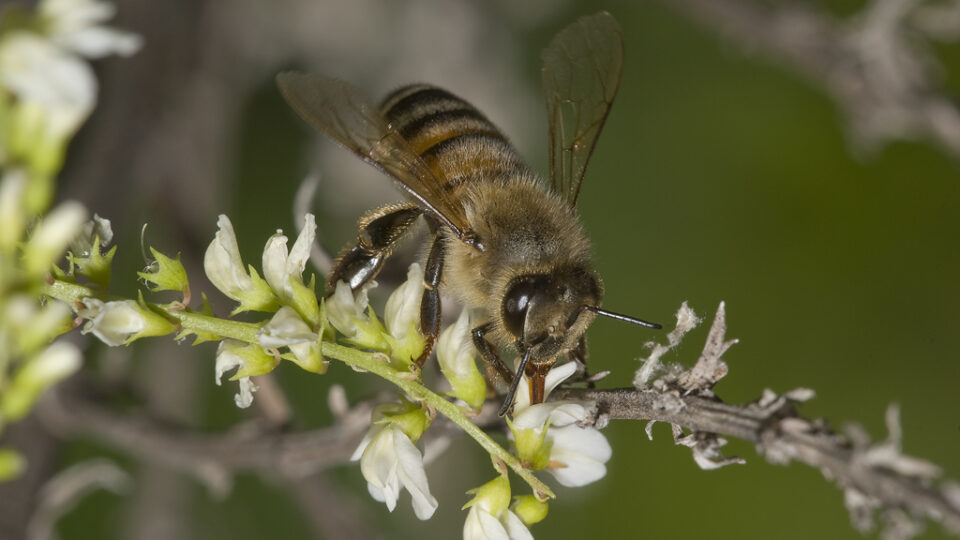
For many years, scientists have been sounding the alarm on the global struggle of pollinators.  Many of the invertebrate pollinator species, such as bees and butterflies, are facing extinction. And since 75% of the world’s food crops depend on pollination to some extent, the decline of pollinators poses a major threat to global food security.

Honey bees are among the struggling pollinators.  Over the past 14 years, bee colonies have been disappearing at an alarming rate in what is known as the “colony collapse disorder.” 

In an effort to understand why, scientists have often focused their research on environmental stressors, such as parasites, pesticides, and disease.  But according to new research by entomologists from the University of Maryland, honey bee life spans are simply 50% shorter today than they were 50 years ago.  In the study, which was recently published in the journal Scientific Reports, the researchers found that honey bees kept in a controlled, laboratory environment lived half as long as honey bees did in the 1970s.  This is the first study to show that genetics – as opposed to environmental stressors – may be influencing the broader trends seen in the beekeeping industry.

When the researchers modeled the effect of their findings on a beekeeping operation, they found that the resulting loss rates were about 33%.  This is similar to the average overwinter and annual loss rates reported by beekeepers during the past 14 years.

The next step is for researchers to compare trends in honey bee life spans across the U.S. and in other countries to see if there are differences in bee longevity. 

**********

Web Links

Honey Bee Lifespans are 50% Shorter Today Than They Were 50 Years Ago

Helping Agriculture’s Helpful Honey Bees

Photo, posted June 23, 2007, courtesy of Susan E. Ellis via Flickr.

Earth Wise is a production of WAMC Northeast Public Radio
More Troubles For Bees | Earth Wise

July 22, 2020 By EarthWise Leave a Comment

More losses for United States beekeepers

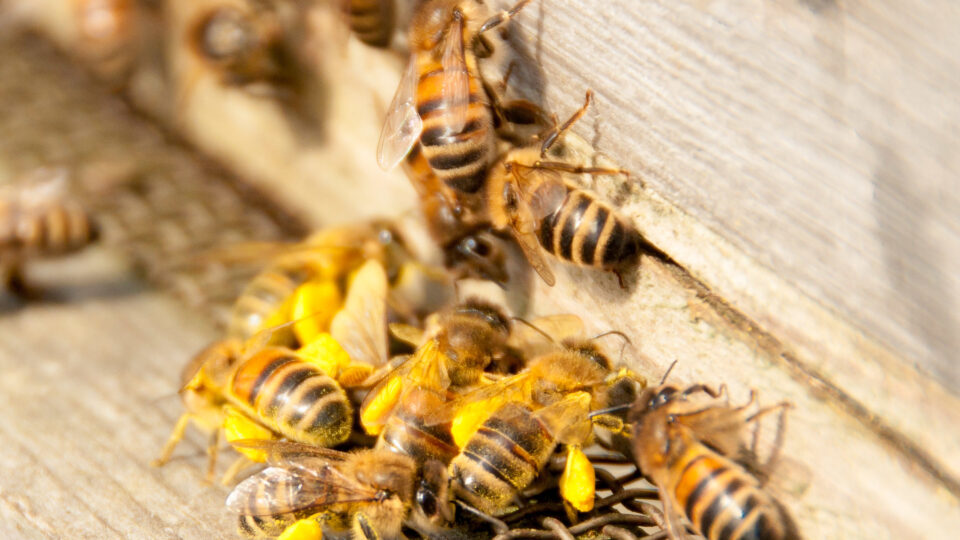
Beekeepers in the United States lost nearly 44% of their managed honeybee colonies from April 2019 to April 2020, according to the 14th annual nationwide survey conducted by the nonprofit Bee Informed Partnership.  This was the second highest annual loss recorded since the surveys began.

The high loss rate over the past year was unusual in that winter losses were actually substantially lower than they have been in recent years.   The winter losses were 22.2%, which is 15.5 points lower than last year and 6.4 points lower than the average over the past 14 years.  On the other hand, summer losses were 32%, which is 12 points higher than last year and 10.4 points higher than the average.

In fact, the summer loss was the highest ever recorded and was only the second time that more bees were lost in the summer than in the winter.

Commercial beekeepers generally have lower losses than backyard and smaller operations.  Commercial honeybee colonies pollinate $15 billion worth of crops in the United States every year, so the health of these colonies is a critical issue for domestic food production and supply.

Beekeepers began noticing dramatic losses in their colonies in the early 2000s and ever since then, state and federal agricultural agencies, university researchers, and the beekeeping industry have been working together to try to understand the reasons for the population decline and to develop approaches to reduce these losses.

Winter loss has previously been the main focus of management activities since that period of the year is thought to be the most challenging for bee colonies.  This year’s results are driving a great deal of analysis of the possible causes for the dramatic summer colony losses.  Whatever they turn out to be, they represent more troubles for bees.

**********

Web Links

Odd Year for U.S. Beekeepers Who Reported Lower Winter Losses but Abnormally High Summer Losses

Photo, posted April 14, 2013, courtesy of Paul Rollings via Flickr.

Earth Wise is a production of WAMC Northeast Public Radio.

Primary Sidebar

Recent Episodes

  • An uninsurable future
  • Clean energy and jobs
  • Insect declines in remote regions
  • Fossil fuel producing nations ignoring climate goals
  • Trouble for clownfishes

WAMC Northeast Public Radio

WAMC/Northeast Public Radio is a regional public radio network serving parts of seven northeastern states (more...)

Copyright © 2026 ·