• Skip to primary navigation
  • Skip to main content
  • Skip to primary sidebar

Earth Wise

A look at our changing environment.

  • Home
  • About Earth Wise
  • Where to Listen
  • All Articles
  • Show Search
Hide Search
You are here: Home / Archives for atmospheric co2

atmospheric co2

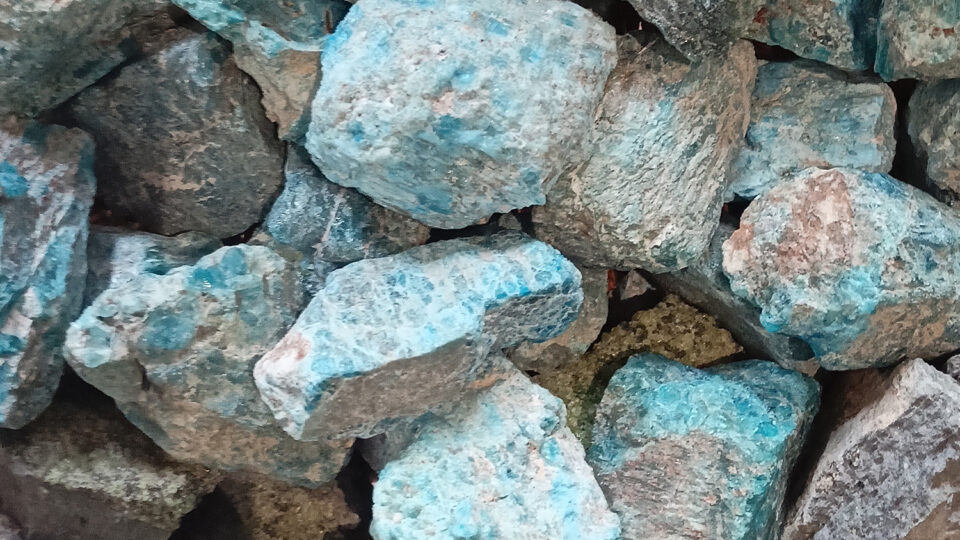
Trapping carbon with rocks

March 25, 2025 By EarthWise Leave a Comment

Many experts say that combating global warming will require both drastically reducing the use of fossil fuels and permanently removing billions of tons of CO2 already in the atmosphere.  Developing practical, large-scale technologies for carbon removal is a significant challenge.

There is a nearly inexhaustible supply of minerals that are capable of removing carbon dioxide from the atmosphere, but they don’t do it quickly enough to make a significant dent in the ever-growing supply in the atmosphere.  In nature, silicate minerals react with water and atmospheric CO2 to form minerals in the process called weathering.  But this chemical reaction can take hundreds or even thousands of years.

Researchers at Stanford University have developed a new process for converting slow-weathering silicates into much more reactive minerals that capture and store carbon quickly.  The new approach resembles a centuries-old technique for making cement.  They combine calcium oxide and another common mineral containing magnesium and silicate ions in a furnace.   The result are new materials that, when exposed to water, quickly trap carbon from the atmosphere.

In their experiments, the carbonation process took weeks to months to occur, thousands of times faster than natural weathering.

The idea would be to spread these materials over large land areas to remove CO2 from the air.  Meaningful use for trapping carbon would require annual production of millions of tons.  But the same kiln designs used to make cement could produce the needed materials using abundant minerals found in many places.  In fact, the required minerals are often common leftover materials – or tailings – from mining.

**********

Web Links

Scientists discover low-cost way to trap carbon using common rocks

Photo courtesy of Renhour48 via Wikimedia.

Earth Wise is a production of WAMC Northeast Public Radio
Carbon dioxide and wildfires

May 14, 2024 By EarthWise Leave a Comment

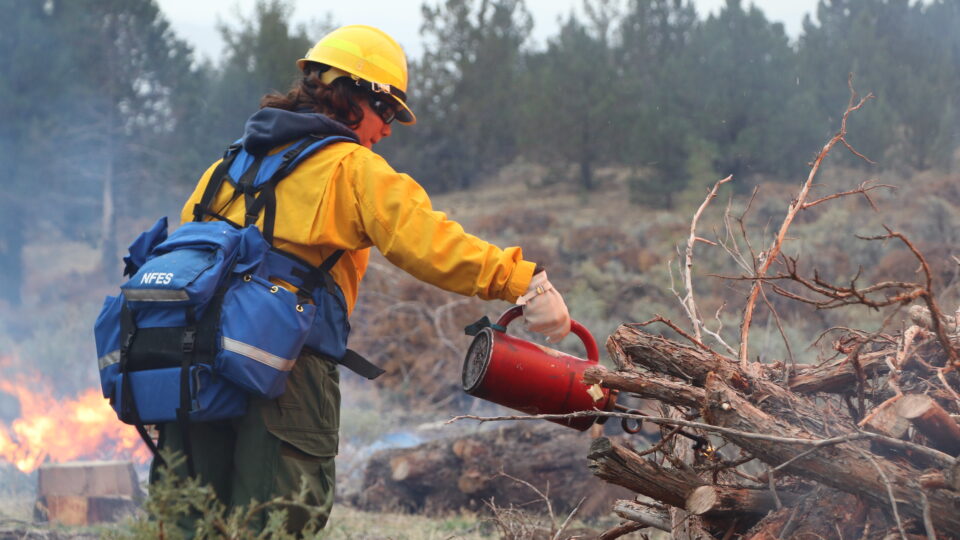
Rising carbon dioxide levels are fueling wildfires

Climate change is a key factor in the increasing risk and extent of wildfires.  Wildfires require the alignment of several factors, including humidity, temperature, and the lack of moisture in fuels, such as trees, shrubs, and grasses.  All of these factors have strong ties to climate variability and climate change.

While the global surge in wildfires is often attributed to hotter and drier conditions, a new study by researchers from the University of California – Riverside has found that increasing levels of a greenhouse gas may be an even bigger factor. 

According to the study, which was recently published in the journal Communications Earth & Environment, carbon dioxide is driving an increase in the severity and frequency of wildfires by fueling the growth of plants that become kindling.

Centuries of burning fossil fuels to produce heat, electricity and to power engines has added alarming amounts of carbon dioxide to the atmosphere.  In fact, atmospheric CO2 levels are measuring more than 420 parts per million, which is a level not seen on earth for 14-16 million years. 

Plants require carbon dioxide, along with sunlight and water, for photosynthesis.  But rising levels of CO2 in the atmosphere are driving an increase in plant photosynthesis – an effect known as the carbon fertilization effect.  This effect can make plants grow bigger and faster. 

Warming and drying are important fire factors.  These are the conditions that make the extra plant mass more flammable.  But the study found that the increase in fires during hotter seasons is driven by the CO2-fueled growth of plants.   

The researchers hope their findings will urge policymakers to focus on reducing carbon dioxide levels in the atmosphere.

********** 

Web Links

CO2 worsens wildfires by helping plants grow

Current carbon dioxide levels last seen 14 million years ago

Photo, posted January 17, 2024, courtesy of Jennifer Myslivy, BLM Fire/NIFC via Flickr.

Earth Wise is a production of WAMC Northeast Public Radio
Forecasting A Bad Year For Carbon

March 11, 2019 By EarthWise Leave a Comment

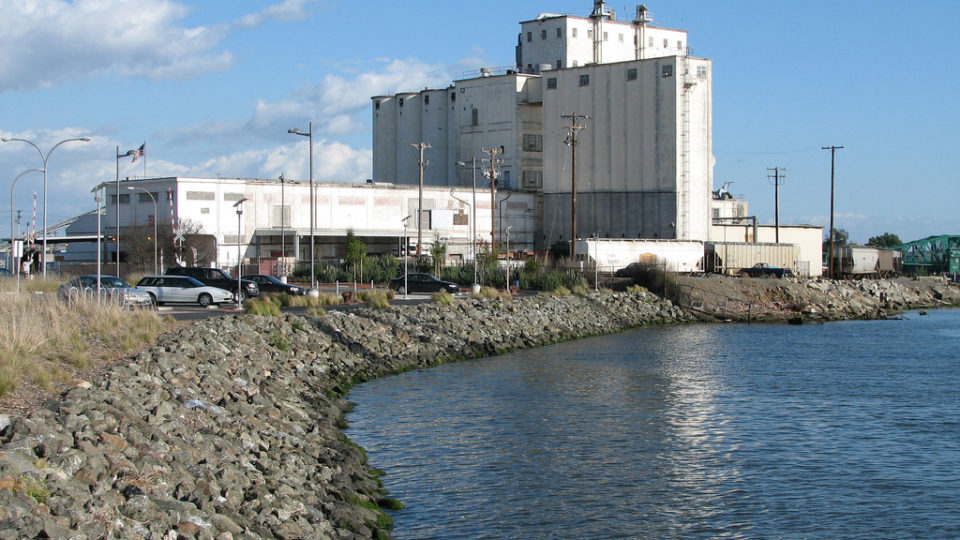
Carbon dioxide levels in the atmosphere are higher than they have been for hundreds of thousands of years, and they continue to grow.  The United Kingdom’s national meteorological service – known as the Met Office – issues annual predictions of global CO2 levels based in part on readings taken at the Mauna Loa observatory in Hawaii.  Their forecast for this year is that there will be one of the largest rises in atmospheric carbon-dioxide concentration in the 62 years of measurements at Mauna Loa.

Since 1958, there has been a 30% increase in the concentration of carbon dioxide in the atmosphere.  This has been caused by emissions from fossil fuels, deforestation and cement production.  The increase would actually have been even larger if it were not for natural carbon sinks in the form of various ecosystems that soak up some of the excess CO2.

Weather patterns linked to year-by-year swings in Pacific Ocean temperatures are known to affect the uptake of carbon dioxide by land ecosystems.  In years with a warmer tropical Pacific – such as El Niño years – many regions become warmer and drier, which limits the ability of plants to grow and to absorb CO2 .  The opposite happens when the Pacific is cool, as was the case last year.

The Met Office predicts that the contribution of natural carbon sinks will be relatively weak, so the impact of human-caused emissions will be larger than last year.  The predicted rise in atmospheric CO2 is 2.75 parts-per-million, which is among the highest rises on record.  The forecast for the average carbon dioxide concentration is 411 ppm, with peak monthly averages reaching almost 415 ppm.  With global emissions not really declining, the numbers just get higher and higher.

**********

Web Links

Faster CO₂ rise expected in 2019

Photo, posted March 18, 2006, courtesy of Darin Marshall via Flickr.

Earth Wise is a production of WAMC Northeast Public Radio.

Primary Sidebar

Recent Episodes

  • An uninsurable future
  • Clean energy and jobs
  • Insect declines in remote regions
  • Fossil fuel producing nations ignoring climate goals
  • Trouble for clownfishes

WAMC Northeast Public Radio

WAMC/Northeast Public Radio is a regional public radio network serving parts of seven northeastern states (more...)

Copyright © 2026 ·