• Skip to primary navigation
  • Skip to main content
  • Skip to primary sidebar

Earth Wise

A look at our changing environment.

  • Home
  • About Earth Wise
  • Where to Listen
  • All Articles
  • Show Search
Hide Search
You are here: Home / Archives for arrays

arrays

Thermal batteries for heavy industry

January 3, 2025 By EarthWise Leave a Comment

Researchers are developing thermal batteries for heavy industry

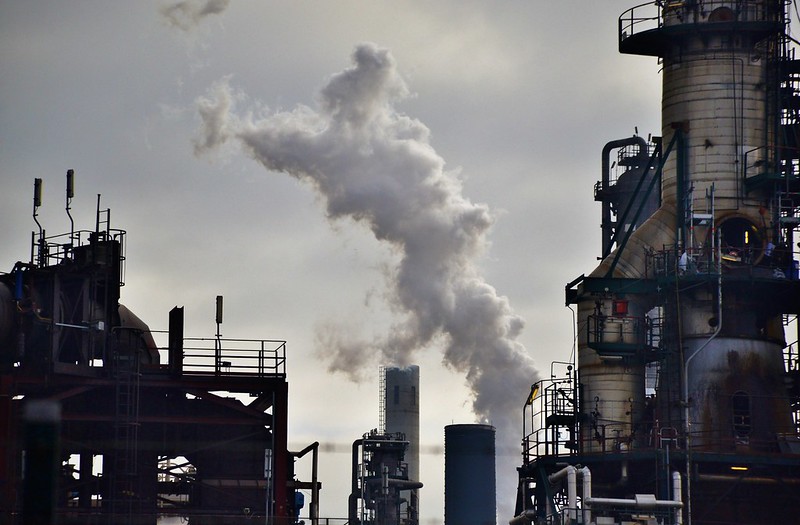
Heavy industries like cement, steel, chemicals, and paper require large amounts of heat and, for the most part, that heat comes from burning fossil fuels.  Other sectors of the economy have been making progress in reducing carbon emissions, but heavy industry has not found easy answers for supplying the heat it needs for manufacturing.

Researchers at MIT have developed a way to supply heat that only uses electricity, which in principle can come from carbon-free sources.  The idea is to use thermal batteries.  These are basically an electrically conductive equivalent of ceramic firebricks, which have been used to store heat for centuries in fireplaces and ovens.

A spinout company called Electrified Thermal Solutions has demonstrated that its firebricks can store heat efficiently for hours and release it by heating air or gas up to 3,272 degrees Fahrenheit. 

The firebrick arrays are contained in insulated, off-the-shelf metal boxes.  The standard system can collect and release about 5 megawatts of energy and store about 25 megawatt-hours.  The thermal battery can run hotter and last longer than any other electric heating solution on the market.

Using this technology can be a way to take advantage of the low cost of electricity in off-peak hours.  In the so-called wind belt in the middle of the U.S., electricity prices can even be negative at times.  Using the firebrick technology – called the Joule Hive Thermal Battery – it can be possible to provide industrial heating capability at very competitive prices, and that doesn’t even factor in the positive climate impact.

**********

Web Links

Decarbonizing heavy industry with thermal batteries

Photo, posted April 19, 2019, courtesy of Hans M. via Flickr.

Earth Wise is a production of WAMC Northeast Public Radio
California renewable energy

June 12, 2024 By EarthWise Leave a Comment

Renewable energy in California exceeding 100% of energy demand

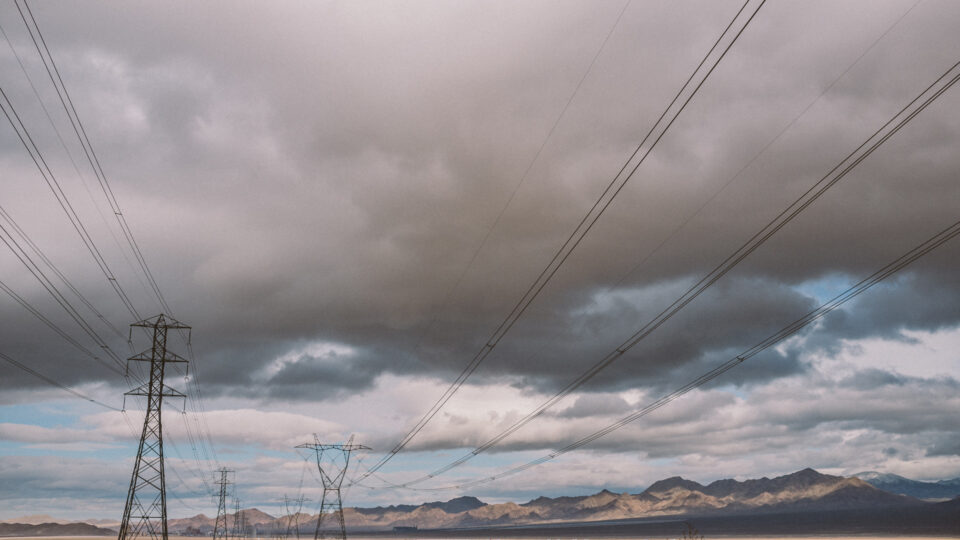
California has aggressively pursued the use of renewable energy, particularly solar and wind power.  Last year, renewables supplied 54% of the state’s electricity needs.  This year, California has been achieving some remarkable milestones with its renewable energy.

As of May 26th, California had produced more than 100% of its electricity demand with wind, solar, and hydropower for parts of 51 straight days and 75 out of 81 days.  On May 25th, California’s grid ran entirely on renewable energy for 10.1 straight hours and renewables provided 83% of the state’s electricity for the entire 24-hour period.  California uses more electricity than any other state apart than Texas, which uses more than half its energy for operating refineries and petrochemical plants.

Excess power in California is either exported to other states or is used to charge up the state’s growing arrays of energy storage batteries.  California has the largest grid-connected battery storage facility in the world, located in Kern County.  The facility can store nearly 3,300 megawatt-hours of energy.

The ability to produce more power than the state needs occurs during the day when the sun is shining, and when many people are not at home.  At night, demand goes up and solar power is not available.  But as the quantity of energy storage available continues to grow along with additional solar installations, California will ultimately be able to wean off of the gas-fueled power plants it predominantly uses at night.

According to some experts, California may operate entirely on renewables and battery storage as soon as 2035. 

**********

Web Links

California exceeds 100% of energy demand with renewables over a record 30 days

Photo, posted January 11, 2016, courtesy of Jared Eberhardt via Flickr.

Earth Wise is a production of WAMC Northeast Public Radio
Solar Canopies | Earth Wise

December 31, 2021 By EarthWise Leave a Comment

There are plenty of solar panels on residential rooftops but there are also increasing numbers of arrays of them on croplands, arid lands, and grasslands. Large solar arrays are mostly built in open spaces like these rather than in developed areas.  The reason is that it is cheaper to build on undeveloped land than on rooftops or construct covered parking lots.

However, building on undeveloped land is not necessarily the smartest idea.   Undeveloped land is a dwindling resource that is needed for many different things:  growing food, sheltering wildlife, storing and purifying water, preventing erosion, and sequestering carbon. 

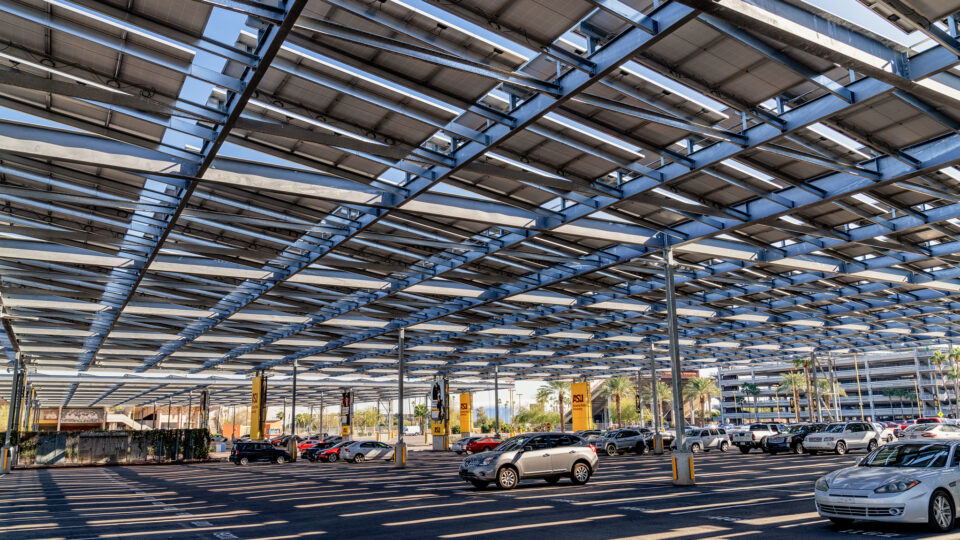
Putting solar panels on parking lots has the appeal that they are abundant, close to electricity customers, and are on land that already has been stripped of much of its biological value.

Putting a solar canopy over a parking lot can produce large amounts of electricity and has the added benefit that it would provide shade for cars.  For example, a typical Walmart supercenter might have a five-acre parking lot, which is enough to support a 3-megawatt solar array.  If Walmart put solar canopies on all of its 3,500+ super centers, it would provide 11 gigawatts of solar power – as much as a dozen large coal-fired power plants.

Solar canopies are still pretty uncommon, but some examples are ones at four DC Metro rail stations, one at JFK Airport, and a large one at the Rutgers University Piscataway campus.

Building parking lot solar canopies is much more expensive than putting solar arrays on open space, but they do eventually pay for themselves. Despite active opposition by utility and fossil fuel interests, solar canopies may eventually be a common sight.

**********

Web Links

Why Putting Solar Canopies on Parking Lots Is a Smart Green Move

Photo, posted January 10, 2020, courtesy of Tony Webster via Flickr.

Earth Wise is a production of WAMC Northeast Public Radio.

Floating Solar In New York’s Capital Region | Earth Wise

June 8, 2021 By EarthWise Leave a Comment

Co-developing land for both solar and solar power could provide huge benefits with minimal costs

We have previously talked about installing solar arrays on the surface of bodies of water.  The idea is especially attractive in places like Japan where land resources are scarce.  There are several floating solar installations in the UK and the idea is starting to catch on elsewhere as well.

It is quite possible that the largest municipally owned floating solar array may get built in the city of Cohoes in New York’s Capital Region if a project under consideration for federal funding moves forward.

The proposal is for an installation of 8,000 solar panels to cover about 2/3 of the 10-acre Cohoes reservoir.  Cohoes has wanted to erect a solar installation to generate power for its buildings but needed to find suitable vacant land.  The 10-acre manmade reservoir could be an excellent location for a floating solar array.

Cohoes would be the first community in the US to build and own a floating array on a manmade reservoir and could serve as a model for municipalities across the nation.  Such a project makes additional use of land that is already municipal property.  According to the city, the 3.2-megawatt array would generate over 4 million kilowatt hours of electricity per year, saving the city $300-350,000 annually.

Cohoes is seeking $4.59 million in federal funding to support the project and has the support of U.S. Representative Paul Tonko for possible inclusion in the 2022 federal budget. 

Apart from generating electricity, putting solar panels on the surface of a reservoir reduces evaporation, lowers algae growth, and actually improves solar panel performance because of the cooling effect of the water.

**********

Web Links

Cohoes reservoir could be a floating solar power pioneer

Photo courtesy of Michael Coghlan via Flickr.

Earth Wise is a production of WAMC Northeast Public Radio.

Solar Energy And Agriculture | Earth Wise

March 10, 2021 By EarthWise Leave a Comment

Co-developing land for both solar and solar power could provide huge benefits with minimal costs

According to a new study by Oregon State University researchers, co-developing land for both solar voltaic power and agriculture could provide 20% of total electricity generation in the United States with an investment of less than 1% of the annual U.S. budget.

The concept is known as agrivoltaics – using the same land for both growing crops and generating solar energy.  The proponents of agrivoltaics say that it provides more food, more energy, lower water demand, lower carbon emissions, and more prosperous rural communities.

According to the study, wide-scale installation of agrivoltaic systems could lead to an annual reduction of 330,000 tons of carbon dioxide emission in the U.S. – the equivalent of taking 75,000 cars off the road – and the creation of more than 100,000 jobs in rural communities.  All of this could be achieved with minimal effects on crop yields.

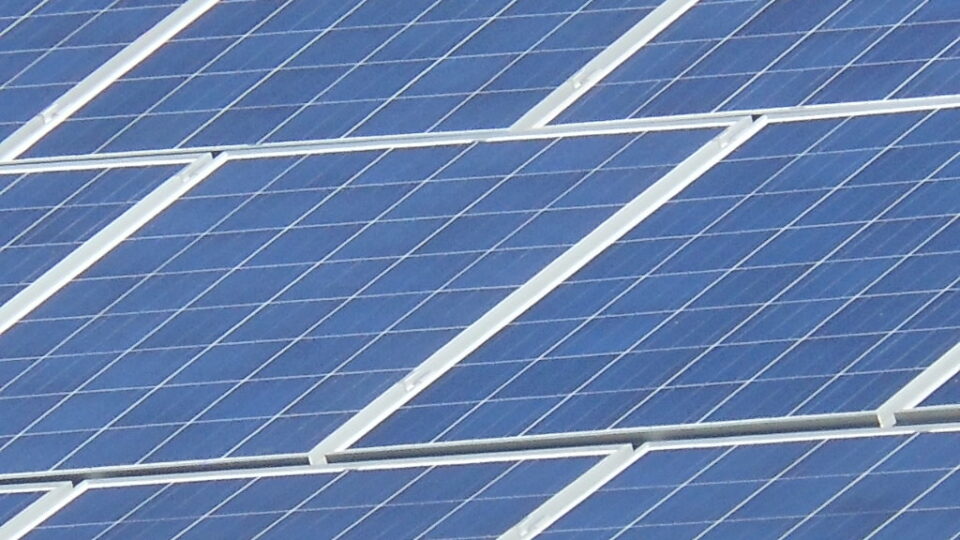
The study finds that an area about the size of Maryland would be needed for agrivoltaics to produce 20% of U.S. electricity generation.  That area of 13,000 square miles constitutes about 1% of current U.S. farmland.

The cost of the solar installations would be $1.1 trillion over 35 years and they would pay for themselves from the electricity generated within 17 years.  Installing the arrays would create the equivalent of 117,000 jobs lasting 20 years.

The researchers are going to install a fully functional solar farm on 5 acres of university owned land to demonstrate to the agricultural community and potential future funders how the study’s findings can be applied in real world agricultural systems.

*********

Web Links

Combining solar energy and agriculture to mitigate climate change, assist rural communities

Photo, posted October 11, 2011, courtesy of Michael Coghlan via Flickr.

Earth Wise is a production of WAMC Northeast Public Radio.

Primary Sidebar

Recent Episodes

  • An uninsurable future
  • Clean energy and jobs
  • Insect declines in remote regions
  • Fossil fuel producing nations ignoring climate goals
  • Trouble for clownfishes

WAMC Northeast Public Radio

WAMC/Northeast Public Radio is a regional public radio network serving parts of seven northeastern states (more...)

Copyright © 2026 ·