• Skip to primary navigation
  • Skip to main content
  • Skip to primary sidebar

Earth Wise

A look at our changing environment.

  • Home
  • About Earth Wise
  • Where to Listen
  • All Articles
  • Show Search
Hide Search
You are here: Home / Archives for animal feed

animal feed

Fuel from Corn Waste

June 27, 2025 By EarthWise Leave a Comment

Making fuel from corn waste

A substantial amount of corn is grown in this country for the purpose of producing ethanol.  The value of doing so is debatable for many reasons.  Nevertheless, the majority of the corn crop is grown for food.  But along with all that corn, there is corn stover.  Stover is the dried stalks, leaves, and other plant parts that remain in the field after the corn itself has been harvested.  Corn stover is the largest quantity of biomass residue in the United States.  Around 250 million tons of it is produced annually and the majority of it is left unused.  Some is used for animal feed and other purposes and has monetary value, but much of it goes to waste.

Scientists at Washington State University have developed a way to produce low-cost sugar from stover that can be used to make biofuels and other bioproducts.

Corn stover is an abundant and cheap source of biomass, which holds great potential as a source of energy and valuable chemicals.  The challenge is to overcome the high cost of processing stover whose complex structural molecules like cellulose and lignin need to be broken down.

The new process uses potassium hydroxide and ammonium sulfite to convert stover into a sugar.  It is a mild-temperature process that allows enzymes to break down the cellulosic polymers in stover into sugar, which can then be fermented into biofuels.  The resulting sugar from the process would be cost-competitive with low-cost imported sugars. The researchers estimate that their patent-pending process could produce sugar that could be sold for as low as 28 cents per pound.

**********

Web Links

Scientists discover a new way to convert corn waste into low-cost sugar for biofuel

Photo, posted August 30, 2012, courtesy of Idaho National Laboratory Bioenergy Program via Flickr.

Earth Wise is a production of WAMC Northeast Public Radio

Curbing food waste

February 3, 2025 By EarthWise Leave a Comment

Efforts to curb food waste are failing

According to the U.S. Department of Agriculture, as much as 40% of the food supply in the United States is wasted.  In fact, Americans generate more food waste than all but two countries.

To address this problem, the federal government announced a goal nearly a decade ago to cut food waste in half by 2030 compared to 2016 levels.  Doing so would bring food waste down to approximately 164 pounds per person annually.

However, according to a new study led by researchers from the University of California – Davis, since 2016, per capita food waste has actually increased instead of decreasing. 

The study, which was recently published in the journal Nature Food, looked at how state policies align with federal targets.  The research team found that state policies focus more on recycling methods, such as composting and anaerobic digestion, rather than on prevention and rescue strategies, like food donations or repurposing food for animal feed.

In 2021, the EPA revised its definition of food waste to no longer include recycling methods.  But when food is wasted, the resources used to grow the food, including energy, water, and fertilizer, are also wasted. 

In the study, the researchers analyzed state-level food waste reduction efforts across four areas: prevention, rescue, repurposing, and recycling.  They found that recycling policies offered the most potential for diversion. Despite this, most states still fell short of the federal goal of 164 pounds per person annually. 

According to the research team, more comprehensive policies to address food waste must be implemented as soon as possible.

**********

Web Links

States Struggle to Curb Food Waste Despite Policies

Photo, posted June 28, 2021, courtesy of Ivan Radic via Flickr.

Earth Wise is a production of WAMC Northeast Public Radio
Food Waste And The Environment | Earth Wise

November 25, 2022 By EarthWise Leave a Comment

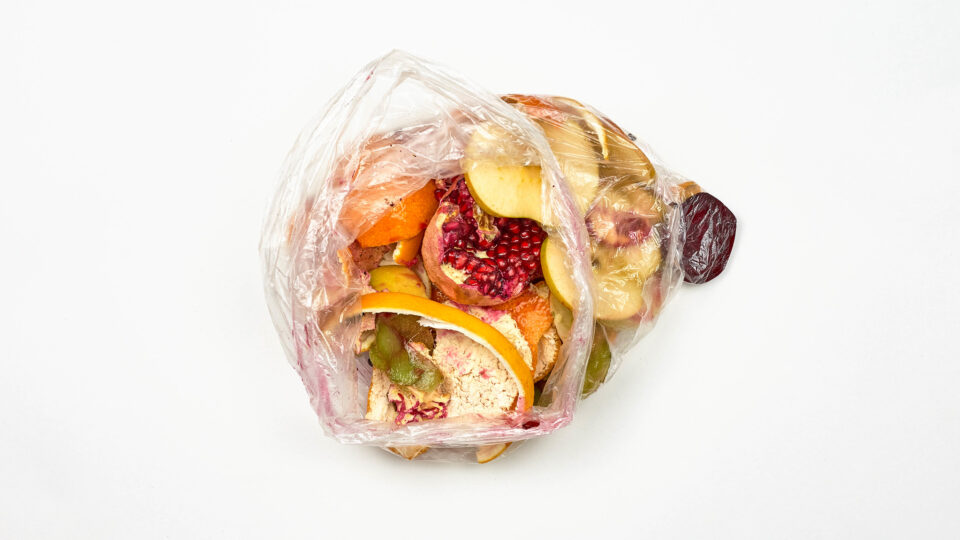
It is tragic that 31% of the world’s food production goes uneaten.  About 14% isn’t distributed after it is harvested.  Another 17% ends up wasted in retail or by consumers.  Worldwide, the amount of food that is wasted is enough to feed more than a billion people while at least 828 million people continue to be affected by hunger.  To make matters worse, food waste accounts for 8 to 10% of global greenhouse gas emissions, which is at least double that of aviation.  Food waste, rotting away in landfills, produces methane gas, a major source of global warming.

Around the world, there are efforts being launched to try to improve the situation.  California now has a law that requires grocery stores to donate edible food that would otherwise be disposed of or they face fines.  The state’s cities and counties are required to reduce the amount of organic waste going into landfills by 75% by 2025 and compost it instead.

In London, grocers no longer put date labels on fruits and vegetables because the labels were leading people to trash perfectly good food.  France now requires supermarkets and large caterers to donate food that is still safe to eat.

South Korea has little space for landfills.  So, the country has been campaigning against throwing away food for 20 years.  Nearly all organic waste in the country is turned into animal feed, compost, or biogas.  Koreans even have to pay for throwing out food waste.  There are now trash bins equipped with electronic sensors that weigh food waste.

All of these things can help.  There is no single magic bullet for reducing food waste, but it is essential to do for so many reasons.

**********

Web Links

Inside the Global Effort to Keep Perfectly Good Food Out of the Dump

Photo, posted November 30, 2020, courtesy of Marco Verch via Flickr.

Earth Wise is a production of WAMC Northeast Public Radio

Primary Sidebar

Recent Episodes

  • An uninsurable future
  • Clean energy and jobs
  • Insect declines in remote regions
  • Fossil fuel producing nations ignoring climate goals
  • Trouble for clownfishes

WAMC Northeast Public Radio

WAMC/Northeast Public Radio is a regional public radio network serving parts of seven northeastern states (more...)

Copyright © 2025 ·