• Skip to primary navigation
  • Skip to main content
  • Skip to primary sidebar

Earth Wise

A look at our changing environment.

  • Home
  • About Earth Wise
  • Where to Listen
  • All Articles
  • Show Search
Hide Search
You are here: Home / Archives for alpine

alpine

Heatwaves And Alpine Mountain Climbing | Earth Wise

August 25, 2022 By EarthWise Leave a Comment

From June to August, there were persistent heat waves affecting parts of Europe that caused wildfires, evacuations, and heat-related deaths.  Nearly 12,000 people died from heat stroke or other causes associated with the high temperatures.  The highest temperature recorded during this period was 116.6 degrees F in Pinhao, Portugal on July 14th.  The RAF base in Coningsby, Lincolnshire recorded a temperature over 104 degrees on July 19th, the highest ever recorded in the United Kingdom.

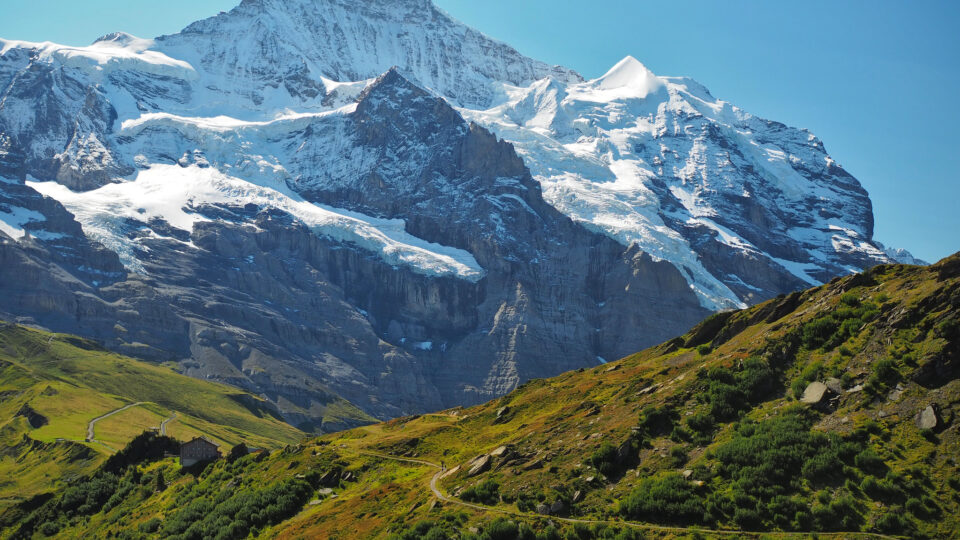
Among the effects of the multiple European heatwaves has been the cancellation of climbing tours up some of the most iconic peaks in the Alps, including Mont Blanc and the Matterhorn.  The high temperatures and rapidly melting glaciers have made the climbing routes too dangerous.  Overall, climbing cancellations occurred on about a dozen peaks, including the Jungfrau in Switzerland, which cancelled tours for the first time in a century.

In previous years, during warm summers, some of these climbing routes were closed in August, but the glaciers were already in a condition that usually only happens at the end of summer or even later.

The combination of heat and glacier melt can be treacherous.  In July, 11 people were killed at Italy’s Marmolada glacier by falling ice and rock.

Glacial melt in the Alps is rapidly accelerating.  The Forni Glacier, the largest valley glacier in Italy, has retreated two miles since 1860 and its area has shrunk by half.  Forecasts are that it will retain only 20% of its current volume by 2050 and may disappear entirely by the end of the century.  Half of the 4,000 glaciers in the Alps are expected to disappear by 2050.

**********

Web Links

European Heat Waves Force Closure of Classic Climbing Routes in Alps

Photo, posted September 4, 2020, courtesy of Dmitry Djouce via Flickr.

Earth Wise is a production of WAMC Northeast Public Radio.
River Of Dust | Earth Wise               

April 25, 2022 By EarthWise Leave a Comment

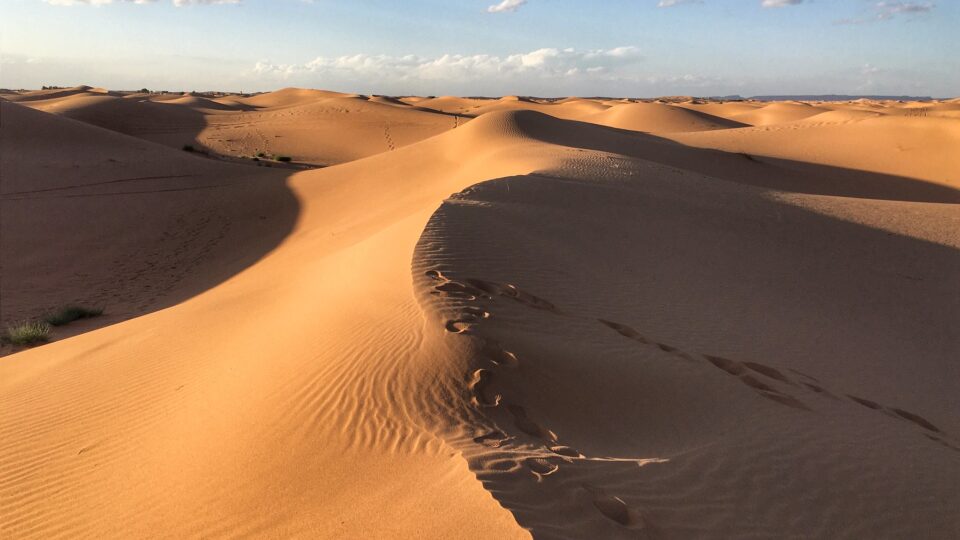
Every year, more than 100 million tons of dust blow out of North Africa.  Strong seasonal winds lift the dust from the Sahara Desert northward.  A few times a year, the winds from the south are strong and persistent enough to drive the dust all the way to Europe.

On March 15, a large plume of Saharan dust blew out of North Africa and crossed the Mediterranean into Western Europe.  European cities were blanketed with the dust, degrading their air quality, and turning skies orange.  Alpine ski slopes were stained with the dust.

These dust events are associated with so-called atmospheric rivers that arise from storms.  Such rivers usually bring extreme moisture but can also carry dust.  Over the past 40 years, nearly 80% of atmospheric rivers over northwestern Africa have led to extreme dust events over Europe.  The March 15 event was associated with Storm Celia, a powerful system that brought strong winds, rain, sleet, hail, and snow to the Canary Islands.

Atmospheric dust plays a major role in climate and biological systems.  The dust absorbs and reflects solar energy and also fertilizes ocean ecosystems with iron and other minerals.

The climate effects of dust are complicated.  Dust can decrease the amount of sunlight reaching the surface, affect cloud formation, and decrease temperatures.  But dust also darkens the snowpack, leading to more rapid snowmelt.  A 2021 dust event resulted in a rapid melt of Alpine snow, reducing its depth by half in less than a month.

The effects of this year’s dust event are not yet known, but this atmospheric river associated with Storm Celia appeared to carry less water and more dust compared with the 2021 event.

**********

Web Links

An Atmospheric River of Dust

Photo, posted December 2, 2019, courtesy of Catherine Poh Huay Tan via Flickr.

Earth Wise is a production of WAMC Northeast Public Radio.
Nanoplastics In The Air | Earth Wise

December 17, 2021 By EarthWise Leave a Comment

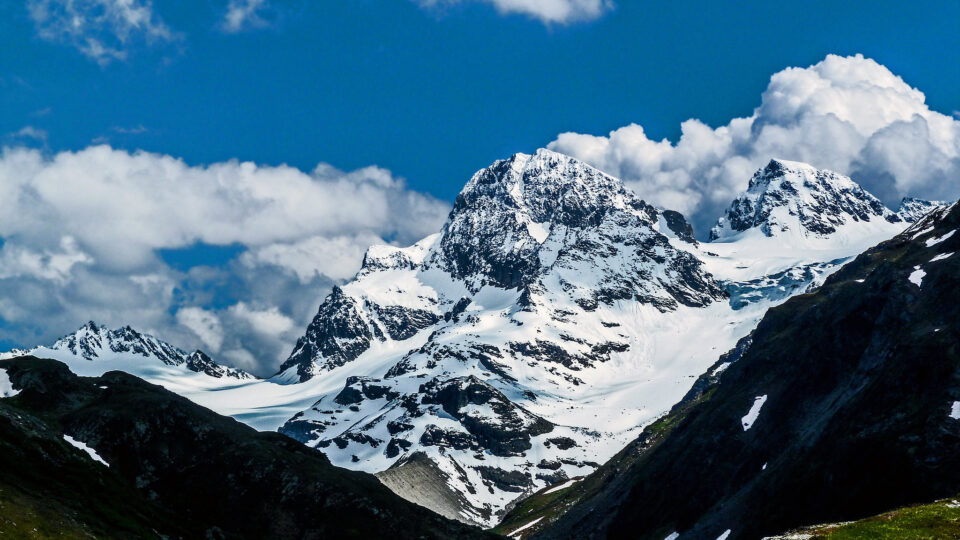
Austria, Silvretta mountains

The world is awash in plastic.  Discarded plastic litters our roadways, woodlands, and beaches.  It piles up in landfills.  Plastic enters the oceans by the millions of tons.  And plastic is finding its way even to remote and supposedly pristine parts of the world.

A team of researchers has found nanoplastics at the isolated high-altitude Sonnblick Observatory in the Austrian Alps.  This is the first time the particles were found in the area.  The researchers were looking for certain organic particles and only found the nanoplastics by chance.

The detected plastic particles were less than 200 nanometers in size, about one hundredth the width of a human hair.  It is highly unlikely that such particles originated in remote Alpine areas.

The researchers were looking for organic particles by taking samples of snow or ice, evaporating them, and then burning the residue to detect and analyze the vapors.  They described the detection method as essentially like a mechanical nose.  In this case, the nose smelled burning plastics in the form of polypropylene and polyethylene terephthalate.

Looking into the issue, the researchers found a strong correlation between high concentrations of nanoplastics and winds coming from the direction of major European cities – especially Frankfurt and the industrial Ruhr area of Germany, but also the Netherlands, Paris, and even London.

Modeling supports the idea that nanoplastics are transported by air from distant urban places.  This is particularly worrisome because it means that there are likely hotspots of nanoplastics in our cities and in the air that we are breathing.  Plastics appear to be everywhere.

**********

Web Links

Nanoplastics found in the Alps, transported by air from Frankfurt, Paris and London

Photo, posted July 1, 2013, courtesy of Robert J. Heath via Flickr.

Earth Wise is a production of WAMC Northeast Public Radio.

Primary Sidebar

Recent Episodes

  • An uninsurable future
  • Clean energy and jobs
  • Insect declines in remote regions
  • Fossil fuel producing nations ignoring climate goals
  • Trouble for clownfishes

WAMC Northeast Public Radio

WAMC/Northeast Public Radio is a regional public radio network serving parts of seven northeastern states (more...)

Copyright © 2026 ·