• Skip to primary navigation
  • Skip to main content
  • Skip to primary sidebar

Earth Wise

A look at our changing environment.

  • Home
  • About Earth Wise
  • Where to Listen
  • All Articles
  • Show Search
Hide Search
You are here: Home / Archives for agricultural waste

agricultural waste

Biochar and carbon

April 25, 2024 By EarthWise Leave a Comment

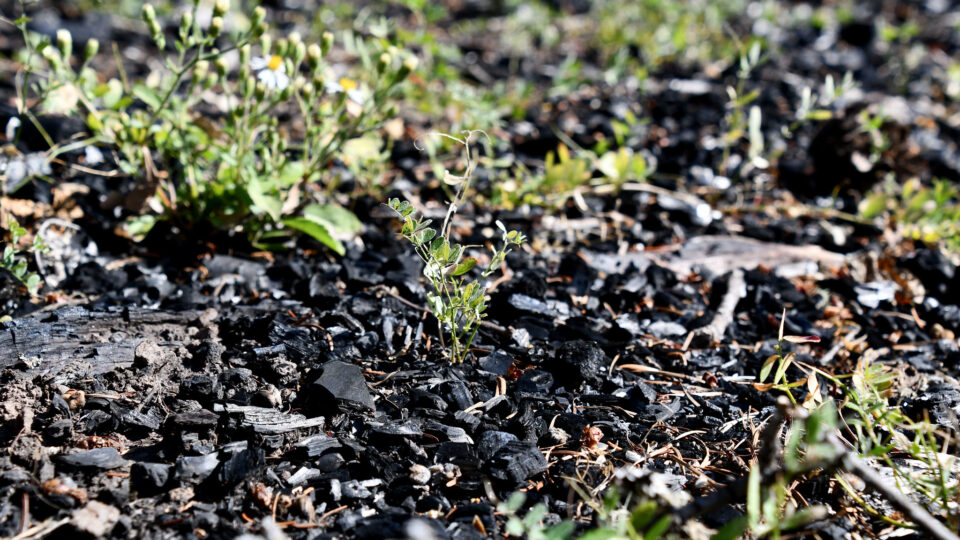
Biochar is a charcoal-like substance that is made by burning organic materials like crop and forestry wastes in a controlled process called pyrolysis, which is burning in an oxygen-deprived environment.  Pyrolysis produces little or no contaminating fumes and results in a stable form of carbon that can’t easily escape into the atmosphere.  Biochar is a very efficient way to convert carbon into a stable form.

Adding charred biomass to improve soil quality has been done for thousands of years.  Indigenous people in the Amazon added charcoal, food residue, and other waste to their soil.  When mixed with soil, biochar creates favorable conditions for root growth and microbial activities, which reduces greenhouse gas emissions. 

Last year, 125,000 tons of carbon dioxide were removed worldwide in the durable carbon market, which is a carbon credit marketplace for carbon removal.  About 93% of that was in the form of biochar. 

Biochar represents a value-added way to deal with agricultural waste and also to make use of dead trees in forests that should be removed to lower the risk of wildfires caused by the presence of all that dry tinder material. 

A bill to fund biochar research is pending before the Senate Agricultural Committee.  It is a rare example of bipartisan legislation.

Biochar is currently expensive to make in the US because large amounts of biomass must be shipped to one of the fewer than 50 small-scale production facilities in the country.   But with appropriate infrastructure, biochar could play an important role in efforts to sequester carbon and combat climate change.

**********

Web Links

Biochar Is ‘Low-Hanging Fruit’ for Sequestering Carbon and Combating Climate Change

Photo, posted September 3, 2019, courtesy of Tracy Robillard / NRCS via Flickr.

Earth Wise is a production of WAMC Northeast Public Radio

Sustainable Jet Fuel | Earth Wise

March 29, 2023 By EarthWise Leave a Comment

Experimenting with sustainable jet fuel

For several years, a few airlines, notably United here in the US, have been experimenting with the use of sustainable jet fuel.  Sustainable aviation fuel is made from such things as used cooking oil and agricultural waste.  It produces up to 80% fewer greenhouse gas emissions than conventional jet fuel. 

To date, when used it has been blended with fossil fuel jet fuel at a fairly low level.  United is the largest consumer of sustainable jet fuel in the US, but it accounts for less than one percent of the airline’s total fuel consumption.  Unfortunately, sustainable fuel can be as much as three times more expensive than conventional jet fuel.

Because of increasing governmental policy changes, technological breakthroughs, and climate commitments by airlines, efforts to increase the viability of sustainable jet fuel are ramping up.

Recently, United Airlines, Air Canada, Boeing, Honeywell, and JP Morgan Chase made initial contributions of $100 million to a new venture capital fund that will invest in sustainable fuel technology.  United expects the fund to grow to $500 million and make about two dozen investments over the next three years. 

Emissions from aviation contribute more than two percent of global greenhouse gas emissions each year.  Like many big companies, United Airlines has pledged to stop adding carbon emissions to the environment by 2050.  Unlike many, United has also pledged to eliminate emissions without using carbon offsets, which is effectively paying others to do their dirty work without cleaning up their own operations.

Multiple sustainable fuel companies in the US and abroad are working on a variety of ways to make aviation fuel from sustainable sources.

**********

Web Links

A Sudden Rush to Make Sustainable Aviation Fuel Mainstream

Photo, posted August 18, 2021, courtesy of Ronen Fefer via Flickr.

Earth Wise is a production of WAMC Northeast Public Radio

Oxygen Loss In Lakes | Earth Wise

January 13, 2023 By EarthWise Leave a Comment

The warming climate is prompting harmful oxygen loss in lakes.

Researchers from Cornell University and Rensselaer Polytechnic Institute have found that the continual warming in the world over the past 25 years has been reducing the amount of oxygen in many lakes.

Data from more than 400 lakes – mostly in the United States – shows that lakes with dissolved oxygen losses strongly outnumber those with gains.  Overall, the researchers found that the amount of low oxygen water is increasing by 0.9% to 1.7% per decade on average  and the volume of lake water lacking oxygen has increased by more than 50% from 25 years ago.

In the summer, lake surfaces may be about 70 degrees while the lake bottom may be about 40 degrees.  The colder water is denser than the warmer water which causes resistance to the layers mixing.  It is akin to having oil and vinegar in a cruet.  This is known as stratification.   The result is that oxygen from the atmosphere is prevented from replenishing dissolved oxygen in deep waters.  This is a normal seasonal phenomenon.

However, with winter ending sooner than it used to, seasonal stratification is starting earlier and ending later. As warming continues, it is likely that there will be an increasing number of oxygen-depleted lakes in the future.

Oxygen deprivation in water can lead to hypoxia (low oxygen) and even anoxia (no oxygen), which have negative consequences for fish and other species.  Reducing oxygen in lake water can lead to buildup of methane.   Nutrients from agricultural runoff, released from unsettled lake sediment, increase the likelihood of harmful algal blooms.

**********

Web Links

Warming climate prompts harmful oxygen loss in lakes

Photo, posted June 23, 2010, courtesy of Alexander Acker via Flickr.

Earth Wise is a production of WAMC Northeast Public Radio.

Car Parts From Agricultural Waste

January 11, 2019 By EarthWise Leave a Comment

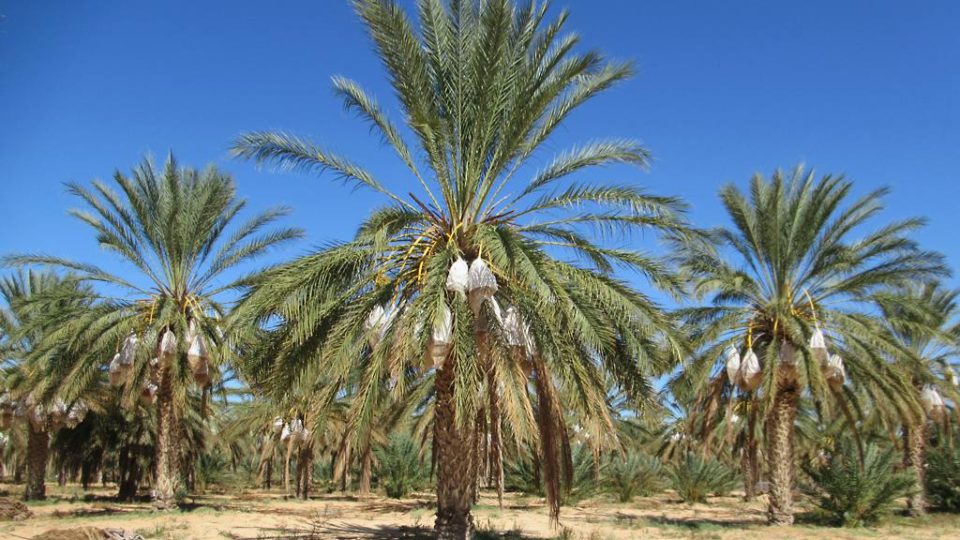
A new bio-composite material made from date palm fiber biomass could be used to produce sustainable, lightweight and low-cost parts for the automobile and marine industries.

A team of researchers from the UK has developed a date palm fiber polycaprolactone composite that is completely biodegradable, renewable,sustainable and recyclable, in contrast to synthetic composite materials reinforced by glass and carbon fibers. The team tested the mechanical properties of the material and found that it achieved better low-velocity impact resistance than traditional man-made composites.

The idea would be to use the material in non-structural auto parts such as car bumpers and door linings.   The result would be to reduce the weight of vehicles, contributing to less fuel consumption and lower emissions.  The new material can be produced using less energy than glass and carbon fibers and is biodegradable and therefore easier to recycle.

Date palm fibers are one of the most available natural fibers in many parts of the world.  The trees produce a large quantity of agricultural waste, which is mostly burned or land-filled,causing serious environmental problems.

Convincing industry to use a new class of materials such as natural-fiber reinforced composites is challenging.  First it is necessary to obtain consistent,reliable properties from the material. Then the industries need to work closely with the developers to test the materials and convince themselves of the viability of using them.  The team, led by researchers at the University of Portsmouth, has been working with industry to test the viability of parts made from a variety of other sustainable materials as well including flax, hemp, and jute.  Someday, our cars may have bumpers made from agricultural waste.

**********

Web Links

Agricultural waste drives us closer to greener transport

Photo, posted October 27, 2017, courtesy of David Stanley via Flickr. 

Earth Wise is a production of WAMC Northeast Public Radio.

Pulling Carbon Out Of The Air

January 20, 2016 By WAMC WEB

https://earthwiseradio.org/wp-content/uploads/2016/01/EW-01-20-16-Pulling-Carbon-Out-Of-The-Air.mp3

The world is increasingly united in the desire to reduce carbon emissions into the atmosphere.  There is much emphasis on reducing and someday eliminating our use of fossil fuels, which is the main culprit in the situation we find ourselves in today.  More and more we are embracing the use of renewable energy sources to produce electricity and we are starting to slowly move away from internal combustion engines to power our cars.

[Read more…] about Pulling Carbon Out Of The Air

Primary Sidebar

Recent Episodes

  • An uninsurable future
  • Clean energy and jobs
  • Insect declines in remote regions
  • Fossil fuel producing nations ignoring climate goals
  • Trouble for clownfishes

WAMC Northeast Public Radio

WAMC/Northeast Public Radio is a regional public radio network serving parts of seven northeastern states (more...)

Copyright © 2026 ·