• Skip to primary navigation
  • Skip to main content
  • Skip to primary sidebar

Earth Wise

A look at our changing environment.

  • Home
  • About Earth Wise
  • Where to Listen
  • All Articles
  • Show Search
Hide Search
You are here: Home / Archives for adaptable

adaptable

An anti-malaria breakthrough

August 26, 2025 By EarthWise Leave a Comment

A technological breakthrough in the battle against malaria

The deadliest animal in the world is the mosquito.  Mosquitos infected 263 million people with malaria in 2023, leading to 600,000 deaths, 80% of which were children.  Malaria is caused by infection from Plasmodium parasites.  The parasites are transmitted to humans from the bite of infected female mosquitos.

Researchers at the University of California San Diego, Johns Hopkins University, UC Berkeley, and the University of Sāo Paulo have developed a new method that genetically blocks mosquitos from transmitting malaria.

The study was published in the journal Nature.  They used gene editing to change a single molecule within mosquitos.  The genetically altered mosquitos can still bite people with malaria and can still acquire parasites from their blood, but the parasites can no longer be spread to other people.  The switching of one specific amino acid known as L224 with a genetic alternative called Q224 prevents malarial parasites from reaching the salivary glands of the mosquito, thereby preventing the spread of infection.  In extensive tests, the researchers found that while the genetic switch disrupted the parasite’s infection capabilities, the mosquitos’ normal growth and reproduction remained unchanged.

The hope is that the replacement of a single amino acid in mosquitoes that prevents them from being infected with malarial parasites is a beneficial trait that can spread throughout a mosquito population.  The researchers believe that the trait can be spread across diverse mosquito species and populations and can pave the way for adaptable, real-world strategies to control malaria.

**********

Web Links

Stealth Genetic Switch in Mosquitoes Halts Malaria Spread

Photo, posted June 20, 2014, courtesy of John Tann via Flickr.

Earth Wise is a production of WAMC Northeast Public Radio

Can birds outfly climate change?

July 8, 2025 By EarthWise Leave a Comment

Birds cannot outfly climate change

As global temperatures continue to rise and ecosystems shift, animals are left with limited options. They must either adjust to the changing conditions in their habitats or relocate to cooler environments. For many species, neither choice is easy – or sometimes even possible.

Ecologists had long assumed birds were among the most adaptable species in a warming world simply because they can fly to higher altitudes or towards global poles. But a new study by researchers from Yale University found that even birds are struggling to stay ahead of rising global temperatures.

The study, which was recently published in the journal Nature Ecology and Evolution, analyzed 20 years of data from 406 bird species across North America. They found that while most birds did shift their ranges northward – by about 40 to 50 miles on average during the summer – the changes weren’t enough to keep up with the rapid pace of climate change.

Birds still experienced significant warming in their new areas when compared with temperatures in their original home range.  In fact, warming was about 1.35 degrees Celsius more in summer, and a striking 3.7 degrees more in winter. And some species, especially those with limited flight ranges or specific habitat needs, like the cactus wren, didn’t move at all.

Highly mobile birds like the blue-winged warbler did better, avoiding nearly two degrees of warming by traveling more than 100 miles north. But even they couldn’t completely dodge the heat.

The findings raise serious concerns about whether less mobile species can survive in a warming world, and underscores the urgent need to better understand and manage those most vulnerable to climate-driven extinction.

**********

Web Links

Even birds can’t outfly climate change

Photo, posted March 1, 2023, courtesy of Henry via Flickr.

Earth Wise is a production of WAMC Northeast Public Radio

Feeding the future

June 9, 2025 By EarthWise Leave a Comment

Climate change is already affecting the yields of major staple crops around the world, and researchers warn that the impacts will become more severe over time. Rising temperatures, shifting rainfall patterns, and more frequent extreme weather events are disrupting growing seasons and reducing agricultural productivity.

Addressing these growing threats requires rethinking how we grow, distribute, and consume food.  To kick off Climate Solutions Week, we wanted to examine some solutions that could make food systems more resilient, sustainable, and adaptable to our rapidly changing environment.

One solution is Climate-Smart Agriculture, which blends traditional practices with modern techniques to boost productivity while reducing greenhouse gas emissions. Methods like zero tillage, intercropping, and crop diversification could improve soil health, conserve water, and help farms withstand climate extremes.

Expanding the production of highly nutritious and climate resilient food crops – like millet, sorghum, teff, quinoa, chickpeas, and tepary beans – will also have an important role to play.  At the same time, reducing food waste through better storage, labeling, and surplus food re-use could help meet demand without increasing production pressure.

Agriculture is the largest user of freshwater globally, and climate change is intensifying water shortages.  Farmers will need to transition to water-efficient farming practices, including drip irrigation, rainwater harvesting, and the reuse of treated wastewater. 

Together, these solutions could help revolutionize the global food system to both feed a growing population and help protect the planet. 

*********

Web Links

Climate-smart agriculture

Water for Prosperity and Peace

A Food For The Future

Photo, posted October 16, 2011, courtesy of Alliance of Bioversity International and CIAT via Flickr.

Earth Wise is a production of WAMC Northeast Public Radio
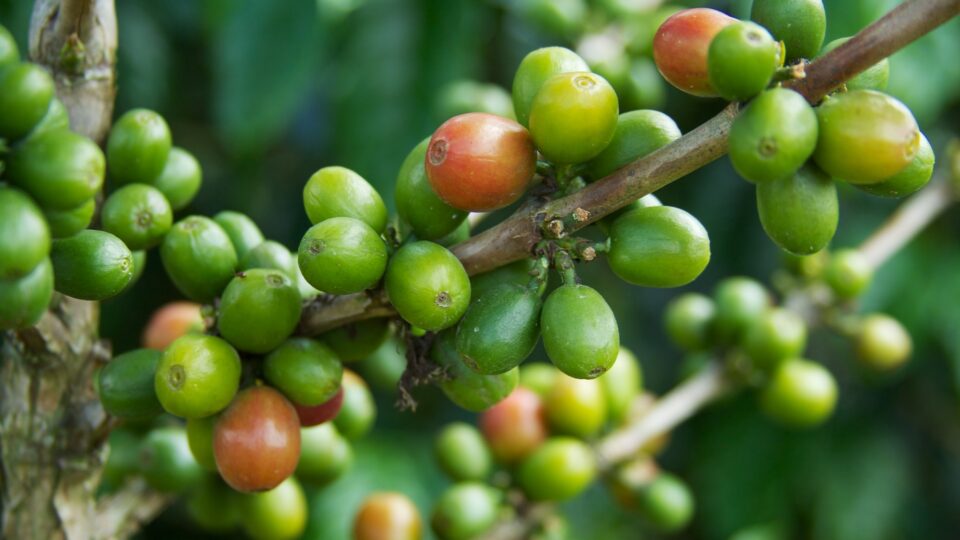
Climate-smart coffee

August 30, 2024 By EarthWise Leave a Comment

Growing climate-smart coffee

Do you crave that morning cup of coffee?  You’re not alone, and not by a long shot.  In fact, more than 2.2 billion cups of coffee are consumed globally every day. 

The existing coffee market is dominated by two species: Coffea arabica and Coffea canephora (the latter commonly called robusta).  Historically, coffee drinkers have preferred Arabica beans for their specific flavor and aroma. 

But climate change is threatening many crops around the world, and maybe none more so than coffee.  In fact, an alarming 50% of suitable coffee-growing land is projected to be lost by 2050.  As a result, scientists see two alternatives to supplement Arabica: either adapt coffee farming practices to new environments, or focus on coffee species that are more resilient.

According to a new study led by researchers from the University of Florida, Robusta coffee might be a good candidate to augment Arabica.   The researchers evaluated Robusta and Arabica for multiple traits in three high-altitude locations in Brazil over five years.

The study, which was recently published in the journal Crop Science, found that Robusta is highly adaptable and grows in high-altitude regions, which means it combines good production and flavor scores.  According to the researchers, Robusta can combine the following three elements for coffee cultivars: Sustainability (produce more with fewer inputs), quality (good flavor to meet consumer demand), and plasticity (capacity to adapt to new production systems).

Following these favorable findings with Robusta in Brazil, the scientists will test whether the species can grow in Florida.

**********

Web Links

Robust and smart: Inference on phenotypic plasticity of Coffea canephora reveals adaptation to alternative environments

UF scientists study how to bring you ‘climate-smart coffee’

Photo, posted May 23, 2013, courtesy of McKay Savage via Flickr.

Earth Wise is a production of WAMC Northeast Public Radio
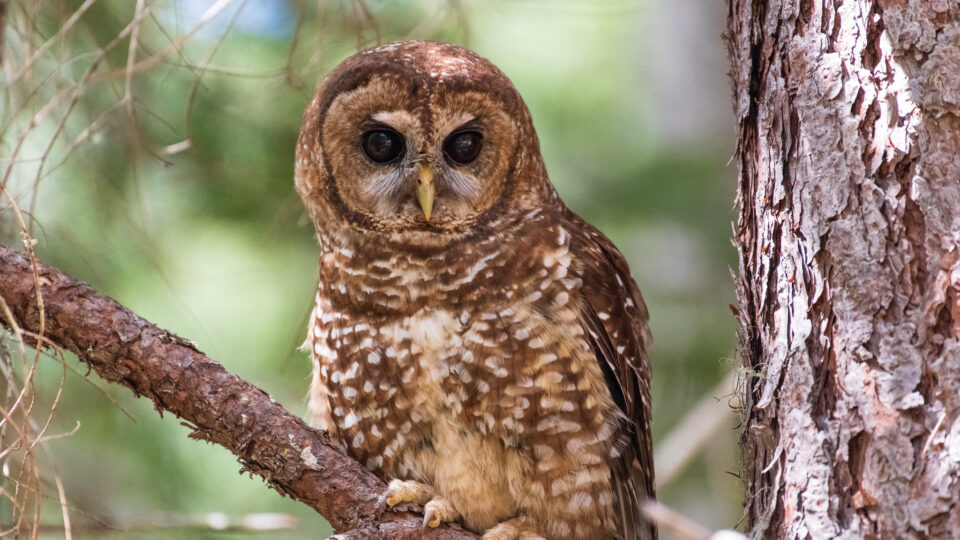
Good owls and bad owls

May 29, 2024 By EarthWise Leave a Comment

In the forests of the Pacific Northwest, spotted owls have been the subject of environmental concern for more than 30 years.  Over the past 20 years, northern spotted owl populations have declined by up to 80% as the birds have faced marginalized territories and increasing numbers of wildfires.  Only about 3,000 of them remain on federal lands.  Spotted owls are picky eaters and are not very adaptable.

The barred owl, a larger and more ornery species, has been moving in on spotted owl turf for 50 years, competing for food and space, and out-reproducing them and chasing them out of their nesting spots.

A last-ditch effort to rescue the northern spotted owl from possible extinction has been proposed by the U.S. Fish and Wildlife Service.  The plan would be to eradicate up to half a million barred owls over the next 30 years in Washington, Oregon, and Northern California.  The owls would be dispatched using cheap and efficient methods, such as shotguns.

The concept of killing off vast numbers of barred owls is awful, and nobody likes the idea.  However, other strategies have failed, and time is running out.  The only way to preserve the northern spotted owl is to protect and increase its habitat and have fewer barred owls.

To say that the proposed plan is controversial is a massive understatement.  A coalition of 75 wildlife and animal welfare organizations described it as a “colossally reckless action.”

A central issue in the debate is whether humans are responsible for this situation and should try to rectify it or, despite our desire to protect the spotted owl, we should just let nature take its course.

**********

Web Links

They Shoot Owls in California, Don’t They?

Photo, posted April 4, 2022, courtesy of Kyle Sullivan / BLM via Flickr.

Earth Wise is a production of WAMC Northeast Public Radio
Better Ways To Make Bioplastics | Earth Wise

August 27, 2021 By EarthWise Leave a Comment

How to replace plastic

The world produces over 300 million tons of plastics each year, mostly produced from petroleum.  The environmental consequences are substantial and there is a critical need to replace as much of that plastic production with biodegradable plastics as possible.  Thus, there is global research aimed at making bioplastics more economical and as environmentally friendly as possible.

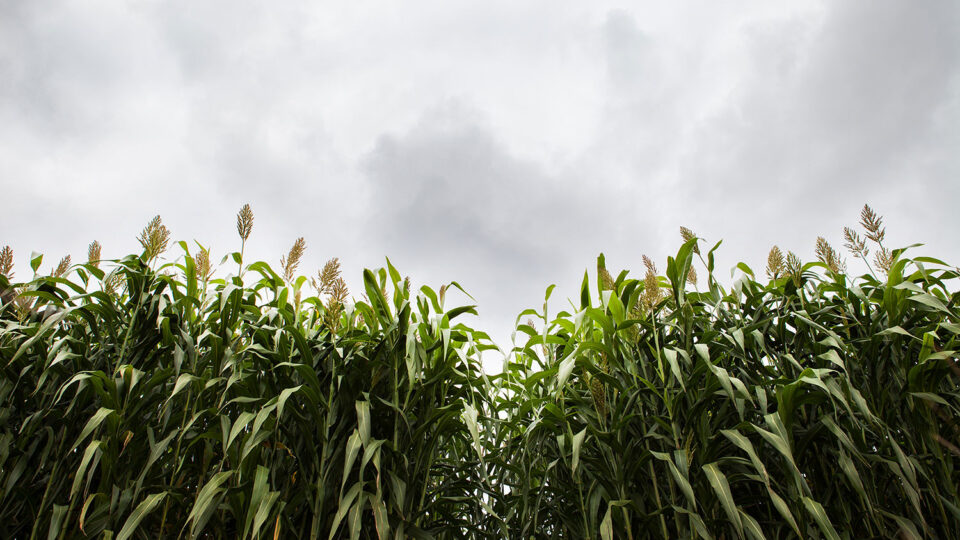
Researchers at Texas A&M University have developed an improved approach for making bioplastics from corn stubble, grasses, and mesquite agricultural production.  Apart from the obvious environmental benefits of having biodegradable plastics, producing bioplastics from common agricultural waste would create new revenue streams for farmers as well as the people who transport harvested feedstock and byproduct crops to refinery operations.

The key to bioplastic production is the efficient extraction and use of lignin, the organic polymer that is the primary structural support material in most plants.  The new research takes five conventional pretreatment technologies for plant materials and modifies them to produce both biofuel and plastics together at a lower cost.  The new method is called “plug-in preconditioning processes of lignin” and it can be directly and economically added into current biorefineries.  The process is designed to integrate dissolving, conditioning, and fermenting lignin, extracting energy from it and making it easily adaptable to biorefinery designs.

The so-called bioeconomy currently supports some 286,000 jobs.  Innovation is the key to achieving more widespread use of biodegradable plastic.  With improved economics of so-called lignocellulosic biorefineries, there can be new avenues to use agricultural waste to produce biodegradable plastics.

**********

Web Links

‘Plugging in’ to produce environmentally friendly bioplastics

Photo, posted November 5, 2015, courtesy of Kathryn Faith via Flickr.

Earth Wise is a production of WAMC Northeast Public Radio.

Primary Sidebar

Recent Episodes

  • An uninsurable future
  • Clean energy and jobs
  • Insect declines in remote regions
  • Fossil fuel producing nations ignoring climate goals
  • Trouble for clownfishes

WAMC Northeast Public Radio

WAMC/Northeast Public Radio is a regional public radio network serving parts of seven northeastern states (more...)

Copyright © 2026 ·