• Skip to primary navigation
  • Skip to main content
  • Skip to primary sidebar

Earth Wise

A look at our changing environment.

  • Home
  • About Earth Wise
  • Where to Listen
  • All Articles
  • Show Search
Hide Search
You are here: Home / Archives for accidentally

accidentally

Moving Endangered Species | Earth Wise

December 5, 2022 By EarthWise Leave a Comment

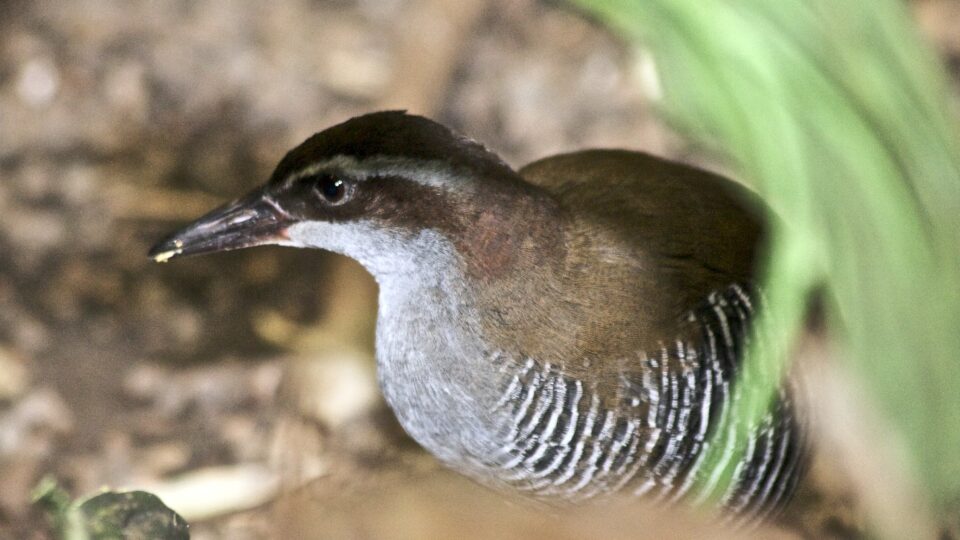
The risks and rewards of relocating endangered species

People have intentionally or accidentally introduced numerous invasive species to habitats around the world.  At the same time, the planet’s wildlife is in a steep decline.  A recent study estimated that the populations of over 5,000 vertebrate species have declined by an average of nearly 70% since 1970.  A United Nations report warns that human activity has threatened as many as a million species with extinction.

With all of this as a background, there is climate change that is altering the habitats of the world’s species – warming lakes and oceans, turning forests into grasslands, tundra into woodland, and melting glaciers.  In response to these changes, living things are rearranging themselves, migrating to more hospitable locations.  But many species are just not capable of finding more suitable habitats on their own.

Conservationists are now increasingly considering the use of assisted migration. In some cases, when a species’ critical habitat has been irreversibly altered or destroyed, agencies are establishing experimental populations outside of the species’ historical range.  Such actions are often deemed extreme but may be increasingly necessary.

However, clear-cut cases are relatively rare.  More likely, it is a more difficult judgement call as to whether assisted migration is a good idea or is possibly a threat to the ecosystem of the species’ new location.  The relative dearth of assisted migration experiments is less likely a result of legal barriers than it is a lack of scientific and societal consensus on the practice. Scientists are now trying to develop risk-analysis frameworks that various agencies can use in considering potential assisted migration experiments. 

**********

Web Links

Last Resort: Moving Endangered Species in Order to Save Them

Photo, posted March 18, 2010, courtesy of Jean via Flickr.

Earth Wise is a production of WAMC Northeast Public Radio
Alien Species On The Rise | Earth Wise

November 3, 2020 By EarthWise Leave a Comment

the number of alien species is rising

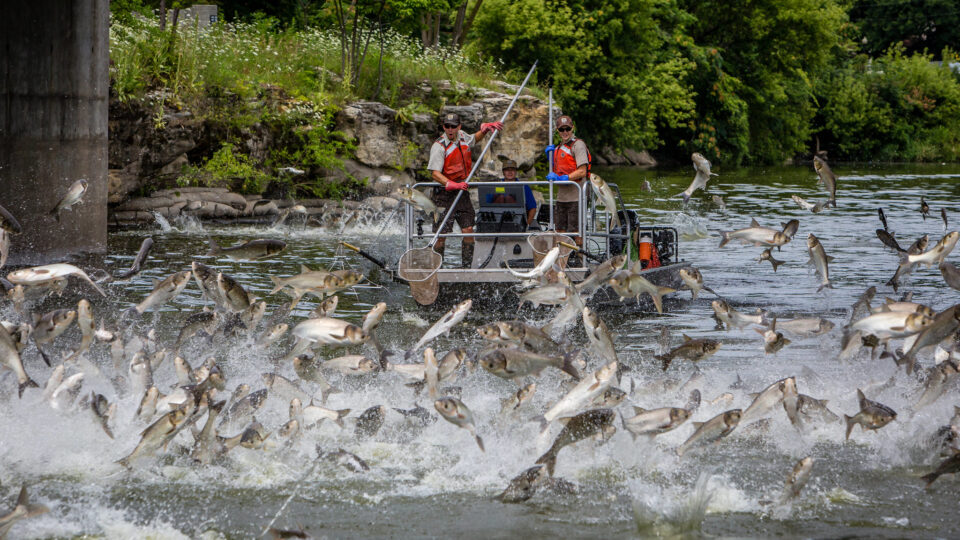
Alien species are species that are introduced, accidentally or intentionally, outside of their natural geographic range as a result of human activities.  More than 35,000 alien species have been recorded through 2005, which is the most recent year for which researchers have comprehensive global data. 

Some of the alien species go on to become invasive alien species, which can have damaging impacts on both ecosystems and economies.  In fact, alien species are one of the main drivers of plant and animal extinctions around the globe.  

According to a new study by an international research team involving University College London, the number of alien species, particularly insects, arthropods and birds, is expected to increase globally by 36% by 2050 when compared to 2005 levels.  The research was recently published in the journal Global Change Biology.

Using a mathematical model developed for the study, the researchers identified high levels of variations between regions.  For example, the largest increase in alien species by the middle of the century is expected in Europe, where numbers are predicted to jump by 64%.  The temperate regions of Asia, North America, and South America are also predicted to be hotspots of alien species.  The lowest relative increase in alien species is expected in Australia.

The researchers do not expect a reversal or slowdown in the spread of alien species.  In fact, with global transportation and trade forecasted to increase in the coming decades, they anticipate many new species will infiltrate non-native habitats by hitching rides as stowaways.   

According to the research team, it would take a concerted global effort with stricter regulations and more rigorous enforcement to slow the flow of new species. 

**********

Web Links

Alien species to increase by 36% worldwide by 2050

Photo, posted October 3, 2016, courtesy of the Asian Carp Regional Coordinating Committee via Flickr. Photo credit: Ryan Hagerty/USFWS.

Earth Wise is a production of WAMC Northeast Public Radio.

Primary Sidebar

Recent Episodes

  • An uninsurable future
  • Clean energy and jobs
  • Insect declines in remote regions
  • Fossil fuel producing nations ignoring climate goals
  • Trouble for clownfishes

WAMC Northeast Public Radio

WAMC/Northeast Public Radio is a regional public radio network serving parts of seven northeastern states (more...)

Copyright © 2026 ·