
• Skip to primary navigation
  • Skip to main content
  • Skip to primary sidebar

Earth Wise

A look at our changing environment.

  • Home
  • About Earth Wise
  • Where to Listen
  • All Articles
  • Show Search
Hide Search
You are here: Home / Archives for accessible

accessible

Vertical-axis wind turbines

February 19, 2025 By EarthWise Leave a Comment

Developing vertical-axis wind turbine technology

Nearly all wind turbines in use today are horizonal axis wind turbines.  They are a familiar sight with their three giant rotor blades spinning about an axis high above the ground attached to a nacelle containing the gearbox and generator. 

A vertical-axis wind turbine has its rotor shaft transverse to the wind; that is, the shaft rises up from the ground and the gearbox and generator are located close to the ground.

This type of wind turbine does not need to be pointed into the wind, which eliminates the need for wind-sensing and orienting mechanisms.  It is also considerably quieter in operation than horizontal axis wind turbines.  Vertical-axis wind turbines have enjoyed minimal success to date because of a variety of problems including reliability issues and complications related to how they respond to changing wind conditions.

A next-generation vertical wind turbine is going on trial in Australia as part of a research collaboration between Flinders University in South Australia and the start-up company VAWT-X Energy.  The 6KW prototype will be installed at a field site in Australia’s Fleurieu Peninsula.

According to the developers, the new turbine design will be as efficient, or even more efficient, as existing horizontal turbines and will be able to thrive across diverse environments including being part of urban infrastructure where their relative quiet is a real advantage.   Such turbines would be more accessible for applications like off-grid power and sustainable energy solutions for small businesses and farms.  The developers claim the technology can also be scaled up for large-scale windfarms.

**********

Web Links

Progress with new-look wind turbine

Photo courtesy of VAWT-X Energy.

Earth Wise is a production of WAMC Northeast Public Radio
Declining pollinator populations

June 28, 2024 By EarthWise Leave a Comment

Declining pollinator populations in North America

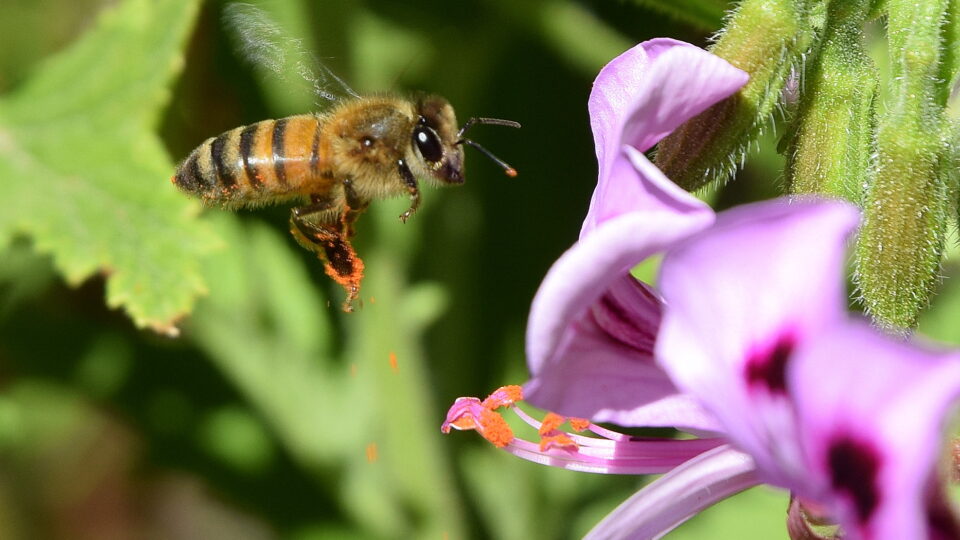
Scientists have been sounding the alarm on the global struggle of pollinators for decades.  Many recent studies have highlighted alarming declines in pollinator populations, sparking concern about the potential negative impacts on ecosystems and agriculture.  Habitat loss, invasive species, and climate change are some of the factors linked to the population declines. But most pollinator research has focused on well-studied species in easily-accessible regions.

In a new study recently published in the journal PLOS One, a research team led by Northern Arizona University compiled data on four major families of bees and butterflies to create species distribution models, allowing them to assess changes over time and space across North America.

The researchers confirmed that bee and butterfly populations are declining in major regions of North America due to ongoing environmental changes, and found that significant gaps in pollinator research limit the ability to protect these species. 

The highest species richness was found along North America’s West Coast –  especially in California. But the models showed a decline in species richness over the past century in western North America.  In contrast, the research team found disproportionate increases in eastern North America.

Comparisons with climate data indicate that the pollinator population changes are at least partly due to the impacts of climate change, including prolonged drought and habitat degradation. 

The study identifies regions of declining populations where officials can prioritize conservation efforts, and highlights how improved monitoring methods could address the knowledge gaps on pollinator populations.

**********

Web Links

Bee and butterfly records indicate diversity losses in western and southern North America, but extensive knowledge gaps remain

Bees and butterflies on the decline in western and southern North America

Photo, posted April 3, 2017, courtesy of Tracie Hall via Flickr.

Earth Wise is a production of WAMC Northeast Public Radio
The Decline Of Earth’s Largest Freshwater Creatures

September 23, 2019 By EarthWise Leave a Comment

While nearly 70% of the globe is covered by water, only 2.5% of it is freshwater.  The rest is saline and ocean-based.  And only 1% of our freshwater is easily accessible, with much of it locked away in snowfields and glaciers.  

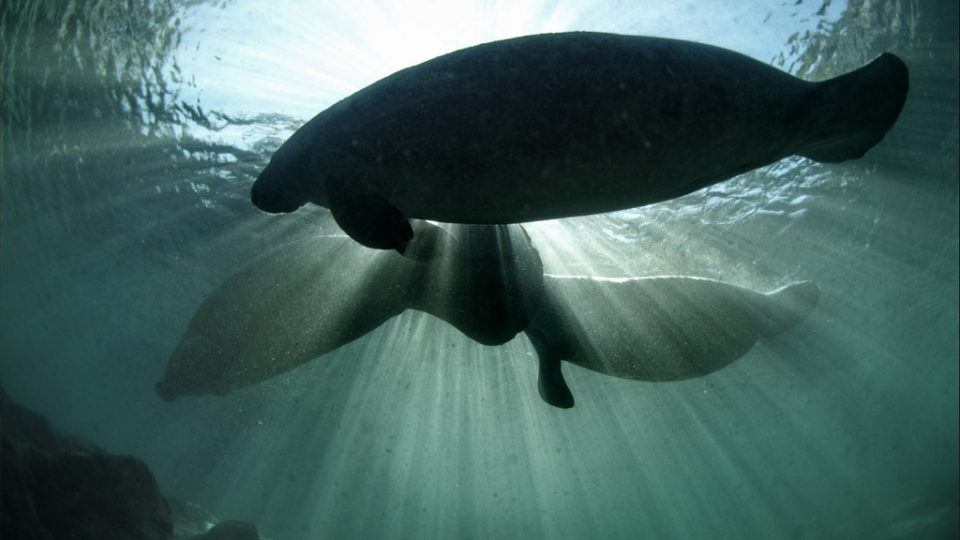
Despite freshwater only making up a small fraction of all water on the planet, it’s home to one third of all vertebrate species.  Some have survived hundreds of millions of years, but many of the world’s largest freshwater creatures – including fish, reptiles, amphibians, and mammals – may soon find themselves on the brink of extinction.

According to a study recently published in the journal Global Change Biology, scientists from the Leibniz-Institute of Freshwater Ecology and Inland Fisheries and international colleagues have quantified the global decline of freshwater megafauna for the first time.  In four decades since 1970, the global populations of these freshwater giants have declined 88% – twice as much as the loss of vertebrate populations on land or in the oceans. 

Freshwater megafauna include all freshwater animals that weigh 30 kilograms (about 66 pounds) or more, such as certain dolphins, beavers, crocodiles, turtles and sturgeons.

Overexploitation is one of the main threats to freshwater megafauna.  (These animals are often targeted for their meat, eggs, and skin).  The other main threat is the loss of free-flowing rivers. Many of the world’s large rivers are already highly fragmented, which impacts access to spawning and feeding grounds.  The research team says another 3700 large dams are planned or under construction, including 800 in habitats rich with freshwater megafauna, including the Amazon, Congo, and Ganges river basins.

Current conservation measures are clearly failing our freshwater creatures. 

********** 

Web Links

88 percent decline of big freshwater animals

Earth’s largest freshwater creatures at risk of extinction

Photo, posted March 25, 2012, courtesy of the U.S. Fish and Wildlife Service via Flickr.

Earth Wise is a production of WAMC Northeast Public Radio.

Primary Sidebar

Recent Episodes

  • An uninsurable future
  • Clean energy and jobs
  • Insect declines in remote regions
  • Fossil fuel producing nations ignoring climate goals
  • Trouble for clownfishes

WAMC Northeast Public Radio

WAMC/Northeast Public Radio is a regional public radio network serving parts of seven northeastern states (more...)

Copyright © 2026 ·