• Skip to primary navigation
  • Skip to main content
  • Skip to primary sidebar

Earth Wise

A look at our changing environment.

  • Home
  • About Earth Wise
  • Where to Listen
  • All Articles
  • Show Search
Hide Search
You are here: Home / Archives for 2026

2026

The Colorado River crisis

May 15, 2024 By EarthWise Leave a Comment

The Colorado River serves nearly 40 million people in seven U.S. states and Mexico.  It provides water for 5 million acres of farmland.  Increasing demand from growing populations, damming, diversion, and drought have been draining the Colorado at alarming rates.  This critical resource supports countless economies, communities, and ecologies stretching from the Rocky Mountains to the Gulf of California.  The Colorado River essentially has made the cities of Las Vegas, Los Angeles, Denver, and Phoenix possible.

How the water of the Colorado is distributed is determined by an agreement that is over 100 years old:  the Colorado River Compact.  It was made at a time when people thought there was more water than really was there.  And at the time, no one thought that the seven states would need to use the water they were allocated down to the last drop.

There have been various measures over the years to conserve water from the Colorado River, including the Colorado River Interim Guidelines in 2007.  Those guidelines will expire in 2026 and negotiations are beginning to take place among the many stakeholders scrambling for water rights.  Apart from the seven U.S. states and Mexico, there are 30 tribal nations involved.  Collaborative governance is complicated when it crosses multiple jurisdictions with their own laws and legal precedents.  The goal is to put in place a new agreement to protect the Colorado River.

Rapidly-growing populations in major cities, a 20-year megadrought, and historically low water levels in America’s two largest reservoirs have put enormous pressure on the Colorado River.  Creating a plan to protect the lifeblood of the American West is essential.

**********

Web Links

Addressing the Colorado River crisis

Photo, posted June 18, 2022, courtesy of Jeff Hollett via Flickr.

Earth Wise is a production of WAMC Northeast Public Radio
Keeping The Colorado River Flowing | Earth Wise

July 5, 2023 By EarthWise Leave a Comment

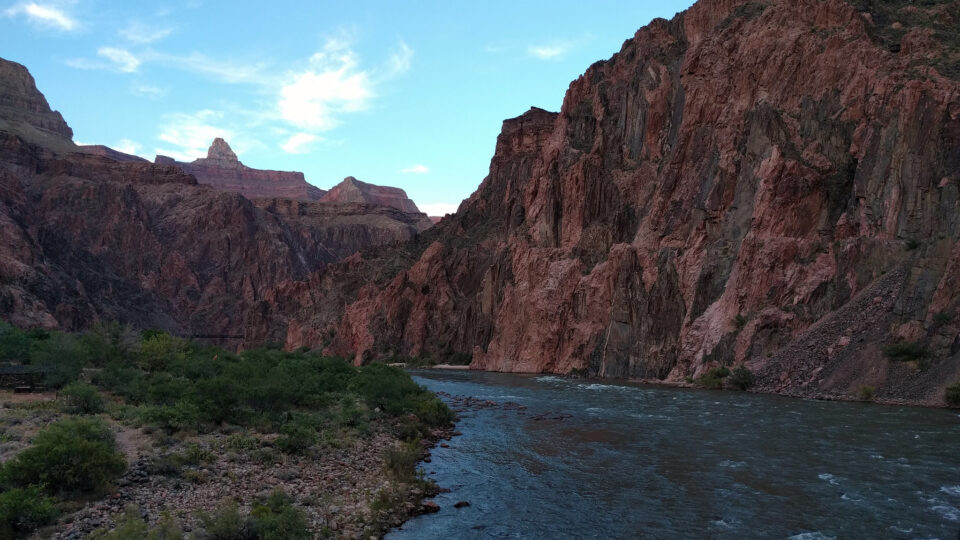
The Colorado River supplies drinking water to 40 million Americans in seven states as well as to many Mexicans and provides irrigation to 5.5 million acres of farmland.  Electricity generated by dams on the Colorado powers millions of homes and businesses in the West.

A combination of drought, population growth, and climate change has reduced the river’s flows by a third in recent years compared with historical averages.  Further reductions could trigger a water and power catastrophe across the Western states.

California, Arizona, and Nevada all get water from Lake Mead, the reservoir formed by the Colorado at Hoover Dam.  The Interior Department determines how much water each of these three states receives.  The other states that use Colorado River water get it directly from the river and its tributaries.  Last summer, water levels in Lake Mead and Lake Powell fell enough that officials feared that the hydroelectric turbines at the Colorado’s dams would soon cease functioning.

The three states have recently struck an agreement with the federal government to take less water from the Colorado.  The reductions amount to about 13% of the total water use in the lower Colorado.  The government will pay about $1.2 billion to irrigation districts, cities, and Native American tribes for temporarily using less water.  The states have also agreed to make additional cuts to generate the total reductions needed to prevent the collapse of the river.

The agreement runs only through the end of 2026.  At that point, all seven states that rely on the river – which includes Colorado, New Mexico, Utah, and Wyoming – may well be facing a deeper reckoning.  The forces driving the decline of the Colorado are not going away.

**********

Web Links

A Breakthrough Deal to Keep the Colorado River From Going Dry, for Now

Photo, posted June 16, 2017, courtesy Karen and Brad Emerson via Flickr.

Earth Wise is a production of WAMC Northeast Public Radio
Protecting New York City From Flooding | Earth Wise

April 21, 2023 By EarthWise Leave a Comment

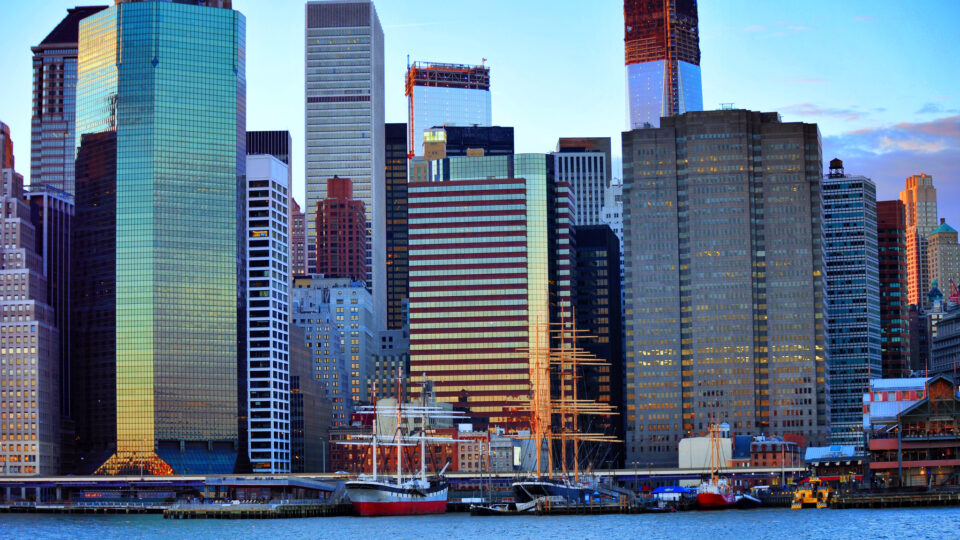
Hurricane Sandy flooded Lower Manhattan in October 2012, closing Wall Street, blacking out power for 250,000 people, and killing 44 New Yorkers.  Within a year, plans were in motion to build berms, floodwalls, and water gates along the city’s Lower East Side in a $770 million first phase of an overall plan to defend New York City from future floodwaters.

Plans got more and more complicated, and the price tag reached $1.45 billion before the existing plan was scrapped by former Mayor Bill de Blasio’s administration in 2018 without involving the community groups that were instrumental in creating the original plan.  After years of lawsuits and court actions, the revised East Side Coastal Resiliency Project is finally proceeding, now at a price tag approaching $3 billion. The project will include 18 moveable floodgates and will protect 110,000 New Yorkers, including 28,000 low-income public-housing residents and is expected to be completed in 2026.

The original larger overall plan was halted in 2020 after former President Trump mocked it and claimed that it would cost $200 billion.  The current plan, created by the U.S. Army Corps of Engineers and known as the 3B alternative, calls for a combination of deployable flood barriers, floodwalls, seawalls, and elevated promenades wrapping around the lower part of Manhattan.  The cost of the project is estimated to be $61 billion. 

In the meantime, over 10 years after Sandy, a similar storm would have almost the same effect today as Sandy had back then.

**********

Web Links

New York City Begins Its Climate Change Reckoning on the Lower East Side, the Hard Way

Photo, posted January 19, 2013 courtesy of Andres Alvarado via Flickr.

Earth Wise is a production of WAMC Northeast Public Radio

Policy Moves on Electric Cars | Earth Wise

February 26, 2021 By EarthWise Leave a Comment

The transition to electric vehicles is underway

In recent times, there have been several significant events affecting the transition to electric vehicles.  The new administration has made aggressive moves toward fighting climate change.  Wall Street investors have placed more value on Tesla stock than that of GM, Toyota, Volkswagen, and Ford combined.  China, the world’s largest car market, recently mandated that most new cars must be powered by electricity within 15 years.

Against this background, the CEO of General Motors announced in late January that the company will aim to sell only zero-emission cars and trucks by 2035.

This announcement took the rest of the auto industry by surprise.  In the past, the industry tended to present a united message on emissions and other policy issues.  This time around, GM has stepped out in front of the issue.

GM has already committed to spending $27 billion to introduce 30 electric vehicle models by 2025 and is building a plant in Ohio to make batteries for those cars and trucks.

A key driver in the GM decision, no doubt, was an executive order signed by President Biden on his first day of office.  The order directed the Environmental Protection Agency to immediately begin developing tough new tailpipe pollution regulations, designed to reduce the nation’s largest source of greenhouse gas emissions.

Even before the change in administration, five other major automakers – BMW, Ford, Honda, Volkswagen, and Volvo – had already legally bound themselves to tougher fuel economy standards in a deal with California.  Those companies committed to an average fuel economy of 51 miles per gallon in 2026.

While no other large automaker has set a specific target date for selling only electric vehicles, many of them are moving in that direction.  The rapid growth of Tesla is an indicator of where the auto industry is heading.

**********

Web Links

G.M. Announcement Shakes Up U.S. Automakers’ Transition to Electric Cars

Photo, posted July 29, 2017, courtesy of Steve Jurvetson via Flickr.

Earth Wise is a production of WAMC Northeast Public Radio.

The Largest Turbines In The Largest Offshore Wind Farm | Earth Wise

November 11, 2020 By EarthWise Leave a Comment

wind energy progress

The world’s largest planned offshore wind farm is going to make use of the world’s largest installed offshore wind turbines.  The Dogger Bank Wind Farm in the North Sea off the Yorkshire coast of England will ultimately generate electricity for more than 4.5 million homes in the United Kingdom.

The 3.6 GW project will cost $10 billion and will be developed in three phases, the first two of which will use 13-MW wind turbines built by General Electric.  The turbine’s blades measure 351 feet – longer than a soccer field.  The turbines stand more than 850 feet tall, which is five times the size of the Arc de Triomphe.  GE claims that a single rotation of one of these huge turbines can supply enough electricity to power the average British household for two days.  When the project is completed in 2026, it will generate 5% of the United Kingdom’s electricity.

The previous version of GE’s Haliade-X turbines, rated at 12 MW, were ordered by the energy company Orsted for installation in two forthcoming U.S. windfarm: the Skipjack Farm off the coast of Maryland, and the Ocean Wind farm off the coast of New Jersey.  The new version will be the largest turbines to reach operation in a commercial project.  Meanwhile, Siemens Gamesa has a 14 MW turbine under development.

The order for 190 of the 13 MW giant turbines for the Dogger Bank farm arrived at GE on the same day that the company announced that it will no longer supply power equipment to new coal plants.  Work on the Dogger Bank project started in January in an area of the North Sea that was previously dominated by oil and gas development.

**********

Web Links

World’s Biggest Offshore Wind Farm Will Boast World’s Largest Installed Turbines

Photo, posted February 22, 2014, courtesy of Jonny Longrigg via Flickr.

Earth Wise is a production of WAMC Northeast Public Radio.

Primary Sidebar

Recent Episodes

  • An uninsurable future
  • Clean energy and jobs
  • Insect declines in remote regions
  • Fossil fuel producing nations ignoring climate goals
  • Trouble for clownfishes

WAMC Northeast Public Radio

WAMC/Northeast Public Radio is a regional public radio network serving parts of seven northeastern states (more...)

Copyright © 2026 ·