
• Skip to primary navigation
  • Skip to main content
  • Skip to primary sidebar

Earth Wise

A look at our changing environment.

  • Home
  • About Earth Wise
  • Where to Listen
  • All Articles
  • Show Search
Hide Search
You are here: Home / Archives for 2025

2025

Bad news for birds

April 1, 2025 By EarthWise Leave a Comment

The 2025 U.S. State of the Birds report was released recently.   The report is produced by a coalition of leading science and conservation organizations.  The bottom line is that there have been continued widespread declines in American bird populations across all mainland and marine habitats. 

More than one-third of U.S. bird species are of high or moderate conservation concern.  Among these, 112 are tipping point species that have lost more than 50% of their populations over the last 50 years. 

Protecting bird species is not just about biodiversity and stewardship of nature.  Wild birds have surprisingly large economic impact.  Nearly 100 million Americans are engaged in birding activities which contribute substantially to local and state economies.  The 2022 National Survey of Fishing, Hunting, and Wildlife-Associated Recreation estimated that the total economic output related to bird watching activities was an amazing $279 billion and birding-related activities support 1.4 million jobs.  Bird watching and other encounters with nature are beneficial for human well-being, including reducing stress, anxiety, and depressive symptoms.

The rapid declines in birds are related to habitat loss, environmental degradation, and extreme weather events.  Moreover, if conditions are not healthy for birds, they are unlikely to be healthy for people as well.  Fortunately, many actions that are good for birds are good for us, so conservation efforts going forward are important.

**********

Web Links

State of America’s birds: Population declines continue

Photo, posted October 30, 2018, courtesy of Shenandoah National Park via Flickr.

Earth Wise is a production of WAMC Northeast Public Radio

Wave energy in LA

March 6, 2025 By EarthWise Leave a Comment

Ocean waves form as wind blows over the surface of open water.  Globally, waves contain tremendous amounts of energy.  Theoretically, the energy generating potential of waves off the coasts of the U.S. would meet more than 60% of the country’s electricity needs.  There are a variety of methods and technologies for tapping into this energy source, but none have reached the point of commercial adoption to date.  There are many problems that remain to be solved.

Eco Wave Power, a wave energy company, announced that it has received the necessary permit from the U.S. Army Corps of Engineers to operate the first onshore wave energy installation in the United States.  The installation will be at the Port of Los Angeles at the facilities of AltaSea, a public-private ocean institute that conducts research on food and energy supply, climate change, and ocean exploration.

The system will utilize eight of Eco Wave Power’s energy floaters that will be installed on the piles of an existing concrete wharf structure on Municipal Pier One.  The system will also include an energy conversion unit enclosed in two shipping containers and connected to the floaters.  The installation is expected to be completed by the end of the first quarter of this year.

Floaters draw energy from waves by using their rising and falling motion to generate electricity. The bobbing motion of the floaters compresses and decompresses hydraulic pistons.  These transmit hydraulic fluid into land-based accumulators that build up pressure.  The pressure rotates a hydraulic motor, which then operates a generator, producing electricity.

The project is a collaboration on the development of wave energy in the Port of Los Angeles between Eco Wave Power and Shell Marine Renewable Program.

**********

Web Links

Eco Wave Power secures final USACE permit for its first U.S. wave energy project

Photo courtesy of Eco Wave Power.

Earth Wise is a production of WAMC Northeast Public Radio

La Niña has arrived

February 26, 2025 By EarthWise Leave a Comment

After seven months of waiting following the end of the recent El Niño condition, La Niña finally showed up in the eastern Pacific Ocean in early December.

El Niño and La Niña are climate patterns in the Pacific Ocean that can affect weather worldwide.  Normally, trade winds in the Pacific blow west along the equator, taking warm water from South America towards Asia.  To replace the warm water, cold water rises from the depths.  During El Niño, trade winds weaken and warm water is pushed back east, toward the west coast of the Americas.  As a result, areas in the northern U.S. and Canada are dryer and warmer than usual.

During La Niña, trade winds are stronger than usual, pushing more warm water toward Asia.  This results in more upwelling of cooler water from the depths.  This tends to lead to drought in the southern U.S. and heavy rains and flooding in the Pacific Northwest and Canada.  During a La Niña year, winter temperatures are warmer than normal in the South and cooler than normal in the North.

According to the report published in January by NOAA, the La Niña that has arrived is not a particularly strong one.  Sea surface temperatures are only about 1.3 degrees Fahrenheit below average in the tropical Pacific.  The report also suggests that the La Niña condition may not stick around very long.

The El Niño-Southern Oscillation phenomenon adds a natural source of year-to-year variability in global temperatures.  The presence of La Niña for at least part of this year may temporarily keep the lid on rapidly climbing global temperatures.

**********

Web Links

La Niña Is Here

Photo, posted November 23, 2011, courtesy of NASA Goddard Space Flight Center via Flickr.

Earth Wise is a production of WAMC Northeast Public Radio

Hydroclimate whiplash

January 30, 2025 By EarthWise Leave a Comment

Hydroclimate whiplash has increased as much as 66% since the mid-20th century

Hydroclimate whiplash is a term that describes rapid swings between intensely wet and dangerously dry weather.  Global weather records show that the occurrence of hydroclimate whiplash has increased by 31% or as much as 66% since the mid-20th century. 

California’s experience is a prime example of this phenomenon.  After years of severe drought, dozens of atmospheric rivers subjected the state to record-breaking amounts of precipitation in the winter of 2022-23.  A second extremely wet winter in the southern parts of the state the following year resulted in the growth of abundant amounts of grass and brush. 2024 saw a record-hot summer which was then followed by a record-dry start to the 2025 rainy season.  The result was the catastrophic wildfires in the Los Angeles area in January.

Research by UCLA climate scientists explains that the primary driver for the increasing occurrence of hydroclimate whiplash is the expansion of the atmospheric sponge – that is, the growing ability of the atmosphere to evaporate, absorb and release water.  Every degree Celsius that the planet warms increases this ability by 7%. 

The global consequences of hydroclimate whiplash include not only floods and droughts but also the increased danger of whipsawing between the two, leading to the bloom and burn cycle that California recently faced. The risk of wildfire is twofold:  first by increasing the growth of flammable grass and brush in the months before the fire season, and then by drying it out to dangerous levels with extremely warm and dry weather.

**********

Web Links

Floods, droughts, then fires: Hydroclimate whiplash is speeding up globally

Photo, posted January 13, 2025, courtesy of Victor Guillen / USDA Forest Service via Flickr.

Earth Wise is a production of WAMC Northeast Public Radio

Energy storage with iron-air batteries

January 24, 2025 By EarthWise Leave a Comment

The Cambridge Energy Storage Project in Cambridge, Minnesota will be the first commercial deployment of iron-air battery technology.  Developed by startup company Form Energy, the battery system will provide 1.5 MW and 150 MWh of multi-day energy storage.

Iron-air batteries are based on the principle of reversible rusting.  When discharging, the battery releases energy by breathing in oxygen from the air and converting iron metal to rust.  When charging, the battery takes up electrical current that converts rust back into iron and breathes out oxygen.

An individual iron-air battery module is about the size of a washer/dryer set and contains about 50 individual cells filled with a water-based, non-flammable electrolyte.  For a utility-scale system like that being built in Cambridge, modules are grouped together in enclosures and hundreds of enclosures grouped together in megawatt-scale power blocks.  A one-megawatt low-density system would take up about half an acre of land.  High-density systems would be capable of producing more than 3 MW per acre. 

The technology has lower costs compared to lithium-ion battery technology but may be best suited as complementary with it since lithium-ion is primarily used for short-duration energy storage while air-iron can store energy for several days.

The system is expected to be operational by late 2025.  Great River Energy, the operator of the system, plans to conduct a multi-year study to evaluate the system’s performance and potential for broader development. 

**********

Web Links

Minnesota co-op breaks ground on multi-day energy storage project

Photo courtesy of Form Energy.

Earth Wise is a production of WAMC Northeast Public Radio
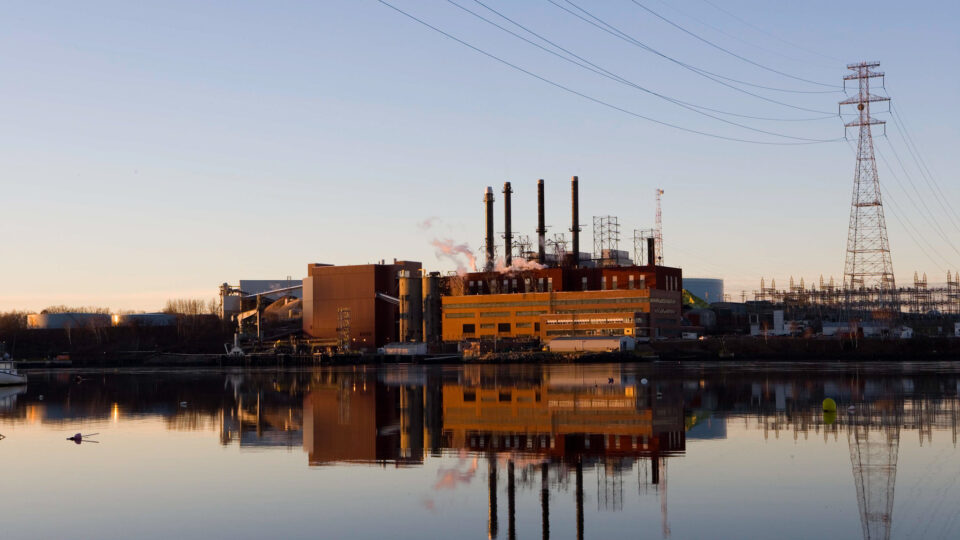
The end of coal in New England

May 3, 2024 By EarthWise Leave a Comment

Photo, posted October 14, 2015, courtesy of Eversource NH via Flickr.

The last two coal-fired power plants in New England are scheduled to close by 2025 and 2028.  The New Hampshire-based plants are operated by Granite Shore Power.  The Schiller Station plant began operations in 1949 and the Merrimack Station was built in the 1960s.

Granite Shore Power has come to an agreement with the Environmental Protection Agency as part of a settlement of lawsuits by the Conservation Law Foundation and the Sierra Club.  The two power plants were the subject of a five-year legal battle waged by clean energy advocates

Granite Shore Power intends to turn both of the sites into renewable energy parks.  The plants will be converted into solar farms and battery units that can be used to store electricity generated by offshore wind turbines along the Atlantic Coast.  Granite Shore Power bought the two power plants in 2018 with the intention of transitioning the coal generation systems into less polluting operations.

The battery storage system at the Schiller Station site in Portsmouth will be named the Jacona II in honor of a self-propelled floating power barge that brought power to parts of Maine and New Hampshire between 1919 and 1930.

Coal use has dropped dramatically in the United States in recent years as natural gas and renewable sources like wind and solar have become less expensive.  As of last year, coal only produced about 17% of American electricity and its use continues to decline. 

Coal is the dirtiest fossil fuel.  In 2021, when it generated less than a quarter of the electricity produced in the US, it accounted for 59% of carbon emissions from electricity generation.

**********

Web Links

The Last Coal-Fired Power Plants in New England Are to Close

Photo, posted October 14, 2015, courtesy of Eversource NH via Flickr.

Earth Wise is a production of WAMC Northeast Public Radio
A giant underground battery

February 5, 2024 By EarthWise Leave a Comment

Building a giant underground battery

Two up-and-coming energy technologies are coming together near a tiny town in central Utah.  Outside of the town of Delta, population 3,600, two caverns, each as deep as the Empire State Building, are being created from an underground salt formation to be used to store hydrogen gas.  The gas will be used as a fuel in a new electricity generation plant.

The plant will replace an aging local coal-fired power plant.  The new plant will burn a mixture of natural gas and hydrogen – green hydrogen produced without emitting greenhouse gases. To produce the hydrogen, the facility will operate 40 giant electrolyzers that will use excess solar and wind power generated at times of low demand to split water molecules into hydrogen and oxygen.

The caverns were created by a process called solution mining in which high-pressure water is pumped down into salt deposits that are dissolved. The resulting caverns are 200 feet in diameter and 1,200 deep and lie 3,000 to 4,000 feet below the surface.  Hydrogen cannot escape through the thick salt layers.

The amount of energy that can be stored in the form of hydrogen fuel in these caverns is massive – far more than all the battery storage installed in the U.S. to date.  Chevron has a majority stake in one of the projects and will supply the natural gas.  The facility is expected to go online in 2025.

While this will produce far fewer emissions than existing coal plants, it is not carbon-free.  Currently, turbine technology cannot operate with pure hydrogen fuel.  The Delta plant will run on only 30% hydrogen.  The hope is that turbine technology will improve in the future and permit operation on pure hydrogen.

**********

Web Links

A Huge Underground Battery Is Coming to a Tiny Utah Town

Photo, posted September 9, 2013, courtesy of Scott via Flickr.

Earth Wise is a production of WAMC Northeast Public Radio
Renewables Will Overtake Coal | Earth Wise

January 17, 2023 By EarthWise Leave a Comment

According to a recent report by the International Energy Agency, worldwide growth in renewable power capacity is set to double in the next five years.  In fact, by 2027, the world will add as much renewable power as it did over the previous 20 years.

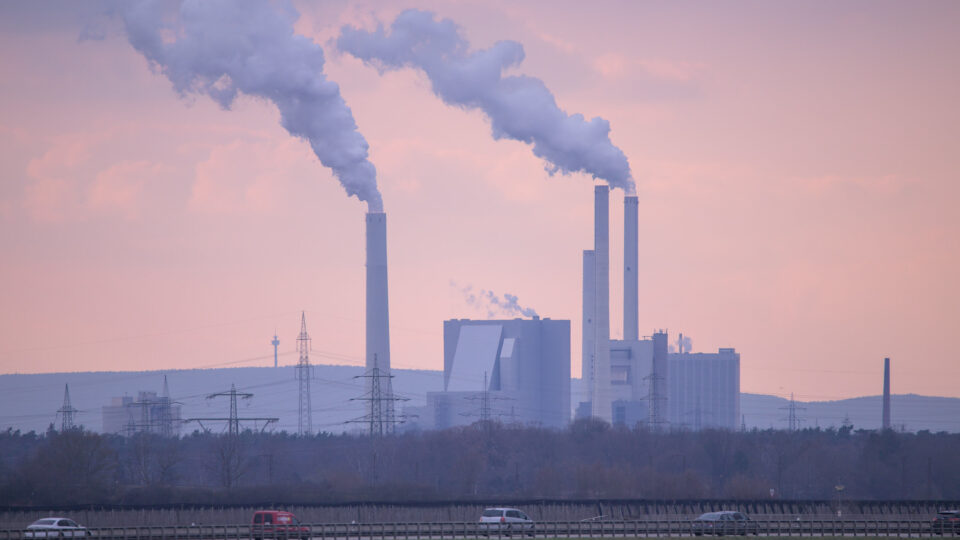
Of particular significance is that renewables are going to overtake coal as the largest source of electricity generation by early 2025.

The global energy crisis triggered by the war in Ukraine has had multiple effects on the evolution of the energy system.  While the war has driven a resurgence in fossil fuel consumption in Europe in order to replace gas from Russia, that resurgence is expected to be short-lived.  Instead, the current energy crisis may turn out to be an historic turning point toward a cleaner and more secure energy system.

Soaring fossil-fuel prices triggered by the war have caused many countries to respond by embracing wind turbines, solar panels, nuclear power plants, hydrogen fuels, electric vehicles, and electric heat pumps.  In the US, Congress approved more than $370 billion in spending for clean energy technologies as part of the Inflation Reduction Act.  China, India, South Korea, and Japan have all increased their national targets for renewable power.   However, heating and cooling buildings with renewable power remains a sector needing larger improvement, according to the energy agency.

Overall, the expansion of renewable power over the next five years is now projected to happen much faster than what was projected just one year ago. The new IEA report revised last year’s forecast for renewables growth by 30% as a result of the introduction of new policies by many of the world’s largest greenhouse gas emitters.

**********

Web Links

Renewables Will Overtake Coal by Early 2025, Energy Agency Says

Photo, posted March 8, 2021, courtesy of Stanze via Flickr.

Earth Wise is a production of WAMC Northeast Public Radio
Hyping Electric Cars | Earth Wise

March 13, 2020 By EarthWise Leave a Comment

During this year’s Super Bowl, at least three car companies – GM, Porsche, and Audi – ran commercials for plug-in cars.  This is a sign that automakers are ramping up their efforts to persuade the public that electric cars really are the future.

The auto industry is investing billions of dollars to develop electric vehicles, spurred by stricter emissions rules in places like California and concerns about climate change.  In fact, more than 100 new plug-in models are expected to become available in the United States over the next five years.

In Europe, electric cars are increasingly popular.  Norwegians, for example, buy more electric cars than gas cars.  And several European countries have banned the sale of gas cars starting in 2025.

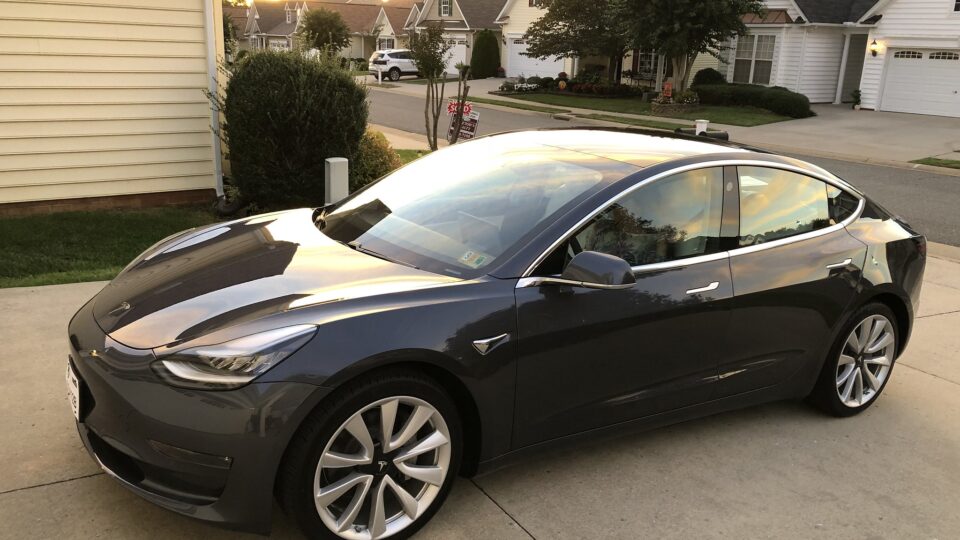
But in the US, enthusiasm for electric cars has been slow to build.  Automakers sold fewer than 330,00 electric vehicles in the US in 2019 and more than half of those were from Tesla, which actually does not even advertise its vehicles.

The auto industry spent nearly $9 billion in national and local advertising in the US last year, but less than half a percent of that went toward promoting electric vehicles.

A big part of the problem is that car dealers are not very enthusiastic about selling electric cars, which require far less maintenance than conventional cars and have far fewer costly replacement parts to sell.   As a result, the industry’s efforts to speed the transition to electric cars has been ambivalent at best.

World-wide, Tesla has sold about a million cars, mostly in the past 4 years, so there is clearly a growing demand for electric vehicles.  It is up to the rest of the industry to create demand for the new cars they have committed to produce.

**********

Web Links

Super Bowl Ads Hyped Electric Cars. But Will Anyone Buy Them?

Photo, posted October 6, 2018, courtesy of Mike Fonseca via Flickr.

Earth Wise is a production of WAMC Northeast Public Radio.

Primary Sidebar

Recent Episodes

  • An uninsurable future
  • Clean energy and jobs
  • Insect declines in remote regions
  • Fossil fuel producing nations ignoring climate goals
  • Trouble for clownfishes

WAMC Northeast Public Radio

WAMC/Northeast Public Radio is a regional public radio network serving parts of seven northeastern states (more...)

Copyright © 2026 ·