• Skip to primary navigation
  • Skip to main content
  • Skip to primary sidebar

Earth Wise

A look at our changing environment.

  • Home
  • About Earth Wise
  • Where to Listen
  • All Articles
  • Show Search
Hide Search
You are here: Home / Archives for 2024

2024

The demise of American offshore wind

August 18, 2025 By EarthWise Leave a Comment

The demise of offshore wind power in the United States

Europe has 37 gigawatts of offshore wind capacity. China is catching up rapidly.  Across the globe, offshore wind is an increasingly important source of clean, renewable power.  The United States had previously set ambitious goals to join the international effort.  But in the aftermath of the 2024 election, offshore wind in the US is basically dead in the water, pun intended.

The Bureau of Ocean Energy Management announced at the end of July that it is rescinding all designated Wind Energy Areas on the U.S. Outer Continental Shelf, effectively ending all offshore wind development across the Gulf of Mexico, the Gulf of Maine, the New York Bight, California, Oregon, and the Central Atlantic.  Additional policy measures announced by the Department of the Interior ended special treatment for what it called “unreliable energy sources, such as wind.” 

The two significant offshore wind projects underway in the US are both under serious attack by the administration and by newly emboldened special interests.  Vineyard Wind in Massachusetts, with 17 turbines already in operation, is under assault by tourist town forces and fishing groups.  Empire Wind, in New York, which resumed construction after efforts by Governor Kathy Hochul, is under pressure by various special interest groups that are urging President Trump to halt the project.

The current administration has very public and very pronounced antipathy towards wind power in general and towards offshore wind in particular.  And this has brought to a rapid halt billions of dollars in investments and will eliminate tens of thousands of jobs.

**********

Web Links

US offshore wind, long ‘dead,’ now really dead

Photo, posted September 15, 2016, courtesy of Lars Plougmann via Flickr.

Earth Wise is a production of WAMC Northeast Public Radio

Record forest loss

July 3, 2025 By EarthWise Leave a Comment

A record amount of forest was lost last year

The world lost a record amount of forests last year.  The biggest factor for the unprecedented losses were wildfires that raged around the world.

According to the annual update by the University of Maryland and the World Resources Institute, pristine rainforests alone lost 17 million acres, which was nearly twice as much as in the previous year.  Overall, the world lost the equivalent of 18 soccer fields of forested land every minute last year.

Over time, agriculture has been the primary cause of forest losses, but last year, for the first time since record-keeping began, fires were the leading cause, accounting for nearly half of all the destruction.

With respect to the climate, wildfires emitted over 4 billion tons of greenhouse gasses, which is more than four times the amount generated by air travel in 2023.

Land clearing for agriculture, cattle farming, and other purposes was by no means in decline last year.  In fact, it rose by 14%, which was the sharpest increase in almost a decade.  This trend could permanently transform critical natural areas, unleashing large amounts of carbon, intensifying climate change, and fueling even more extreme fires.

Forests are a major contributor to the natural storing of carbon dioxide.  Intact tropical forests are especially effective at storing carbon.

Brazil has the largest area of tropical forest and it accounted for 42% of all tropical primary forest loss in 2024.  Fires fueled by the worst drought on record caused two thirds of that loss, more than a sixfold increase over the previous year.

**********

Web Links

Global Forest Loss Hit a Record Last Year as Fires Raged

Photo, posted September 12, 2024, courtesy of the USDA Forest Service via Flickr.

Earth Wise is a production of WAMC Northeast Public Radio

It’s only getting warmer

July 2, 2025 By EarthWise Leave a Comment

Global warming continues and the planet cannot withdraw from its consequences

Climate science is not popular with the current administration.  Phrases like “climate crisis”, “clean energy”, and “climate science” itself are prohibited from websites, reports, regulations, and other communications by government employees and federal funding recipients.  Once again, the United States is turning away from climate mitigation efforts and will have a drastically reduced ability to forecast disasters and head off their worst consequences.

Meanwhile, global warming continues, and the planet can’t withdraw from its consequences.

The hottest year in nearly two centuries was recorded in 2024.  According to a new report by the World Meteorological Organization, there is an 80% chance that at least one year over the next four will surpass 2024 as the warmest year on record. 

The consequences of warming will probably vary widely across the world.  But likely occurrences include rapid thawing of Arctic Sea ice, drier seasons in the Amazon, excess rain in places like Alaska, northern Europe, and the Sahel in north-central Africa.  Hotter temperatures lead to more evaporation of water from plants and soil, leading to droughts and failed crop seasons.  The warmer atmosphere holds more moisture, which increases the chance of flooding from downpours and stronger hurricanes.

Ignoring what is going on with the climate or thinking that it will only impact other people in other places is nothing short of foolhardy.  The planet does not care about politics.  What is happening to the climate will be in just about everyone’s backyard soon enough.

**********

Web Links

‘It’s pretty bleak’: A warming planet is poised to get even hotter, forecasters warn

Photo, posted December 1, 2015, courtesy of Adam Matsumoto via Flickr.

Earth Wise is a production of WAMC Northeast Public Radio

The oceans are warming faster

May 21, 2025 By EarthWise Leave a Comment

A new study has shown that the rate of ocean warming has more than quadrupled over the past 40 years.  The study, by researchers at the University of Reading in the UK, helps to explain why there have been unprecedented ocean temperatures in 2023 and 2024.

Global ocean temperatures hit record highs for 450 days straight in 2023 and early 2024.  Some of this unusual warmth came from the El Niño that was taking place at the time, but the rest of the increased temperature came from the sea surface warming up more quickly over the past 10 years than in previous decades.  In the late 1980s, ocean temperatures were rising at a rate of 0.06 degrees Celsius per decade.  According to the recent research, they are now increasing at 0.27 degrees per decade.

The acceleration of ocean warming is driven by growth in the Earth’s energy imbalance, meaning that more energy from the sun is being absorbed by the Earth than is escaping back into space.  This energy imbalance has roughly doubled since 2010 as a result of two factors:  increasing greenhouse gas concentrations in the atmosphere and reductions in the Earth’s albedo.

Earth’s albedo, the measure of how much sunlight is reflected back into space, has been declining since the 1970s, primarily due to the decrease in snow and ice cover, especially in the Arctic. 

The overall rate of ocean warming observed over recent decade is likely to only increase.  This underscores the urgency of reducing fossil fuel burning to avoid even more rapid temperature increases in the future.

**********

Web Links

Ocean-surface warming four times faster now than late-1980s

Photo, posted January 18, 2007, courtesy of Alexey Krasavin via Flickr.

Earth Wise is a production of WAMC Northeast Public Radio
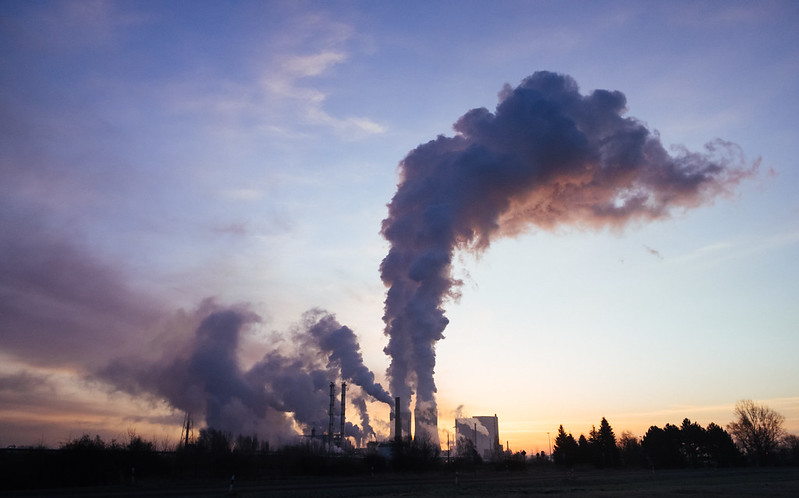
New highs for carbon dioxide

April 11, 2025 By EarthWise Leave a Comment

New highs reached for global carbon dioxide emissions

Last year was the hottest year on record and the ten hottest years on record have in fact been the last ten years.  Ocean heat reached a record high last year and, along with it, global sea levels.  Those are rising twice as fast as they did in the 1990s.

The World Meteorological Organization reports that the global atmospheric concentration of carbon dioxide reached a new observed high in 2023, which is the latest year for which global annual figures are available.  The level was 420 ppm, which is the highest level it has been in 800,000 years. 

The increase in carbon dioxide levels was the fourth largest one-year change since modern measurement began in the 1950s.  The rate of growth is typically higher in El Niño years because of increases from fire emissions and reduced terrestrial carbon sinks.

Concentrations of methane and nitrous oxide – which are two other key greenhouse gases – also reached record high observed levels in 2023.  Levels of both of these gases have also continued to increase in 2024.

The annually averaged global mean near-surface temperature in 2024 was 1.55 degrees Celsius above the 1850-1900 average.  Apart from being the warmest year in the 175 years records have been kept, it is also above the 1.5-degree limit set as the goal of the Paris Climate Agreement.  While a single year above 1.5 degrees of warming does not mean that the efforts to limit global warming have failed, it is a strong warning that the risks to human lives, economies, and the planet are increasing.

**********

Web Links

Carbon Dioxide Levels Highest in 800,000 Years

Photo, posted January 30, 2018, courtesy of Johannes Grim via Flickr.

Earth Wise is a production of WAMC Northeast Public Radio

The cost of electric vehicle batteries

April 4, 2025 By EarthWise Leave a Comment

The battery pack in an electric car is the most expensive part of the car. Currently, it accounts for as much as 30% of the price.  But EV batteries last a long time.  Most are guaranteed for 8-10 years and are likely to last as long as 20 years.  In practice, only 1.5% of electric cars need battery replacements for one reason or another.

The economics of EV batteries has changed dramatically over time and will continue to do so.  EV battery capacity is measured in kWh, the units you are charged for your home electricity.  An EV with a 300-mile driving range will have a battery pack that holds something like 75 kWh.

In 2008, when electric cars were just starting to enter the market again after earlier false starts, lithium-ion battery packs cost $1,355 per kWh.  When the Tesla Model S was introduced in 2012, packs were about $800. By 2019, packs broke the $200 per kWh barrier. Last year, lithium-ion battery packs reached $115 per kWh.

A combination of technology improvements and strong market competition with growing supplies is driving prices ever lower.  Industry analysts expect battery prices to drop well below $100 this year and reach about $80 next year.

The result of all of this cost reduction is that EVs will be cheaper than equivalent internal combustion vehicles, which in fact is already the case in China. Apart from cost, batteries for cars continue to improve so that the driving range of EVs will continue to increase making the cars more attractive and very practical for nearly all drivers.

**********

Web Links

How Much Do Electric Car Batteries Cost to Replace?

Photo, posted January 22, 2019, courtesy of Steve Rainwater via Flickr.

Earth Wise is a production of WAMC Northeast Public Radio
A record year for solar and batteries

March 20, 2025 By EarthWise Leave a Comment

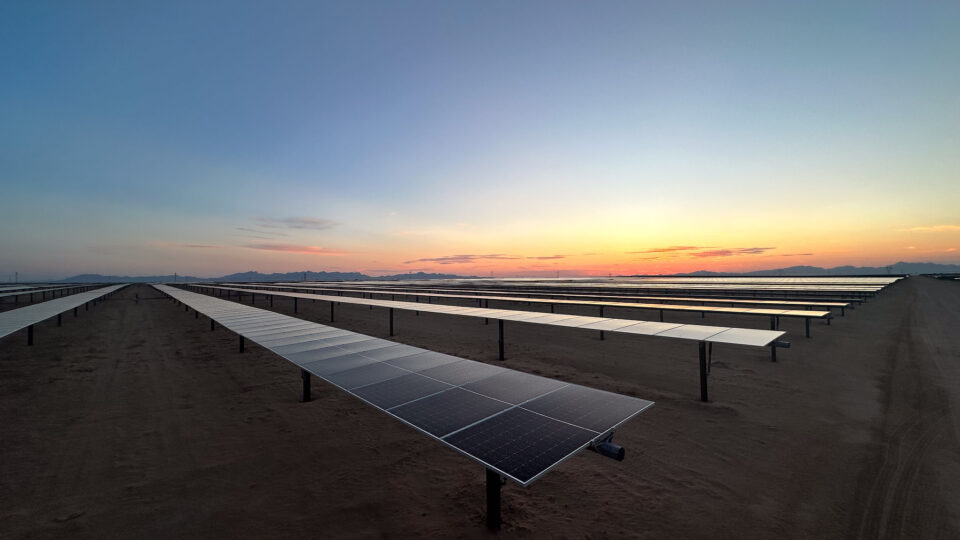
According to a recent forecast from the U.S. Energy Information Administration, solar panels and batteries will account for more than 80% of new power capacity installed in the U.S. this year.  The record growth of these technologies is hastening the decline of coal power in this country.

Solar power alone will account for more than half of the country’s new power capacity and most of it will be in Texas and California.

Wind power is expected to provide only 12% of new capacity this year.  Wind is facing rising costs, lengthy permitting, public backlash, and clear opposition from the Trump administration which is determined to stifle its growth.

As renewable energy grows, coal power continues to decline.  The U.S. will retire twice as much coal power this year as it did last year, closing about 5% of the country’s capacity.  Not only are older coal plants shutting down; the remaining plants are generating less power.

One of the most significant changes in technology over the last few decades has been the massive drop in the cost of clean energy.  Solar photovoltaic costs have fallen by 90% in the past decade, onshore wind by 70%, and batteries by more than 90%.  The connection between cost reduction and volume has been very strong:  costs of these technologies have fallen by around 20% every time global cumulative capacity doubles.   Over the past 40 years, solar power has transformed from one of the most expensive electricity sources to the cheapest in many countries.  That trend is likely to continue.  Setting politics aside, market forces generally are the strongest driver.

**********

Web Links

U.S. Solar and Batteries Headed for Record Year

Photo, posted December 16, 2024, courtesy of Bureau of Land Management California via Flickr.

Earth Wise is a production of WAMC Northeast Public Radio
Clean energy in New York

March 14, 2025 By EarthWise Leave a Comment

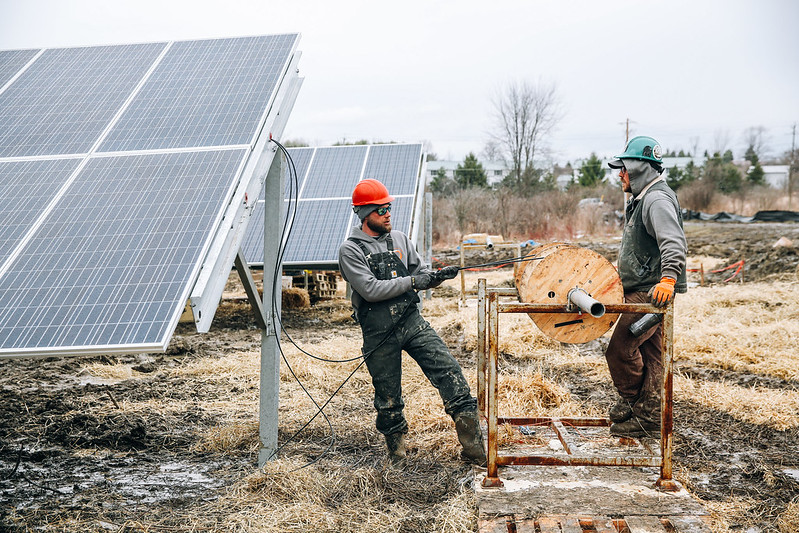
The New York State Energy Research and Development Authority – NYSERDA – recently issued a report on clean energy progress in the state during 2024.  The report highlighted continued and increased growth in heat pumps, electric vehicles, and solar energy.

Heat pumps, which provide both heating and cooling, have outsold gas furnaces countrywide for three straight years.  Air source heat pumps outsold gas furnaces by 37%.  This does not include ground source heat pumps, also known as geothermal heat pumps. New York offers Clean Heat rebates to offset the cost of installing heat pumps.

2024 was a good year for electric vehicles in New York with 90,221 new registrations.  More than 60 car models are eligible for New York’s Drive Clean state rebates.

New York achieved its Climate Act goal of having 6,000 MW of distributed solar power in October.  The state is expected to have more than 10,000 MW of distributed solar by 2030.

Nationwide, solar energy represented 64% of all the new electricity generation capacity installed in 2024, up from 55.5% in 2023.  Utility-scale solar generation in the lower 48 states was 36% higher in the summer of 2024 than in summer 2023.

NYSERDA’s report points out that converting to clean energy technologies can bring multiple benefits that include energy efficiency, cost savings, and reduced greenhouse gas emissions and air pollution.

**********

Web Links

Heat Pumps, Electric Vehicles, and Solar Scale Up Through 2024

Photo, posted April 6, 2017, courtesy of Stephen Yang / The Solutions Project via Flickr.

Earth Wise is a production of WAMC Northeast Public Radio

A record warm January

March 4, 2025 By EarthWise Leave a Comment

January saw record warm temperatures around the world

Americans experienced unusually cold and wintery weather in January.  Places like southern Louisiana and Florida saw appreciable amounts of snow.  For those who experienced January’s Arctic blast, it was a cold January.  But despite that, January was the world’s warmest on record, extending a run of extraordinary heat in which 18 out of the last 19 months saw an average global temperature more than 1.5 degrees Celsius above pre-industrial times.  In fact, the global average temperature in January was 1.75 degrees above the pre-industrial average.

The exceptional warmth was surprising to climate researchers.  It happened despite the emergence of La Niña conditions in the Pacific Ocean, which tend to lower global temperatures, at least for a while.

Researchers are investigating whether there is something beyond the effects of greenhouse gas emissions that is boosting temperatures to an unexpected degree.  It is true that emissions, associated with the burning of coal, gas, and oil, reached record levels in both 2023 and 2024.  But January’s warmth was still something of a surprise.

One prevalent theory is that cutting dangerous pollution is playing a role in causing global warming to accelerate.  As regulators have curbed sulfate pollution to protect people’s lungs, the cooling effect of these particles that help form more and brighter clouds has diminished.

January demonstrates that the global climate system is complex and the weather in any particular region does not necessarily reflect what is happening to the planet as a whole.

**********

Web Links

Global Temperatures Shattered Records in January

Photo, posted December 22, 2013, courtesy of SD Anderson via Flickr.

Earth Wise is a production of WAMC Northeast Public Radio

The warmest year on record

February 14, 2025 By EarthWise Leave a Comment

2024 was the warmest year on record

It came as no surprise that 2024 ended up as the warmest year on records. It was the hottest year since record keeping began in 1880.  The global average temperature was 1.28 degrees Celsius (or 2.3 degrees Fahrenheit) above the 20th-century baseline period of 1951-1980.  It was actually 1.47 degrees above the 1850-1900 average.

The Paris Climate Agreement has a goal to keep the global average temperature increase below 1.5 degrees Celsius over the long term.  Long term is specified because for more than half of 2024, average temperatures were more than 1.5 degrees above the baseline.

The temperature of an individual year can be influenced by various natural climate fluctuations, such as the presence of an El Niño or a La Niña condition in the Pacific, or volcanic eruptions.  A strong El Niño began in 2023 and continued throughout much of 2024.  That El Niño has abated, so it is no longer a factor in the global climate condition.

The global temperature is determined using surface air temperature data collected from thousands of meteorological stations as well as sea surface temperature data collected by ships and buoy-based instruments. 

When the climate changes, it is observed first in the global mean temperature.  Then there are changes seen on a continental scale and then at the regional scale.  Finally, changes are observable at the local level.  These changes are becoming more and more common as people’s everyday weather experiences become different from any they had encountered before.

**********

Web Links

2024 Was the Warmest Year on Record

Photo, posted August 26, 2015, courtesy of Saskia Madlener / NASA via Flickr.

Earth Wise is a production of WAMC Northeast Public Radio

The year in energy

February 5, 2025 By EarthWise Leave a Comment

Last year saw some major trends in the global energy sector. Perhaps the most dramatic was the shift to renewable power, which continued to outpace the projections of both financial analysts and industry experts.  2024 saw new highs in renewable installation, largely due to China, which accounted for more than half of all the solar power installed globally.  Huge solar installations also came online in California and Nevada during the year.  On the other hand, the amount of coal burning for the year also exceeded expert predictions, also largely due to China.

A second trend was increasing sales of electric vehicles, which reached a new high, although short of expectations.  A major driving force in EV sales is the dropping price of lithium-ion batteries, which fell by 20% in 2024.  Again, China was a major factor with roughly half of all its domestic vehicle sales being electric.

Coal’s decline is being slowed by the rising demand for electricity.  The increased use of electric heating and cooling along with the increasing use of EVs are major factors.  But the proliferation of energy-hungry data centers incorporating artificial intelligence capabilities is driving up the demand for power even more. 

Perhaps the clearest indication of the future for global energy comes from investors, who put about $2 trillion into clean energy last year.  That is twice as much as invested in oil, coal, and natural gas.

The history of energy has seen the Age of Coal and the Age of Oil.  By all indications, we are now heading into the Age of Electricity.

**********

Web Links

The Year in Energy in Four Charts

Photo, posted November 23, 2024, courtesy of Mussi Katz via Flickr.

Earth Wise is a production of WAMC Northeast Public Radio

Unexplained heat wave hotspots

December 27, 2024 By EarthWise Leave a Comment

2023 and 2024 have been the hottest years since records have been kept.  But above and beyond the upward march of average temperatures around the globe, there has been the phenomenon of distinct regions across the globe experiencing repeated heatwaves that are so extreme that they cannot be accounted for in any models of global warming.

A new study by Columbia University’s Climate School has provided the first worldwide map of such regions, which have emerged on every continent except Antarctica.  Heatwaves in these regions have killed thousands of people, withered crops and forests, and triggered devastating wildfires.

These recent regional-scale record-breaking temperature extremes have raised questions about whether current climate models can provide adequate estimates of the relationship between global mean temperature changes and regional climate risks.

Some of these regional events in recent years include a nine-day heatwave in the U.S. Pacific Northwest and southwestern Canada in June 2021 that broke daily records in some places by 54 degrees Fahrenheit.  Across Germany, France, the UK, the Netherlands, and other countries, the hottest days of the year are warming twice as fast as the summer mean temperatures. 

There is yet little understanding of the phenomenon.  Some theories related to destabilization of the jet stream don’t really explain all the temperature extremes observed.  But regardless of the underlying causes, the health impacts of these heat waves are severe, as are the effects on agriculture, vegetation, and infrastructure.  Society is not built to quickly adapt to them.

**********

Web Links

Unexplained Heat Wave ‘Hotspots’ Are Popping Up Across the Globe

Photo, posted August 16, 2022, courtesy of Alisdare Hickson via Flickr.

Earth Wise is a production of WAMC Northeast Public Radio

October was another hot month

December 3, 2024 By EarthWise Leave a Comment

October was another hot month, a continuation of the warming trend

In a year filled with unusually warm months, October 2024 ranked as the second-warmest October in the 175 years of the National Oceanic and Atmospheric Administration’s records.  It was just 0.09 degrees Fahrenheit cooler than the previous global record set just last year.

In our part of the world, North America had its warmest October on record.

Year-to-date, the global surface temperature has been 2.3 degrees Fahrenheit above the 20th century average, which is the warmest such period on record.  This record warmth was observed in Africa, Europe, North America, Oceania, and South America.  With only a little of the year to go, predictions are that there is a greater than 99% chance that 2024 will rank as the world’s warmest year on record.

Other aspects of the warming climate were also in full evidence in October.  Global sea ice coverage was the smallest in the 46 years that it has been tracked, about 1.25 million square miles below the 1991-2020 average.  Ice extent in the Arctic was the fourth lowest on record and ice extent in the Antarctic was the second lowest on record.

Global ocean surface temperature was the second warmest for October and is the warmest ever for the period January to October.

The Atlantic basin saw five tropical cyclones during October, including the deadly and destructive Hurricane Milton that made landfall just south of Tampa Bay. 

The monthly climate postings by NOAA continue to report record-breaking temperatures and significant climate anomalies and events.  This pattern is not likely to do anything but continue in the future.

**********

Web Links

Planet saw its 2nd-warmest October in 175-year record

Photo, posted August 21, 2018, courtesy of Fabio Achilli via Flickr.

Earth Wise is a production of WAMC Northeast Public Radio

South American drought

November 13, 2024 By EarthWise Leave a Comment

Vast areas of South America have been gripped in drought conditions for months.  Rivers in the Amazon basin fell to record-low levels in October.  The drought has amplified wildfires, parched crops, disrupted transportation networks, and interrupted hydroelectric power generation in parts of Brazil, Bolivia, Colombia, Ecuador, Peru, and Venezuela.

The drought is related to the impact of the El Niño that was present for the latter part of 2023 and the first half of this year.  El Niño typically shifts rainfall patterns in such a way that there is reduced rainfall in the Amazon.  This is especially true during the dry season months of July, August, and September.

Forecasts earlier in the year warned that there would be extreme fire conditions during the dry season.  Indeed, the Pantanal region that spans parts of southern Brazil, Paraguay, and Bolivia has experienced one of its worst fire seasons in decades.  The lack of rainfall, low soil moisture, and drawdowns of groundwater helped to amplify fires and caused them to spread faster and farther.

The drought has strained power supplies in Brazil and Ecuador because hydroelectric power stations are producing less electricity.   Snarled transportation networks with impassible rivers have left some communities struggling to get supplies. 

Brazil’s National Center for Monitoring and Early Warning of Natural Disasters has called the current drought the most intense and widespread Brazil has ever experienced.  Late October saw 293 Brazilian municipalities facing extreme drought.

**********

Web Links

Intense, Widespread Drought Grips South America

Photo, posted August 13, 2010, courtesy of Colm Britton via Flickr.

Earth Wise is a production of WAMC Northeast Public Radio

And the heat goes on

October 16, 2024 By EarthWise Leave a Comment

August 2024 was the hottest August in the 175-years for which there are global records.  The last full month of summer also wrapped up the Northern Hemisphere‘s warmest summer on record.

The average global surface temperature in August was 62.39 degrees Fahrenheit, which is 2.29 degrees above the 20th century August average.  Furthermore, August was the 15th consecutive month of record-high global temperatures, which is a record in and of itself.

Regionally, Europe and Oceana had their warmest August on record.  Asia had its second-warmest August, and Africa and North America had their third-warmest August.

The summer in the Northern Hemisphere was a record-breaker with a temperature 2.74 degrees Fahrenheit above average.  Thinking about climate goals, this is 1.52 degrees Celsius above average, which is a troubling amount.  Meanwhile, in the Southern Hemisphere, where it was winter in the June-to-August period, it was also the warmest ever with a temperature 1.73 degrees Fahrenheit above average.

Globally, this year to date ranks as the warmest ever recorded with a temperature 2.3 degrees above the 20th-century average.  With a few months to go, the prediction is that there is a 97% chance that 2024 will rank as the world’s warmest year on record.

Other aspects of the global climate system were consistent with these record-breaking temperatures.  The global ocean surface temperature for June through August was the warmest on record. 

These monthly climate reports have an unfortunate similarity:  the heat goes on.

**********

Web Links

Earth had its hottest August in 175-year record

Photo, posted June 22, 2021, courtesy of Vicky Brock via Flickr.

Earth Wise is a production of WAMC Northeast Public Radio
Solar energy on federal land

October 15, 2024 By EarthWise Leave a Comment

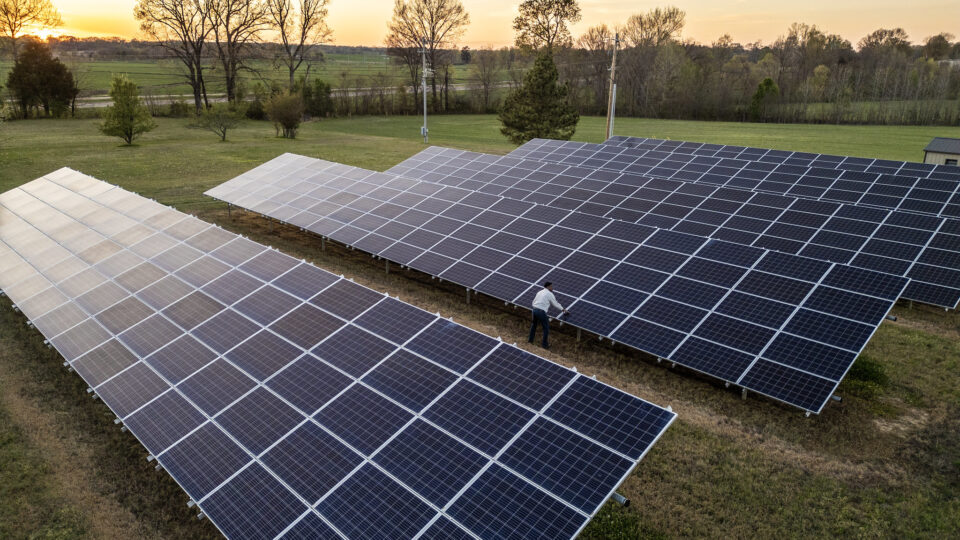
Officials at the federal Bureau of Land Management announced late in August that they had finalized a plan to add Oregon, Idaho, Montana, Washington, and Wyoming to the Western Solar Plan, which started during the Obama era.   The plan, created in 2012, provides permitting for solar projects on federal land.  The original plan included Arizona, California, Colorado, Nevada, New Mexico, and Utah.

The Western Solar Plan is a major expansion for clean energy production in the Bureau of Land Management’s land leasing portfolio.  For decades, the BLM has leased tens of millions of acres of federal land to fossil fuel companies for oil, coal, and natural gas exploration and production.

The new addition includes 1.1 million acres of land in Oregon, an area larger than the entire state of Rhode Island.  The land selected is deemed to be of low risk for any adverse environmental effects from solar installation, and the plots of land are all within 15 miles of existing or planned electrical transmission lines.  A little over 50% of Oregon’s land is owned by the federal government and is managed primarily by the Bureau of Land Management and the U.S. Forest Service.

The publication of the finalized plan at the end of August initiated a 30-day period for any participants in the initial planning to voice objections.  The governors of the 5 new states are reviewing the plan.  Final approval and adoption are expected later this year.

Western states need to expand solar and other clean energy production to meet their climate goals and federal lands will have to play an important role.

**********

Web Links

Plan would make 1 million acres of federal land in Oregon available for solar energy projects

Photo, posted May 20, 2024, courtesy of the U.S. Department of Agriculture via Flickr.

Earth Wise is a production of WAMC Northeast Public Radio

2023: A year of extreme climate

September 11, 2024 By EarthWise 1 Comment

2023 was a year of climate extremes

There have already been all sorts of extreme weather this year in many parts of the world and undoubtedly there will be more to talk about in the coming months.  But the American Meteorological Society has recently published its State of the Climate report for 2023 and it was a year for the record books.

In 2023, the Earth’s layers of heat-reflecting clouds had the lowest extent ever measured.  That means that skies were clearer around the world than on average, a situation that amplifies the warming of the planet.  Since 1980, clouds have decreased by more than half a percent per decade. 

The most dramatic climate effect last year occurred in the world’s oceans.  About 94% of all ocean surfaces experienced a marine heatwave during the year.  The global average annual sea surface temperature anomaly was 0.13 degrees Celsius above the previous record set in 2016.  This is a huge variation for the ocean.  Ocean heatwave conditions stayed in place for at least 10 months in 2023 in vast reaches of the world’s oceans.  Ocean heat was so remarkable that climate scientists are now using the term “super-marine heatwaves” to describe what is going on. 

There were many other ways in which 2023 experienced weather extremes.  July experienced a record-high 7.9% of the world’s land areas in severe drought conditions.  During the year, most of the world experienced much warmer-than-average conditions, especially in the higher northern latitudes.  These unprecedented changes to the climate are unlikely to be one-time occurrences; 2024 is likely to be another one for the record books.  

**********

Web Links

New Federal Report Details More of 2023’s Extreme Climate Conditions

Photo, posted May 27, 2021, courtesy of Wendy Cover/NOAA via Flickr.

Earth Wise is a production of WAMC Northeast Public Radio

The hottest day on record

August 21, 2024 By EarthWise Leave a Comment

The hottest day on record

There have been numerous temperature records set in recent years.  Apart from record high temperatures for many places around the world, there were 13 consecutive monthly temperature records set for the planet since the previous summer.

According to NASA data, July 22, 2024, was the hottest day on record.  July 21st and 23rd also exceeded the previous daily record, which was set in July last year.  The new record was 17.16 degrees Celsius, or about 63 degrees Fahrenheit.

We are not used to thinking in terms of the global average temperature.  That is the number that keeps climbing and that climate goals seek to keep from getting too high.  The global average temperature is about 59 degrees Fahrenheit.  So, on July 22nd, the Earth was about 4 degrees warmer than usual.  That may not seem like much, but it takes an enormous amount of energy to raise the temperature of the planet by that amount.

The NASA report shows the global daily temperature throughout the year for the years 1980 to 2024.  It clearly shows how much warmer temperatures are now compared with the previous decades.

In many places, people experienced persistent hot weather during the month of July. New York’s Capital Region saw relentless hot and humid weather.  There were 9 days with high temperatures in the 90s.   July in Albany had a monthly mean temperature of 77.3 degrees, which was the highest in any current resident’s lifetime.  This is more than 4 degrees higher than the average over the past 30 years.  The last time the average temperature was over 77 was in 1887.  July was hot.

**********

Web Links

NASA Data Shows July 22 Was Earth’s Hottest Day on Record

Photo, posted October 22, 2016, courtesy of Susanne Nilsson via Flickr.

Earth Wise is a production of WAMC Northeast Public Radio
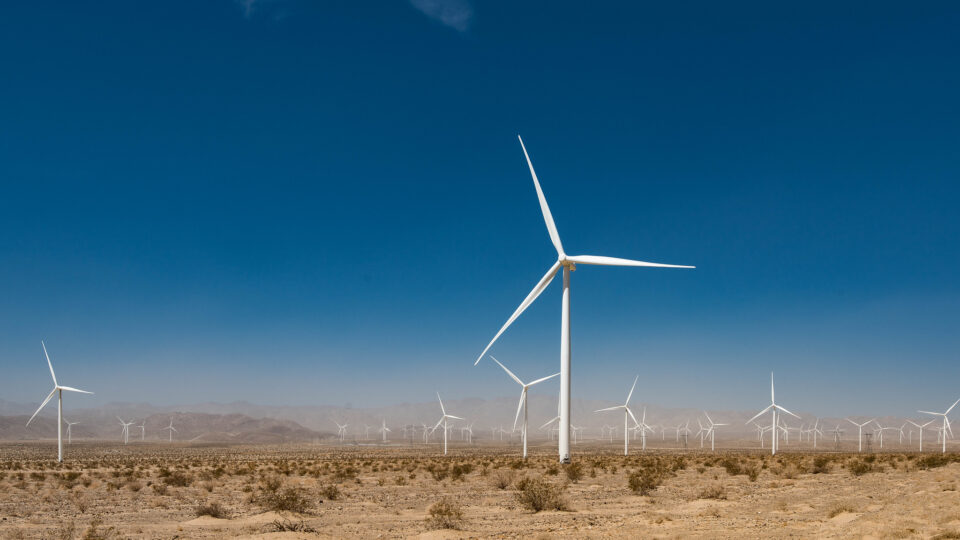
Expanding solar and wind in the U.S.

August 20, 2024 By EarthWise Leave a Comment

Solar and wind power are expanding in the United States

According to new data from the Federal Energy Regulatory Commission, solar and wind now make up more than 20% of the total US electrical generating capacity.  Adding up all renewable energy sources – which also include biomass, geothermal, and hydropower – renewable energy is now nearly 30% of the total electrical generating capacity in this country.

During the first five months of 2024, 10.669 gigawatts of solar and 2.095 gigawatts of wind power came online.  There were also 212 megawatts of hydropower and 3 megawatts of biomass added to generating capacity.  All told, renewables constituted 89.91% of new generating capacity added this year.  This does not include 1.1 gigawatts of nuclear power added at the Vogtle-4 reactor in Georgia. 

Solar power is booming.  The amount added this year was more than double the amount added over the same period last year.  Solar has been the largest source of new generating capacity for nine months straight.  Wind was the second largest.

About one-third of US solar capacity is in the form of small-scale – that is, rooftop – solar.  The statistics quoted in this report do not take that into account.  If it was included, solar plus wind would be closer to 25% of the US total.

Predictions are that over the next three years, nearly 90 gigawatts of additional solar power will be added to the grid as well as 23 gigawatts of wind power.  Over that period, coal, natural gas, and oil are projected to shrink by more than 20 gigawatts.

**********

Web Links

Solar and wind now make up more than 20% of US electrical generating capacity

Photo, posted October 28, 2016, courtesy of Daxis via Flickr.

Earth Wise is a production of WAMC Northeast Public Radio
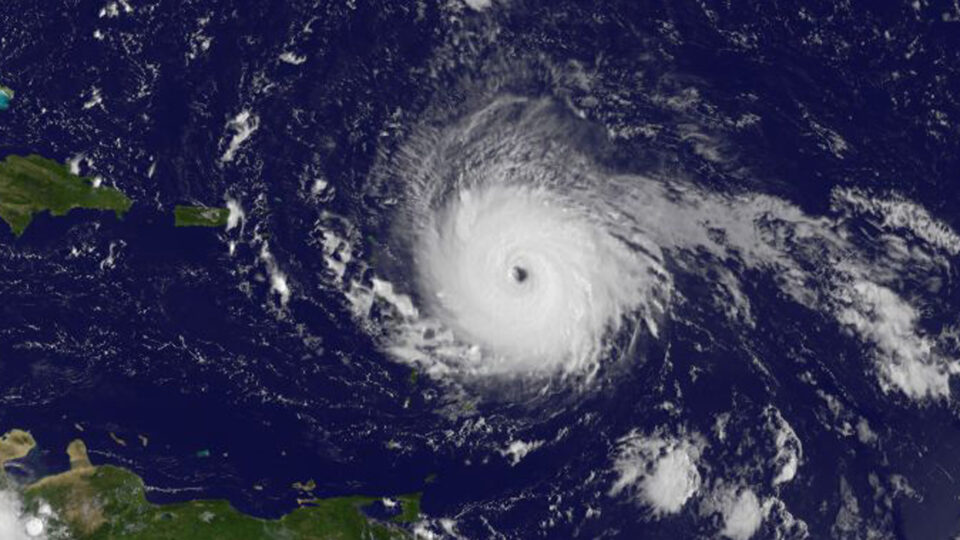
An active hurricane season

May 13, 2024 By EarthWise Leave a Comment

The Atlantic hurricane season officially runs from June 1st until November 30th.  Forecasters at Colorado State University have issued forecasts of Atlantic basin hurricane activity since 1984 based on the pioneering work of Professor William Gray.  This year’s forecast, issued in April, predicts a higher-than-average number of Atlantic storms.  In fact, it may be one of the most active seasons on record.

On average, there are 14 named storms each season.  This year, the prediction is for 23 of them.  On average, there are 7 hurricanes each season.  This year, the prediction is for 11. The prediction is for 5 major hurricanes among them.  These predictions are among the highest on record, although in 2020 they predicted 12 hurricanes.  In fact, that year there were 14 that actually took place.

Among the factors at play are that the El Niño that was occurring last year has dissipated and there is a good chance of a La Niña forming, which suppresses upper-level winds thereby making conditions ideal for hurricane formation and intensification.  But the overarching factor is global warming which is driving ocean temperature rise.  The water in the Atlantic, especially in the eastern Atlantic where most hurricanes form, has seen record-breaking warmth.  More warm water means more chances for storms.

Other research groups echo the predictions from Colorado State and, in some cases, see ever greater chances for an extremely active hurricane season.  The University of Pennsylvania forecast calls for 33 named storms.

The overall forecast is for a well above-average probability for major hurricanes making landfall along the continental United States coastline and the Caribbean. 

**********

Web Links

Weather tracker: US experts predict one of most active hurricane seasons on record

Photo, posted September 5, 2017, courtesy of NASA/NOAA GOES Project via Flickr.

Earth Wise is a production of WAMC Northeast Public Radio

  • Page 1
  • Page 2
  • Go to Next Page »

Primary Sidebar

Recent Episodes

  • An uninsurable future
  • Clean energy and jobs
  • Insect declines in remote regions
  • Fossil fuel producing nations ignoring climate goals
  • Trouble for clownfishes

WAMC Northeast Public Radio

WAMC/Northeast Public Radio is a regional public radio network serving parts of seven northeastern states (more...)

Copyright © 2025 ·