• Skip to primary navigation
  • Skip to main content
  • Skip to primary sidebar

Earth Wise

A look at our changing environment.

  • Home
  • About Earth Wise
  • Where to Listen
  • All Articles
  • Show Search
Hide Search
You are here: Home / Archives for 2014

2014

Global coral bleaching

May 22, 2024 By EarthWise Leave a Comment

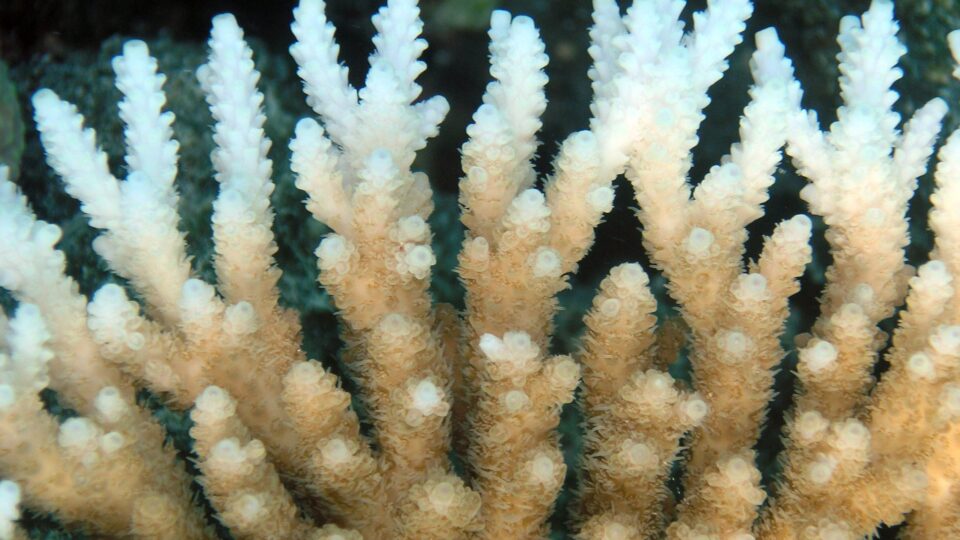
The world’s coral reefs are in the midst of a global bleaching event being driven by extraordinarily high ocean temperatures.  This is the fourth such global event on record and is predicted to be the largest one ever.  Coral bleaching occurs when corals are stressed by heat and eject the symbiotic algae within them that they need to survive.  Bleached corals can recover if water temperatures cool soon enough.  Otherwise, they die.

Each of the three previous coral bleaching events has been worse than the last.  The first, in 1998, affected 20% of the world’s reefs.  The second, in 2010, affected 35%.  The third, from 2014 to 2017, affected 56% of reefs.

The current bleaching event was confirmed by satellite observations early in April and was already seen to be affecting more than half of the world’s coral areas across the Pacific, Indian, and Atlantic Oceans.  The ongoing event is expected to be the worst bleaching ever experienced by Australia’s Great Barrier Reef.  A small saving grace is that the current bleaching event is not expected to be of extremely long duration because the El Niño in the Pacific has abated.

Coral bleaching events are becoming more severe and frequent due to increased marine heat waves driven by climate change.  Last year was particularly difficult for corals as global sea temperatures reached record high levels for several months.

Widespread coral bleaching impacts economies, livelihoods, food security, and more.  Coral reefs provide ecosystem services essential to marine life and human populations as well.  Global action will be needed for coral interventions and restorations.

**********

Web Links

Satellites watch as 4th global coral bleaching event unfolds

Photo, posted March 23, 2012, courtesy of Oregon State University via Flickr.

Earth Wise is a production of WAMC Northeast Public Radio
Alaska Is Getting Wetter | Earth Wise

August 31, 2020 By EarthWise Leave a Comment

alaska is getting wetter

Siberia has been in the news for record-setting heat waves and wildfires, but it is not the only northern region experiencing unusual weather.   Alaska, apart from setting its own warm weather records, is experiencing the rainiest five years in its century-long meteorological record.

Extreme weather in the Arctic is being driven by an aspect of climate change called Arctic amplification, which leads to temperatures rising faster than the global average.  The physical basis of Arctic amplification is well understood, but its effects over time are much less predictable.

The past five years included two summers with average precipitation, one that was a little drier than usual, and two of the wettest summers on record.    Researchers have taken measurements of how far below the surface permafrost has thawed by the end of summer over a wide range of Alaskan environments.

About 85% of Alaska sits upon permafrost and the increasing rainfall over the past five years is leading to a deeper thaw of permafrost across the state.  The wettest summer on record was 2014 and permafrost didn’t freeze back to previous levels even when the next couple of summers were relatively drier.

The study demonstrated how different types of land cover govern relationships between summer rainfall and permafrost thaw.  As Alaska becomes warmer and wetter, the vegetation cover is projected to change, and the increasing occurrence of wildfires will disturb larger areas of the landscape.  These conditions are likely to lead to a feedback loop driving more and more permafrost thawing.

Fundamental changes to Alaskan ecosystems are occurring on an unprecedented timescale – not gradually over decades or lifetimes, but over mere months or years.

**********

Web Links

Alaska is getting wetter. That’s bad news for permafrost and the climate.

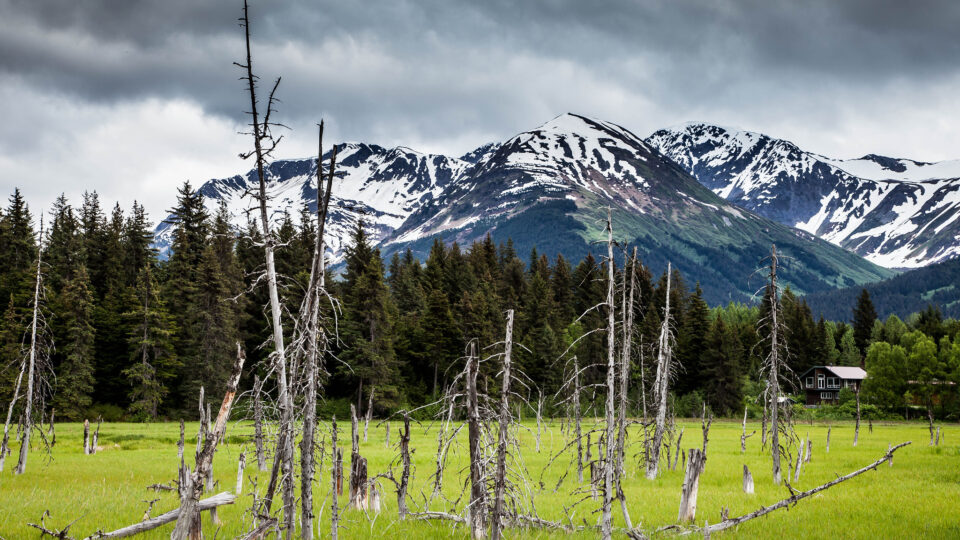
Photo, posted June 10, 2011, courtesy of Peter Rintels via Flickr.

Earth Wise is a production of WAMC Northeast Public Radio.

The Hottest Month (Again)

September 15, 2016 By WAMC WEB

https://earthwiseradio.org/wp-content/uploads/2016/08/EW-09-15-16-The-Hottest-Month-Again.mp3

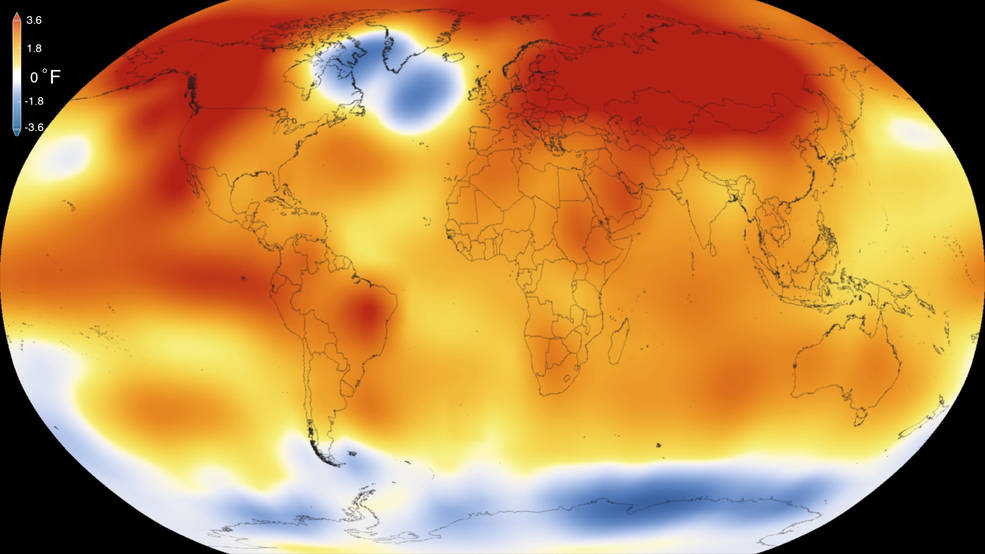
NASA data show that the Earth’s temperature in July was the highest recorded since record-keeping began 136 years ago.  It was also the 10th straight month of record-breaking temperatures and was .18 degrees Fahrenheit higher than the previous hottest July in 2011.

[Read more…] about The Hottest Month (Again)

Primary Sidebar

Recent Episodes

  • An uninsurable future
  • Clean energy and jobs
  • Insect declines in remote regions
  • Fossil fuel producing nations ignoring climate goals
  • Trouble for clownfishes

WAMC Northeast Public Radio

WAMC/Northeast Public Radio is a regional public radio network serving parts of seven northeastern states (more...)

Copyright © 2026 ·