• Skip to primary navigation
  • Skip to main content
  • Skip to primary sidebar

Earth Wise

A look at our changing environment.

  • Home
  • About Earth Wise
  • Where to Listen
  • All Articles
  • Show Search
Hide Search
You are here: Home / Archives for 1970

1970

Americans breathe unhealthy air

June 2, 2025 By EarthWise Leave a Comment

According to the American Lung Association’s annual State of the Air report, at least 156 million Americans – 46% of the population – live with unsafe levels of ozone, particulate pollution, or both.

The report analyzed ozone and particulate pollution levels between 2021 and 2023, during which the worst wildfire season on record took place in Canada.  The report ranked pollution levels in counties and cities across the country on a grading scale from A to F.  At least 156 million people live with air that got the poorest grade of F for at least one of three pollutants.   At least 42 million people live in counties that failed all three pollutant standards measured.

While the report attempts to provide a complete picture of air quality around the country, about two-thirds of counties lack air quality monitoring for ozone or particulate pollution. 

The wildfires in Canada are responsible for much of the increase in air pollution in the past several years.  However, climate projections suggest that the conditions that fueled those fires are likely to become increasingly common.

Air quality standards in the United States have generally been improving since the Clean Air Act was enacted by Congress in 1970.  Since that time, levels of key pollutants have dropped by nearly 80%.  But millions of Americans are still breathing polluted air, leading to both acute and chronic health conditions.

Plans by the Trump administration to loosen environmental regulations and cut funding for air quality research are likely to only make matters worse.

**********

Web Links

Almost Half of Americans Breathe Unhealthy Air, Report Finds

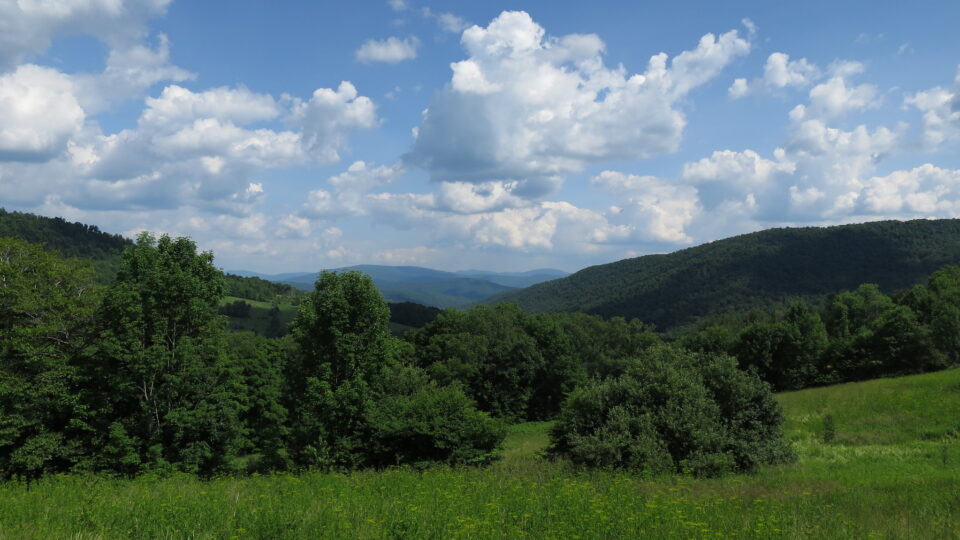
Photo, posted June 8, 2023, courtesy of Anthony Quintano via Flickr.

Earth Wise is a production of WAMC Northeast Public Radio
Air Quality In The U.S.

November 13, 2019 By EarthWise Leave a Comment

Globally, poor air is a serious problem.  According to the World Health Organization, exposure to air pollution is linked to the premature deaths of an estimated 7 million people every year.  In fact, 91% of the people on the planet live in places where air pollution exceeds WHO guideline limits. 

In the United States, air pollution has dramatically improved over the last four decades due in large part to federal regulations put in place under the Clean Air Act of 1970.  Fine particulate matter (known as PM2.5) and other pollution, including ozone, sulphur dioxide, and nitrogen dioxide, have all decreased during this time span. 

But according to recent research, this trend has unfortunately done an about-face.  New data reveals that air pollution has increased nationally since 2016.  An analysis of Environmental Protection Agency data by researchers at Carnegie Mellon University found that, on average, fine particulate pollution increased 5.5% across the country between 2016 and 2018. 

This increase in fine particulate pollution was associated with nearly 10,000 additional premature deaths in the United States during that time period. 

According to researchers, there are several factors likely causing this uptick in unhealthy air, including increases in both driving and the burning of natural gas.  Wildfires out west are also thought to be a major contributor. 

The researchers also suggest that a decrease in enforcement of the Clean Air Act may also be playing a role.  The law put in place strict air pollution standards for vehicles, factories, power plants, and other sources, and is credited with saving hundreds of thousands of lives.

It’s time for clean air to be recognized as a basic human right.

***********

Web Links

America’s Air Quality Worsens, Ending Years of Gains, Study Says

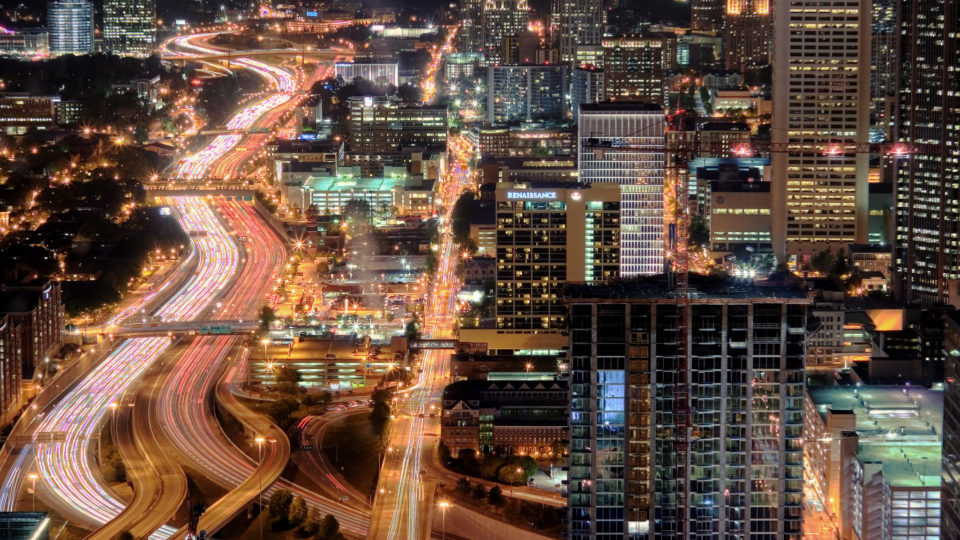
Photo, posted April 6, 2007, courtesy of Brett Weinstein via Flickr.

Earth Wise is a production of WAMC Northeast Public Radio.

Cleaner Air Saves Lives

September 25, 2019 By EarthWise Leave a Comment

A new study by Columbia University has concluded that lower air pollution levels saved an estimated 5,660 lives in New York State in 2012, compared to 2002 mortality levels.

The study looked at New York State levels of the specific type of pollution known as fine particulate matter, referred to as PM2.5.  These microscopic particulates are a mixture of solid particles and liquid droplets that either come from burning fuel or are formed in the atmosphere as a result of complex reactions of chemicals such as sulfur dioxide and nitrogen oxides from power plants, industries, and automobiles.

Long-term exposure to PM2.5 can lead to respiratory and cardiovascular problems.

The study looked at extensive amounts of data to analyze trends in PM2.5 levels across New York State.  The data showed that PM2.5 levels dropped by 28 to 37% between 2002 and 2012.  This was a result of continued progress in cleaner vehicles, the reduction of high sulfur-dioxide emitting coal-burning power plants, and other air pollution reduction programs.  They calculated that this amount of reduction in PM2.5 reduced the air pollution mortality burden for New York State residents by 67% – from 8,410 premature deaths in 2002 to 2,750 deaths in 2012.

The study provides evidence that emission controls on air pollutants – which were initiated by the Clean Air Act of 1970 and later expanded in 1990 – have improved public health across New York State.  According to the researchers, the study is a key step to documenting the health benefits from cleaner air.

**********

Web Links

Air Pollution Cuts Are Saving Lives in New York State

Photo, posted June 29, 2014, courtesy of Paul Comstock via Flickr.

Earth Wise is a production of WAMC Northeast Public Radio.

Earth Day

April 22, 2019 By EarthWise Leave a Comment

Today is Earth Day.  On April 22, 1970, millions of Americas took to the streets in peaceful demonstrations in favor of environmental reform.  Since that first time, Earth Day has now become a global event each year.  Estimates are that as many as a billion people in 192 countries take part in Earth Day events.

This year, the theme for Earth Day is “Protect our Species.”  The focus is on the fact that the world is facing the greatest rate of extinction since the demise of the dinosaurs more than 60 million years ago.

But unlike the extinctions from that time that were linked to so-called acts of god like asteroid collisions, the rapid extinction of species in our world today is mostly the result of human activity.

The global destruction and rapid reduction of plant and wildlife populations are directly linked to climate change, deforestation, habitat loss, trafficking and poaching, unsustainable agriculture, pollution, and pesticides.

In order to stem the tide of destruction, the Earth Day Network is asking people to help raise awareness about the accelerating rate of extinction of millions of species and the causes and consequences of this phenomenon.  We need to push for the creation of policies that protect broad groups of species as well as individual species and their habitats.  There needs to be a global movement that embraces nature and its values. And we need to eat less meat and curtail the use of pesticides and herbicides.

We share the planet with many species, and we need them to be here in order to sustain our own species.  Something to remember on Earth Day 2019.

**********

Web Links

Earth Day Network

Photo, posted January 24, 2012, courtesy of Jonas Bengtsson via Flickr.

Earth Wise is a production of WAMC Northeast Public Radio.

Primary Sidebar

Recent Episodes

  • An uninsurable future
  • Clean energy and jobs
  • Insect declines in remote regions
  • Fossil fuel producing nations ignoring climate goals
  • Trouble for clownfishes

WAMC Northeast Public Radio

WAMC/Northeast Public Radio is a regional public radio network serving parts of seven northeastern states (more...)

Copyright © 2026 ·