• Skip to primary navigation
  • Skip to main content
  • Skip to primary sidebar

Earth Wise

A look at our changing environment.

  • Home
  • About Earth Wise
  • Where to Listen
  • All Articles
  • Show Search
Hide Search
You are here: Home / Archives for water treatment

water treatment

Reducing farm nutrient pollution

December 11, 2024 By EarthWise Leave a Comment

Researchers developing new method to reduce nutrient pollution from farms

When farmers add nutrients to their fields in excess of their crops’ ability to utilize them, these excess nutrients can enter the surrounding environments and create environmental problems.  The primary culprits are nitrogen and phosphorous.  These fertilizer components emerge from fields and enter local waterways in surface runoff.

Researchers at the University of Illinois Urbana-Champaign have developed a form of designer biochar that can provide phosphorous in a time-released fashion and reduce the amount that escapes into the environment.

The researchers used sawdust and lime sludge, which are byproducts from milling and water treatment plants, respectively.  They mixed the two ingredients and formed pellets which were then slow-burned in low-oxygen conditions to create phosphorous-laden designer biochar.  Once the pellets bind all the phosphorous they can hold, they can be spread onto fields where the nutrient is slowly released over time.

They tested the pellets in working field conditions.  The pellets are used to remove phosphorous from drainage water and then can be reused in the field to provide the nutrient to the plants.   

The results were very encouraging.  The biochar proved to be a very effective way to provide phosphorous to crops and then reduce how much phosphorous enters the environment.  The cost of producing the biochar pellets was less than half that of alternative substances for phosphorous removal. 

There is currently no regulation that requires farmers to remove phosphorous from drainage water but there are a growing number of conservation-minded farmers who want to reduce nitrogen and phosphorous losses from their fields.  The idea that the recyclable pellets can both provide and control phosphorous is an attractive one.

**********

Web Links

Scientists tackle farm nutrient pollution with sustainable, affordable designer biochar pellets

Photo, posted July 16, 2016, courtesy of Rick Obst via Flickr.

Earth Wise is a production of WAMC Northeast Public Radio

Cities and rainwater

September 24, 2024 By EarthWise Leave a Comment

Cities across the country are grappling with the problem that bigger, more frequent rainstorms occurring as a result of climate change are overtaxing the systems put in place to handle stormwater.  Cities use a combination of so-called green infrastructure – such as rain gardens and porous pavements – and traditional gray infrastructure, such as pipes, tunnels, and pump stations.

In 2011, Philadelphia drew national attention for its Green City, Clean Waters program that was designed to manage the increasing amount of storm water using mostly green infrastructure.  Thirteen years later, the city is experiencing billions of gallons of polluted stormwater overflowing its sewage outfall pipes each year.  Green infrastructure is cheaper and faster to build, but it is not coping with increasing rainfall.

About 700 U.S. municipalities, mostly in the Northeast and around the Great Lakes, rely on these combined sewer systems.  Based on updated climate projections, many are having to greatly increase gray infrastructure projects that include concrete holding tanks, tunnels, and pipes that can divert and hold onto flows until the rain stops, and water treatment plants can recover.  These projects can take decades to implement and cost billions of dollars.

All across the country, cities are going to need to bite the bullet and make large-scale investments in conventional sewage infrastructure and repairs to stop billions of gallons of raw sewage from running into rivers.  The increased storms present a daunting challenge for America’s cities.

**********

Web Links

Faced With Heavier Rains, Cities Scramble to Control Polluted Runoff

Photo, posted August 29, 2011, courtesy of Reggie via Flickr.

Earth Wise is a production of WAMC Northeast Public Radio

Cleaner Water Using Corn | Earth Wise

May 12, 2021 By EarthWise Leave a Comment

Using corn waste to clean water

Corn is the largest agricultural crop in the U.S., and it is also one of the most wasteful.  About half of the harvest ends up as stover – corn stalks, leaves, husks, and cobs – once the kernels are used for food.

Corn stover has relatively few commercial or industrial uses.  It can be used to produce biofuel, but that is not very energy efficient.  It is sometimes used as a low-quality livestock feed as well.  Mostly, it is just burned if it is used at all.

Researchers at the University of California Riverside have developed an energy-efficient way to make good use of stover by transforming it into activated carbon for use in water treatment.

Activated carbon – often called activated charcoal – is an organic material that is specially treated to contain millions of microscopic pores that make it highly absorbent.  It has many industrial uses, the most common of which is for filtering pollutants out of drinking water.  Most household water filters such as Brita filters as well as the ones built into refrigerators make use of activated carbon.

The Riverside researchers explored methods for producing activated carbon from charred corn stover and found that processing the material with hot compressed water – a process known as hydrothermal carbonization – produced highly absorbent activated carbon with superior properties compared to material produced by slow pyrolysis, where corn stover is charred at increasing temperatures over a long period of time.

According to the researchers, it is important to create approaches that convert waste into high-value materials, fuels, and chemicals in order to create new value streams and eliminate the environmental harm that comes from a so-called “take-make-dispose” economic model.

**********

Web Links

Cleaner Water Through Corn

Photo, posted September 15, 2010, courtesy of the United Soybean Board / the Soybean Checkoff via Flickr.

Earth Wise is a production of WAMC Northeast Public Radio.

Destroying Forever Chemicals | Earth Wise

August 11, 2020 By EarthWise Leave a Comment

PFAS, short for poly and perfluoroalkyl substances, have been used in commercial products since the 1940s.  There are more than 4,000 different chemicals in the class.   Some of the most commonly used PFAS chemicals, like PFOS and PFOA, have long half-lives, which has earned them the moniker “forever chemicals.” 

These dangerous chemicals have not been manufactured in the U.S. since the early 2000s, but they can still be found in various imported goods.  PFAS chemicals have been linked to cancer, birth defects, thyroid disease, and liver damage.  These forever chemicals linger in the environment and scientists have found them in the blood of virtually all Americans.

Researchers at Rice University have recently discovered an efficient catalyst for destroying PFAS forever chemicals.  Unexpectedly, the catalyst was actually in the control group in a study they were performing.

The study, published in the journal Environmental Science and Technology Letters, found that boron nitride, acting as a light-activated catalyst, destroyed PFOA at a faster clip than any previously reported photocatalyst.

The catalyst, boron nitride powder, is a commercially available synthetic mineral that is widely used in makeup, skincare products, thermal pastes for cooling computer chips, and various other industrial products.  The discovery began with dozens of failed experiments on a variety of more promising PFAS catalysts.  But along the way, they found that the boron nitride control material repeatedly yielded positive results.

The research has already attracted the attention of industrial partners seeking to develop off-grid water treatment systems that both protect human lives and support sustainable economic development.

**********

Web Links

Boron nitride destroys PFAS ‘forever’ chemicals PFOA, GenX

Photo, posted April 9, 2009, courtesy of Rex Roof via Flickr.

Earth Wise is a production of WAMC Northeast Public Radio.

Wildfires And The Water Supply

November 12, 2018 By EarthWise Leave a Comment

https://earthwiseradio.org/wp-content/uploads/2018/10/EW-11-12-18-Wildfires-and-the-Water-Supply.mp3

Hotter and dryer conditions are leading to an increasing number of wildfires in North America and elsewhere around the world.  The damage they cause is well-known.  But one aspect of that damage that tends to be overlooked is the impact on aquatic environments and drinking water supplies.

[Read more…] about Wildfires And The Water Supply

Tomato Energy

April 25, 2016 By WAMC WEB

https://earthwiseradio.org/wp-content/uploads/2016/04/EW-04-25-16-Tomato-Energy.mp3

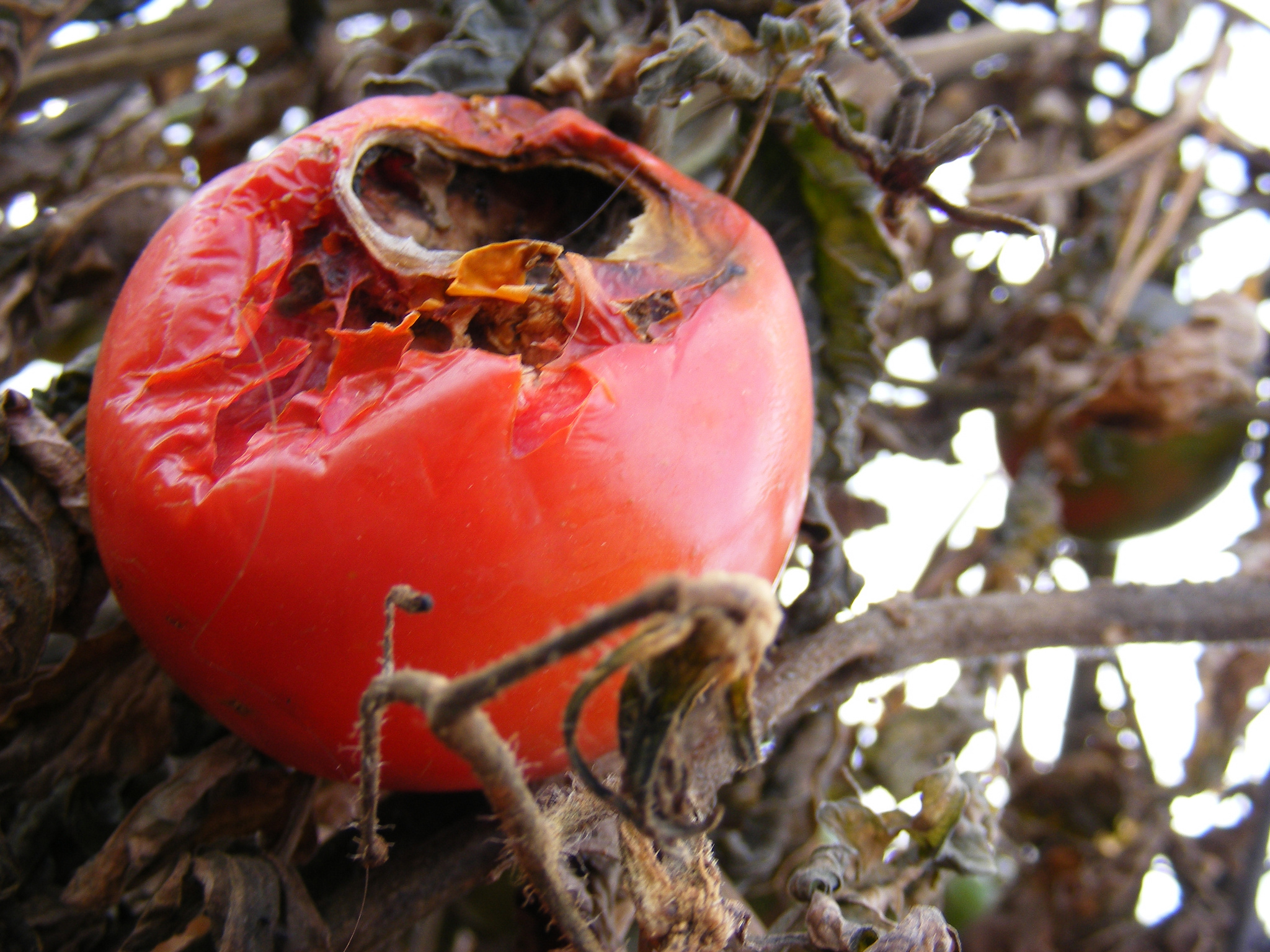
People continue to find new ways to generate energy from unusual sources.  A team of scientists at several universities recently reported on a new fuel cell that uses tomato waste left over from harvests in Florida.

[Read more…] about Tomato Energy

Land, Water and Energy

January 28, 2016 By WAMC WEB

https://earthwiseradio.org/wp-content/uploads/2016/01/EW-01-28-16-Land-Water-and-Energy.mp3

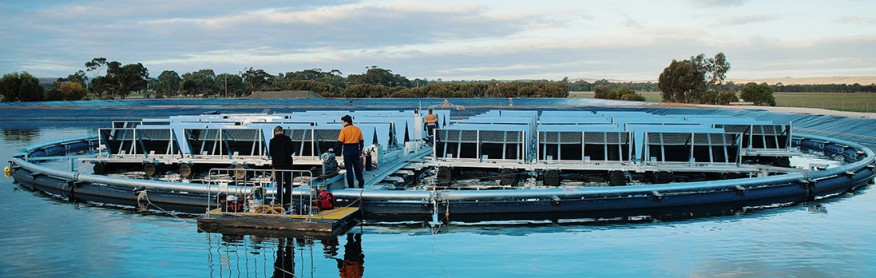
The city of Holtville in California is sometimes called the “Carrot Capital of the World.”  This agricultural community has signed an agreement with Australian company Infratech to build a floating solar power system for its water treatment plant.

[Read more…] about Land, Water and Energy

Primary Sidebar

Recent Episodes

  • An uninsurable future
  • Clean energy and jobs
  • Insect declines in remote regions
  • Fossil fuel producing nations ignoring climate goals
  • Trouble for clownfishes

WAMC Northeast Public Radio

WAMC/Northeast Public Radio is a regional public radio network serving parts of seven northeastern states (more...)

Copyright © 2026 ·