• Skip to primary navigation
  • Skip to main content
  • Skip to primary sidebar

Earth Wise

A look at our changing environment.

  • Home
  • About Earth Wise
  • Where to Listen
  • All Articles
  • Show Search
Hide Search
You are here: Home / Archives for water table

water table

Rising seas are destroying buildings

April 8, 2025 By EarthWise Leave a Comment

Alexandria is the second largest city in Egypt and is the largest city on the Mediterranean coast.  Its history goes back over 2,300 years and it was once home to a lighthouse that was among the Seven Wonders of the Ancient World and a Great Library that was the largest in the ancient world.  The modern city has more than 6 million residents but still has many historic buildings and ancient monuments.  But perhaps not for long.

Rising seas and intensifying storms are taking a toll on the ancient port city.  For centuries, Alexandria’s historic structures have endured earthquakes, storm surges, tsunamis, and more.  They are truly marvels of resilient engineering.  But now, climate change is undoing in decades what took millennia for humans to create.

Over the past two decades, the number of buildings collapsing in Alexandria has risen tenfold.   Buildings are collapsing from the bottom up as a rising water table weakens soil and erodes foundations.  Since 2001, Alexandria has seen 290 buildings collapse.  Comparing present-day satellite imagery with decades-old maps, the authors of a study by the Technical University of Munich have tracked the retreat of Alexandria’s shorelines to determine where seas have intruded into groundwater. The authors say that more than 7,000 buildings in Alexandria are at risk.  They call for building sand dunes and planting trees along the coast to block encroaching seawater.

The true cost of this gradual destruction goes far beyond bricks and mortar.  This is the gradual disappearance of historic coastal cities.  Alexandria is a warning for such cities around the world.

**********

Web Links

In This Storied Egyptian City, Rising Seas are Causing Buildings to Crumble

Photo, posted September 11, 2012, courtesy of Sowr via Flickr.

Earth Wise is a production of WAMC Northeast Public Radio
Beavers Are Flooding The Warming Arctic | Earth Wise

March 14, 2022 By EarthWise Leave a Comment

Beavers are flooding the warming Arctic

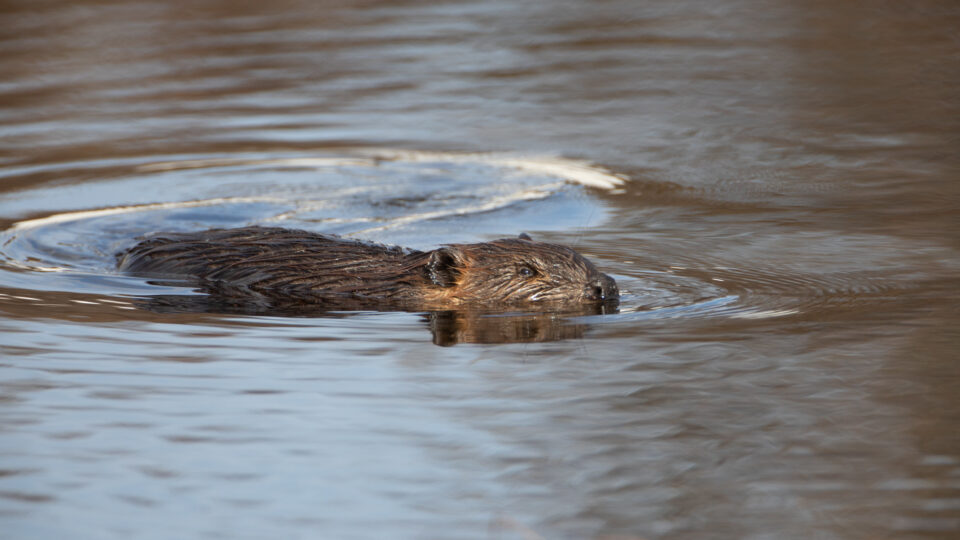
The accelerating warming in the Arctic has transformed the region into a warmer, wetter, and more diverse environment.  Warming temperatures have encouraged the increasing growth of vegetation, particularly shrubs that provide beavers with bark to eat and branches to build with.  Warming temperatures also mean that lakes and streams freeze solid for shorter periods of time or not at all, allowing beavers to pursue their construction projects for longer periods during the year.

Prior to the mid-1970s, residents of the Alaskan Arctic encountered few beaver ponds.  In 2018, researchers using satellite imagery mapped 12,000 beaver ponds in Alaskan tundra.

Beavers are causing major changes in the streams and floodplains that many small Alaskan villages depend upon for food, water, and navigation.  As the rodents transform lowland tundra ecosystems, they are eliminating food sources, deteriorating water quality, and making it difficult to navigate waterways.

The migration of beavers across the Arctic landscape is largely a result of climate change.  But it is also becoming one of the factors amplifying climate change.  Scientists are trying to figure out the degree of permafrost thawing that beaver dam-and-den building is causing and how fast these defrosted organic soils will degrade and release trapped carbon and methane.

Beaver dams alter the hydrology of streams by slowing the flow, storing and spreading water to create wetlands, raising the water table, and lowering the oxygen content of the water. 

Climate-driven changes in species distributions affect human well-being as entire ecosystems continue to change.  Shifts in animal habitat stimulated by climate change could have profound consequences across the globe.

**********

Web Links

Beavers Are Flooding the Warming Alaskan Arctic, Threatening Fish, Water and Indigenous Traditions

Photo, posted June 12, 2018, courtesy of Peter Pearsall/USFWS via Flickr.

Earth Wise is a production of WAMC Northeast Public Radio.

Storing CO2 Underground | Earth Wise

February 19, 2020 By EarthWise Leave a Comment

carbon dioxide and storage

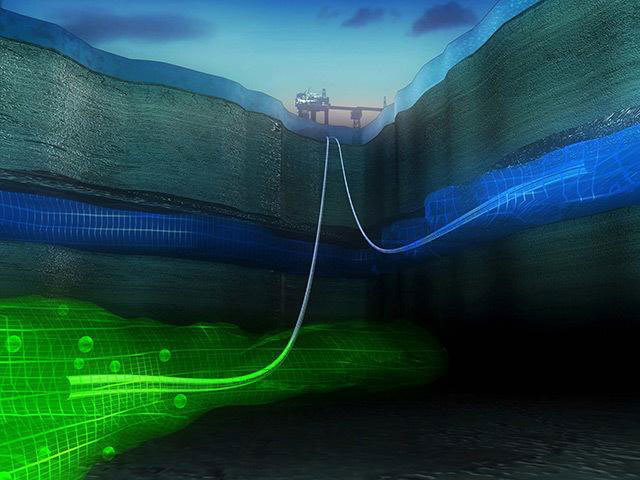
Capturing the carbon dioxide emitted from power plants and factories and safely storing it so it can’t enter the atmosphere has long been an attractive and desirable goal.  Even though the use of renewable energy sources has been expanding rapidly, it will still be a long time before fossil fuel plants go away entirely.

The most widely considered method of carbon capture and storage is underground storage.  The idea is to send the carbon dioxide through a pipeline to a place where underground rock formations can store it safely and permanently.  Typically, it would be pumped deep underground – often more than half a mile down – and the site would be monitored to make sure the CO2 doesn’t leak back up to the atmosphere or into the water table.

A new study looked at how much carbon dioxide the suitable geological formations on Earth can store.  The conclusion of the study is that drilling about 12,000 carbon storage wells globally could provide enough capacity to store 6 to 7 billion tons of CO2 a year by 2050.  That is about 13% of global emissions.

Drilling 12,000 wells is equivalent to the amount of oil and gas drilling that has taken place just in the Gulf of Mexico over the last 70 years.  The study identified locations worldwide that could handle the pressures associated with storing injected carbon dioxide.

So far, less than two dozen projects exist that capture and store carbon dioxide from fossil fuel plants.  In total, these plants can capture about 36 million tons a year, which is far less than what is needed.  But the new study at least shows that finding places to put captured carbon is not a problem.

**********

Web Links

Ample Geological Capacity Exists to Store Large Quantities of Captured CO2

Photo courtesy of Equinor.

Earth Wise is a production of WAMC Northeast Public Radio.

Primary Sidebar

Recent Episodes

  • An uninsurable future
  • Clean energy and jobs
  • Insect declines in remote regions
  • Fossil fuel producing nations ignoring climate goals
  • Trouble for clownfishes

WAMC Northeast Public Radio

WAMC/Northeast Public Radio is a regional public radio network serving parts of seven northeastern states (more...)

Copyright © 2025 ·