• Skip to primary navigation
  • Skip to main content
  • Skip to primary sidebar

Earth Wise

A look at our changing environment.

  • Home
  • About Earth Wise
  • Where to Listen
  • All Articles
  • Show Search
Hide Search
You are here: Home / Archives for water bottles

water bottles

Using CO2 To Convert Seawater Into Drinking Water | Earth Wise

October 27, 2020 By EarthWise Leave a Comment

Converting Seawater into Drinking Water

A chemist at the University of Copenhagen has invented a technology that uses carbon dioxide to convert seawater into drinking water within minutes.  This desalination technology has the potential to replace electricity with CO2 and be used in survival gear and in large-scale industrial plants in places where people don’t have clean drinking water.

Over 800 million people worldwide lack access to clean drinking water and that number is growing rapidly.  Seawater is a vital source of drinking water in many parts of the world, but desalination faces the major challenge of being highly energy intensive.  Desalination plants use huge amounts of fossil fuel-generated electricity and therefore contribute to climate change.

The Copenhagen technology is reminiscent of a SodaStream machine.  Carbon dioxide is added to water, initiating a chemical reaction.  But instead of using it for bubbly carbonation, it is used to separate salt from water.  It works by adding a chemical called CO2-responsive diamine to saltwater.  The diamine compound binds with the added CO2 and acts as a sponge to absorb the salt, which can then be separated.  The entire process takes one to ten minutes.  Once the CO2 is removed, the salt is released again, allowing the diamine to be reused for several more rounds of desalination.

In the laboratory, the method removed 99.6% of the salt in seawater.  The technology is still being developed to lower its price and optimize the recycling process.  It is also being tested on a small scale in the form of water bottles fitted with special filters that can be used in lifeboats or in other outdoor settings.  Ultimately, it could be used to greatly reduce the energy consumption of desalination plants.

**********

Web Links

Chemist uses CO2 to convert seawater into drinking water

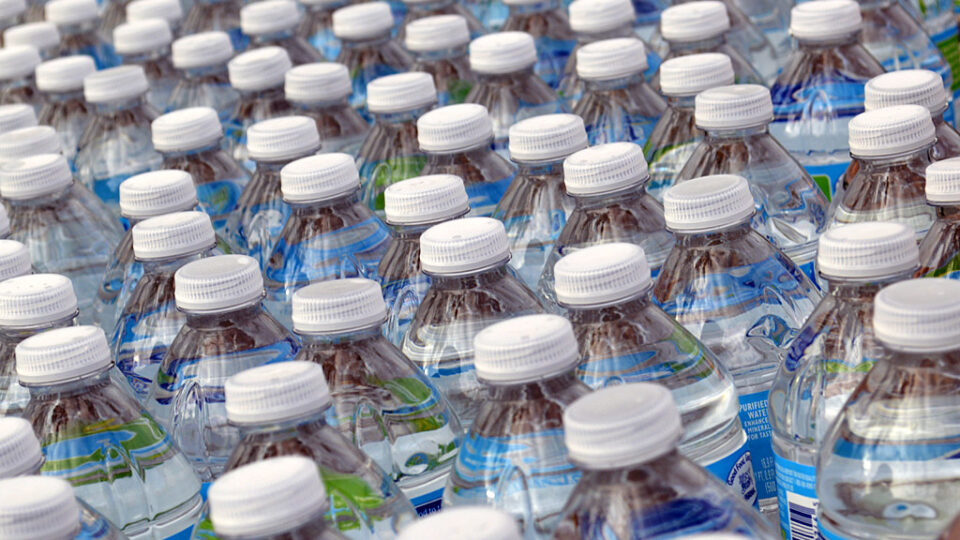
Photo, posted January 10, 2015, courtesy of Daniel Orth via Flickr.

Earth Wise is a production of WAMC Northeast Public Radio.

Strategies To Promote Green Products | Earth Wise

March 26, 2020 By EarthWise Leave a Comment

downplay greenness to consumers to sell products

Green products are environmentally-friendly products with features that are less harmful to people and the planet.  For instance, green products may require fewer resources to produce, consume less energy, contain non-toxic ingredients, or create fewer emissions.  Some examples include biodegradable waste bags, LED light bulbs, low-flow shower heads, organic cotton clothing, and reusable coffee cups and water bottles.  

But according to new research from two universities in the United Kingdom, companies looking to promote their latest environmentally-friendly product should actually downplay its greenness if they want consumers to buy it.

The study, by researchers from the University of East Anglia and the University of Leeds, found advertising that highlights a product’s green attributes can lead consumers to associate it with weak performance.  The findings, which were recently published in the Journal of Advertising, indicate that companies should downplay a product’s green qualities and instead promote it on more traditional aspects.

An example of these two distinct advertising strategies – green emphasis versus green understatement – can be found in the auto industry.  Car manufacturer Toyota prominently highlights the low emissions and low fuel consumption features of the Prius, employing what the researchers term as ‘explicit signals’.  In contrast, automaker Tesla reduces the prominence of its green attributes, focusing instead on its cars’ acceleration, handling, and other performance-related characteristics.  This is known as the ‘implicit signals’ marketing approach.

After conducting two experiments, the research team found that the implicit, rather than explicit, marketing approach about greenness leads to higher performance evaluations and purchase intent.

Consumers appear more likely to engage in pro-social actions when it’s accompanied by some form of personal benefit. 

**********

Web Links

Highlighting product greenness may put consumers off buying

Photo, posted December 21, 2019, courtesy of Flickr.

Earth Wise is a production of WAMC Northeast Public Radio.
Plastic Bottles

November 19, 2018 By EarthWise Leave a Comment

https://earthwiseradio.org/wp-content/uploads/2018/10/11-19-18-Plastic-Bottles.mp3

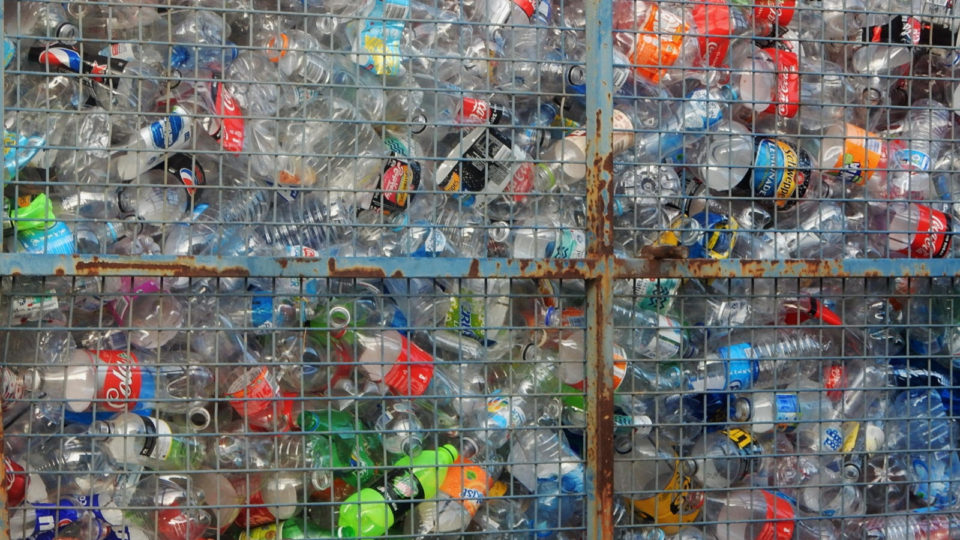
Plastic straws have become outcasts these days and for good reasons.  But they are not the only bad actors in the world of plastic products.  Single-use plastic water bottles are another example of a real trouble maker.

[Read more…] about Plastic Bottles

Primary Sidebar

Recent Episodes

  • An uninsurable future
  • Clean energy and jobs
  • Insect declines in remote regions
  • Fossil fuel producing nations ignoring climate goals
  • Trouble for clownfishes

WAMC Northeast Public Radio

WAMC/Northeast Public Radio is a regional public radio network serving parts of seven northeastern states (more...)

Copyright © 2026 ·