
• Skip to primary navigation
  • Skip to main content
  • Skip to primary sidebar

Earth Wise

A look at our changing environment.

  • Home
  • About Earth Wise
  • Where to Listen
  • All Articles
  • Show Search
Hide Search
You are here: Home / Archives for warms

warms

Cooling cities

September 2, 2024 By EarthWise Leave a Comment

Cooling cities with white roofs

As the climate warms, city dwellers tend to suffer from extreme heat more than people in rural areas because of the urban heat island effect. Extensive surfaces of man-made materials like concrete, asphalt, and brick absorb the sun’s energy and lead to temperatures well above those in the surrounding countryside.

Cities can take countermeasures that include creating urban green spaces full of plants that cool the surrounding air and the use of cool roofs that reflect the sun’s energy back into space.  Local governments in many cities provide incentives for planting more trees.  But more could be accomplished by encouraging the use of cool roofs.

The heat island effect has been well-known for a long time, but scientists are only recently learning what interventions are most effective. A recent study modeled two days of extreme heat in London in 2018 and compared the potential effects of cool roofs, green roofs, roof-top solar panels, and ground level vegetation. They found that cool roofs are the most effective way to lower temperatures and would have reduced London temperatures by 2 degrees on average and as much as 3.6 degrees in some places.

Cool roofs are created by swapping out dark, heat-absorbing roofing materials with reflective materials or simply by painting roofs white. Los Angeles is the first major city to require that all new residential construction includes a cool roof. 

Apart from the effectiveness of passive cooling techniques, using them also reduces the reliance upon air conditioning to protect people from heat.  Air conditioners themselves contribute considerable amounts of heat to urban environments.

**********

Web Links

The surprisingly simple way cities could save people from extreme heat

Photo, posted February 21, 2024, courtesy of Warren LeMay via Flickr.

Earth Wise is a production of WAMC Northeast Public Radio

Climate change and fish migration

May 17, 2024 By EarthWise Leave a Comment

Climate change is changing the distribution of fish species

The warming climate is changing the distribution of fish species.  Researchers at the University of Adelaide in Australia have observed that tropical fish species are moving into temperate Australian waters.

The Eastern Australian Current is strengthening as the climate warms and larvae of tropical fish are getting caught in the current and moving into more temperate regions.  These larvae would not normally survive in the cooler Australian ocean water, but the warming current keeps the baby fish warm and increases their chances for survival.  The fish migration observed in the study is an ongoing process that has strengthened in the last few decades due to ocean warming.

The novel populations of tropical fish in these temperate ecosystems are not having much impact at the present time, but they may do so in the future.  The water is still cooler than the fishes’ natural environment and therefore they do not grow to their maximum size.  As a result, they don’t represent stiff competition for the native species – at least not yet.

As the ocean temperatures continue to rise, these tropical species will eventually grow to their full size and their diets will overlap more and more with those of temperate fish species.  Tropical herbivores tend to overgraze temperate kelp while the impact of tropical fish that eat invertebrates is less well understood.  Tropical fish with varied diets are the most successful invaders.  The ultimate effects on temperate ecosystems remain to be seen but survival may become difficult for the native fish in rapidly warming temperate ocean environments.

**********

Web Links

Tropical fish are invading Australian ocean water

Photo, posted March 28, 2017, courtesy of Ryan McMinds via Flickr.

Earth Wise is a production of WAMC Northeast Public Radio
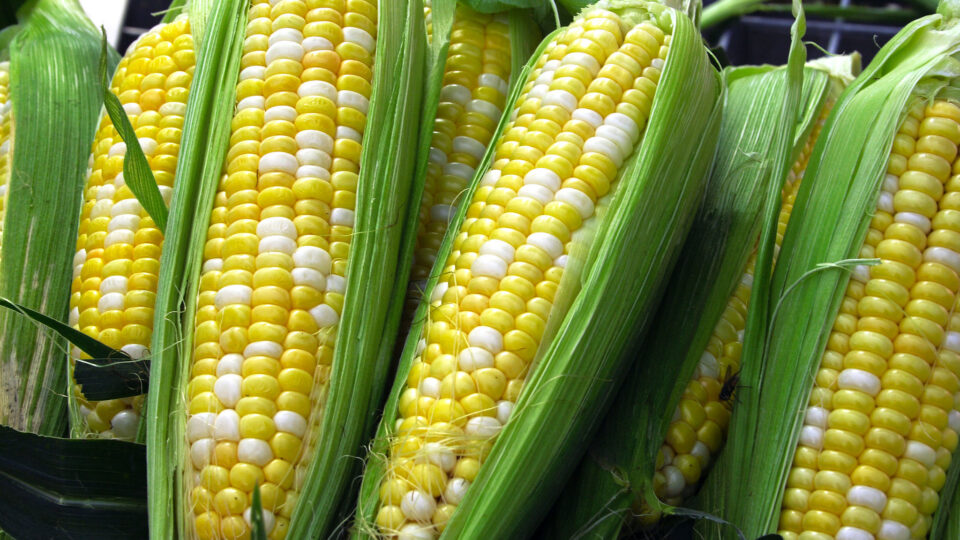
Airplanes, corn, and groundwater

January 11, 2024 By EarthWise Leave a Comment

Is replacing traditional jet fuel with ethanol a good idea for the climate?

The aviation industry wants to slash its greenhouse gas emissions.  One proposed strategy is to replace ordinary jet fuel with ethanol.  Ethanol in this country mostly comes from corn.  The airlines are enthusiastic about the idea; corn farmers are enthusiastic about the idea.  Ethanol suppliers are obviously enthusiastic about it.  But is it a good idea?

Today, nearly 40% of America’s corn crop is turned into ethanol.  Twenty years ago, the figure was around 10%.  The massive growth was the result of mandates for ethanol augmentation of gasoline for environmental reasons.

But the environmental benefits of corn ethanol have always been controversial at best when all the energy factors are considered. But apart from that, a very serious issue is that corn is a water-intensive crop, and it can take hundreds of gallons of water to produce a single gallon of ethanol.  As the climate warms and corn crops expand, groundwater in many corn-growing areas is being increasingly depleted and groundwater provides half our drinking water and meets far more than just the needs of corn farmers.

Corn farmers and ethanol producers see the rapid growth of electric vehicles as a threat to their lucrative business of supplying the auto fuel industry.  The ambitious goals of the airline industry to reduce its emissions would likely require nearly doubling ethanol production.

The situation is a powerful example of the tradeoffs that can arise as the world tries to make the transition away from fossil fuel.  Even green solutions can have their own environmental cost and sometimes that cost may be too steep.

**********

Web Links

Airlines Race Toward a Future of Powering Their Jets With Corn

Photo, posted September 2, 2007, courtesy of Rosana Prada via Flickr.

Earth Wise is a production of WAMC Northeast Public Radio
Two Lost Lakes Return To California | Earth Wise

May 10, 2023 By EarthWise Leave a Comment

Two lost lakes return to California following recent rains

The recent siege of powerful storms in California driven by a series of atmospheric rivers has had a significant effect on the severe drought that has plagued most of the state for many years.  Many of the state’s reservoirs are at the highest level they have been for decades.   The snowpack in the Sierras is well over 200% of its historical average.  Many parts of the state are no longer considered to be in drought conditions, and, in fact, flooding has been a serious problem in some areas.  This flooding has had some surprising results.

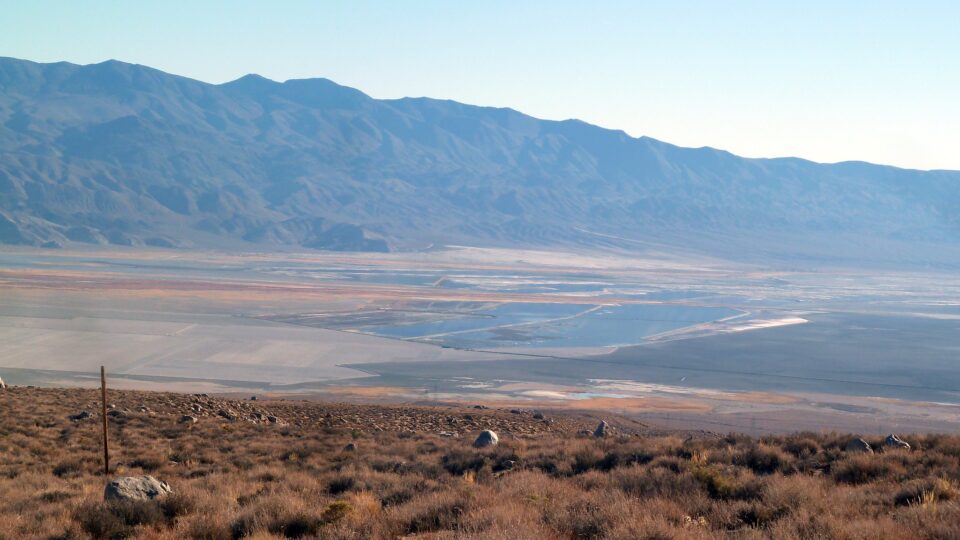
Two California lakes that drained a century ago have reappeared as a result of floodwaters from the recent storms.

Tulare Lake, in California’s Central Valley used to be fed by rain and snowmelt from the Sierras.  A system of dams and canals constructed in the early 20th century to support regional agriculture diverted water away from the lake.  It used to be the largest freshwater lake in the West but farmers ultimate planted crops in the dried lakebed.

The atmospheric river events in March inundated that farmland and once again there is water in Tulare Lake.

Owens Lake, on the eastern side of the Sierra Nevada, was long fed by mountain streams.  The 1913 construction of the Los Angeles Aqueduct redirected water to that city and desiccated the lake.   Floodwaters in March caused a partial collapse of the aqueduct and when the spill gates on the aqueduct were opened to drain the damaged areas, floodwaters poured in and partially refilled the lake.

California has suffered from drought for many years.  With its massive snowpack, as the weather warms, the state may face even more flooding.

**********

Web Links

Two Long-Drained California Lakes Refilled by Floodwaters, Satellite Images Show

Photo, posted November 10, 2014, courtesy of CN via Flickr.

Earth Wise is a production of WAMC Northeast Public Radio

Native Species Or Invasive Species? | Earth Wise

February 27, 2020 By EarthWise Leave a Comment

climate change is transforming the distribution of biodiversity

For decades, conservation biology has characterized the movement of species into new habitats as potential invasions of alien species that pose serious dangers to local ecosystems and resident species.  Wild species are classified as either native or alien.  But this way of looking at the natural world is becoming increasingly controversial.

As the world warms, a mass exodus of tens of thousands of species is transforming the distribution of biodiversity.  Scientists have documented countless species shifting their ranges towards the poles, higher up into the mountains, and deeper into the oceans in response to the changing climate.

Deciduous shrubs have spread into the Arctic tundra.  Tropical fish have arrived in the kelp forests of the eastern Mediterranean. 

A growing number of scientists now say that continuing to base conservation policy on the native-alien dichotomy may actually endanger biodiversity.  The climate-driven range shifts may be the only way for many species to survive.  Furthermore, only a small fraction of new arrivals may actually endanger resident species and ecosystems.

There are real distinctions between climate-displaced species and disruptive alien species introduced through global trade and travel.  Among other things, climate-displaced species tend to shift their ranges alongside other species they have co-evolved with.

There is talk of establishing a Climate Change Redistribution Treaty that would create a transnational system to manage species shifting across geopolitical and biogeographical borders.  The assumptions traditionally made as to which species to protect, which to leave to their own devices,  and which to eradicate are no longer valid and the time has come to base conservation policies on the new reality.

**********

Web Links

Native Species or Invasive? The Distinction Blurs as the World Warms

Photo, posted March 21, 2011, courtesy of Flickr.

Earth Wise is a production of WAMC Northeast Public Radio.

Primary Sidebar

Recent Episodes

  • An uninsurable future
  • Clean energy and jobs
  • Insect declines in remote regions
  • Fossil fuel producing nations ignoring climate goals
  • Trouble for clownfishes

WAMC Northeast Public Radio

WAMC/Northeast Public Radio is a regional public radio network serving parts of seven northeastern states (more...)

Copyright © 2026 ·