• Skip to primary navigation
  • Skip to main content
  • Skip to primary sidebar

Earth Wise

A look at our changing environment.

  • Home
  • About Earth Wise
  • Where to Listen
  • All Articles
  • Show Search
Hide Search
You are here: Home / Archives for vertical

vertical

Advantages of vertical farming

June 19, 2025 By EarthWise Leave a Comment

Vertical farming has been increasingly used for leafy greens like lettuce and kale, as well as for herbs and a few fruits like strawberries and tomatoes.  A recent study by the Technical University of Munich has investigated the use of vertical farming for a much broader range of foods.  The study looked at the positive effects of vertical farming on both yield and environmental impact.

Traditional agriculture can reach its limits as a result of extreme weather events or in areas of high population density and resultant high demand.   With vertical farming, food can be grown close to consumers independent of weather and can make very efficient use of space.

The Proteins4Singapore study investigated the potential of a 10-layer vertical farming system cultivating crops, algae, mushrooms, insects, fish, and cultivated meat.  Many of these things are not currently part of many people’s diets.  But these foods can increase the protein yield per cultivation area nearly three hundredfold for crops and 6,000-fold for mushrooms and insects. 

Mushrooms and insects are examples of foods that require little light and cultivating them reduces energy consumption and, therefore, associated costs.

The biggest challenges for controlled environment agriculture – which is what vertical farming is – are the high energy demands for cultivation and the social acceptance.  Some of the foods that are especially well-suited to vertical farming – such as algae and insects – are not generally accepted by many consumers.  Controlled environment agriculture can revolutionize food production, but it will take a combination of technological advances, policy initiatives, and public engagement.

**********

Web Links

Vertical Farming to increase yields and reduce environmental impact

Photo, posted October 21, 2022, courtesy of Fred Miller / University of Arkansas System Division of Agriculture via Flickr.

Earth Wise is a production of WAMC Northeast Public Radio
Does vertically-grown food taste different?

January 2, 2024 By EarthWise Leave a Comment

Vertical farming is a method of producing crops in vertically stacked layers or surfaces typically in a skyscraper, used warehouse, or shipping container.  Modern vertical farming uses indoor farming techniques and controlled-environment agriculture technology. 

Vertical farming has the potential to be one of the solutions to food insecurity in parts of the world where crop production is limited by climate change or other environmental factors.  Vertical farming reduces water and land use, reduces nutrient emissions, and could eliminate the need for pesticides.  It also allows more food to be grown locally and with higher yields.

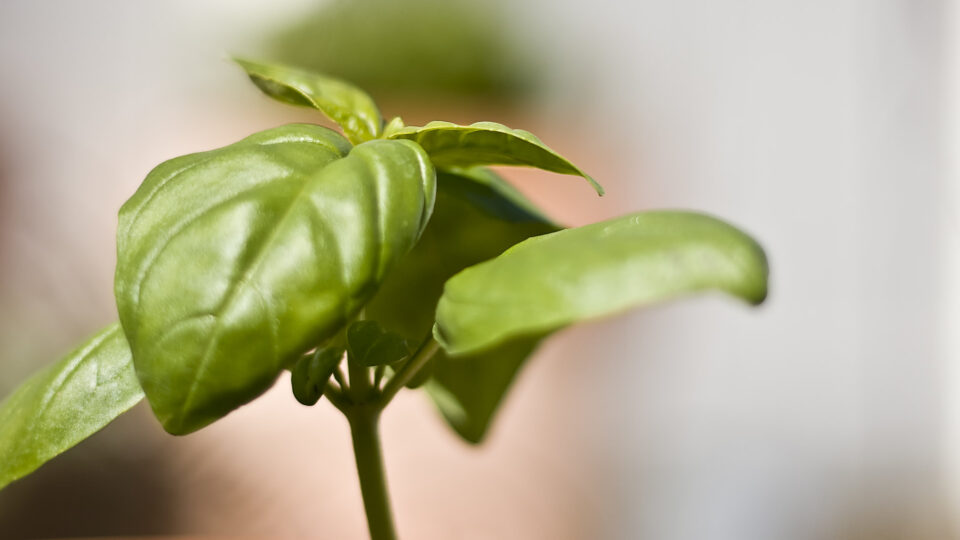
But some critics of vertically-grown veggies say they look pale, artificial, and taste bland.  In the first study of its kind, a research team led by scientists from the University of Copenhagen in Denmark sought to investigate whether these consumer prejudices hold true.

The research team asked 190 participants to blind taste test arugula, baby spinach, pea shoots, basil, and parsley grown in vertical farming and compare the taste and appearance to those same leafy greens grown organically in soil. 

Overall, the organic greens grown traditionally narrowly beat out the vertically-grown ones in the study, but it was very close.  For example, when asked to rate arugula on a scale of 1-9 with 9 being best, the participants gave both types a 6.6.  There was no clear winner between basil, baby spinach, and pea shoots.  The only clear winner was organically-grown parsley. 

The study debunks some myths about vertically-grown food and should help pave the way for more widespread adoption of this efficient method to grow tasty and nutritious food. 

**********

Web Links

A delicious surprise: Vertically farmed greens taste as good as organic ones

Photo, posted May 11, 2009, courtesy of Cliff Johnson via Flickr.

Earth Wise is a production of WAMC Northeast Public Radio

Floating Sea Farms | Earth Wise

October 18, 2023 By EarthWise Leave a Comment

Researchers at the University of South Australia have designed a self-sustaining solar-driven system that turns seawater into fresh water and grows crops without any involvement.  In theory, such a system could help address the growing problems of freshwater shortages and inadequate food supplies as the world’s population continues to increase.

The system can be described as a vertical floating sea farm.  It is made up of two chambers:  an upper layer similar to a greenhouse and a lower chamber for water harvesting.

Clean water is supplied by an array of solar evaporators that soak up seawater, trap the salts in the evaporator body and, heated by the sun, release clean water vapor into the air which is then condensed on belts that transfer the water into the upper plant growth chamber.

The researchers tested the system by growing broccoli, lettuce and bok choi on seawater surfaces without maintenance or additional clean water irrigation.  The system was powered entirely by solar light.

The design is only a proof-of-concept at this point.   The next step is to scale it up using an array of individual devices to increase plant production. 

The futuristic potential for such technology would be huge farm biodomes floating on the ocean.  The UN estimates that by 2050, nearly 2.5 billion people are likely to experience water shortages while the global supply of water for irrigation is expected to decline by 19%.  Nearly 98% of the world’s water is in the oceans.  Harnessing the sea and the sun to address growing global shortages could be the way to go.

**********

Web Links

Floating sea farms: a solution to feed the world and ensure freshwater by 2050

Photo, posted February 11, 2015, courtesy of Ed Dunens via Flickr.

Earth Wise is a production of WAMC Northeast Public Radio
An Indoor Farm In Upstate New York | Earth Wise        

March 11, 2022 By EarthWise Leave a Comment

Indoor farms to help feed the world

Vertical farming is the practice of growing crops in vertically stacked layers, generally under controlled environments and using soilless farming techniques like hydroponics, aquaponics, and aeroponics.   Vertical farms are housed in structures such as buildings, shipping containers, tunnels, and abandoned mineshafts.

The potential advantages of vertical farms are that they are very efficient in terms of the amount of land required to produce a given amount of crop, they are resistant to weather, and they allow crops to be produced in close proximity to where they will be used.

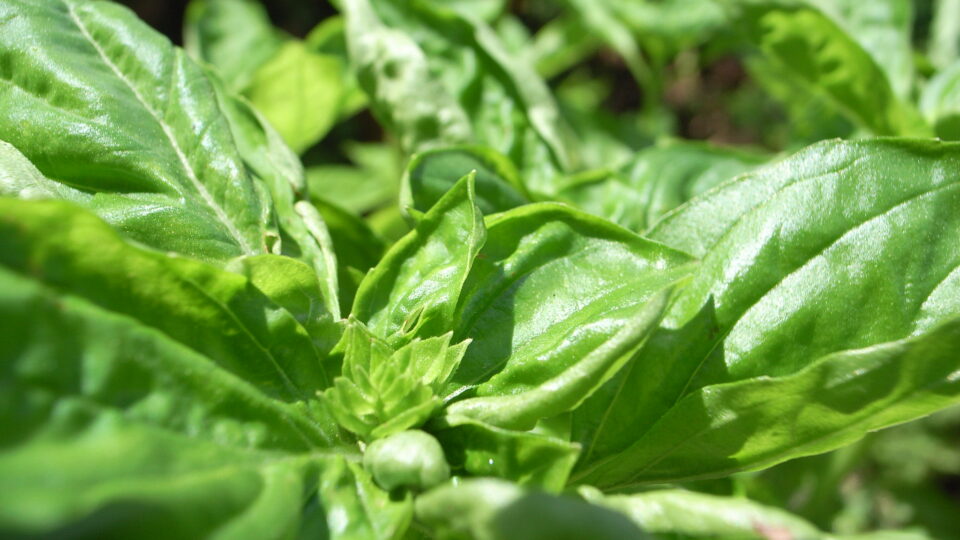
The vacant third floor of a building in downtown Glens Falls, New York is about to become the home of a small vertical farm.  The facility will be used to hydroponically grow things like fresh basil, lettuce, and fruits to be used by nearby restaurants.  In fact, the first floor of the building is a restaurant that will be a customer for the crops growing upstairs.  Other local restaurants are likely to benefit as well.

Th pilot program is being funded by a grant from the Smart Cities Innovation Partnership that the city applied for in 2020.  Glens Falls is partnering with Re-Nuble, a New York City-based renewability and sustainability firm.  Apart from the vertical farm project, Re-Nuble also advises on reduction of food waste by composting and on the selection of energy-efficient equipment.

The pilot program will run for a year and the results will be used for scaling it up to a larger vertical farm.  Vertical farms like these are not intended to replace conventional farms but can supplement the existing food stream and provide items that are hard to obtain during the year.

**********

Web Links

Glens Falls is fitting a farm inside a downtown building

Photo, posted July 15, 2007, courtesy of Toshiyuki Imai via Flickr.

Earth Wise is a production of WAMC Northeast Public Radio.

Rigs To Reefs

March 29, 2019 By EarthWise Leave a Comment

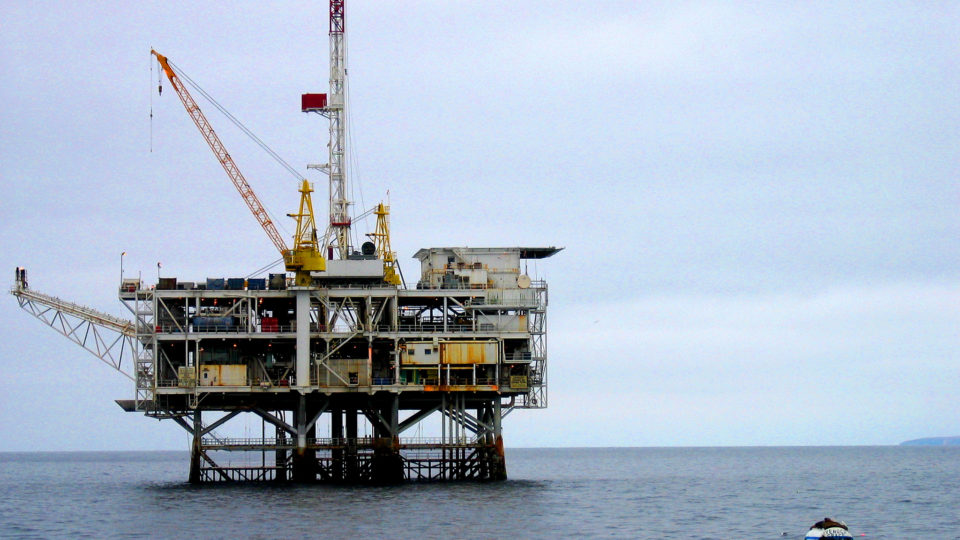
There are about 6,000 offshore oil platforms in the world’s oceans.  They have an immense presence physically, financially and environmentally.  As these massive structures extract hydrocarbons from deep beneath the sea, they also undergo a remarkable transformation under the water.  The enormous substructures that support the platforms become vertical reefs, home to millions of individual plants and animals.

Over time, many oil platforms are decommissioned, and their owners are faced with the choice of either removing them entirely or transitioning them into permanent reefs.   Traditional practice was to restore the site to its original condition, but more recently the idea of “reefing” old platforms has gained popularity.  As of 2016, more than 11% of decommissioned platforms in the U.S. portion of the Gulf of Mexico have become permanent reefs.

Decommissioning and completely removing a platform is a daunting and pricey proposition.  The most recent estimate for removing all platforms off the coast of California alone totals $8 billion.  Modifying the platforms to serve as permanent reefs cuts these costs significantly, especially those associated with hauling, cleaning and disposing of the underwater support structure, which will have thousands of tons of sea-life clinging to it by the time it is removed.

Converting the structure into a permanent reef means making it free of any hydrocarbons or other hazardous materials. But this is still a far cheaper venture than total removal.  Studies of oil rigs as underwater habitats have shown them to be some of the most productive in the world.  They are 3-dimensional reefs whose open construction allows currents to pass through bringing lots of nutrients.

Over time, more and more oil platforms will be decommissioned. Many may end up remaining as permanent homes for undersea life.

**********

Web Links

Rigs to Reefs

Photo, posted August 21, 2011, courtesy of Marianne Muegenburg via Flickr

Earth Wise is a production of WAMC Northeast Public Radio.

Primary Sidebar

Recent Episodes

  • An uninsurable future
  • Clean energy and jobs
  • Insect declines in remote regions
  • Fossil fuel producing nations ignoring climate goals
  • Trouble for clownfishes

WAMC Northeast Public Radio

WAMC/Northeast Public Radio is a regional public radio network serving parts of seven northeastern states (more...)

Copyright © 2026 ·