• Skip to primary navigation
  • Skip to main content
  • Skip to primary sidebar

Earth Wise

A look at our changing environment.

  • Home
  • About Earth Wise
  • Where to Listen
  • All Articles
  • Show Search
Hide Search
You are here: Home / Archives for varied

varied

Climate change and fish migration

May 17, 2024 By EarthWise Leave a Comment

Climate change is changing the distribution of fish species

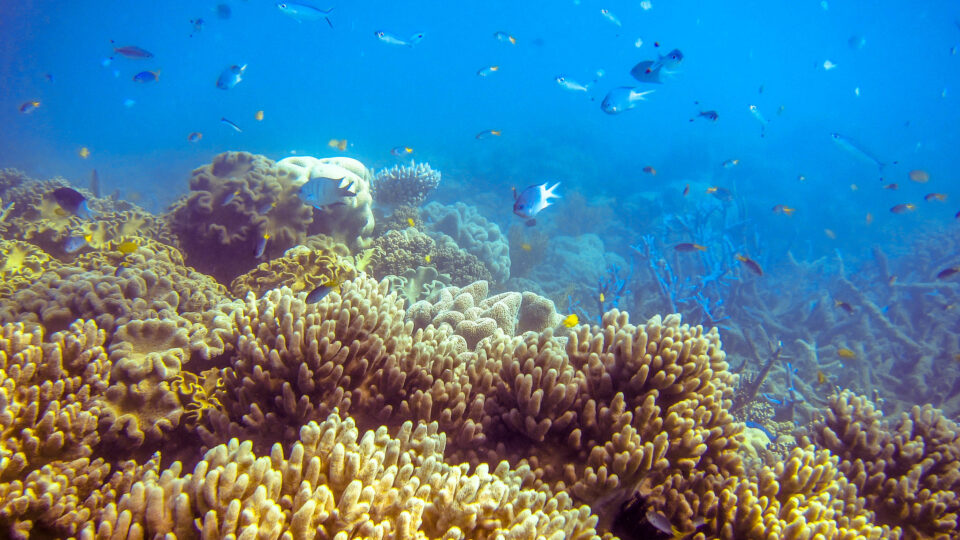
The warming climate is changing the distribution of fish species.  Researchers at the University of Adelaide in Australia have observed that tropical fish species are moving into temperate Australian waters.

The Eastern Australian Current is strengthening as the climate warms and larvae of tropical fish are getting caught in the current and moving into more temperate regions.  These larvae would not normally survive in the cooler Australian ocean water, but the warming current keeps the baby fish warm and increases their chances for survival.  The fish migration observed in the study is an ongoing process that has strengthened in the last few decades due to ocean warming.

The novel populations of tropical fish in these temperate ecosystems are not having much impact at the present time, but they may do so in the future.  The water is still cooler than the fishes’ natural environment and therefore they do not grow to their maximum size.  As a result, they don’t represent stiff competition for the native species – at least not yet.

As the ocean temperatures continue to rise, these tropical species will eventually grow to their full size and their diets will overlap more and more with those of temperate fish species.  Tropical herbivores tend to overgraze temperate kelp while the impact of tropical fish that eat invertebrates is less well understood.  Tropical fish with varied diets are the most successful invaders.  The ultimate effects on temperate ecosystems remain to be seen but survival may become difficult for the native fish in rapidly warming temperate ocean environments.

**********

Web Links

Tropical fish are invading Australian ocean water

Photo, posted March 28, 2017, courtesy of Ryan McMinds via Flickr.

Earth Wise is a production of WAMC Northeast Public Radio
Cooling Down Urban Heat Islands

November 6, 2019 By EarthWise Leave a Comment

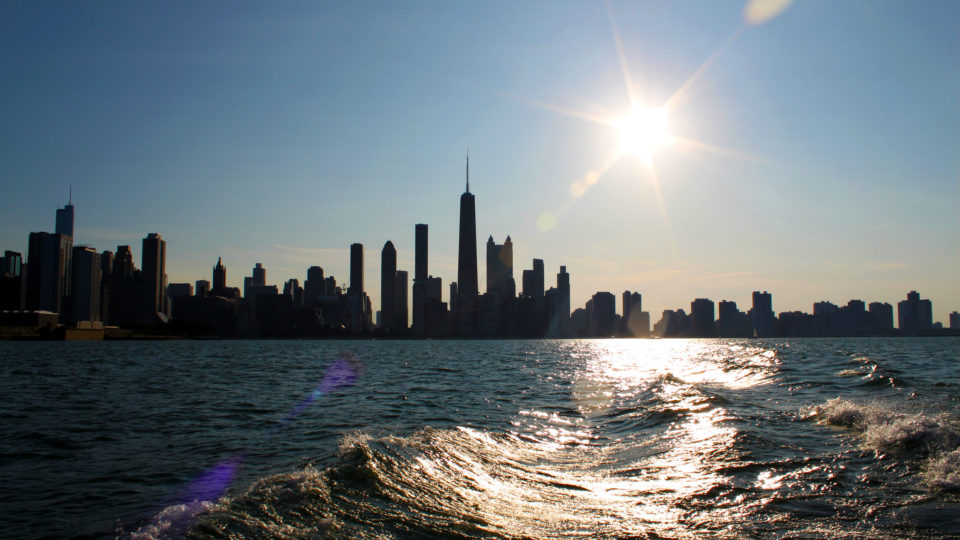
Researchers have known about and studied the urban heat island effect for quite some time.  Since large cities began to emerge in the 19th century, it has been understood that various aspects of the urban environment lead to warmer temperatures than the surrounding countryside.

Researchers led by a group at Portland State University in Oregon have been utilizing a new way of studying the urban heat island effect.  They have used citizen science volunteers in 24 cities around the world to map temperatures in the cities at ground level in great detail using mobile sensors attached to slow-moving vehicles.  Previous studies have used data from satellite or stationary sensors.  They have learned that the urban heat island effect is more complicated, more varied, and subtler than the earlier data indicated.

They found that there are six things that affect urban heat. Three are living — the volume of the tree canopy, the height of the tree canopy, and the ground level vegetation. Three are human-built — the volume of buildings, the difference in building heights, and the coloring of the buildings.

Buildings can have both negative and positive effects. Tall buildings that cast shade actually lower relative afternoon temperatures, while densely packed shorter buildings, like the big-box stores in suburban areas, lead to hotter afternoon temperatures. The studies show that increasing the difference in building heights in an area creates more air circulation, which has a cooling effect.

The study also showed that urban heat is a social justice issue.  Lower-income neighborhoods largely barren of trees have considerably higher temperatures than more affluent, tree-shaded areas.

Such detailed research can be used to guide decisions in urban planning with regard to trees, building heights, and the color and type of surfaces in our urban spaces.

**********

Web Links

Can We Turn Down the Temperature on Urban Heat Islands?

Photo, posted July 21, 2009, courtesy of Daniel Dionne via Flickr.

Earth Wise is a production of WAMC Northeast Public Radio.

Primary Sidebar

Recent Episodes

  • An uninsurable future
  • Clean energy and jobs
  • Insect declines in remote regions
  • Fossil fuel producing nations ignoring climate goals
  • Trouble for clownfishes

WAMC Northeast Public Radio

WAMC/Northeast Public Radio is a regional public radio network serving parts of seven northeastern states (more...)

Copyright © 2026 ·