• Skip to primary navigation
  • Skip to main content
  • Skip to primary sidebar

Earth Wise

A look at our changing environment.

  • Home
  • About Earth Wise
  • Where to Listen
  • All Articles
  • Show Search
Hide Search
You are here: Home / Archives for us forest service

us forest service

Wildfires and carbon storage

August 14, 2024 By EarthWise Leave a Comment

Wildfires impacting carbon storage potential

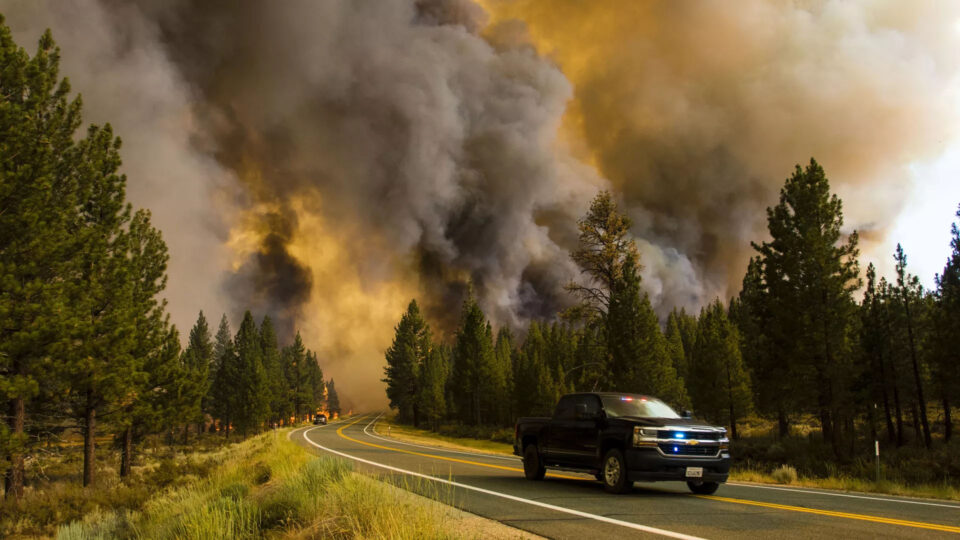
Forests are known to be a key natural solution to the increasing amounts of carbon dioxide in the atmosphere.  For this reason, there are widespread efforts to plant more trees around the world and to prevent increasing deforestation for development and agriculture.  But a new study has highlighted the fact that wildfires in the western US are degrading the potential for forests to help curb climate change.

The study has established a baseline for how much carbon is currently stored in Western forests, how that amount is changing, and how fires and droughts are affecting the ability of the forests to mitigate climate change.

The study made use of survey data collected by the US Forest Service to estimate how much carbon is stored in 19 ecoregions across the West.  These ecoregions range from hot and dry areas in the Southwest to the wet and cool regions of the Pacific Northwest.

The study reveals that the carbon stored in living trees declined across much of the Western US between 2005 and 2019.  Carbon stored in dead trees and woody debris increased.  These things do not provide long-term carbon storage.  Instead, they release it back into the atmosphere through decomposition or combustion in forest fires.

The increasing frequency and intensity of wildfires, especially since 2020, indicate that the decline in live carbon stored in the forests will become increasingly pronounced.  The result, according to the study’s authors, is that we cannot rely on increasing carbon storage in Western US forests.  It may be possible to increase the stability of carbon storage in the forests with mechanical thinning and prescribed burning, but the carbon carrying capacity of those forests is not likely to be what is needed.

**********

Web Links

Forest carbon storage has declined across much of the Western US, likely due to drought and fire

Photo, posted July 25, 2021, courtesy of Felton Davis via Flickr.

Earth Wise is a production of WAMC Northeast Public Radio
Saving Giant Sequoias | Earth Wise

October 13, 2022 By EarthWise Leave a Comment

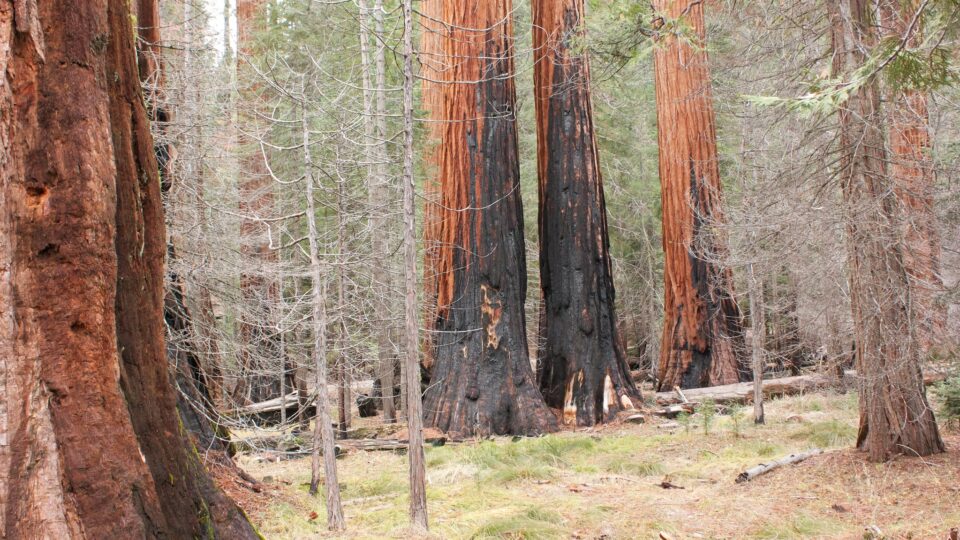
Last year, the KNP Complex Fire burning in Sequoia National Park drew global attention as the General Sherman, the world’s largest tree, was wrapped in tinfoil-like material in order to repel the flames from the fire.  Hundreds of firefighters labored for weeks trying to save giant redwood trees.  Despite these efforts, the U.S. Forest Service estimates that wildfires killed 13% to 19% of the world’s giant sequoias in 2020 and 2021.

This past July, the Washburn Fire burned through part of Yosemite’s Mariposa Grove and the giant sequoias there were surrounded by automated sprinklers trying to shelter them from the flames.

For a century, government agencies have worked to extinguish all natural wildfires and prohibited Native people in the region from lighting the fires they traditionally used to manage their lands.  As a result, forests have grown far thicker with trees that can fuel fires.  The Sierras are now home to more than three times as many trees as when they were managed by indigenous communities.  But more than 100 million of those trees had died by 2016 because of drought.

Add to this massive amount of kindling the effects of climate change – a hotter and drier environment – and there is the perfect storm for megafires among the giant sequoias.

There is federal legislation pending that would provide resources for prescribed burning and other forms of active forest management.  It is controversial.  It has attracted support from the Nature Conservancy, the Save The Redwoods League, and others, but also opposition from more than 80 environmental groups.

What is not controversial is that the Giant Sequoias are in the midst of a crisis and urgent action is needed.

**********

Web Links

In California, a Race to Save the World’s Largest Trees From Megafires

Photo, posted December 10, 2014, courtesy of Laura Camp via Flickr.

Earth Wise is a production of WAMC Northeast Public Radio
Forests And Water | Earth Wise

June 15, 2022 By EarthWise Leave a Comment

We hear a great deal about the environmental services provided by forests.  Deforestation is one of the major factors contributing to increasing levels of carbon dioxide in the atmosphere.  And, of course, forests – most notably rainforests – are major contributors to biodiversity.  A new study by the U.S. Forest Service looked at the role forests play in providing water for Americans.

According to the study, published in the journal Water Resources Research, forested lands across the U.S. provide 83 million Americans with at least half of their water.  125 million people – well over a third of the country – receive at least 10% of their water from forests.  Notably, in the drought-stricken western U.S., nearly 40 million people get more than half of their drinking water from forests that are increasingly threatened by wildfires.

The study looked at surface water sources for more than 5,000 public water systems.  It provides a critical update to the map of where our water comes from.  The study focused on surface waters such as lakes, rivers, and streams because it is too difficult to trace sources of groundwater on a national scale.  Included is a new database of inter-basin water transfers, which are how surface water moves from places where it is plentiful to where it is not.  Examples are the California Aqueduct and the Central Arizona Project which respectively supply Los Angeles and Phoenix with drinking water.  

In Los Angeles, 69% of the water coming in through inter-basin transfers originated in forested lands.  In Phoenix, the figure is 82%.  There are many urban communities that obtain more than half of their drinking water from inter-basin transfers.  Even far from forests, water from forests is essential for millions of Americans.

**********

Web Links

U.S. Forests Provide 83 Million People with Half Their Water

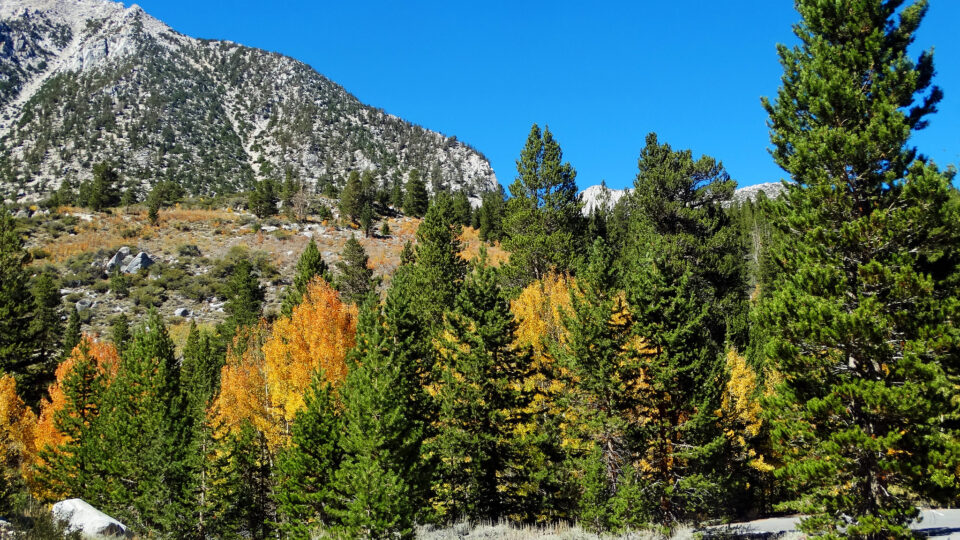
Photo, posted September 26, 2016, courtesy of Don Graham via Flickr.

Earth Wise is a production of WAMC Northeast Public Radio.

The Value Of Street Trees

July 13, 2016 By WAMC WEB

https://earthwiseradio.org/wp-content/uploads/2016/07/EW-07-13-16-California-Street-Trees.mp3

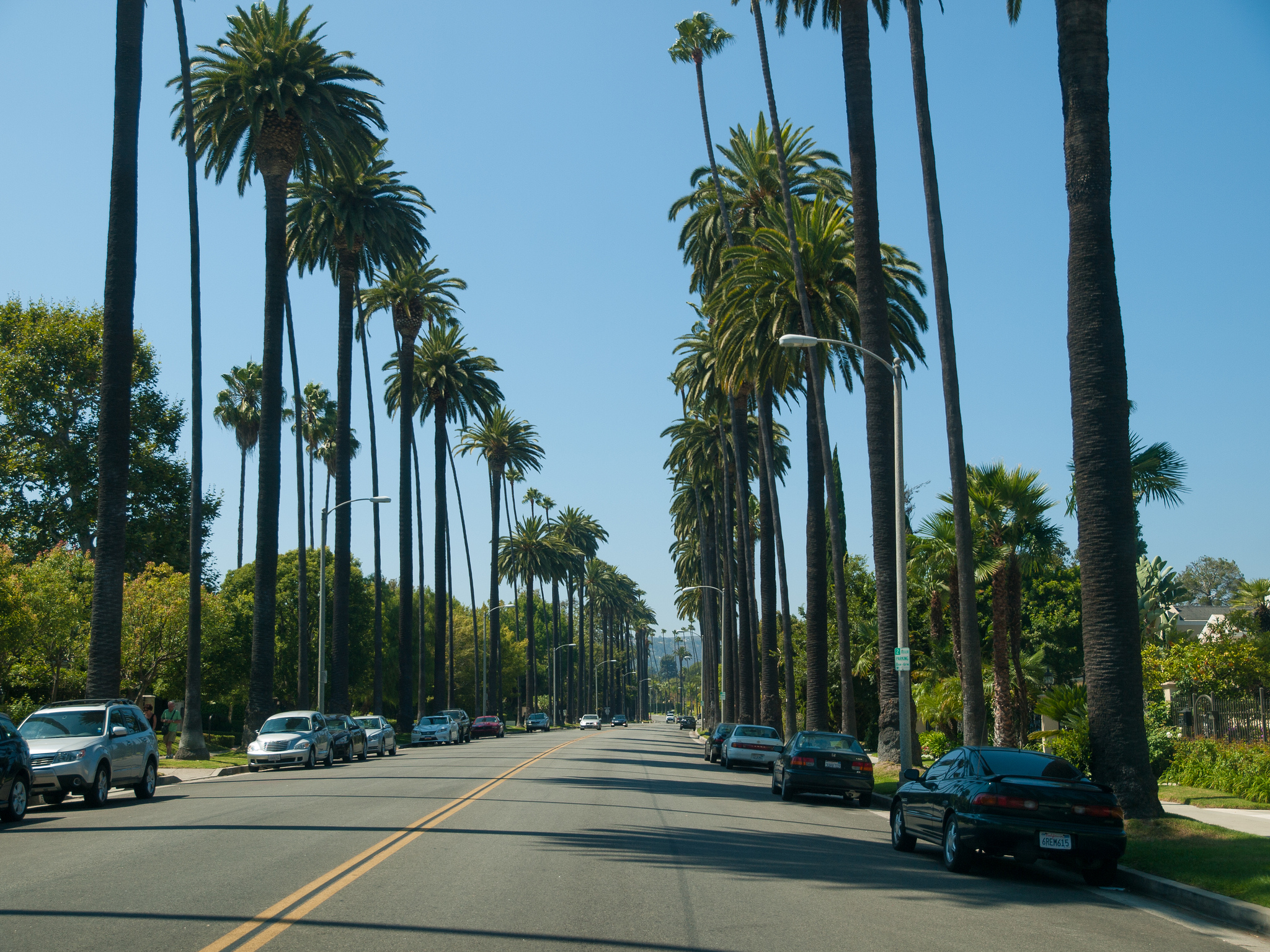
Why should you care whether there are trees on your street or on the streets nearby?  Besides the obvious fact that they make streets more attractive, street trees provide a number of real benefits both for residents and for the environment. 

[Read more…] about The Value Of Street Trees

Listening To Forest Data

January 8, 2016 By WAMC WEB

https://earthwiseradio.org/wp-content/uploads/2015/12/EW-01-08-16-Listen-to-Data.mp3

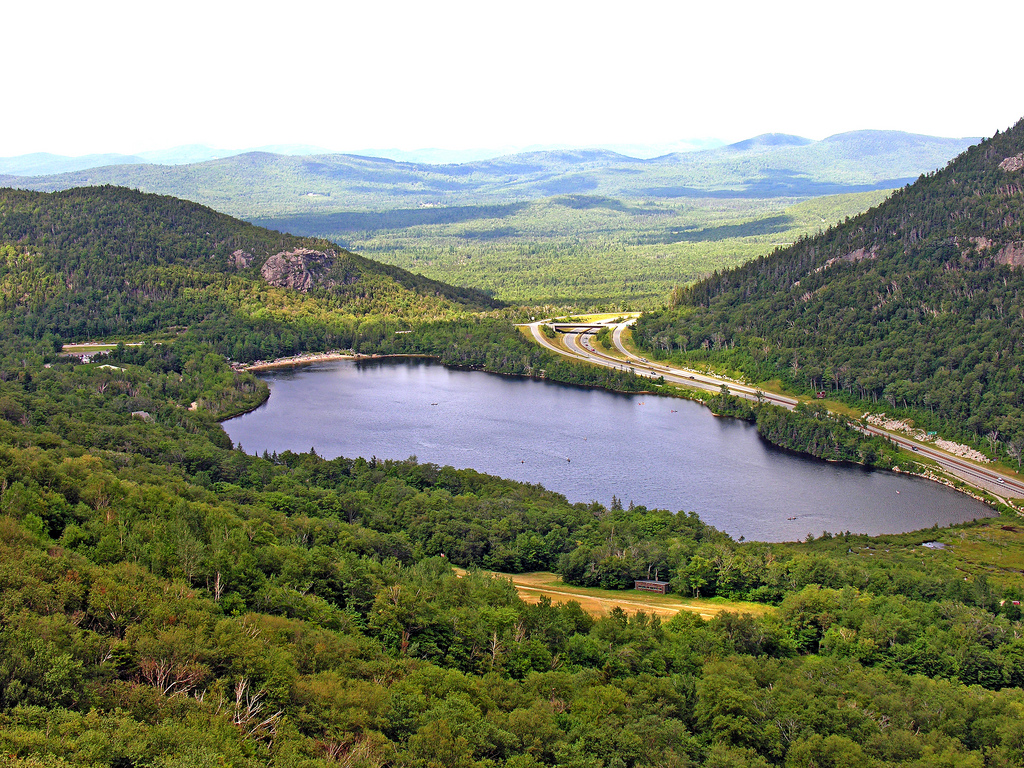
The forest is playing a symphony. By tapping into environmental monitoring sensors at the Hubbard Brook Experimental Forest in the White Mountains of New Hampshire, a tool called WaterViz captures a real-time audio visualization of the forest’s water cycle.

[Read more…] about Listening To Forest Data

Primary Sidebar

Recent Episodes

  • An uninsurable future
  • Clean energy and jobs
  • Insect declines in remote regions
  • Fossil fuel producing nations ignoring climate goals
  • Trouble for clownfishes

WAMC Northeast Public Radio

WAMC/Northeast Public Radio is a regional public radio network serving parts of seven northeastern states (more...)

Copyright © 2026 ·