• Skip to primary navigation
  • Skip to main content
  • Skip to primary sidebar

Earth Wise

A look at our changing environment.

  • Home
  • About Earth Wise
  • Where to Listen
  • All Articles
  • Show Search
Hide Search
You are here: Home / Archives for unknown

unknown

The dangers of deep sea mining

April 21, 2025 By EarthWise Leave a Comment

The dangers of deep sea mining are poorly understood

The White House is considering an executive order that would fast-track permitting for deep-sea mining in international waters and allow mining companies to bypass a United Nations-backed review process.

Deep sea mining is the extraction of minerals from the seabed in the deep ocean.  Most of the interest is in what are known as polymetallic nodules, which are potato-sized mineral deposits that have built up in layers over thousands of years. They are located several miles below the surface, primarily in what is called the Clarion-Clipperton zone, which is an environmental management area of the Pacific Ocean about halfway between Mexico and Hawaii.

A new multiyear study led by UK’s National Oceanography Center and published in the journal Nature found that the site of a deep-sea mining test in 1979 still showed lower levels of biodiversity than in neighboring undisturbed sites 44 years later.

Much is not known about the undersea nodules.  We know that they produce oxygen.  If the nodules are removed, will that reduce the amount of oxygen in the deep sea and affect the organisms that live there?  If mining occurs, what effect will the metal-containing sediment plumes churned up by the mining process have? 

The nodule fields sustain highly specialized animal and microbial communities.  More than 20 billion tons of nodules are estimated to lie on the seabed of the Clarion-Clipperton Zone.  If large-scale mining takes place, and there is much interest in that happening, it is important to find out what the impact will be on the ocean and its ecosystems because it is likely to be largely irreversible.

**********

Web Links

Deep sea mining for rare metals impacts marine life for decades, scientists say

Photo, posted September 4, 2014, courtesy of James St. John via Flickr.

Earth Wise is a production of WAMC Northeast Public Radio

Paper Cups Are Not So Great | Earth Wise

October 4, 2023 By EarthWise Leave a Comment

Paper cups are not as innocent as they seem

The environmental cost of plastic waste is a highly visible global issue.  The response has been a growing effort to replace plastic items with alternative materials.  One very visible change of this sort has been the replacement of plastic cups with paper cups at coffee shops.  But a new study at the University of Gothenburg in Sweden has found that this solution has problems of its own.

Researchers studied the effects of disposable cups in the environment on the larvae of the butterfly mosquito.  They placed disposable cups made from different materials in wet sediment and water for a few days and observed how the chemicals leached from the cups affected the growth of the larvae.  It turned out that all of the different kinds of cups had negative effects.  The concern is not specifically about mosquito larvae; it is the fact that more environmentally friendly drinking cups are still potentially harmful to living things.

Paper is neither fat nor water resistant, so paper cups need to be treated with a surface coating.  The most common coating is polylactide, which is a type of bioplastic.  It is generally considered to be biodegradable, but the study shows that it can still be toxic.  Bioplastics still contain many different chemicals and the potential toxicity of each of them is not well known.

The UN is trying to develop a binding agreement by the world’s countries to end the spread of plastics in society and nature.  For such an agreement to be effective, the plastics industry will need to clearly report what chemicals all products contain, including such mostly invisible products as the coating on paper drinking cups.

**********

Web Links

Paper cups are just as toxic as plastic cups

Photo, posted October 23, 2016, courtesy of Flickr.

Earth Wise is a production of WAMC Northeast Public Radio
Geoengineering And Volcanoes

November 14, 2019 By EarthWise Leave a Comment

Solar geoengineering is a theoretical strategy for curbing the effects of climate change by introducing aerosol particles in the upper atmosphere to reflect some of the Sun’s radiation back into space and thereby cool the planet.  It would basically be intentionally tinkering with the climate system on a global scale.

The concept is fraught with the danger of unintended consequences and most experts consider the idea almost unthinkable.  But there are those who see it as a last resort if all our other efforts to mitigate the effects of climate change are unsuccessful.

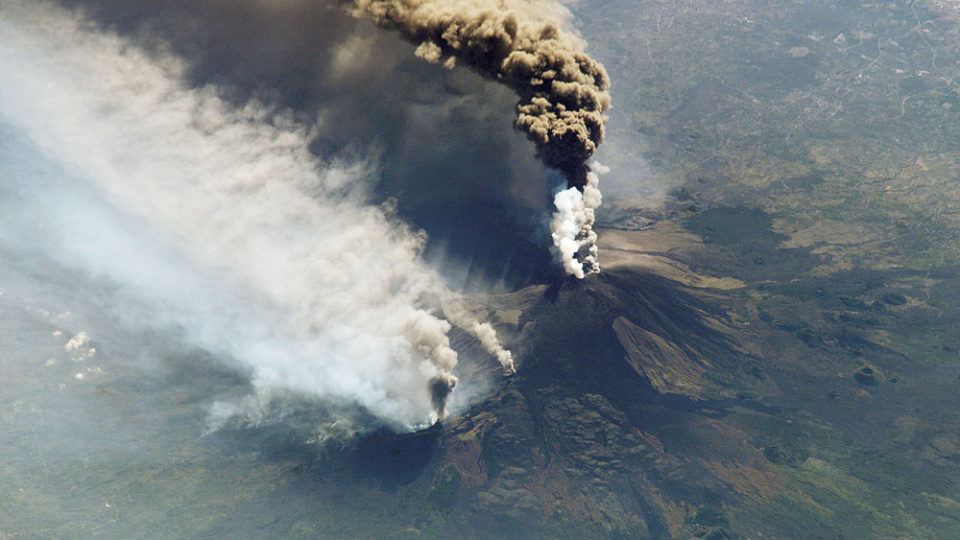
Proponents of the idea like to describe the technique as being like a human-made volcano.  Major volcanic eruptions spew ash particles into the atmosphere which can linger for as long as a few years.  The result is cooler temperatures, sometimes across much of the globe.  The Krakatoa eruption of 1883 lowered average Northern Hemisphere temperatures by more than 2 degrees and created chaotic weather patterns until about 1888.

Researchers at the Carnegie Institution and two Chinese research institutions used sophisticated modeling techniques to compare the effects on the climate of a volcanic eruption with long-term geoengineering deployment.

They found that the volcanic eruption created a greater temperature difference between the land and sea than the geoengineering and resulted in very different precipitation scenarios.  In both cases, there would be less available water for people on land.

Overall, the study demonstrated that volcanic eruptions are imperfect analogs for geoengineering and that scientists should be very cautious about extrapolating too much from them.  It is important to evaluate geoengineering from an informed position, but the truth is that it represents a great and perilous unknown.

**********

Web Links

Geoengineering Versus A Volcano

Photo, posted November 1, 2002, courtesy of the NASA Goddard Space Flight Center via Flickr.

Earth Wise is a production of WAMC Northeast Public Radio.

The Microplastic Diet

July 29, 2019 By EarthWise Leave a Comment

According to a new study published in the journal Environmental Science & Technology, Americans consume more than 70,000 microplastic particles every year from the food they eat, the water they drink, and the air they breathe.

While the health impacts of ingesting these tiny particles are largely unknown, there is the potential for the plastic to enter human tissues and cause an immune response or perhaps release toxic chemicals into the body.

The analysis by biologists at the University of Victoria in Canada examined data from 26 previous studies on microplastic contamination.  It found that Americans eat and drink an estimated 39,000 to 52,000 microplastic particles each year, depending on their age and sex.  The numbers jump to 74,000 to 121,000 when inhalation of microplastics is included.

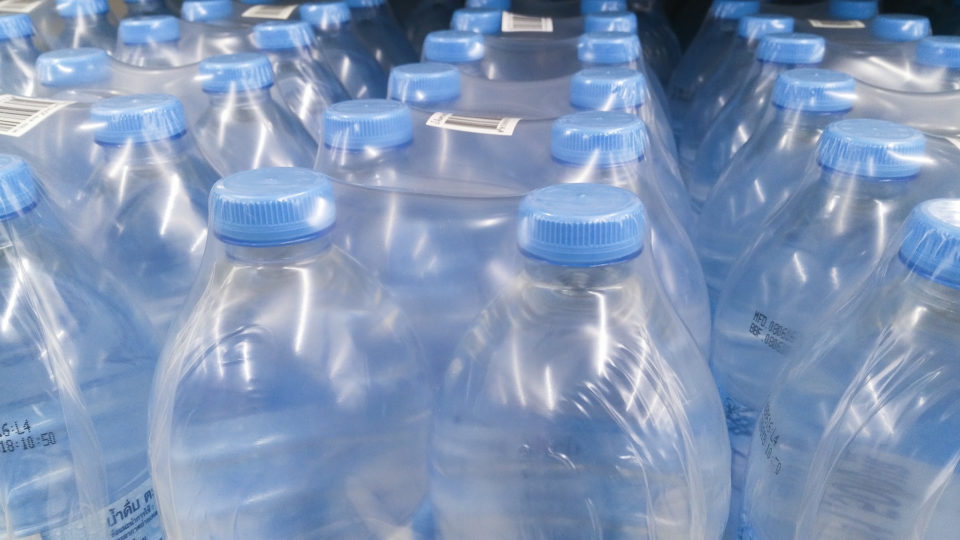
Americans who drink water solely from plastic bottles consume an additional 90,000 particles annually, compared to only 4,000 particles for people who only drink tap water.

The researchers warn that their findings are likely to be drastic underestimates of the problem.  Several major U.S. food groups – including poultry, beef, dairy, grains, and vegetables – have not been studied for their microplastic contamination.  Thus, the estimate of microparticle ingestion is associated with only 15% of an average person’s caloric intake.  Furthermore, there is no assessment currently available for how much plastic might be entering our bodies from food packaging.

The report’s findings suggest that microplastics will continue to be found in the majority if not all items intended for human consumption.  Realistically, the only way to reduce the human consumption of microplastics will be to reduce the production and use of plastics.

**********

Web Links

Americans Consume Tens of Thousands of Microplastic Particles Every Year

Photo, posted June 18, 2016, courtesy of Sirirat Kornsongkaew via Flickr.

Earth Wise is a production of WAMC Northeast Public Radio.

Primary Sidebar

Recent Episodes

  • An uninsurable future
  • Clean energy and jobs
  • Insect declines in remote regions
  • Fossil fuel producing nations ignoring climate goals
  • Trouble for clownfishes

WAMC Northeast Public Radio

WAMC/Northeast Public Radio is a regional public radio network serving parts of seven northeastern states (more...)

Copyright © 2026 ·