• Skip to primary navigation
  • Skip to main content
  • Skip to primary sidebar

Earth Wise

A look at our changing environment.

  • Home
  • About Earth Wise
  • Where to Listen
  • All Articles
  • Show Search
Hide Search
You are here: Home / Archives for undesirable

undesirable

Climate risks for apple-growing areas

January 31, 2025 By EarthWise 2 Comments

The changing climate is creating challenges for some of the most productive apple growing regions in America.  A study by Washington State University analyzed over 40 years of climate conditions that impact the growth cycle of apple trees.

Many growing areas face increased climate risk, but the top three apple-producing counties are among the most impacted.  Yakima County in Washington is the country’s largest apple producer with more than 48,000 acres of apple orchards.  Kent County in Michigan and Wayne County in New York (located east of Rochester) are the next two largest.

The study looked at six metrics that affect apple production.  Two of these metrics relate to extremes:  extreme heat days (with temperatures above 93 degrees) that can cause multiple problems and warm nights (with minimum temperatures above 59 degrees) that adversely affect coloration.

Other metrics included the number of cold days, the last day of spring frost, and the number of growing degree days, which are the number of days above a certain temperature that are conducive for apples to grow.

Changes to these metrics can impact apple production, change the time when apple flowers bloom, increase risk of sunburn on apples, and affect apple appearance and quality.  In many places, nearly all of these metrics are changing in an undesirable direction.

Apples are the most consumed fruit in the United States.  27,000 American producers supply an industry with a downstream value of $23 billion.  Apples are a big deal.

**********

Web Links

Prime apple-growing areas in US face increasing climate risks

Photo, posted August 8, 2020, courtesy of Sue Thompson via Flickr.

Earth Wise is a production of WAMC Northeast Public Radio
Getting Rid Of Hydrogen Sulfide | Earth Wise

December 20, 2022 By EarthWise Leave a Comment

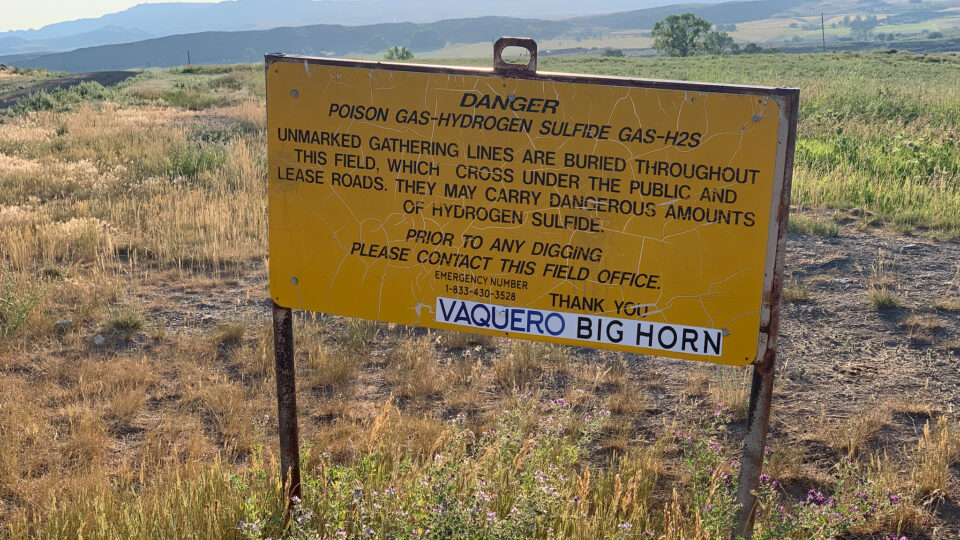
Hydrogen sulfide gas produces the characteristic smell of rotten eggs, sewers, stockyards, and landfills.  The petroleum industry produces thousands of tons of the stuff each year as a byproduct of the processes that remove sulfur from petroleum, natural gas, coal, and other products.  The industry faces substantial fines for emitting hydrogen sulfide, but remediation is expensive.

Researchers at Rice University have developed a method for turning hydrogen sulfide into hydrogen gas and sulfur in a single step.  Called plasmonic photocatalysis, it not only gets rid of an undesirable substance, it does so by producing valuable byproducts.

The established way of getting rid of hydrogen sulfide is called the Claus process.  It requires multiple steps, including some that require combustion chambers heated to 1,500 degrees Fahrenheit.  The end product is sulfur and water.

The Rice University process gets all of its energy from light.  A surface of grains of silicon dioxide is dotted with tiny gold nanoparticles.  These particles interact strongly with a specific wavelength of visible light and cause plasmonic reactions that create short-lived, high-energy electrons that drive the catalysis of hydrogen sulfide.  Given that the process requires only visible light and no external heating, it should be relatively straightforward to scale up using solar energy or very efficient LED lamps.

The new hydrogen sulfide remediation technology has been licensed by a Houston-based startup company with more than 60 employees whose founders include some of the Rice researchers.  The process may end up being efficient enough and cheap enough for cleaning up non-industrial sources of hydrogen sulfide such as sewers and animal waste.

**********

Web Links

New catalyst can turn smelly hydrogen sulfide into a cash cow

Photo, posted July 8, 2021, courtesy of Doug Letterman via Flickr.

Earth Wise is a production of WAMC Northeast Public Radio

Primary Sidebar

Recent Episodes

  • An uninsurable future
  • Clean energy and jobs
  • Insect declines in remote regions
  • Fossil fuel producing nations ignoring climate goals
  • Trouble for clownfishes

WAMC Northeast Public Radio

WAMC/Northeast Public Radio is a regional public radio network serving parts of seven northeastern states (more...)

Copyright © 2026 ·