
• Skip to primary navigation
  • Skip to main content
  • Skip to primary sidebar

Earth Wise

A look at our changing environment.

  • Home
  • About Earth Wise
  • Where to Listen
  • All Articles
  • Show Search
Hide Search
You are here: Home / Archives for underestimated

underestimated

Extreme Heat And Humidity | Earth Wise

June 15, 2020 By EarthWise Leave a Comment

heat and humidity

On hot, sticky summer days, one often hears the expression “it’s not the heat, it’s the humidity.” That isn’t just an old saw; it is a recognition of what might be the most underestimated direct, local danger of climate change.   Extreme humid heat events represent a major health risk.

There is an index called “wet-bulb temperature” that is calculated from a combination of temperature and humidity data.  The reading, which is taken from a thermometer covered in a wet cloth, is related to how muggy it feels and indicates how effectively a person sheds heat by sweating.  When the wet-bulb temperature surpasses 95o Fahrenheit, evaporation of sweat is no longer enough for our bodies to regulate their internal temperature.  When people are exposed to these conditions for multiple hours, organ failure and death can result. 

Climate models project that combinations of heat and humidity could reach deadly thresholds for anyone spending several hours outdoors by the end of this century. 

Dangerous extremes only a few degrees below the human tolerance limits – including in parts of the southwestern and southeastern US – have more than doubled in frequency since 1979.  Since then, there have been more than 7,000 occurrences of wet-bulb temperatures above 88o, 250 above 91o, and multiple reading above 95o.  Even at lower wet-bulb temperatures around 80o, people with pre-existing health conditions, the elderly, as well as those performing strenuous outdoor labor and athletic activities, are at high risk.

More research is needed on the factors that generate extreme wet-bulb temperatures as well as the potential impacts on energy, food systems, and human security.

**********

Web Links

Dangerous Humid Heat Extremes Occurring Decades Before Expected

Photo, posted April 16, 2012, courtesy of Flickr.

Earth Wise is a production of WAMC Northeast Public Radio.
Climate Change And Infertility

March 8, 2019 By EarthWise Leave a Comment

Many of us are all too familiar with the effects of climate change.  Our changing climate, as a result of our actions, is leading to rising global temperatures, biodiversity loss, ocean acidification, wildfires, more weather extremes like floods and droughts. But a lesser known effect of climate change could lead to frightening consequences: infertility.

According to researchers at the University of Liverpool, rising temperatures could make some species sterile and lead them to succumb to the effects of climate change far earlier than currently thought. Their work was recently published in the journal Trends in Ecology and Evolution, and it was produced in collaboration with scientists from the University of Leeds, University of Melbourne, and Stockholm University.

Biologists and conservationists are trying to predict where species will be lost due to climate change so that suitable reserves can be established in other locations.  But the problem is that most data on when temperature will make an area unlivable for a species is based on its ‘critical thermal limit’ or CTL.  This is the temperature at which a species would collapse, stop moving, or die. 

The authors of the article fear that the impact of climate change on species survival is being underestimated.  Because rather than zeroing in on lethal temperatures, the scientists argue the focus should be on the temperatures at which organisms can no longer breed.  Extensive plant and animal data suggest organisms lose fertility at a lower temperature than their CTL.

The scientists have proposed a new fertility-based metric to gauge how organisms function as temperatures climb: Thermal Fertility Limit or TFL.  Understanding when a species will cease to reproduce will certainly help conservation measures. 

**********

Web Links

Climate change and infertility — a ticking time bomb?

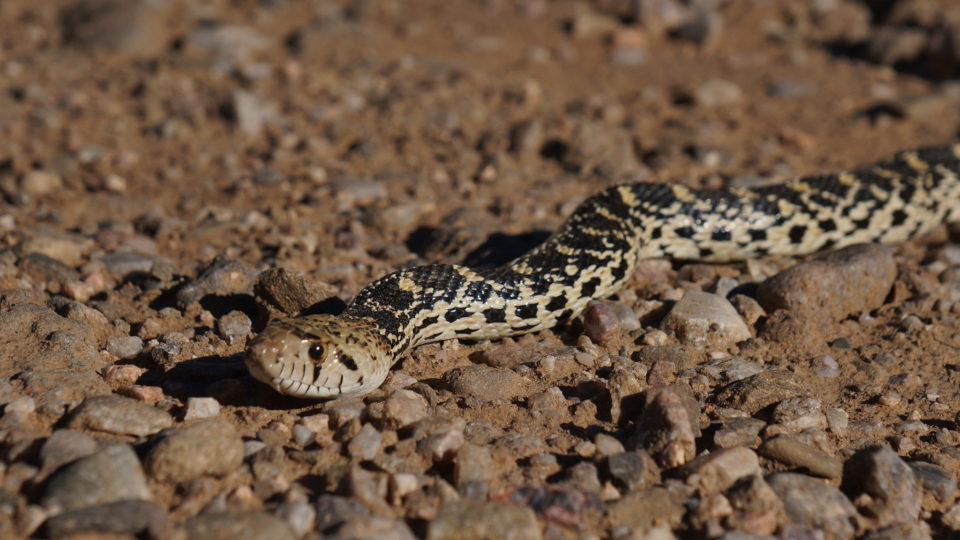
Photo, posted August 11, 2013, courtesy of Mike Lewinski via Flickr.

Earth Wise is a production of WAMC Northeast Public Radio.

Primary Sidebar

Recent Episodes

  • An uninsurable future
  • Clean energy and jobs
  • Insect declines in remote regions
  • Fossil fuel producing nations ignoring climate goals
  • Trouble for clownfishes

WAMC Northeast Public Radio

WAMC/Northeast Public Radio is a regional public radio network serving parts of seven northeastern states (more...)

Copyright © 2026 ·