• Skip to primary navigation
  • Skip to main content
  • Skip to primary sidebar

Earth Wise

A look at our changing environment.

  • Home
  • About Earth Wise
  • Where to Listen
  • All Articles
  • Show Search
Hide Search
You are here: Home / Archives for UC san diego

UC san diego

Return of the frogs

September 22, 2025 By EarthWise Leave a Comment

Mountain yellow-legged frog may make a comeback

The mountain yellow-legged frog is a species that lives in the mountains of Southern California.  It is listed as an endangered species for protection by the federal government.   Surveys 20 years ago determined that the frog’s population was declining and on a trajectory toward extinction.  The frogs are severely impacted by water pollution and are vulnerable to the effects of wildfires, floods, disease, and drought.

A collaboration headed by the Scripps Institution of Oceanography at UC San Diego along with the San Diego Zoo Wildlife Alliance, UCLA, and the Big Bear Alpine Zoo has been raising mountain yellow-legged frogs in captivity as part of a long-running recovery program with partners at multiple federal and California state agencies.

In August, more than 350 of the frogs were reintroduced into the wild in Southern California’s San Bernardino Mountains, one of the largest releases of the captive-raised frogs to date.  This represented the first species reintroduction by the Scripps Institution and an important milestone in its growing conservation work.

The frogs were transported in coolers to the mountains where a team then hiked the frogs to three sites along a lake within a protected reserve.  The frogs were microchipped with passive transponder tags that will allow researchers to identify individuals during future surveys.  This will enhance long-term monitoring and inform ongoing conservation efforts.

The goal of these efforts is to help to delist or at least downlist the endangered status of the frogs by enhancing the genetic diversity of both captive and wild populations, optimizing reintroduction efforts, and increasing wild frog populations.

**********

Web Links

Hundreds of Mountain Yellow-legged Frogs Leap Back Into the Wild

Photo, posted April 27, 2011, courtesy of Rick Kuyper / USFWS via Flickr.

Earth Wise is a production of WAMC Northeast Public Radio

Improved Radar For Cars | Earth Wise

December 31, 2020 By EarthWise Leave a Comment

Improving radar technology for cars

Self-driving cars require a variety of sensor systems in order for the cars to safely navigate roads and deal with the wide range of objects and conditions that they encounter.  Two competing technologies that cars use to identify and locate objects on the scene are radar and LiDAR. 

Radar uses transmitted radio waves to locate objects and LiDAR bounces laser beams off of objects.   Each has its shortcomings.   Radar has the problem that only a small fraction of the transmitted signals gets reflected back to the sensor, so that there is frequently insufficient data to fully characterize a scene.  LiDAR has the problem that it is an optical system that does not work well in fog, dust, rain, or snow.  It is also much more expensive than radar.

Researchers at the University of California San Diego have developed a new system that they describe as a LiDAR-like radar. The system consists of two radar sensors placed on a car’s hood and spaced about 1.5 meters apart.  This configuration enables the system to see more space and detail than a single radar sensor.

Having two radars at different vantage points with an overlapping field of view creates a region of high-resolution with a high probability of detecting the objects that are present.  The system also overcomes noise problems of conventional radar systems.

The researchers developed new algorithms that can fuse the information from two different radar sensors and produce a new image free of noise.

Self-driving cars have to combine detection technologies like radar with cameras and ultrasonic sensors.  Duplicating the capabilities that people use in order to safely drive a car is a complex problem requiring a combination of multiple sensors and sophisticated software.

**********

Web Links

Upgraded radar can enable self-driving cars to see clearly no matter the weather

Photo, posted January 2, 2014, courtesy of Bradley Gordon via Flickr.

Earth Wise is a production of WAMC Northeast Public Radio.

Sustainable Flip-Flops | Earth Wise

September 9, 2020 By EarthWise Leave a Comment

Sustainable technologies

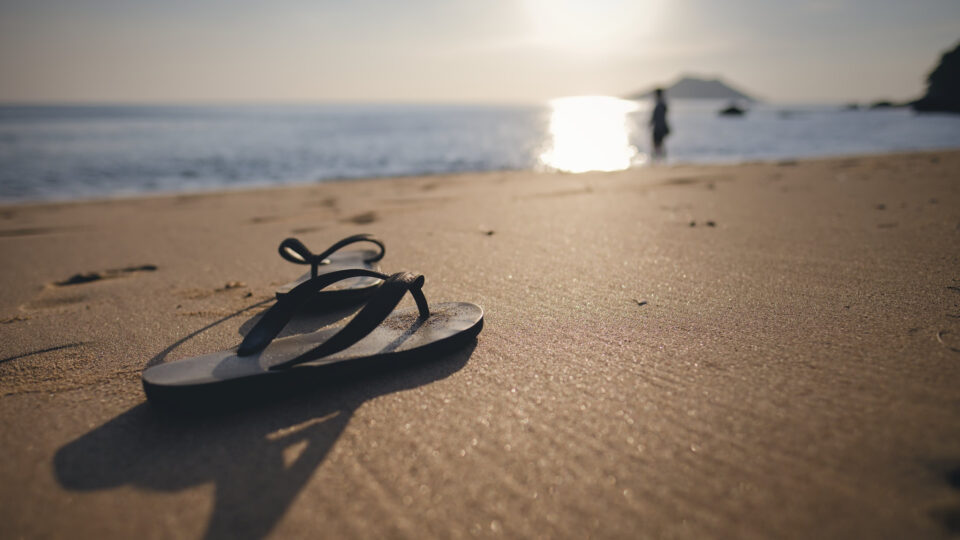
Flip-flops are the world’s most popular shoe.  They are lightweight, comfortable, affordable, and durable.  In fact, the global market for flip-flops is expected to reach a whopping $23.8 billion by the year 2025. 

But the popularity comes with a price.  Flip-flops account for a troubling percentage of plastic waste that ends up in our landfills and oceans.  As a result, demand for alternatives is compelling researchers to develop more sustainable versions of the popular footwear.

Scientists at the University of California San Diego have spent years working on this issue, and recently announced a breakthrough.  According to a study recently published in Bioresource Technology Reports, the research team has formulated polyurethane foams – made from algae oil – to meet commercial specifications for mid-sole shoes and the foot-bed of flip-flops.   In other words, the scientists have created sustainable, biodegradable, and consumer-ready materials that could replace plastics in some footwear. 

The UC San Diego scientists collaborated with Algenesis Materials – a technology startup – on the research.  Together, they worked to not only create the shoes, but to degrade them as well.  The team tested their customized foams by immersing them in traditional compost and soil.  The algae-based materials degraded after just 16 weeks.  

The life of any material should be proportionate to the life of the product.  The researchers point out that it doesn’t make sense to create a product that will last 500 years if it’ll only be used for a year or two. 

The research team is currently working on production details with its manufacturing partners.  The creation of biodegradable flip-flops that meet commercial footwear standards could eliminate tons of plastic waste from the environment.   

************ 

Web Links

New science behind algae-based flip-flops

Flip Flops Market Size Worth $23.8 Billion by 2025

Photo, posted December 12, 2019, courtesy of Flickr.

Earth Wise is a production of WAMC Northeast Public Radio.

Plastic From Algae | Earth Wise

June 9, 2020 By EarthWise Leave a Comment

Producing plastic from algae

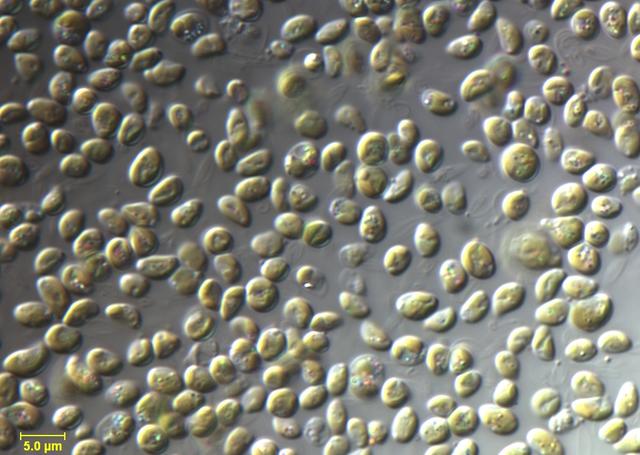
Many researchers consider algae to be one of the best renewable resources for replacing fossil fuels and even as a food source.  The green microalgae Nannochloropsis salina is already a common source of omega-3 fatty acids that are sold as dietary supplements.  As a result, that algae strain is already grown on a large scale for the production of omega-3 products.

A group of researchers at UC San Diego has developed a way to make use of the waste stream from that production to create plastics and other useful products.  Currently, when the algae is processed to extract the omega-3 oil, leftover oils comprising more than 70% of the starting material are either thrown away or burned. 

The UCSD team has developed a process to purify and convert this waste stream into azelaic acid, which is a building block for flexible polyurethanes.   These materials have all kinds of commercial applications from flip-flops and running shoe soles to mattresses and yoga mats.

By analogy to the use of animals by native American tribes, the researchers wanted to “use the whole buffalo” in their solution for algae processing waste and therefore figured out how to convert heptanoic acid – another substance in the algae waste stream – into a food flavoring and fragrance.  The flavoring molecule is valued at over $500 per kilogram.

The work, published in the journal Green Chemistry, demonstrates that an algae-source waste stream has both the practical and economic potential to support production of polyurethanes.  The team is already working with shoe companies to commercialize the technology.  With mounting concern over petroleum-based plastic waste, renewable plastic made from algae is an attractive alternative.

**********

Web Links

Researchers Turn Algae Leftovers into Renewable Products with Flare

Photo, posted November 8, 2006, courtesy of Adam Moore via Flickr.

Earth Wise is a production of WAMC Northeast Public Radio.

Primary Sidebar

Recent Episodes

  • An uninsurable future
  • Clean energy and jobs
  • Insect declines in remote regions
  • Fossil fuel producing nations ignoring climate goals
  • Trouble for clownfishes

WAMC Northeast Public Radio

WAMC/Northeast Public Radio is a regional public radio network serving parts of seven northeastern states (more...)

Copyright © 2026 ·