• Skip to primary navigation
  • Skip to main content
  • Skip to primary sidebar

Earth Wise

A look at our changing environment.

  • Home
  • About Earth Wise
  • Where to Listen
  • All Articles
  • Show Search
Hide Search
You are here: Home / Archives for type

type

Indoor air and outdoor pollution

July 11, 2025 By EarthWise Leave a Comment

How outdoor pollution can impact indoor air quality

The majority of us spend about 80% of our time indoors.   The quality of the air that we breathe depends on the age and type of building we occupy along with any sources of indoor pollution that may exist and, ultimately, the quality of the air outdoors.  The HVAC used to heat, ventilate, and cool the building plays an important role.

The College of Engineering at the University of Utah used its Salt Lake City campus as a living laboratory to explore how outdoor air pollution affects indoor air quality.  Specifically, the nature of outdoor pollution sources strongly affected how effectively HVAC systems prevented external sources from getting into buildings.

Of particular concern is fine particulate matter with a diameter of less than 2.5 microns.  These PM 2.5 particles can penetrate deeply into lungs, potentially causing health problems like respiratory irritation and heart disease.

There are multiple sources of PM 2.5.  The Utah study found that wildfire smoke had four to five times more PM 2.5 infiltration into buildings than pollution from inversions and wind-driven dust events.

An additional finding was that commercial HVAC systems that use air-side economizers are much less effective at keeping out particulate matter.  These systems use special duct and damper systems that reduce energy use by drawing air from outdoors when temperature and humidity levels are optimum.

**********

Web Links

Does outdoor air pollution affect indoor air quality?

Photo, posted June 15, 2024, courtesy of Peter Burka via Flickr.

Earth Wise is a production of WAMC Northeast Public Radio
Mercury in tuna

March 25, 2024 By EarthWise Leave a Comment

Mercury in tuna still a lingering issue

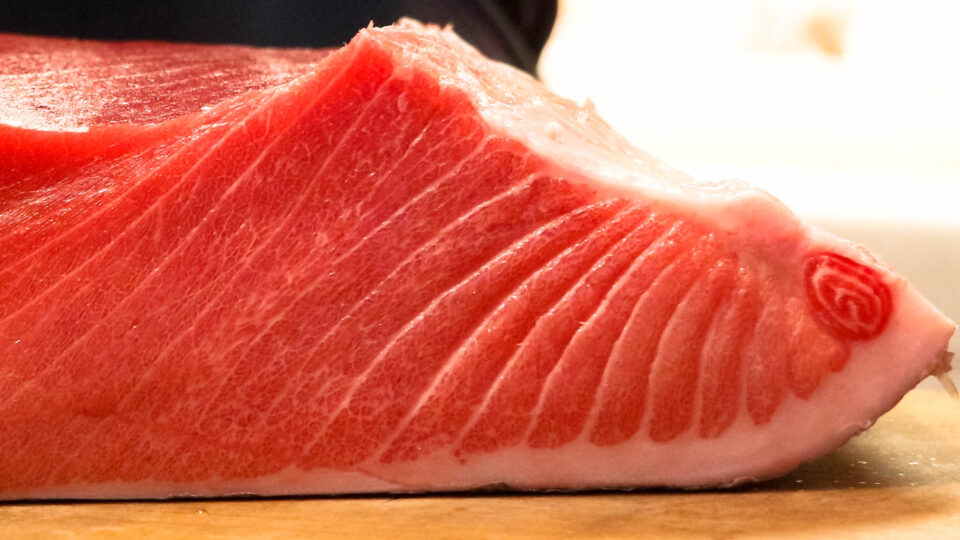
Mercury is found throughout the ocean, and there is at least some of it in any fish one might eat. It is an element found naturally in the environment, but it is also a byproduct of manmade pollution. Generally speaking, bigger fish tend to have higher mercury levels than smaller ones, because they are higher up in the food chain. The more small fish those big fish eat, the more mercury builds up in their bodies.  Tuna aren’t the biggest fish in the ocean, but they are very common in many people’s diets.

Increased mercury levels are a result of human activities like burning coal and mining which release methylmercury into the air.  It then finds its way into the oceans in rainwater.  Methylmercury is a particularly toxic chemical that affects the nervous system.  Environmental protection policies in recent decades have helped to reduce mercury pollution.

However, a recent study by French researchers looked at the mercury levels in tuna over the past 50 years.  They found that the levels have basically not changed since 1971.  As a result, they are calling for more restrictive environmental policies to further lower mercury pollution levels.

The researchers explained that the lowering of mercury airborne levels to date has not necessarily been ineffective.  They theorized that the static levels in tuna may be caused by the upward mixing of “legacy” mercury from deeper ocean water into the shallower depths where tropical tuna swim and feed.  It could very well take decades to dramatically reduce ocean mercury levels. 

Meanwhile, mercury content in tuna varies considerably by tuna type and source and there are both better and worse choices out there.  Consumers should learn the facts.

**********

Web Links

Mercury levels in tuna remain nearly unchanged since 1971, study says

Photo, posted November 7, 2015, courtesy of Mussi Katz via Flickr.

Earth Wise is a production of WAMC Northeast Public Radio
Infinitely Recyclable Plastic

June 8, 2018 By EarthWise Leave a Comment

https://earthwiseradio.org/wp-content/uploads/2018/06/EW-06-08-18-Infinitely-Recyclable-Plastic.mp3

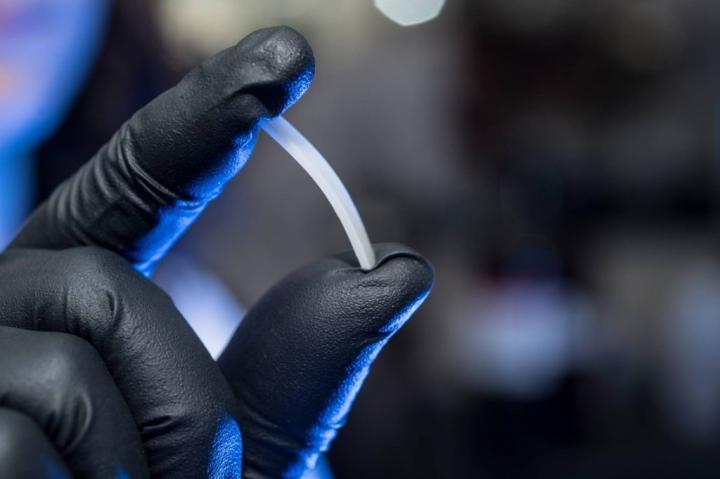
Less than 10% of discarded plastic is recycled.  This is one of the major reasons that plastic waste is such a threat to the environment.  There are many challenges to recycling plastics.  For one thing, there are many different types of plastic and if they are melted together, they tend to phase-separate like oil and water and the resultant substance is structurally weak.  Sorting plastics by type is not a simple task.   More generally, it is very difficult to produce plastic with its original properties from recycled feedstock.  So recycled plastics generally end up being useful in only more limited applications.

[Read more…] about Infinitely Recyclable Plastic

Primary Sidebar

Recent Episodes

  • An uninsurable future
  • Clean energy and jobs
  • Insect declines in remote regions
  • Fossil fuel producing nations ignoring climate goals
  • Trouble for clownfishes

WAMC Northeast Public Radio

WAMC/Northeast Public Radio is a regional public radio network serving parts of seven northeastern states (more...)

Copyright © 2026 ·