• Skip to primary navigation
  • Skip to main content
  • Skip to primary sidebar

Earth Wise

A look at our changing environment.

  • Home
  • About Earth Wise
  • Where to Listen
  • All Articles
  • Show Search
Hide Search
You are here: Home / Archives for trillions

trillions

Natural hydrogen

February 26, 2024 By EarthWise Leave a Comment

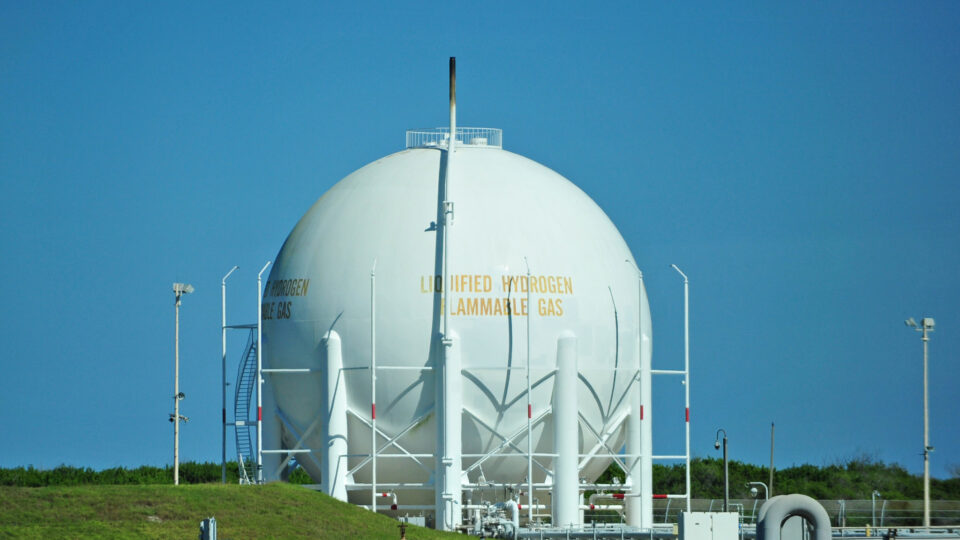
Natural hydrogen could be a big deal

Hydrogen is considered to be a potential substitute for conventional fossil fuels in applications where electricity cannot easily be used such as in blast furnaces, cement works, industrial heating, long-distance aviation, and shipping.  But most hydrogen is manufactured by separating it from methane, which is energy-intensive and produces carbon dioxide.  So-called green hydrogen is made by splitting water using electricity.  It is a carbon-free process if the electricity is from renewable sources, but it is pretty expensive.

A small community in Mali gets its electricity by burning natural hydrogen, which bubbles up from underground into a village well.  It has long been known that processes in the Earth’s crust can make hydrogen gas from water under certain circumstances.  But conventional wisdom has been that this occurrence is rare and that the hydrogen produced is either inaccessible or seeps away.

An increasing number of geoscientists now are convinced that there is actually an enormous quantity of hydrogen beneath the planet’s surface and that we just haven’t been looking for it in the right places, or at all, for that matter.  Some say that there could be trillions of tons of hydrogen, and more is being generated all the time.

Prospectors have recently been drilling for hydrogen in France, Australia, Morocco, Brazil, and in the United States, in Nebraska, Arizona, and Kansas.  Will extracting natural hydrogen be practical at the scale required and will it be economical?  The jury is still out on all of this, but if it turns out as proponents claim, natural hydrogen could be a very big deal.

**********

Web Links

Natural Hydrogen: A Potential Clean Energy Source Beneath Our Feet

Photo, posted November 4, 2012, courtesy of Heather Paul via Flickr.

Earth Wise is a production of WAMC Northeast Public Radio

The Enormous Cost Of Steel Corrosion | Earth Wise

February 28, 2023 By EarthWise Leave a Comment

Global steel production has been rising for decades.  Because steel corrodes over time, part of the demand for more steel comes from the need to replace the steel used in construction materials – in everything from bridges to cars – that has become corroded over time.  Studies have estimated that the economic cost of corrosion is an astonishing 3 to 4% of a nation’s gross domestic product.  Globally, this means that steel corrosion costs the world trillions – yes, trillions with a T – of dollars each year.

On top of the staggering economic impact of corrosion, there is the fact that steel production is one of the largest greenhouse gas emitters of any industry, accounting for more than 25% of all manufacturing sector carbon emissions.  In fact, steel manufacturing causes over 10% of total global carbon emissions.  

As a result of regulations placed on the steel industry, technological advances in the steelmaking process have resulted in a 61% reduction in the industry’s energy consumption over the last 50 years.   There are continuing efforts to reduce the energy consumption of steel making and to move away from the use of fossil fuels to produce the needed energy.  But without significant improvements, just the emissions associated with replacing corroded steel could make the goals set by the Paris Climate Agreement unfeasible.

It’s hard to believe that something costing the world trillions of dollars and has a major negative impact on the climate is largely invisible.  Steel corrosion is an enormous societal challenge that has gone under the  radar for decades and therefore has not received anything like the attention it deserves.

**********

Web Links

Reducing steel corrosion vital to combating climate change

Photo, posted July 24, 2008, courtesy of Phil Whitehouse via Flickr.

Earth Wise is a production of WAMC Northeast Public Radio

The Cost Of Heat Waves | Earth Wise

December 7, 2022 By EarthWise Leave a Comment

Heat waves are defined as periods of abnormally hot weather generally lasting more than two days. To be considered a heat wave, the recorded temperatures must be substantially above the historical averages for a given area. According to climate scientists, anthropogenic climate change is likely causing heat waves to increase in both frequency and intensity.  

According to a new study by researchers from Dartmouth University, climate change-driven severe heat waves have cost the world economy trillions of dollars since the early 1990s. 

In the study, which was recently published in the journal Science Advances, researchers combined in-depth economic data for regions worldwide with the average temperature for the hottest five-day period —a commonly used measurement of heat intensity—for each region in each year.  The research team found that between 1992 and 2013, heat waves statistically coincided with variations in economic growth and that an estimated $16 trillion was lost to the effects of high temperatures on human health, productivity and agricultural output.

The results of the study underscore issues of climate justice and inequality.  According to researchers, the economic costs of extreme heat have been and will be disproportionately borne by the world’s poorest nations.  While economic losses due to extreme heat events averaged 1.5% of GDP per capita for the world’s wealthiest regions, the researchers found that low-income regions suffered a loss of 6.7% of GDP per capita.  Most of these low-income nations have contributed the least to climate change. 

According to the research team, immediate action is needed now to protect vulnerable people during the hottest days of the year.

**********

Web Links

Heat Waves Have Cost World Economy Trillions of Dollars

Photo, posted July 23, 2021, courtesy of Martin Fisch (marfis75) via Flickr.

Earth Wise is a production of WAMC Northeast Public Radio

The Cost Of Invasive Species | Earth Wise

May 7, 2021 By EarthWise Leave a Comment

Invasive species cost the global economy trillions of dollars

A new study published in Nature has tried for the first time to put a price tag on the impact of invasive species.  Researchers have been studying the effects of invasive species for decades, but it is a problem that has not really captured the attention of the public and policy makers.

According to the research by scientists at the French National Museum of Natural History, from 1970 to 2017, invasive species have cost the global economy at least $1.28 trillion dollars in damages and efforts to control them.

The team screened over 19,000 published papers, ultimately analyzing nearly 2,000 that detailed costs of various invasions at particular times.   Annual costs roughly doubled every six years, reaching a yearly bill of $162 billion in 2017.

The five costliest invasive species are Aedes mosquitos, rats, cats, termites, and fire ants, collectively accounting for a quarter of the global damage.

Asian tiger mosquitos and yellow fever mosquitos alone accounted for $149 billion in damage to public health as they spread from country to country.  Rats hitchhike on human boats and drive native species to extinction on islands around the world.  Cats inflict damage primarily by their impact on native biodiversity.  By some estimates, they kill a billion birds each year in the US alone.   Termites, as they spread across the globe, wreak havoc on all sorts of infrastructure.  Fire ants can feed on a variety of seedlings, from citrus to soybeans, reduce the size of grazing lands for livestock and bite and sting farm animals and humans.

The study shows invasive species are a massive problem that is getting worse.

**********

Web Links

Invasive Species Cost Billions of Dollars in Damages Annually, Researchers Find

Photo, posted March 29, 2012, courtesy of Aleksey Gnilenkov via Flickr.

Earth Wise is a production of WAMC Northeast Public Radio.

Primary Sidebar

Recent Episodes

  • An uninsurable future
  • Clean energy and jobs
  • Insect declines in remote regions
  • Fossil fuel producing nations ignoring climate goals
  • Trouble for clownfishes

WAMC Northeast Public Radio

WAMC/Northeast Public Radio is a regional public radio network serving parts of seven northeastern states (more...)

Copyright © 2026 ·