• Skip to primary navigation
  • Skip to main content
  • Skip to primary sidebar

Earth Wise

A look at our changing environment.

  • Home
  • About Earth Wise
  • Where to Listen
  • All Articles
  • Show Search
Hide Search
You are here: Home / Archives for transfer

transfer

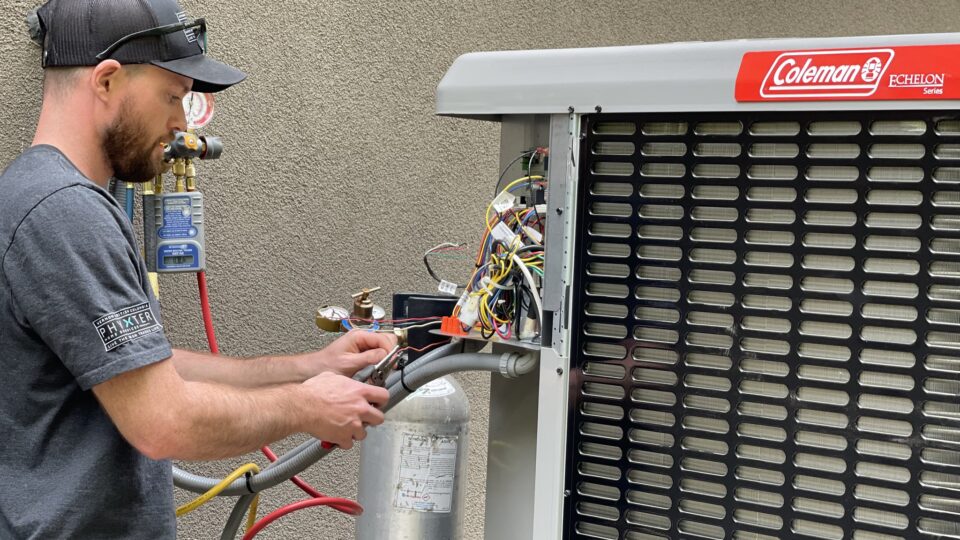
Are today’s refrigerants safe?

March 21, 2025 By EarthWise Leave a Comment

The refrigerants being used today may not be safe

Refrigeration is based on heat transfer mediums that absorb heat from the area being cooled and transfer it to the outside environment.

The earliest refrigerants were dangerous substances like ammonia.  In the 1930s, chlorofluorocarbons (CFCs) like Freon became the standard refrigerant for use in refrigeration systems and even in aerosol cans.  When these substances were found to be depleting the earth’s ozone layer, the Montreal Protocol dictated their phaseout and by the mid-1990s, CFCs were largely replaced by hydrofluorocarbons (HFCs).

HFCs don’t deplete the ozone layer, but they were eventually determined to be potent greenhouse gases, thousands of times more planet-warming than carbon dioxide.   As a result, the global phaseout of HFCs began in 2016, and have been increasingly replaced by hydrofluoroolefins (HFOs), which are considered a more environmentally-friendly alternative to all their predecessors.

Trying to not be surprised by additional unpleasant discoveries about refrigerants, researchers are studying the potential environmental impacts of HFOs.  Researchers at the University of New South Wales in Australia have found that HFOs can break down in the atmosphere and that some small amounts of the resultant products are in fact fluoroforms, which are the HFC with the greatest global warming potential and can stay in the atmosphere for up to 200 years.

That only a small amount of HFC gets into the atmosphere is good, but nevertheless it reveals that the consequences of replacing widely-used chemicals are not a simple matter to determine.

**********

Web Links

Are our refrigerants safe? The lingering questions about the chemicals keeping us cool

Photo, posted July 19, 2021, courtesy of Vernon Air Conditioning via Flickr.

Earth Wise is a production of WAMC Northeast Public Radio

Climate change and Antarctic meteorites

May 1, 2024 By EarthWise Leave a Comment

Researchers from Switzerland and Belgium have investigated the effects of the warming climate on access to meteorites in Antarctica.  Meteorites are of great scientific interest because they provide unique information about the makeup of our solar system.  Of all the meteorites that people have found, 62.6% of them were found in Antarctica.

Why is this?  It is not because more meteorites land in Antarctica.  Statistically, they can land anywhere on earth.  Most end up in the ocean since the world’s oceans cover 70% of the planet. 

Meteorites in Antarctica are more visible because environmental conditions are favorable for their preservation and their visibility.  The arid and cold Antarctic environment helps to preserve meteorites and the lack of rocks and contrast with ice makes spotting meteorites much easier.  The flow of ice sheets tends to concentrate meteorites in so-called meteorite stranding zones where the dark colored space rocks can be easily detected.

There are an estimated 300,000 to 800,000 meteorites in Antarctica.  When meteorites warm up, they can transfer heat to the ice, which locally melts.  Eventually, the meteorites sink beneath the surface.  A recent study using satellite imagery, climate model projections, and AI predicts that for every tenth of a degree of increase in global air temperature, an average of 9,000 meteorites in Antarctica will disappear from the surface and will no longer be able to be found. 

The study estimates that a quarter of Antarctic meteorites will be lost to glacial melt by 2050.  If warming continues to accelerate, closer to three-quarters of the meteorites on the continent will be lost. 

**********

Web Links

Climate change threatens Antarctic meteorites

Photo, posted April 21, 2005, courtesy of Kevin Walsh via Flickr.

Earth Wise is a production of WAMC Northeast Public Radio
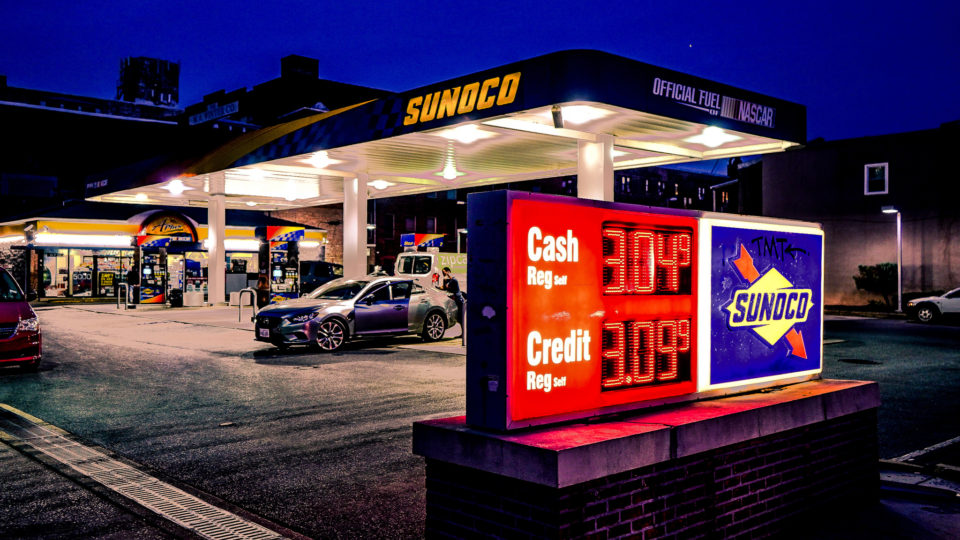
Fumes From Gas Stations

November 15, 2018 By EarthWise Leave a Comment

https://earthwiseradio.org/wp-content/uploads/2018/11/EW-11-15-18-Fumes-from-Gas-Stations.mp3

A study by environmental health scientists at Columbia University examined the release of vapors from gas station vent pipes and found that emissions were 10 times higher than the estimates used to establish setback regulations that determine how close schools, playgrounds, and parks can be to the facilities.

[Read more…] about Fumes From Gas Stations

Primary Sidebar

Recent Episodes

  • An uninsurable future
  • Clean energy and jobs
  • Insect declines in remote regions
  • Fossil fuel producing nations ignoring climate goals
  • Trouble for clownfishes

WAMC Northeast Public Radio

WAMC/Northeast Public Radio is a regional public radio network serving parts of seven northeastern states (more...)

Copyright © 2026 ·