• Skip to primary navigation
  • Skip to main content
  • Skip to primary sidebar

Earth Wise

A look at our changing environment.

  • Home
  • About Earth Wise
  • Where to Listen
  • All Articles
  • Show Search
Hide Search
You are here: Home / Archives for tons

tons

Trapping carbon with rocks

March 25, 2025 By EarthWise Leave a Comment

Many experts say that combating global warming will require both drastically reducing the use of fossil fuels and permanently removing billions of tons of CO2 already in the atmosphere.  Developing practical, large-scale technologies for carbon removal is a significant challenge.

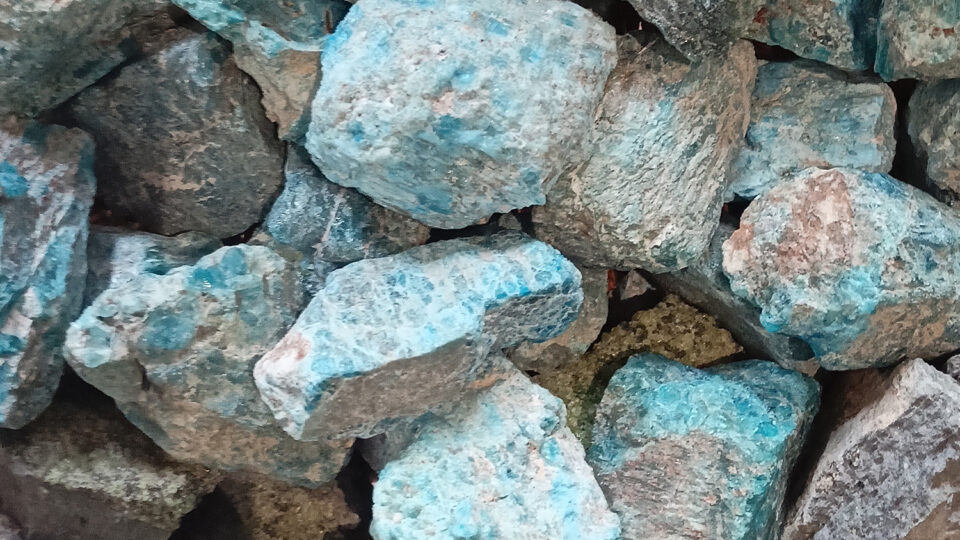
There is a nearly inexhaustible supply of minerals that are capable of removing carbon dioxide from the atmosphere, but they don’t do it quickly enough to make a significant dent in the ever-growing supply in the atmosphere.  In nature, silicate minerals react with water and atmospheric CO2 to form minerals in the process called weathering.  But this chemical reaction can take hundreds or even thousands of years.

Researchers at Stanford University have developed a new process for converting slow-weathering silicates into much more reactive minerals that capture and store carbon quickly.  The new approach resembles a centuries-old technique for making cement.  They combine calcium oxide and another common mineral containing magnesium and silicate ions in a furnace.   The result are new materials that, when exposed to water, quickly trap carbon from the atmosphere.

In their experiments, the carbonation process took weeks to months to occur, thousands of times faster than natural weathering.

The idea would be to spread these materials over large land areas to remove CO2 from the air.  Meaningful use for trapping carbon would require annual production of millions of tons.  But the same kiln designs used to make cement could produce the needed materials using abundant minerals found in many places.  In fact, the required minerals are often common leftover materials – or tailings – from mining.

**********

Web Links

Scientists discover low-cost way to trap carbon using common rocks

Photo courtesy of Renhour48 via Wikimedia.

Earth Wise is a production of WAMC Northeast Public Radio
Wind farms and sea farms

August 5, 2024 By EarthWise Leave a Comment

There has been increasing use of agriculture coexisting with solar farms.  This dual use of land is a win-win situation.  Recently, Danish researchers have been investigating the potential for farming marine products at offshore wind farms.

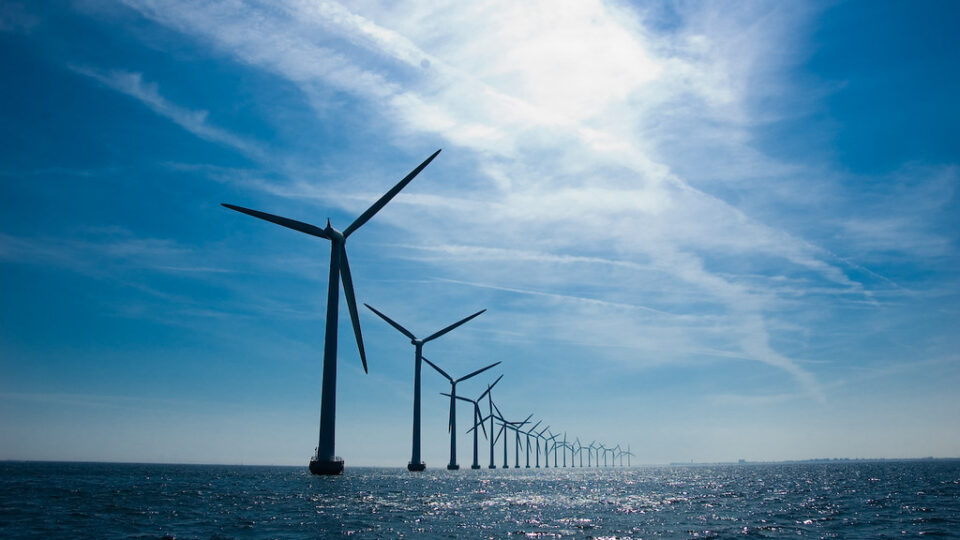
Scandinavia’s largest wind farm, Kriegers Flak, is the site of a four-year-old project in which long lines are stretched between the wind farm’s pylons and are used to grow mussels and seaweed.  With the first harvest that has taken place after 18 months, it is showing signs of early success.

Seaweed and mussels are low trophic aquaculture crops.  That means that that they don’t need to be fed or fertilized.  They take up nutrients from the sea and produce healthy foods.

The 328-foot lines spread between the turbines can be used to grow substantial quantities of the underwater seafood.  According to modeling by Aarhus University – the institution conducting the study – using just a tenth of Denmark’s wind park area could produce tons of seafood annually while using only the naturally-available resources.  This form of aquaculture captures emissions instead of producing them.

Researchers say that it is time to develop guidelines to encourage companies to plan for multiple uses of the ocean because countries are ramping up production of clean energy from offshore wind farms.  Denmark was the first country in the world to install a commercial offshore wind park in 1991.  Over 30 years later, nearly half of the country’s electricity comes from wind turbines.

The benefits of such sea farms combined with offshore wind farms go beyond food production and clean energy production.  They also help improve water quality and capture carbon.  It is another win-win situation.

**********

Web Links

Beneath offshore wind turbines, researchers grow seafood and seaweed

Photo, posted August 5, 2007, courtesy of Andreas Klinke Johannsen via Flickr.

Earth Wise is a production of WAMC Northeast Public Radio
Life In The Garbage Patch | Earth Wise

May 23, 2023 By EarthWise Leave a Comment

The ocean's garbage patches are teaming with marine life

A team of scientists has found thriving communities of coastal creatures living thousands of miles from their original homes and now ensconced on plastic debris in the Great Pacific Garbage Patch. 

A new study published in the journal Nature Ecology & Evolution reports that dozens of species of coastal invertebrate organisms – including tiny crabs and anemones – have been able to survive and reproduce on plastic garbage that has been floating in the ocean for years.

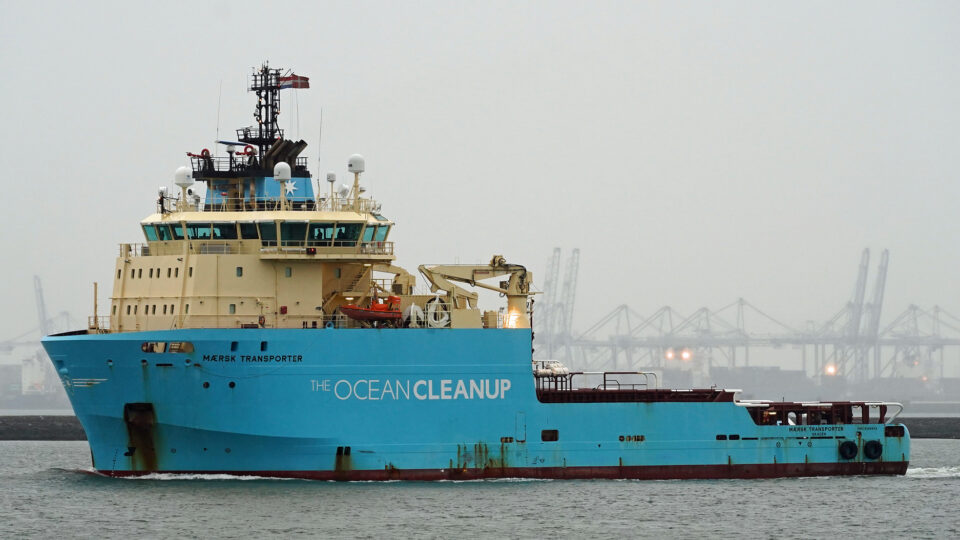
The Great Pacific Garbage Patch is an area in the ocean between California and Hawaii, larger than Texas, where plastic debris has been collected by the North Pacific Subtropical Gyre, one of five huge, spinning circular currents in the world’s oceans.  The patch is estimated to contain about 1.8 trillion pieces of plastic weighing an estimated 90,000 tons.  The Ocean Cleanup Initiative is dedicated to removing this immense accumulation of plastic, but it is an immense job.

Researchers discovered this new ecosystem after analyzing plastic samples collected by The Ocean Cleanup organization during its expeditions in the Pacific.  They were surprised to find 37 different invertebrate species that normally live in coastal water and only a dozen species that live in open waters.  These species have made their way from North America and have thrived.  So, the garbage patch has created a novel community that didn’t previously exist.

Debris from the Great Pacific Garbage patch constitutes the majority of debris arriving on Hawaiian beaches and reefs.  Hawaii’s fragile marine ecosystems have long been protected from invasive species because of the very long distances from North America or Asia.  With the coastal species now inhabiting the garbage patch, there is increased danger of colonization by them in Hawaii’s ecosystems.

**********

Web Links

Coastal species persist on high seas on floating plastic debris

Photo, posted September 30, 2020, courtesy of Kees Torn via Flickr.

Earth Wise is a production of WAMC Northeast Public Radio

Recycling Shingles | Earth Wise

May 27, 2022 By EarthWise Leave a Comment

A process to recycle asphalt shingles

Every year in the US, about 13 million tons of asphalt material is removed from old roofs to be replaced with new shingles.  Only about 10% of that is recycled for use in paving and various roadway projects.  The other 12 million tons of asphalt ends up in landfills where it takes a very long time to break down.

GAF, the largest roofing manufacturer in North America, has developed a shingle recycling process for which it has received three patents.  The process involves grinding torn-off shingles into a refined material which can then be introduced into the shingle manufacturing process.  The material – referred to as RAS for recycled asphalt shingles – has the potential to significantly reduce the amount of virgin asphalt needed to make new shingles.

Tests by GAF reclaimed upwards of 90% of the waste shingle material and produced new shingles containing up to 15% recycled content.  Underwriters Laboratories certified the shingles containing RAS material with regard to their safety and effectiveness.  The GAF process opens to door to creating a circular, sustainable economy for asphalt used for roofing shingles.

Roofs play an important role in the transition to a green economy.  Apart from recycling asphalt shingles, there are increasing options for solar shingles, which take the place of both traditional asphalt shingles and ordinary solar panels by integrating them into a single roofing product.  There are also so-called green roofs, which replace conventional roofing materials with a contained green space atop a building. Such roofs provide stormwater management, cooling, and an interesting aesthetic.

All aspects of buildings play important roles in our environment – even their roofs.

**********

Web Links

5 Ways Roofers Can Celebrate Earth Day, Everyday

Photo, posted April 15, 2012, courtesy of Robert Taylor via Flickr.

Earth Wise is a production of WAMC Northeast Public Radio.

Primary Sidebar

Recent Episodes

  • An uninsurable future
  • Clean energy and jobs
  • Insect declines in remote regions
  • Fossil fuel producing nations ignoring climate goals
  • Trouble for clownfishes

WAMC Northeast Public Radio

WAMC/Northeast Public Radio is a regional public radio network serving parts of seven northeastern states (more...)

Copyright © 2026 ·