• Skip to primary navigation
  • Skip to main content
  • Skip to primary sidebar

Earth Wise

A look at our changing environment.

  • Home
  • About Earth Wise
  • Where to Listen
  • All Articles
  • Show Search
Hide Search
You are here: Home / Archives for thriving

thriving

Tigers in India

March 17, 2025 By EarthWise Leave a Comment

The Anthropocene is the term that describes the current era in Earth’s history when human activities are having a significant impact on the planet.  It is an epoch filled with species extinction and species attrition in both numbers and range.  The population of large carnivores are among the most affected species and recovering these animals that play important roles in ecosystems is a formidable challenge.

Tigers in Asia are a prime example of extirpation – removal of a species from a specific area.  They have been eliminated in more than 90% of their historic Asian range over the past century.  A new study, published in Science has found that tigers in India are making a comeback.

India’s National Tiger Conservation Authority estimates that between 2010 and 2022, India’s tiger population grew from 1,706 to 3,682.  Tigers are thriving not only on protected lands but also near some human communities.

Tigers are gone from poorer areas where poaching was prevalent and from areas affected by the violent conflict associated with India’s Maoist rebellion.  On the other hand, the big cats can be found near some prosperous communities where poaching is rare.  Farmers keep cattle in enclosures to protect them from tigers.  

The success in protecting tigers in India could provide some insights for Europe where wolves are making a comeback, and perhaps even in the American West where the resurgence of wolf populations is triggering a violent backlash.

Large predators can survive in the modern world with creative thinking and willingness to find a balance between protection and coexistence.

**********

Web Links

India Doubled its Tiger Population in a Little More Than a Decade

Photo, posted January 8, 2014, courtesy of Roderick Eime via Flickr.

Earth Wise is a production of WAMC Northeast Public Radio
Sequoias in Britain

April 16, 2024 By EarthWise Leave a Comment

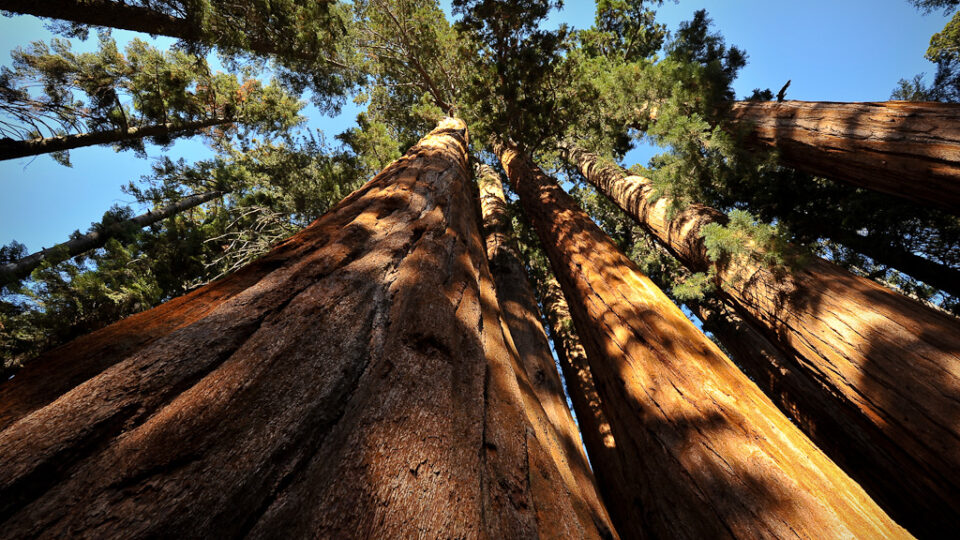
Giant sequoias are the most massive trees on earth.  They can grow as tall as nearly 300 feet and have trunk diameters from 20 to 26 feet.  They are also among the oldest living organisms on Earth; some of them are well over 3,000 years old.  The trees are native to the western slopes of the Sierra Nevada mountain range in California.

Lengthy droughts and wildfires have been pushing giant sequoias in California into decline.  Up to 20% of all large giant sequoias in California died in wildfires in 2020 and 2021.  There are estimated to be only about 80,000 remaining in the native groves in the Sierra Nevada.  These old-growth forests are very much in jeopardy and represent rare ecosystems of considerable ecological and historical value.

Giant sequoias have been planted in many places around the world.  They were introduced to country estates in Britain during the 19th century.  They were seen as symbols of wealth and power.  Over time, they have been widely planted in parks and woodlands.   As a result, there are now half a million giant sequoias growing in Britain and they are thriving there.

The British sequoias are rather young by sequoia standards, so they are relatively squat in stature.  The tallest of them measures about 180 feet.  But recent research, published in the journal Royal Society Science, found that in Britain’s cool and mild climate, the trees are growing nearly as fast as they do in California. 

The British sequoias are probably more important for their aesthetic and historical interest than their impact on the environment, but it is good to know they are there.

**********

Web Links

Under Threat in Their Native California, Giant Sequoias Are Thriving in Britain

Photo, posted November 4, 2010, courtesy of John Buie via Flickr.

Earth Wise is a production of WAMC Northeast Public Radio
How To Support Pollinators | Earth Wise

August 4, 2023 By EarthWise Leave a Comment

Pollinators of all sorts have been in decline for a while.  This is especially true of bees, bats, and monarch butterflies.  Without pollinators, fruits, vegetables, and other plants cannot provide their contributions to our food supply.  According to experts, about 30% of the food that ends up on our tables gets there because of pollinators.

Bees are the most efficient pollinators, but plenty of other insects do their share as well.  Butterflies and months, flies, beetles, and wasps all are good pollinators.  In addition to insects, birds and bats can also be pollinators. 

Entomologists at Texas A&M University have offered some science-based advice for homeowners who want to keep pollinators around and thriving during the summer months.

Pollinators need flowers that bloom at different times of the year.  So, home gardens should overlap blooms.  Native and drought-tolerant species are good additions to a garden or landscape.

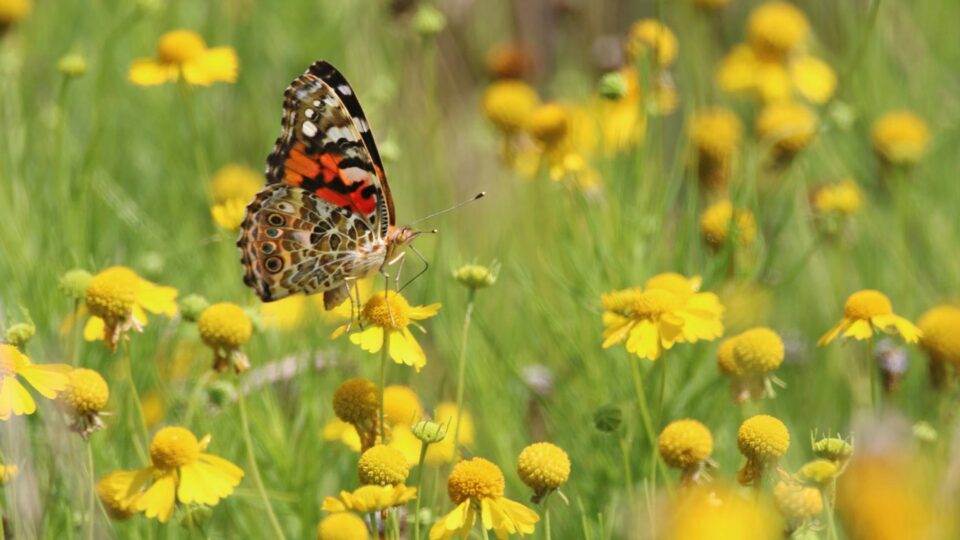
Colorful gardens attract more pollinators because different pollinators are attracted to different colors.  Bumblebees like blues and purples; other bees are attracted to yellows and whites.  Butterflies like bright colors like oranges and pinks.

Plant flowers with different shapes and sizes because pollinators flower preferences come in all shapes and sizes.

Provide shelter for pollinators.  Houses for bees and other pollinators are available for purchase. Or people can make their own using plastic tubes.

And probably most importantly, go easy on pesticides.  If it is really necessary to apply pesticides, do it in the evening when most pollinators have called it a day.

Having a colorful garden with lots of variety is a fine addition to one’s home.  Beyond that, it is a valuable contribution to helping preserve essential pollinators.

**********

Web Links

Top Five Tips For Supporting Pollinators This Summer

Photo, posted August 14, 2017, courtesy of USFWS Midwest Region via Flickr.

Earth Wise is a production of WAMC Northeast Public Radio

Agriculture Turning Wild Plants Into Weeds | Earth Wise

February 7, 2023 By EarthWise Leave a Comment

Modern agriculture practices are turning wild plants into weeds

We often hear about the importance of native plants in the environment and how invasive species can wreak havoc with ecosystems.   But it turns out that human activities can change the characteristics of native species and create unexpected new problems.

Common waterhemp is plant native to North America that typically grows near lakes and streams.  It never used to be any kind of problem, but in recent times it has become nearly impossible to eradicate from farms as a result of genetic adaptations triggered by modern agriculture.

A study led by researchers at the University of British Columbia looked at waterhemp samples from modern farms and neighboring wetlands and compared them with historical samples dating back as far as 1820 stored in various museums.

In recent times, mutations in genes related to drought tolerance, rapid growth, and resistance to herbicides have resulted in waterhemp that has become a pervasive weed on farms.  These genetic shifts, scarcely ever seen in historical samples, have made the plant thrive among human agricultural activities and enable it to outcompete crops.

Genetic analysis of the plants showed that herbicide-resistant mutations that were mostly absent from historical samples stand out as factors that allow waterhemp to prosper in agricultural settings. There are some plants in natural habitats that have herbicide-resistant mutations, but in many cases, these mutations are actually harmful to the plants in the wild.

Understanding how plant adaptations occur on relatively short timescales is increasingly important as farming and climate  change continue to drive rapid plant evolution.

**********

Web Links

How intensive agriculture turned a wild plant into a pervasive weed

Photo, posted February 16, 2016, courtesy of Aqua Mechanical via Flickr.

Earth Wise is a production of WAMC Northeast Public Radio

Primary Sidebar

Recent Episodes

  • An uninsurable future
  • Clean energy and jobs
  • Insect declines in remote regions
  • Fossil fuel producing nations ignoring climate goals
  • Trouble for clownfishes

WAMC Northeast Public Radio

WAMC/Northeast Public Radio is a regional public radio network serving parts of seven northeastern states (more...)

Copyright © 2026 ·