• Skip to primary navigation
  • Skip to main content
  • Skip to primary sidebar

Earth Wise

A look at our changing environment.

  • Home
  • About Earth Wise
  • Where to Listen
  • All Articles
  • Show Search
Hide Search
You are here: Home / Archives for three gorges dam

three gorges dam

The largest solar power plant

October 2, 2025 By EarthWise Leave a Comment

The Middle East is known for its vast petroleum resources and oil has been its primary source of wealth.  But the desert region is now becoming a significant center for solar energy as well.  The world’s largest single-site solar park is the Mohammed bin Rashid Al Maktoum Solar Park, located in the United Arab Emirates.

Currently, 1 GW of solar is operational at the facility, but work is underway that will add 1.8 GW more capacity. Over 2.2 million solar panels have been installed to date and there will be more than 3.9 million by the time the next phase is completed. By the end of the decade, the capacity of the facility is expected to reach 7.2 GW, exceeding the original 5 GW target.  The plant will contribute about a third of Dubai’s total electricity capacity.

This solar plant will be one of the 15 largest power plants in the world.  Most of the largest ones are hydroelectric plants.  The biggest is the Three Gorges Dam in China, which has an enormous 22.5 GW capacity. The only non-hydro plant in the top 10 is the Jebel Ali natural gas plant, located in the United Arab Emirates.  China’s Jiuquan Wind Farm has a capacity of nearly 8 GW.  The largest power plant in the United States is the Grand Coulee Dam, which has a 6.8 GW capacity.

The world’s hunger for electric power continues to grow, especially with the surging use of AI technology.  As a result, there will be growing numbers of increasingly larger power plants.

**********

Web Links

World’s largest solar park adds 1 GW

Photo courtesy of the Dubai Media Office.

Earth Wise is a production of WAMC Northeast Public Radio

Five amazing renewable energy projects

June 11, 2025 By EarthWise Leave a Comment

Worldwide investment in renewable energy topped $2 trillion in 2024.  For Climate Solutions Week, we wanted to highlight some amazing projects around the world that showcase innovative technology, ambitious scale, and the commitment to a cleaner and sustainable future.

In Morocco, the Noor Solar Power Station is a huge concentrated solar power facility that generates power for more than a million Moroccans.  The facility stores some of the heat generated by the sun in molten salt so it can continue to produce power after sunset.

The Three Gorges Dam in China is the world’s largest power plant by installed capacity.  The 32 turbines generate enough electricity to power millions of homes. 

The Alta Wind Energy Center in California is one of the largest onshore wind farms in the world.  The 600 turbines at the facility provide clean electricity for up to 450,000 homes.

The Yamakura Dam Floating Solar Project in Japan has more than 50,000 solar panels that provide electricity for about 5,000 households.  The plant is located atop the surface of the Yamakura Dam reservoir and is one of the largest floating solar installations in the world.

The Hellisheiði Power Station in Iceland is one of the world’s most technologically advanced geothermal energy plants.  It taps into Iceland’s volcanic geology and draws both high-pressure steam and hot water to provide both electricity and heat to thousands of local homes and businesses.  

These five projects are just a sampling of the renewable energy development going on all over the world.

**********

Web Links

Powering the Future: Innovative Renewable Energy Projects Around the World

Photo, posted December 1, 2019, courtesy of Richard Allaway via Flickr.

Earth Wise is a production of WAMC Northeast Public Radio
The Bengal Water Machine | Earth Wise

October 31, 2022 By EarthWise Leave a Comment

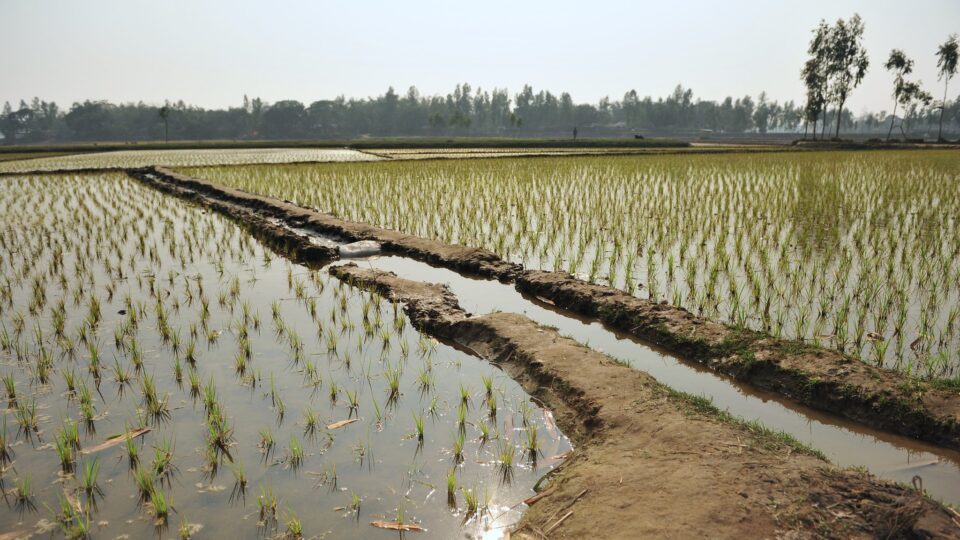
Over the past three decades, the owners of 16 million small farms in the Bengal Basin of Bangladesh have been pumping shallow groundwater during dry seasons to irrigate rice paddies.  By lowering groundwater levels in this way during the dry season, the ability of leakage from rivers, lakes, and ponds to replenish the groundwater was greatly enhanced.   Capturing surface water not only improved the recovery of groundwater levels but only helped to reduce flooding during monsoons.

The net result of this enormous collective groundwater pumping by millions of farmers has been the creation of vast natural reservoirs underground that are comparable to what is contained by many of the world’s largest dams.   This system of sustaining irrigation has transformed what was previously a famine-prone country into a food-secure nation.

The details of this remarkable transformation have been laid out in a study by University College London recently published in the journal Science.  According to the study, over the course of 30 years, more than 75 cubic kilometers of fresh water was captured by this process, which is equivalent to the combined reservoirs of China’s Three Gorges Dam and the Hoover Dam in the U.S.

The authors of the study described the water cycling process as “The Bengal Water Machine” and argue that it can be a sustainable alternative to conventional approaches to seasonal river flow storage for irrigation, which typically involve dams and reservoirs.  Such approaches are difficult to implement in densely populated alluvial plains where sand, silt, and clay are laid down by annual floodwaters. 

**********

Web Links

Millions of farmers “replumb” world’s largest delta

Photo, posted February 2, 2010, courtesy of Melanie Ko via Flickr.

Earth Wise is a production of WAMC Northeast Public Radio

Primary Sidebar

Recent Episodes

  • An uninsurable future
  • Clean energy and jobs
  • Insect declines in remote regions
  • Fossil fuel producing nations ignoring climate goals
  • Trouble for clownfishes

WAMC Northeast Public Radio

WAMC/Northeast Public Radio is a regional public radio network serving parts of seven northeastern states (more...)

Copyright © 2026 ·