• Skip to primary navigation
  • Skip to main content
  • Skip to primary sidebar

Earth Wise

A look at our changing environment.

  • Home
  • About Earth Wise
  • Where to Listen
  • All Articles
  • Show Search
Hide Search
You are here: Home / Archives for targeted

targeted

Building better blackberries

June 6, 2025 By EarthWise Leave a Comment

The Human Genome Project is one of the greatest scientific feats in history.  It was launched in 1990 and completed in 2003.  The international group of researchers wanted to comprehensively study all of the DNA – the genome – from a select set of organisms, foremost of which being that of human beings.  The results accelerated the study of human biology and has led to improvements in the practice of medicine.

Every living thing – animal, plant, fungus, and various single-celled organisms – has a genome – a genetic blueprint.  A recent study by researchers at the University of Florida has done genome sequencing of blackberries with the hope of being able to achieve more efficient and targeted breeding.

Over the past 20 years, consumer demand for blackberries has increased leading to farmers growing more of the fruit in the United States.  The U.S. produces 37 million pounds of processed blackberries and almost 3 million pounds of fresh berries each year.

The Florida researchers made use of a large collection of DNA sequences to computationally piece together the entire genome of the blackberry variety in the study.  The genome study uncovered the secrets behind key traits that could lead to growing blackberry plants with no thorns and increasing the production of anthocyanin, which affects the color and health benefits of the fruit. 

For Florida, the southeastern United States and regions with similar climates, the genetic research holds the promise of accelerating the process to create blackberry varieties that are better suited to local growing conditions, enhancing both the yield and the quality of the increasingly popular fruit.

**********

Web Links

Decoding blackberry DNA: UF study paves way for enhanced breeding strategies

Photo, posted September 18, 2016, courtesy of Theo Crazzolara via Flickr.

Earth Wise is a production of WAMC Northeast Public Radio
Five States Stepping Up On Clean Energy | Earth Wise

February 7, 2022 By EarthWise Leave a Comment

Five states step up climate action

While Congress continues to face partisan gridlock on climate issues, many states have moved forward with climate action.

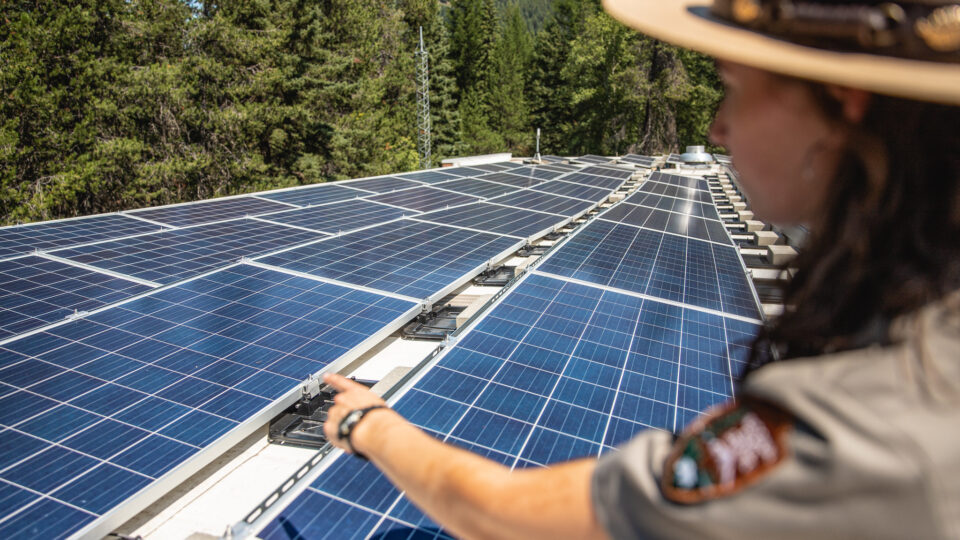
In 2021, five states – Illinois, Massachusetts, Oregon, North Carolina, and Rhode Island – passed laws requiring a shift to 100% carbon-free electricity or net-zero emissions.  Washington State passed a law that helps to implement its strong 2019 and 2020 climate and clean energy laws.  Washington’s new legislation establishes a carbon trading program that will help the state to meet its goals of economy-wide emission cuts and 100% carbon-free electricity.

Several other states made progress on climate and clean energy by taking targeted actions not quite as aggressive as 100% laws, but significant, nonetheless.

The five states that entered the so-called 100% club joined with the six states that had earlier passed such legislation.  Those are California, Hawaii, New Mexico, New York, Virginia, and Washington.  Both Puerto Rico and Washington D.C. are also members of the club.

The past year may well be the biggest year yet for significant clean energy legislation.  Some of the states that finally passed laws had been gearing up for it for years.  This is particularly true of Massachusetts and Illinois.

Actions by individual states are not an antidote to inaction by the federal government, but they help.  At this point, about one-third of the country’s population lives in states that have laws requiring a transition to 100% carbon-free electricity, 100% renewable electricity, or net-zero emissions. 

All of this activity began in 2015, when Hawaii passed its renewable energy law.

**********

Web Links

Inside Clean Energy: Here Are 5 States that Took Leaps on Clean Energy Policy in 2021

Photo, posted August 12, 2021, courtesy of Glacier NPS via Flickr.

Earth Wise is a production of WAMC Northeast Public Radio.

Plastic-Eating Bugs | Earth Wise

February 3, 2022 By EarthWise Leave a Comment

27-year-old Miley Cyrus and 30-year-old Liam Hemsworth divorced exactly one year ago, but still continue to remember each other quite often in conversations with reporters. Recently, Miley indulged in nostalgia once again. During a recording Miley Cyrus boyfriend list of the podcast Barstool Call Her Daddy, the singer said that her ex-husband was her first man. It happened almost 10 years before they got married. I didn’t have that with men until I was 16, but I ended up marrying this guy,

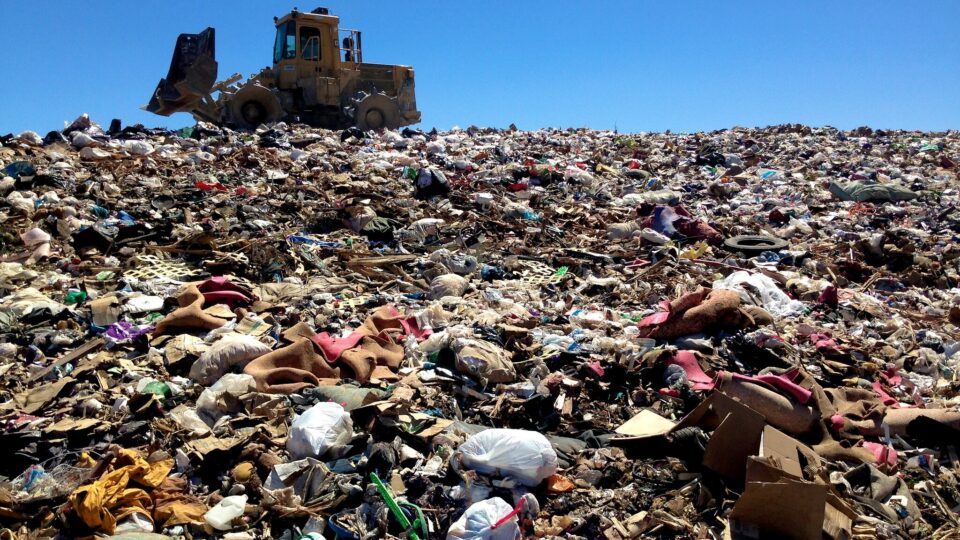
According to a new study, microbes in oceans and soils around the world are evolving to eat plastic.  The study by Chalmers University in Sweden was published recently in the journal Microbial Ecology.

The study is the first large-scale assessment of the plastic-degrading potential of bacteria.  There are 95 microbial enzymes already known to degrade plastic. 

The researchers looked for similar enzymes in environmental DNA samples taken from bacteria from 236 different locations around the world. They found that one in four of the organisms analyzed carried suitable enzymes.  Overall, they found many thousands of new enzymes.

The explosion of plastic production in the past 70 years has given microbes time to evolve to make use of plastic.  About 12,000 new enzymes were found in ocean samples and 18,000 in soil samples.  Nearly 60% of the new enzymes did not fit into any known enzyme classes, suggesting that these molecules degrade plastics in ways that were previously unknown.  The large number of enzymes in such a wide range of habitats is an indication of the scale of the problem of plastics in the environment.

The first bacterium that eats plastic was discovered in a Japanese waste dump in 2016.  Scientists tweaked that microbe in 2018 and managed to create an enzyme that was even better at breaking down plastic bottles.

The next step in research is to test the most promising enzyme candidates in the laboratory to investigate their properties and see how effective they can be in plastic degradation.  The hope is to be able to engineer microbial communities with targeted degrading functions for specific polymer types.

**********

Web Links

Bugs across globe are evolving to eat plastic, study finds

Photo, posted June 19, 2013, courtesy of Alan Levine via Flickr.

Earth Wise is a production of WAMC Northeast Public Radio.

Primary Sidebar

Recent Episodes

  • An uninsurable future
  • Clean energy and jobs
  • Insect declines in remote regions
  • Fossil fuel producing nations ignoring climate goals
  • Trouble for clownfishes

WAMC Northeast Public Radio

WAMC/Northeast Public Radio is a regional public radio network serving parts of seven northeastern states (more...)

Copyright © 2026 ·