• Skip to primary navigation
  • Skip to main content
  • Skip to primary sidebar

Earth Wise

A look at our changing environment.

  • Home
  • About Earth Wise
  • Where to Listen
  • All Articles
  • Show Search
Hide Search
You are here: Home / Archives for tampa bay

tampa bay

Manatees are not Florida natives

December 20, 2024 By EarthWise 1 Comment

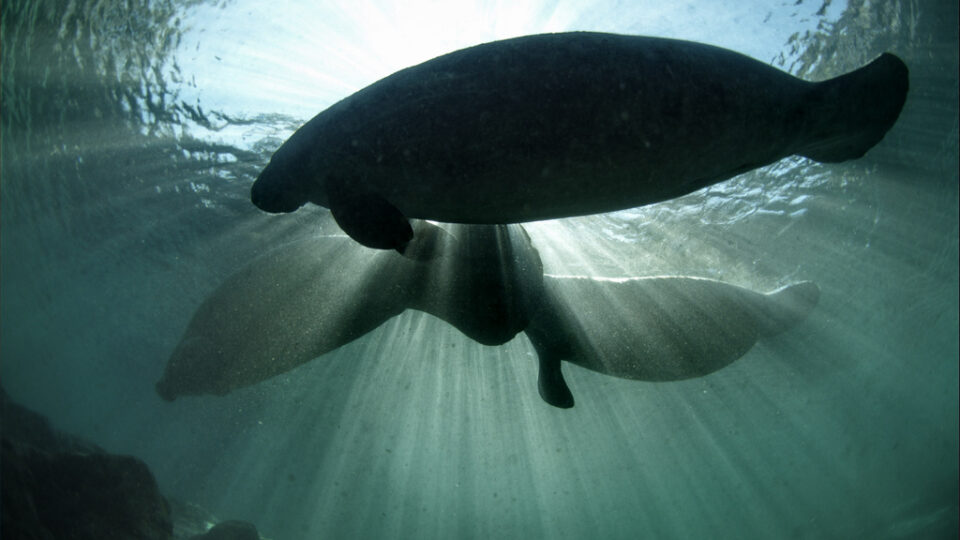
Manatees might not be native to Florida

Florida is very proud of its manatees.  It has a county named after them and has pictures of them on license plates.  These gentle creatures are part of Florida culture.  But recent research indicates that manatees – also known as sea cows – might only be relatively recent residents of the Sunshine State.

Manatees have been spotted in Florida waters for several centuries but might have only been tourists visiting briefly before returning to their home waters in the Caribbean in places like Cuba.

The new research suggests that manatees might not have actually taken up residence in Florida until after Europeans colonized the area in the 1500s.  There is a rarity of manatee bones on archaeological sites that date back further.  It was particularly striking that Crystal River, which is an epicenter for modern manatee populations, had little evidence of their presence in earlier times.

Even into the early 1900s, Florida newspaper reports treated manatee sightings as a spectacle rather than a common occurrence.  In the 1920s and 1930s, there started to be more routine sightings in places like yacht basins and canal harbors.  In the 1950s, manatees became more plentiful in Tampa Bay and Crystal River. The warming waters and human activities creating shallow warm water refuges increased manatee populations, particularly near places like power plants.

The current Florida manatee population is between 8,000 and 12,000 and is classified as threatened under the Endangered Species Act, an improvement over its previous endangered status.  But pollution is killing a lot of the seagrass that they eat, and their safety is by no means assured.

**********

Web Links

Why manatees are likely not Florida natives

Photo, posted March 25, 2012, courtesy of David Hinkel / USFWS via Flickr.

Earth Wise is a production of WAMC Northeast Public Radio

October was another hot month

December 3, 2024 By EarthWise Leave a Comment

October was another hot month, a continuation of the warming trend

In a year filled with unusually warm months, October 2024 ranked as the second-warmest October in the 175 years of the National Oceanic and Atmospheric Administration’s records.  It was just 0.09 degrees Fahrenheit cooler than the previous global record set just last year.

In our part of the world, North America had its warmest October on record.

Year-to-date, the global surface temperature has been 2.3 degrees Fahrenheit above the 20th century average, which is the warmest such period on record.  This record warmth was observed in Africa, Europe, North America, Oceania, and South America.  With only a little of the year to go, predictions are that there is a greater than 99% chance that 2024 will rank as the world’s warmest year on record.

Other aspects of the warming climate were also in full evidence in October.  Global sea ice coverage was the smallest in the 46 years that it has been tracked, about 1.25 million square miles below the 1991-2020 average.  Ice extent in the Arctic was the fourth lowest on record and ice extent in the Antarctic was the second lowest on record.

Global ocean surface temperature was the second warmest for October and is the warmest ever for the period January to October.

The Atlantic basin saw five tropical cyclones during October, including the deadly and destructive Hurricane Milton that made landfall just south of Tampa Bay. 

The monthly climate postings by NOAA continue to report record-breaking temperatures and significant climate anomalies and events.  This pattern is not likely to do anything but continue in the future.

**********

Web Links

Planet saw its 2nd-warmest October in 175-year record

Photo, posted August 21, 2018, courtesy of Fabio Achilli via Flickr.

Earth Wise is a production of WAMC Northeast Public Radio
Warming estuaries

September 13, 2024 By EarthWise Leave a Comment

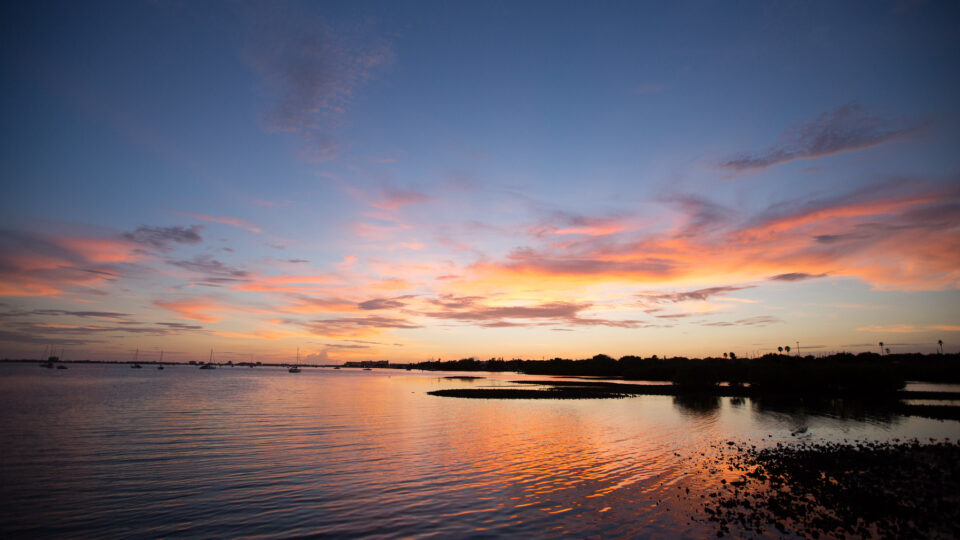
Estuaries in South Florida are rapidly warming

Estuaries and their surrounding wetlands are bodies of water where freshwater from rivers and streams mixes with salt water from the ocean to create brackish water.  These brackish ecosystems support many unique plant and animal communities around the world. 

But ocean water temperature around the world continues to warm.  In fact, from 1901 to 2023, the average sea surface temperature has increased by 0.14°F per decade, and 2023 was the warmest year on record.

While sea surface temperatures are on the rise, the problem is more pronounced in South Florida’s estuaries.  According to a new study by researchers from the University of South Florida College of Marine Science and the National Park Service, estuaries have experienced rapid warming over the past two decades. 

In fact, the research team found that sea surface temperature in four estuaries in South Florida – Florida Bay, Tampa Bay, St. Lucie Estuary and Caloosahatchee River Estuary- has risen around 70% faster than the Gulf of Mexico, and 500% faster than the global oceans. 

Their findings, which were recently published in the journals Environmental Research Letters and Estuaries and Coasts, paint a troubling picture for the marine life that calls South Florida’s estuaries home.

The research team has speculated about the possible causes of the rapid rate of warming, including evaporation, water capacity, and residence time, but no single factor has been revealed as dominant. 

The researchers hope to partner with colleagues at the Florida Fish and Wildlife Conservation Commission and NOAA to explore the potential impacts of water temperatures on seagrass and coral populations in South Florida.

**********

Web Links

Estuaries in South Florida are warming faster than the Gulf of Mexico and global ocean

What is an estuary?

Photo, posted August 18, 2016, courtesy of City of St. Pete via Flickr.

Earth Wise is a production of WAMC Northeast Public Radio

Primary Sidebar

Recent Episodes

  • An uninsurable future
  • Clean energy and jobs
  • Insect declines in remote regions
  • Fossil fuel producing nations ignoring climate goals
  • Trouble for clownfishes

WAMC Northeast Public Radio

WAMC/Northeast Public Radio is a regional public radio network serving parts of seven northeastern states (more...)

Copyright © 2026 ·