• Skip to primary navigation
  • Skip to main content
  • Skip to primary sidebar

Earth Wise

A look at our changing environment.

  • Home
  • About Earth Wise
  • Where to Listen
  • All Articles
  • Show Search
Hide Search
You are here: Home / Archives for surprising

surprising

How much nanoplastic is in the oceans?

August 1, 2025 By EarthWise Leave a Comment

There is a shocking amount of nanoplastics in the world's oceans

It is unfortunately well-known that microplastics are pretty much everywhere on Earth.  They are also increasingly found in living things like birds and dolphins as well as in human brains and placentas.  The oceans are polluted with plastic, and for the first time, there is now an estimate for the volume of nanoplastics – which are even smaller than microplastics and invisible to the human eye – found in the North Atlantic.

According to a study published in the journal Nature by the microplastics and nanoplastics research group at the Helmholtz Center for Environmental Research in Germany, there are at least 30 million tons of nanoplastics in the North Atlantic, which is more than the weight of all wild land mammals on Earth.

The same researchers have analyzed plastic in lakes, urban air, and even the air in very remote places, but the new study reveals a missing part of the plastics story.

Nanoplastics are microscopic fragments smaller than one micron, about the size of small bacteria.  There has been ongoing concern about nanoplastics in ocean water, but there wasn’t the technology available to really investigate it.  While nanoplastics were expected to be found in the ocean, the sheer amount of it was surprising.

The average concentration of nanoplastics near coastlines is about 25 milligrams per cubic meter of water, about the weight of a single large bird feather.   Nanoplastics are tiny enough that they can easily infiltrate the bodies of living creatures.  For fish and other ocean animals, that means constant exposure that builds up over time.

It is highly unlikely that plastic pollution is going to stop any time soon, but there is a United Nations meeting on the subject in August in Geneva.

**********

Web Links

Tons of Invisible Plastic Pieces Lurk in Ocean Water

Photo, posted June 24, 2020, courtesy of G.P. Schmal / NOAA via Flickr.

Earth Wise is a production of WAMC Northeast Public Radio
Sea turtles and climate change

March 24, 2025 By EarthWise Leave a Comment

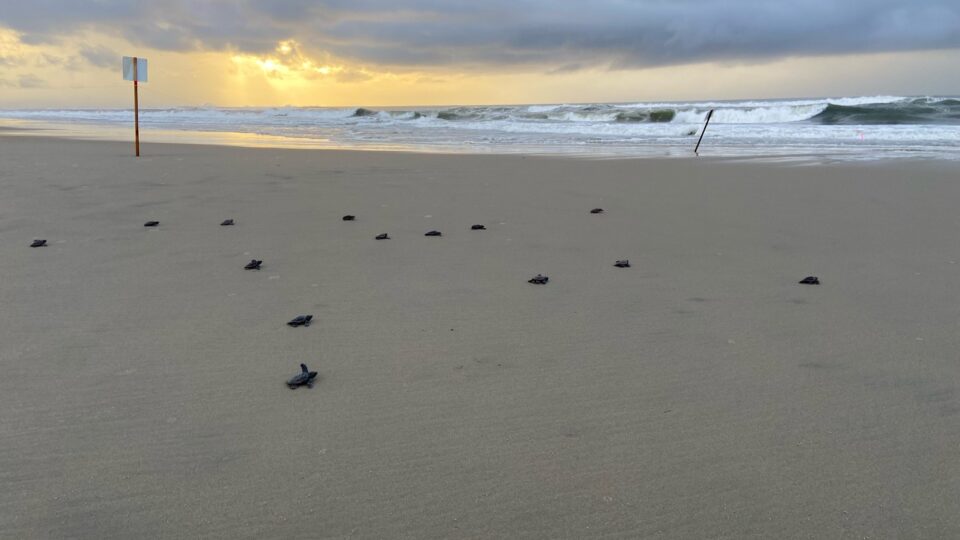
Sea turtles face threats from climate change

Life is a struggle for survival from the moment a sea turtle hatches.  In fact, only one sea turtle out of every 1,000 typically reaches adulthood as a result of natural predators and other challenges.  Those fortunate enough to make it to adulthood face serious threats from humans. For example, sea turtles are hunted for their meat, eggs, and shells in some regions. Their beach habitats get developed. Harmful marine debris and oil spills pollute their waters and beaches.

Now, climate change is exposing sea turtles to even greater threats.  Rising sea levels and stronger storms threaten to erode and destroy their nesting beaches. Warming oceans disrupt currents, potentially exposing sea turtles to new predators, and damaging the coral reefs that some depend on to survive.

As these environmental challenges intensify, sea turtles are beginning to adapt in surprising ways.  According to a new study by researchers from the University of Exeter in England and the Society for the Protection of Turtles in Cyprus, sea turtles are responding to climate change by nesting earlier.  Researchers monitoring nesting green and loggerhead turtles in Cyprus have discovered they are returning to their regular nesting spots earlier each year to compensate for rising temperatures.

Temperature plays a crucial role in determining the biological sex of sea turtles.  Warmer nest temperatures produce more female hatchlings than males.

But at least for now, sea turtles seem to be doing enough to ensure their eggs continue to hatch by nesting earlier in more ideal temperatures.  While this is good news, there’s no guarantee that it will continue. 

**********

Web Links

Turtles change nesting patterns in response to climate change

Photo, posted December 20, 2021, courtesy of Cape Hatteras National Seashore via Flickr.

Earth Wise is a production of WAMC Northeast Public Radio

A record warm January

March 4, 2025 By EarthWise Leave a Comment

January saw record warm temperatures around the world

Americans experienced unusually cold and wintery weather in January.  Places like southern Louisiana and Florida saw appreciable amounts of snow.  For those who experienced January’s Arctic blast, it was a cold January.  But despite that, January was the world’s warmest on record, extending a run of extraordinary heat in which 18 out of the last 19 months saw an average global temperature more than 1.5 degrees Celsius above pre-industrial times.  In fact, the global average temperature in January was 1.75 degrees above the pre-industrial average.

The exceptional warmth was surprising to climate researchers.  It happened despite the emergence of La Niña conditions in the Pacific Ocean, which tend to lower global temperatures, at least for a while.

Researchers are investigating whether there is something beyond the effects of greenhouse gas emissions that is boosting temperatures to an unexpected degree.  It is true that emissions, associated with the burning of coal, gas, and oil, reached record levels in both 2023 and 2024.  But January’s warmth was still something of a surprise.

One prevalent theory is that cutting dangerous pollution is playing a role in causing global warming to accelerate.  As regulators have curbed sulfate pollution to protect people’s lungs, the cooling effect of these particles that help form more and brighter clouds has diminished.

January demonstrates that the global climate system is complex and the weather in any particular region does not necessarily reflect what is happening to the planet as a whole.

**********

Web Links

Global Temperatures Shattered Records in January

Photo, posted December 22, 2013, courtesy of SD Anderson via Flickr.

Earth Wise is a production of WAMC Northeast Public Radio
Two Lost Lakes Return To California | Earth Wise

May 10, 2023 By EarthWise Leave a Comment

Two lost lakes return to California following recent rains

The recent siege of powerful storms in California driven by a series of atmospheric rivers has had a significant effect on the severe drought that has plagued most of the state for many years.  Many of the state’s reservoirs are at the highest level they have been for decades.   The snowpack in the Sierras is well over 200% of its historical average.  Many parts of the state are no longer considered to be in drought conditions, and, in fact, flooding has been a serious problem in some areas.  This flooding has had some surprising results.

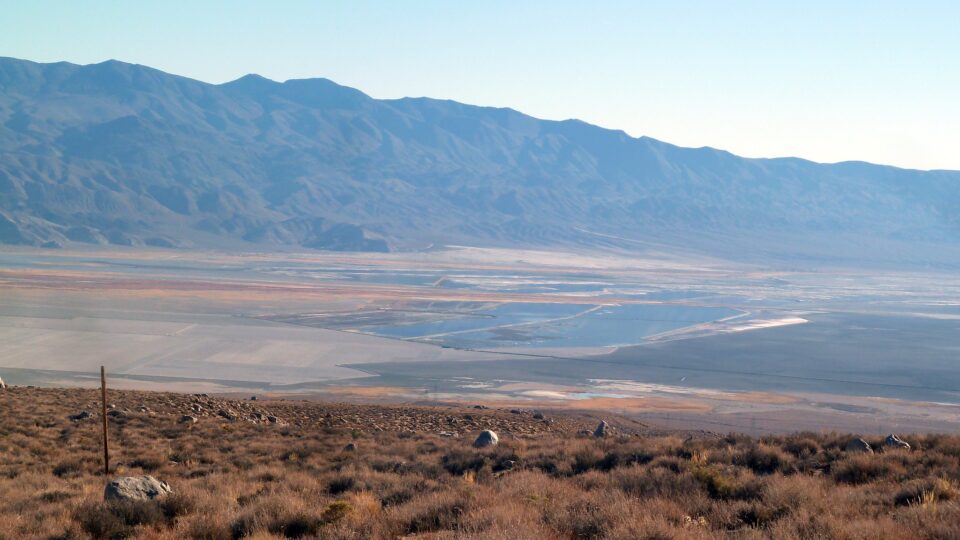
Two California lakes that drained a century ago have reappeared as a result of floodwaters from the recent storms.

Tulare Lake, in California’s Central Valley used to be fed by rain and snowmelt from the Sierras.  A system of dams and canals constructed in the early 20th century to support regional agriculture diverted water away from the lake.  It used to be the largest freshwater lake in the West but farmers ultimate planted crops in the dried lakebed.

The atmospheric river events in March inundated that farmland and once again there is water in Tulare Lake.

Owens Lake, on the eastern side of the Sierra Nevada, was long fed by mountain streams.  The 1913 construction of the Los Angeles Aqueduct redirected water to that city and desiccated the lake.   Floodwaters in March caused a partial collapse of the aqueduct and when the spill gates on the aqueduct were opened to drain the damaged areas, floodwaters poured in and partially refilled the lake.

California has suffered from drought for many years.  With its massive snowpack, as the weather warms, the state may face even more flooding.

**********

Web Links

Two Long-Drained California Lakes Refilled by Floodwaters, Satellite Images Show

Photo, posted November 10, 2014, courtesy of CN via Flickr.

Earth Wise is a production of WAMC Northeast Public Radio

Primary Sidebar

Recent Episodes

  • An uninsurable future
  • Clean energy and jobs
  • Insect declines in remote regions
  • Fossil fuel producing nations ignoring climate goals
  • Trouble for clownfishes

WAMC Northeast Public Radio

WAMC/Northeast Public Radio is a regional public radio network serving parts of seven northeastern states (more...)

Copyright © 2026 ·