• Skip to primary navigation
  • Skip to main content
  • Skip to primary sidebar

Earth Wise

A look at our changing environment.

  • Home
  • About Earth Wise
  • Where to Listen
  • All Articles
  • Show Search
Hide Search
You are here: Home / Archives for supply chain

supply chain

Big Food and greenhouse gas emissions

October 29, 2024 By EarthWise Leave a Comment

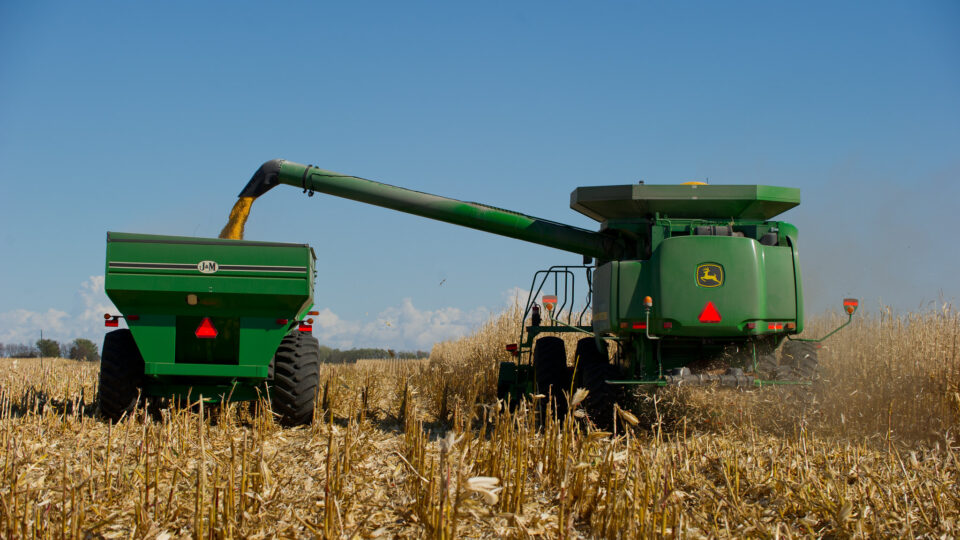
Analyzing Big Food and its greenhouse gas emissions

The global food system is responsible for as much as 40% of human-generated greenhouse gas emissions. The investor advocacy group Ceres has tracked whether the 50 largest North American food and agriculture companies have set targets to lower their emissions and whether doing so has actually resulted in lower emissions.

The emissions from food and agriculture companies are grouped into three so-called scopes.  Scope 1 are emissions from a company’s direct operations.  Scope 2 are emissions from its energy use.  Scope 3 are emissions from a company’s supply chain:  from the farmers who grow crops, raise cattle, and otherwise provide necessary items for a company’s final products.  In the food industry, the scope 3 category is responsible for about 90% of overall emissions.

Of the 50 food companies studied, 23 reduced their scope 1 and scope 2 emissions over the past 2 years, but only 12 reduced their scope 3 emissions.  Companies have more control over their scope 1 and scope 2 emissions. 

Reducing scope 3 emissions is more difficult.  And most companies haven’t set scope 3 reduction targets. 

The findings of the study suggest that reducing scope 3 emissions is especially difficult for companies whose supply chains are linked to carbon-intensive commodities, like meat, or crops linked to deforestation or land-use change, both of which result in increased emissions.

In March, the Securities and Exchange Commission finalized rules requiring companies to disclose their climate risk to regulators, increasing the visibility of the food industry emissions issue.

**********

Web Links

North America’s Biggest Food Companies Are Struggling to Lower Their Greenhouse Gas Emissions

Photo, posted October 13, 2011, courtesy of the United Soybean Board via Flickr.

Earth Wise is a production of WAMC Northeast Public Radio
Offshore Wind Industry In New York | Earth Wise

March 27, 2023 By EarthWise Leave a Comment

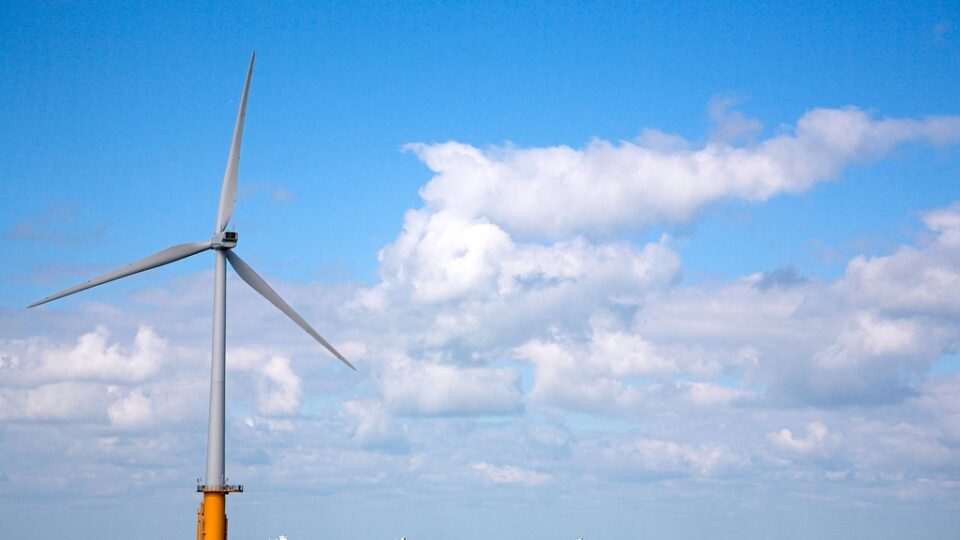
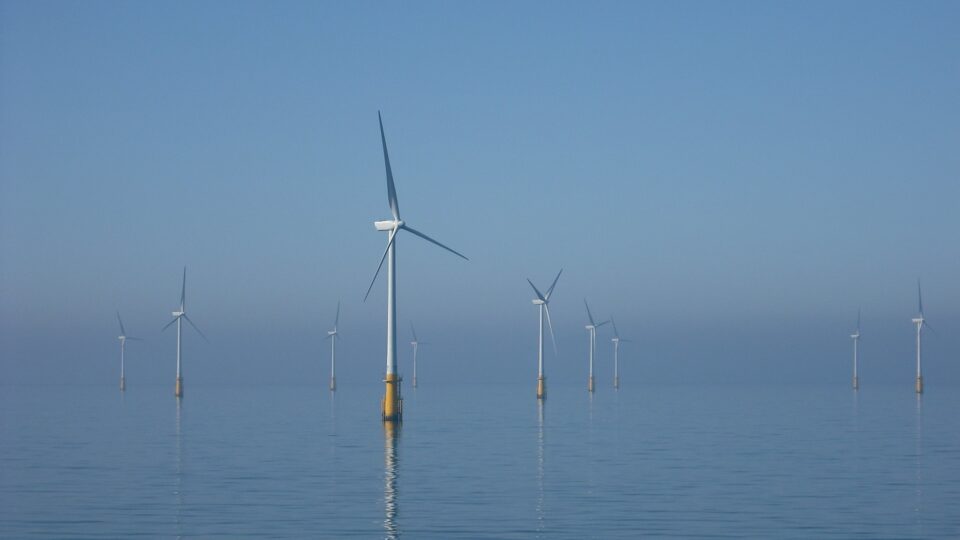
Last July, New York Governor Kathy Hochul announced the release of the state’s third competitive offshore wind solicitation, seeking to add generating capacity to power at least 1.5 million homes.  In response to the solicitation, the New York State Energy Research and Development Authority – NYSERDA -received more than 100 proposals for 8 new projects from six offshore wind developers.  An evaluation period is in progress and NYSERDA expects to announce awards sometime this spring.

Apart from the development and installation of offshore wind turbines and their associated infrastructure, participating in the program also involves supply chain investments to support the development of a strong, local supply chain that creates jobs for New Yorkers as well as bolstering the state’s standing as a regional hub for offshore wind manufacturing.

Siemens Gamesa Renewable Energy, a multi-billion-dollar Spanish-German wind engineering company, is one of the companies bidding to have its wind turbines used for the forthcoming New York offshore wind projects.   If Siemens Gamesa is selected for the project, the company has revealed that it will build a major offshore nacelle manufacturing facility at the Port of Coeymans, New York, some 15 miles from Albany.

The planned facility would create approximately 420 direct jobs and represent an investment of around $500 million in the region.  Siemens Gamesa said it would also commit to localizing several new component supplier facilities, including steel component fabrication, bearings, and composite components. 

Offshore wind will bring more than just electricity to New York; it will bring a whole new industry.

**********

Web Links

Siemens Gamesa reveals plans for New York offshore wind hub

Photo, posted March 24, 2016, courtesy of TEIA via Flickr.

Earth Wise is a production of WAMC Northeast Public Radio

The Race For EV Batteries | Earth Wise

February 1, 2023 By EarthWise Leave a Comment

The race for electric vehicle batteries is on

Lithium-ion batteries have been the power source for electric vehicles since 2008, when the Tesla Roadster was introduced.  They took over for nickel-metal hydride batteries that powered most hybrid electric cars such as the Prius.  Lithium-ion batteries store much more energy for a battery of a given weight, which leads to greater driving range.

But lithium-ion is not an ideal solution.  The batteries depend on critical materials that are obtained by hacking into mountains, utilizing scarce desert groundwater, and in some cases, making use of child labor. Many materials depend on countries with whom economic ties have complicated geopolitical consequences.

State and federal mandates and incentives are pushing auto companies to prioritize electric vehicles in their future plans.  The Inflation Reduction Act in particular provides credits and other incentives for both consumers and manufacturers to electrify. So, sources for EV batteries are a key issue.

The Department of Energy is funding 20 different companies with $2.8 billion to bolster the production and processing of critical minerals in the U.S.  The goal is to bring the electric vehicle supply chain onshore to the greatest extent possible.  Some of the work involves redesigning lithium-ion batteries to reduce or eliminate problematic materials such as cobalt.  Other efforts seek to find domestic sources of critical materials such as lithium without causing serious environmental problems.

Given all this, it is no surprise that academic and industrial researchers are also exploring a wide variety of alternative battery technologies. 

The future of transportation is electrification and the race for EV batteries is on.

**********

Web Links

For U.S. Companies, the Race for the New EV Battery Is On

Photo, posted August 27, 2021, courtesy of Ron Frazier via Flickr.

Earth Wise is a production of WAMC Northeast Public Radio
Who Can Solve The Plastic Waste Problem? | Earth Wise

June 21, 2022 By EarthWise Leave a Comment

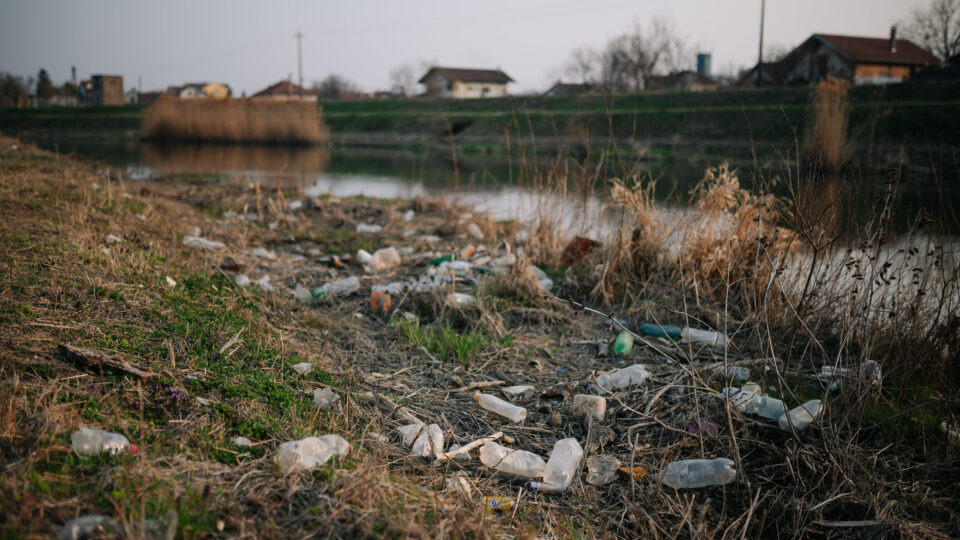
Plastic packaging waste is a global problem.  It collects in the oceans, breaks down into microplastics, which are consumed by fish and in turn by people who eat the fish.  Only 14.5% of U.S. plastic waste is recycled.  Most of it ends up in landfills, where is remains undegraded for hundreds of years. 

A new international study explored the global patterns of plastic packaging waste.  The study found that three countries – the U.S., Brazil, and China – are the top suppliers of waste.  In terms of supply, the Americas generate 41% of the world’s production of plastic waste, Europe 24%, and Asia 21%.

That’s the plastics supply.  As far as the consumers actually creating waste are concerned, the Americas represent 36% of the world’s packaging consumption, Asia 26%, and Europe 23%.

Packaging high-protein food such as meat, fish, and dairy is a major contributor to the waste problem.  Plastic for this purpose is hard to replace and international exports exacerbate the problem, accounting for about 25% of plastic packaging waste.

International agreements typically focus on restrictions and fees on production.  But that mostly creates strong incentives to simply relocate polluting activities to developing countries, which is a zero-sum game.  There need to be incentives for consumers to reduce plastic use such as taxes on waste management, refunds on returning bottles, single-use plastic bans, and so on.

Who can solve the plastic waste problem?  Everyone along the supply chain as well as the final consumers have to be part of the solution for reducing plastic waste.

**********

Web Links

Producers and consumers must share burden of global plastic packaging waste

Photo, posted March 29, 2022, courtesy of Ivan Radic via Flickr.

Earth Wise is a production of WAMC Northeast Public Radio.

Electric Car Sales Surge | Earth Wise

March 24, 2022 By EarthWise 1 Comment

Electric car sales have surged despite falling overall auto sales

During the fourth quarter of 2021, overall auto sales in the US fell by 21.3% compared to the same quarter of 2020.  At the same time, sales of electric cars grew by 73%.  Is this the beginning of the end for the Gasoline Era, or was it a just an anomaly during the COVID pandemic?

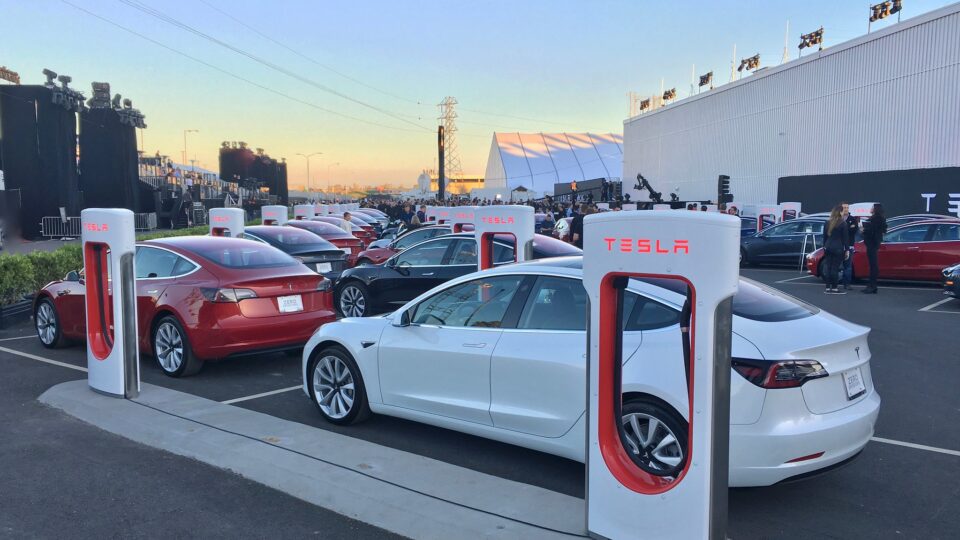
The biggest factor for the big drop in car sales was probably on the supply side.  The ongoing chip shortage as well as other supply-chain problems made it difficult to find many desired vehicles.  Meanwhile, the soaring electric car sales in the US was mostly soaring Tesla sales.  According to Kelley Bluebook, 72% of all electric cars sold in the US in the fourth quarter were Teslas.  For a number of reasons related to its in-house software development and it unified computer architecture, the chip shortage has been far less of a problem for Tesla than for other car brands.  So, Tesla bucked the overall market decline because it actually had cars to sell.

So, once these supply-chain issues are resolved, will the car market return to “normal”?  That is actually unlikely.  Apart from the short-term issues, there are long-term factors that are changing the automobile market.

There is far more public attention on EVs these days.  Multiple commercials during the Superbowl demonstrated that.  All the carmakers are gearing up for an electric future as government policies push for it.   Electric vehicle sales are already booming in Europe.  Cars are fashion products and electric cars are the latest trend.  Electric car sales will continue to grow at an impressive pace this year.  According to many observers, the recent trend could be the beginning of an avalanche.

**********

Web Links

US Electric Car Sales Surge As Overall Car Sales Slip — A Game-Changing Trend?

Photo, posted July 28, 2017, courtesy of Steve Jurvetson via Flickr.

Earth Wise is a production of WAMC Northeast Public Radio.

Fitness Trackers For Lobsters | Earth Wise

October 20, 2020 By EarthWise Leave a Comment

improving the lobster supply chain

The lobster industry is somewhat unique, at least in this country, in that it involves an animal food that is kept alive until it has reached the destination where it will be consumed or used.  As a result, the industry has to deal with a problem they call “shrink”, which is the mortality lobsters experience as they change hands from capture to kitchen.

Maine’s lobster industry has reached out to the University of Maine Lobster Institute along with collaborators at other institutions to help quantify and mitigate stress points in the lobster supply chain that reduce survival and profitability.

A 2-year project was funded by the National Oceanic and Atmospheric Administration to create miniature sensory devices – crustacean heart and activity trackers (called C-HATs).  These are essentially Fitbits for lobsters.  The noninvasive devices strapped on a lobster monitor its heart rate and movement as it passes from trap to on-board live tank to live storage crate to truck to wholesaler to retailer or processor.

A separate sensor-equipped device called the MockLobster travels along with the lobsters to log environmental conditions experienced, including temperature, light and dissolved oxygen levels.

The hope is to be able to get a good handle on the conditions lobsters experience from trap to market and learn where problems are likely to arise.  The researchers are also working to develop economical, standardized protocols to monitor water quality and the heath of lobsters during their movement through the supply chain.

The goal is to produce big improvements in the bottom lines of everyone along the supply chain along with big improvements in the health of the lobsters destined for market.

**********

Web Links

Fitness trackers, environmental sensors prototyped to improve survival in the lobster supply chain 

Photo, posted August 29, 2015, courtesy of Adam Grimes via Flickr.

Earth Wise is a production of WAMC Northeast Public Radio.

New Jersey And Offshore Wind | Earth Wise

July 28, 2020 By EarthWise Leave a Comment

New Jersey commits to offshore wind

New Jersey intends to become a major hub for offshore wind in the United States.  The state recently announced a plan to build a 30-acre port along the Delaware River for assembling and deploying wind turbines, as well as an additional 25 acres for manufacturing facilities.   The new port is expected to cost as much as $400 million and create 1,500 jobs in southern New Jersey.

The port will be located on an artificial island that was built by the U.S. Army Corps of Engineers early in the 20th century.  The island is already home to three nuclear reactors.  No bridges exist between the island and the Atlantic Ocean, so turbines that are built at the staging facility could be hoisted upright and towed out to sea without obstruction.  Some components are as tall as 500 feet and when fully constructed on the ocean, the turbines selected for New Jersey’s first offshore wind project will be more than 850 feet tall.

A second phase of the program would add over 150 acres to accommodate extensive manufacturing facilities for turbine components like blades and nacelles.

Construction on the port is expected to start next year.  New Jersey has pledged to produce 7,500 megawatts of offshore wind energy by 2035 and to generate 100% of its electricity from renewables by 2050.  Apart from deploying offshore wind, New Jersey wants to have a significant piece of the supply chain for what is likely to be a growing industry along the northeast coast.  The state views offshore wind as a once-in-a-generation opportunity to not only protect the environment but also greatly expand its economy in a way that has immediate impacts and long-term growth.

**********

Web Links

New Jersey Announces $400 Million Offshore Wind Port

Photo, posted September 18, 2010, courtesy of Vattenfall Nederland via Flickr.

Earth Wise is a production of WAMC Northeast Public Radio.

Preserving Produce With Eggs | Earth Wise

July 17, 2020 By EarthWise Leave a Comment

Using eggs to preserve produce

Researchers at Brown University have developed an inexpensive coating to protect fruits and vegetables that is made from eggs that would otherwise be wasted.  The micron-thick coating solves problems for the produce and its consumers as well as for the environment.

The coating relies on eggs that never reach the market.  The U.S. produces more than 7 billion eggs a year.  The supply chain rejects about 3% of them, typically because of shell damage, which means that more than 200 million eggs end up in landfills.

The coating is mostly made from egg, the rest consisting of nanoscale cellulose extracted from wood, a tiny amount of curcumin (the main active ingredient in turmeric that has antimicrobial properties), and a bit of glycerol for added elasticity.  The coating is applied to produce by spraying or dipping.  It shows a remarkable ability to resist rotting for an extended period comparable to standard coatings like wax, but without their shortcomings.

Along with being edible, the coating retards dehydration, provides antimicrobial protection, and is largely impermeable to both water vapor to prevent dehydration and to gas to prevent premature ripening.  The coating is entirely natural, and it washes off with water.  So, anyone sensitive to the coating, such as someone with an egg allergy, can easily eliminate it.

Lab tests of the coating studied its effects on strawberries, avocados, bananas and other fruits.  All were seen to maintain their freshness far longer than uncoated produce.

The researchers are continuing to refine the coating.  They are also considering other source materials.  They chose egg proteins because there are so many wasted eggs, but it may be possible to make use of plant proteins instead to address the needs of vegan consumers.

**********

Web Links

Egg-based coating preserves fresh produce

Photo, posted July 13, 2012, courtesy of Liz West via Flickr.

Earth Wise is a production of WAMC Northeast Public Radio.

Detecting Methane

December 23, 2019 By EarthWise Leave a Comment

Natural gas has become a huge industry in the United States, increasingly replacing coal in power plants, and otherwise contributing to energy independence.  Unfortunately, it also contributes to climate change.  Methane – the primary component of natural gas – is a powerful greenhouse gas that is estimated to be responsible for as much as a quarter of atmospheric warming.

Not all of the emissions from natural gas come from its use.  In the United States, so-called fugitive emissions from the oil and gas industry total an estimated 13 million metric tons per year.  These emissions basically consist of leakage of various types from the extraction, transportation, and processing of natural gas and cost the industry $2 billion in lost revenue each year.  Globally, that figure is estimated to be $30 billion.

Research labs and startup companies are working on developing and deploying novel technologies to address the growing issue of methane leaks across the fossil fuel supply chain.

One company called LongPath Technologies – a spinout from the University of Colorado – uses frequency comb laser technology that can pinpoint a leak to about a 50 square-foot area from half a mile away.  Other companies use different variations on laser absorption technology to be able to measure methane concentrations from a distance. 

Methane is a much more powerful greenhouse gas than carbon dioxide, but it stays in the atmosphere for much less time.  As a result, reducing methane emissions can pay off much more quickly than reducing carbon dioxide emissions.

The current EPA is trying to eliminate emissions regulations on the natural gas industry, but it is in the industry’s economic interest to curb those emissions even if they were unconcerned about the environment.

**********

Web Links

Methane Detectives: Can a Wave of New Technology Slash Natural Gas Leaks?

Photo, posted October 22, 2016, courtesy of Flickr.

Earth Wise is a production of WAMC Northeast Public Radio.

Primary Sidebar

Recent Episodes

  • An uninsurable future
  • Clean energy and jobs
  • Insect declines in remote regions
  • Fossil fuel producing nations ignoring climate goals
  • Trouble for clownfishes

WAMC Northeast Public Radio

WAMC/Northeast Public Radio is a regional public radio network serving parts of seven northeastern states (more...)

Copyright © 2026 ·