• Skip to primary navigation
  • Skip to main content
  • Skip to primary sidebar

Earth Wise

A look at our changing environment.

  • Home
  • About Earth Wise
  • Where to Listen
  • All Articles
  • Show Search
Hide Search
You are here: Home / Archives for sugars

sugars

Plastic from food waste

April 9, 2025 By EarthWise Leave a Comment

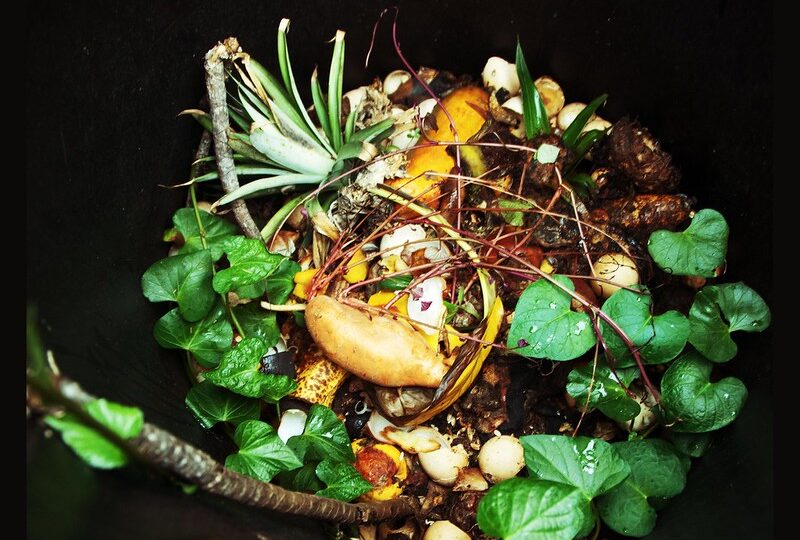
Creating bioplastics from food waste

Plastic waste management is a complicated business.  Most methods of recycling or breaking down plastic are costly and harmful to the environment.  The most common biodegradable alternatives – like paper straws – are less than ideal replacements.

There are many approaches to creating biodegradable plastics using feedstocks like seaweed, sugarcane, and other plant matter.  However, the resulting plastics often fall short compared with conventional petroleum-based plastics.

One type of bioplastic that is gaining popularity is polyhydroxyalkanoates, or PHA.  PHA is a plastic produced by microorganisms.  It is fully compostable or biodegradable but in other ways but looks, feels, and functions like regular plastic but without the environmental drawbacks.

PHA can be made using bacterial fermentation of a variety of feedstocks such as vegetable oils, sugars, starches, and even methane and wastewater.

Researchers at a startup from the University of Waterloo in Canada called MetaCycler BioInnovations have developed a process for producing PHA based on bacteria that has been engineered to convert waste from milk and cheese production.  This solution upcycles waste from the dairy industry into cost-effective, sustainable bio-based plastics. 

PHAs can be tailored to have a wide range of properties ranging from being rigid and tough to being quite flexible.  Therefore, they can be suitable for many applications including packaging, agricultural films, and consumer goods. 

The Waterloo technology is a way to tackle the problems of both food waste and plastic pollution with one solution.

**********

Web Links

Turning food waste into a new bioplastic

Photo, posted December 10, 2017, courtesy of Leonard J Matthews via Flickr.

Earth Wise is a production of WAMC Northeast Public Radio
Bio-based products on the rise

January 30, 2024 By EarthWise Leave a Comment

There is a growing global movement working towards replacing conventional synthetic products – ones that are toxic to make or use, difficult to recycle, and have large carbon footprints – with products made from plants, trees, or fungi that can be safely returned to the earth at the end of their useful life.  This so-called bioeconomy is in its infant stages, but there is increasing interest in turning successful research into manufactured products.

One example is nylon.  Nylon was created in the 1930s by DuPont.  It has been used and continues to be used in a wide range of products.  The problem with it is that it is made from petroleum, it doesn’t biodegrade, and producing it generates nitrous oxide, which is a problematic greenhouse gas.

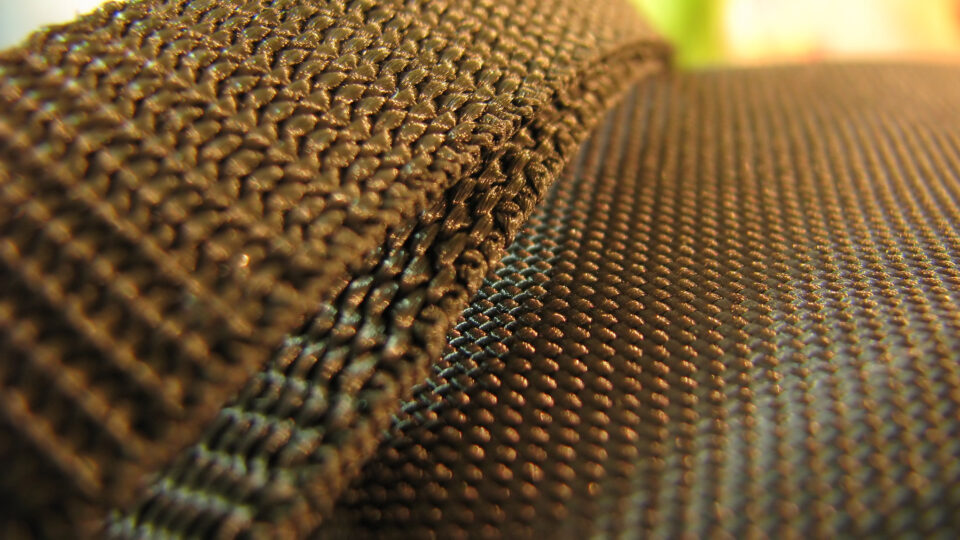
A San Diego-based company called Genomatica has developed a plant-based nylon using biosynthesis, a process in which a genetically engineered microorganism ferments plant sugars to create a chemical intermediate that can be turned into the nylon-6 polymer, and then into textiles. 

The impetus for developing bio-based products includes the growing public disgust at the mounting environmental toll of plastic, not the least of which is that people and animals are increasingly ingesting it.  Coupled with this, there is a rapidly-growing torrent of funding, especially in the US and Europe, aimed at accelerating the transition away from products that are non-biodegradable, toxic, and that produce carbon emissions.   Last September saw the launch of the National Biotechnology and Biomanufacturing Initiative which will support research and development on such topics as the use of sustainable biomass and waste resources to make non-toxic, bio-based fuels, chemicals, and fertilizers.

**********

Web Links

From Lab to Market: Bio-Based Products Are Gaining Momentum

Photo, posted May 27, 2010, courtesy of André C via Flickr.

Earth Wise is a production of WAMC Northeast Public Radio

Fungus And Carbon Storage | Earth Wise

July 26, 2023 By EarthWise Leave a Comment

It is well-known that plants and trees store enormous amounts of carbon.  What has not been common knowledge is that the vast underground network of fungi across the world’s lands stores billions of tons carbon, roughly equivalent to 36% of yearly global fossil fuel emissions.

These mycorrhizal fungi form symbiotic relationships with almost all land plants.  The fungi transport carbon, converted by sugars and fats by plants, into soil.  They have been supporting life on land for at least 450 million years and form sprawling underground networks everywhere – even beneath roads, gardens, and houses – on every continent on earth.

An international team of scientists analyzed hundreds of studies looking at plant-soil processes to understand how much carbon is being stored by fungi on a global scale.  The findings, published in the journal Current Biology, revealed that over 13 billion tons of CO2 is transferred from plants to fungi each year, more than China emits annually.  This process transforms the soil beneath our feet to a massive carbon pool and constitutes the most effective carbon storage activity in the world.

Given that fungi have such a crucial role in mitigating carbon emissions, the researchers are recommending that fungi should be considered in biodiversity and conservation policies. More needs to be done in protecting the underground networks of mycorrhizal fungi. The UN has warned that human activities are degrading soils and that 90% of the world’s soils could be degraded by 2050.  Not only would this obviously be very bad for the productivity of crops and plants, but we now know this could be catastrophic for curbing climate change and rising temperatures.

**********

Web Links

Fungi stores a third of carbon from fossil fuel emissions and could be essential to reaching net zero

Photo, posted May 28, 2023, courtesy of Geoff McKay via Flickr.

Earth Wise is a production of WAMC Northeast Public Radio

Sunscreen For Corals | Earth Wise

August 6, 2021 By EarthWise Leave a Comment

Scientists examine why some corals are better equipped to survive a changing environment

Sunscreen from beachgoers entering ocean waters is one of the greatest threats to coral reefs and there are global efforts to reduce or eliminate the use of many of the most harmful chemicals people use to protect themselves from the sun’s rays.  However, scientists at the Smithsonian Conservation Biology Institute have found that some corals have a natural sunscreen of their own that helps protect them from the effects of climate change.

Hawaiian blue rice corals feature a deep blue pigment that is created by chromoprotein that filters out harmful ultraviolet radiation from the sun.  UV damage has harmful impacts to reproduction in many coral species, but it appears not to have the same effect on blue rice coral.

In a study published in Scientific Reports, Smithsonian researchers studied the devastating effects that bleaching had on brown rice coral in the Hawaiian bleaching events of 2014 and 2015.  During the same events, blue rice coral either recovered quickly or was not affected by the elevated ocean temperature at all.

The blue-pigmented corals had dramatically greater reproductive vigor than the brown-pigmented version.  The key factor appears to be the sun-screening ability of the blue pigment in the particular symbiotic algae that lives inside the coral tissue known as zooxanthellae.  The coral protects the algae and in turn the algae provide the coral with food in the form of sugars produced as a waste product from photosynthesis.  In the case of the blue version, the algae also produce sunscreen for the coral.

By better understanding the role UV-protective pigments play in mitigating the adverse effects of climate change and warming oceans, scientists can learn why some species are better equipped to survive in a changing environment.

**********

Web Links

Smithsonian Conservation Biology Institute Scientists Find Corals’ Natural “Sunscreen” May Help Them Weather Climate Change

Photo, posted September 28, 2009, courtesy of Matt Kieffer via Flickr.

Earth Wise is a production of WAMC Northeast Public Radio.

Hacking Photosynthesis | Earth Wise

September 14, 2020 By EarthWise Leave a Comment

benefits of hacking photosynthesis

A team led by the University of Illinois has been pursuing a project called Realizing Increased Photosynthetic Efficiency or RIPE, which has the aim of improving photosynthesis in order to provide farmers with higher-yielding crops in an increasingly challenging climate.  Photosynthesis is the natural, sunlight-powered process that plants use to convert carbon dioxide into sugars that fuel growth, development, and for us, crop yield.

If we think of photosynthesis as a factory line composed of multiple machines, the growth of plants is limited by the slowest machines in the line.  The RIPE project has identified some steps in photosynthesis that are slower than others and are attempting to enable plants to build more machines to speed up those slower steps.

The researchers modeled a total of 170 steps in the process of photosynthesis to identify how plants could manufacture sugars more efficiently.  In the study, the team increased crop growth by 27% by resolving two constraints:  one in the first part of photosynthesis where plants turn light energy into chemical energy and one in the second part when carbon dioxide is turned into sugars.

The researchers effectively hacked photosynthesis by adding a more efficient transport protein from algae to enhance the energy conversion process. 

In the greenhouse, these changes improved crop productivity by 52%, but in field trials, which are a more important test, these photosynthetic hacks boosted crop production by 27%.

Ultimately, the team hopes to translate these discoveries to a series of staple food crops, such as cassava, cowpea, corn, soybean and rice, which are needed to feed the world’s growing population this century.

**********

Web Links

Photosynthetic hacks can boost crop yield, conserve water

Photo, posted June 14, 2017, courtesy of Alex Holyoake via Flickr.

Earth Wise is a production of WAMC Northeast Public Radio.

Primary Sidebar

Recent Episodes

  • An uninsurable future
  • Clean energy and jobs
  • Insect declines in remote regions
  • Fossil fuel producing nations ignoring climate goals
  • Trouble for clownfishes

WAMC Northeast Public Radio

WAMC/Northeast Public Radio is a regional public radio network serving parts of seven northeastern states (more...)

Copyright © 2025 ·