• Skip to primary navigation
  • Skip to main content
  • Skip to primary sidebar

Earth Wise

A look at our changing environment.

  • Home
  • About Earth Wise
  • Where to Listen
  • All Articles
  • Show Search
Hide Search
You are here: Home / Archives for suffering

suffering

Wildfires and air quality

January 1, 2024 By EarthWise Leave a Comment

The impact of wildfires on air quality

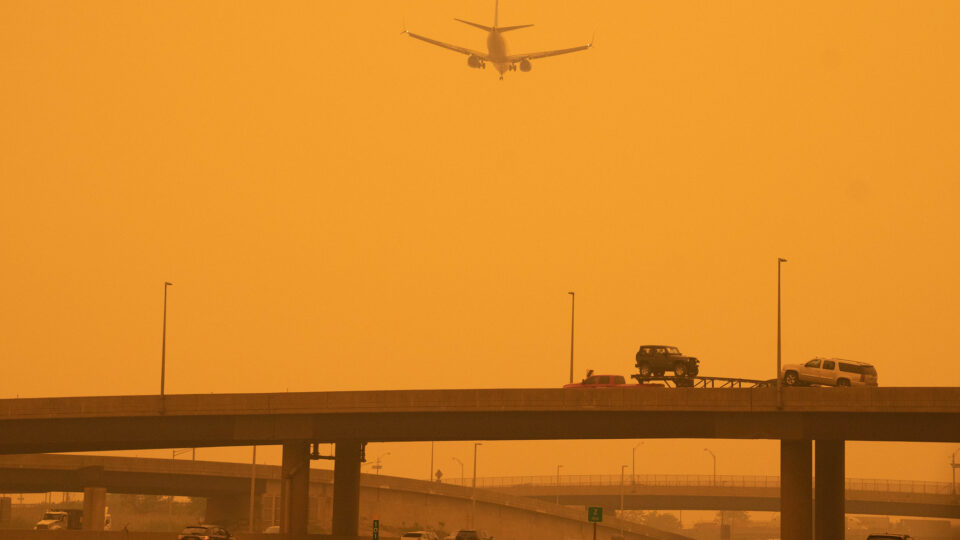
The wildfires last summer in parts of the U.S. and Canada fouled the air over much of the country.  Air quality in many places was dangerous for human health.  And such fires are becoming more numerous and more intense.

A new study by the University of Iowa has assessed the effects of two decades of wildfires on air quality and human health in the continental U.S.

From 2000 to 2020, air quality in the western U.S. has gotten worse as a result of the numerous fires in that region.  More generally, all those fires have undermined the success of federal efforts to improve air quality, primarily through the reductions in automobile emissions.

American air had been getting cleaner and clearer as a result of EPA regulations on vehicle emissions, but the surge in wildfires has limited and, in some cases, erased these air quality gains.  Twenty years of efforts by the EPA to make our air cleaner have been lost in fire-prone areas and in many downwind areas.

The Iowa study looked at the concentration of black carbon, a fine-particle air pollutant from fires linked to respiratory and heart disease.  In the western U.S., black carbon concentrations have risen 86% on an annual basis.

Fires have also affected the air in the Midwest, although not to the same degree as in the west.  The eastern U.S. had no major declines in air quality during the 2000-2020 time period.  Given the episodes of smoke from Canadian wildfires experienced by the east coast this past summer – as far south as Florida – even the air in that part of the country is suffering from the spread of wildfires.

**********

Web Links

Wildfires have erased two decades’ worth of air quality gains in western US

Photo, posted June 8, 2023, courtesy of Anthony Quintano via Flickr.

Earth Wise is a production of WAMC Northeast Public Radio
Climate Change And The World’s Fisheries | Earth Wise

March 10, 2022 By EarthWise Leave a Comment

Climate change is affecting the world's fishing

According to a new study, approximately 70% of the world’s oceans could be suffocating from a lack of oxygen by 2080 as a consequence of climate change.  This has the potential to impact marine ecosystems all around the world.  

The study, which was recently published in the journal Geophysical Research Letters, is the first to use climate models to predict how and when deoxygenation will occur throughout the world’s oceans outside of its natural variability. 

According to the findings, significant and potentially irreversible deoxygenation of the ocean’s middle depths began occurring last year.  The models predict that deoxygenation will begin affecting all zones of the ocean by 2080.

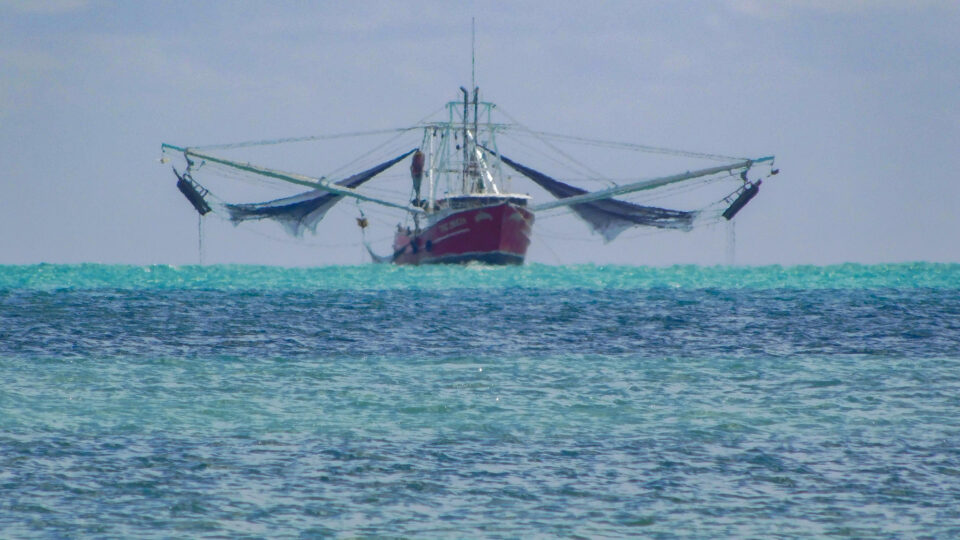
According to the study’s models, mid-ocean depths are already losing oxygen at unnatural rates. Globally, the ocean’s middle depth – known as the mesopelagic zone – is home to many of the world’s commercially fished species.  This makes these new findings a potential harbinger of economic hardship, seafood shortages, and environmental disruption. 

Just like land animals, aquatic animals need oxygen to breathe.  As climate change warms the oceans, the water holds less oxygen and is more buoyant than cooler water.  This leads to less mixing of oxygenated water near the surface with deeper waters, which naturally contain less oxygen.  Warmer water also raises oxygen demand among living organisms, resulting in less availability for marine life. 

The researchers also found that oceans closer to both the North Pole and the South Pole are particularly vulnerable to deoxygenation.  While they are not yet sure why, accelerated climate warming could be the culprit. 

These findings should add new urgency to climate change mitigation efforts. 

**********

Web Links

Climate change has likely begun to suffocate the world’s fisheries

Photo, posted January 28, 2019, courtesy of Joseph Gage via Flickr.

Earth Wise is a production of WAMC Northeast Public Radio.

Another Problem For Coral Reefs

April 5, 2019 By EarthWise Leave a Comment

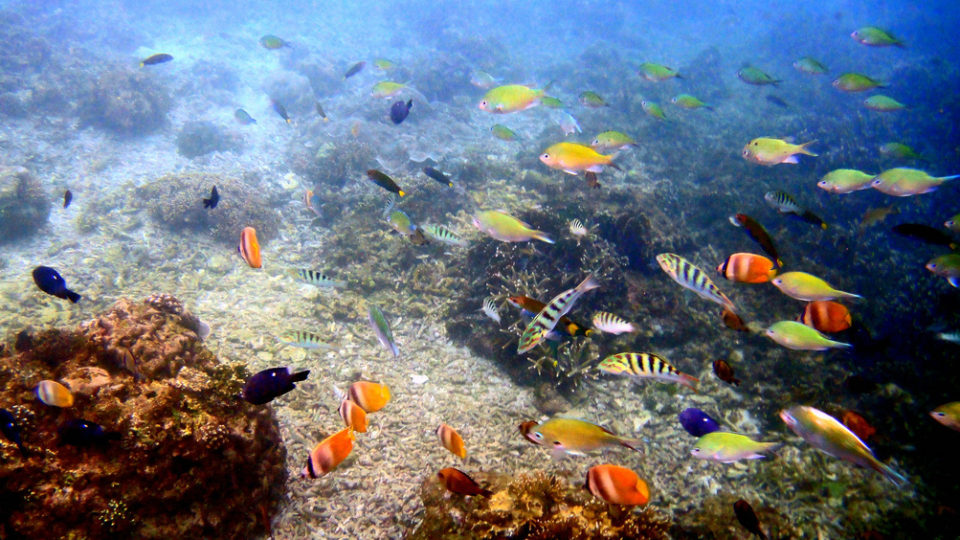
Coral reefs around the world have been suffering in recent years from warming ocean temperatures as well as from increasing ocean acidification.  Corals are very sensitive organisms that can only tolerate relatively slight changes in their environment.  Thus, the majority of reef-building corals are found in tropical and subtropical waters with favorable conditions.

New research has confirmed that drastic changes in ocean salinity from, for example, severe freshwater flooding, provoke similar stress responses in corals as the heating that has resulted in freshwater bleaching and, eventually, coral death.

The coast of northeast Queensland in Australia has experienced abnormal monsoon-related freshwater flooding that caused extreme and sudden changes in the ocean salt concentration.  In places, nearshore reefs were exposed to water with only half the normal ocean salinity.  The result has been a shock response in corals that prevents normal cell function.  Unlike their response to heat stress, corals exposed to reduced salinity experience a complete collapse of their internal cellular protein balance.

The central Great Barrier Reef has actually been relatively free from mass thermal bleaching events this Australian summer, but many coastal reefs instead have been battling dramatic changes in water conditions as a result of massive plumes of floodwater.

The wild weather in Australia is undoubtedly associated with the changing climate and this new research shows that it is leading to yet another threat to the world’s coral reefs.  With the frequency and severity of heavy rainfall and runoff events predicted to continue to increase over the next few decades, proactive measures to increase the resiliency of coral reefs are needed more than ever.

**********

Web Links

Reduced salinity of seawater wreaks havoc on coral chemistry

Photo, posted December 12, 2010, courtesy of Gareth Williams via Flickr.

Earth Wise is a production of WAMC Northeast Public Radio.

Primary Sidebar

Recent Episodes

  • An uninsurable future
  • Clean energy and jobs
  • Insect declines in remote regions
  • Fossil fuel producing nations ignoring climate goals
  • Trouble for clownfishes

WAMC Northeast Public Radio

WAMC/Northeast Public Radio is a regional public radio network serving parts of seven northeastern states (more...)

Copyright © 2026 ·