• Skip to primary navigation
  • Skip to main content
  • Skip to primary sidebar

Earth Wise

A look at our changing environment.

  • Home
  • About Earth Wise
  • Where to Listen
  • All Articles
  • Show Search
Hide Search
You are here: Home / Archives for storing

storing

Storing carbon in buildings

February 4, 2025 By EarthWise Leave a Comment

According to a new study by researchers at the University of California, Davis and Stanford University, construction materials used in buildings have the potential to lock away billions of tons of carbon dioxide.  The study, published in Science, shows that storing CO2 in buildings could be a major contributor to efforts to reduce greenhouse gas emissions.

Overall efforts in carbon sequestration take carbon dioxide – either as it’s being produced or once it’s already in the atmosphere – and store it away.  Storing it might involve injecting it into underground caverns or deep in the ocean.  Alternatively, storing it might involve converting it into a stable form using chemical reactions.  These various strategies involve both practical challenges and potential environmental risks.

The new study suggests that many materials that are already produced in large quantities have the potential to store carbon dioxide.  These include concrete, asphalt, plastics, wood, and brick.  More than 30 billion tons of these materials are produced worldwide every year.

Ways to accomplish carbon storage include adding biochar into concrete, using artificial rocks loaded with carbon as concrete and asphalt aggregates, plastic and asphalt binders based on biomass instead of petroleum, and including biomass fiber into bricks. 

The largest potential is using carbonated aggregates to make concrete.  Concrete is by far the world’s most popular building material with more than 20 billion tons being produced each year.

The feedstocks for these ways to store carbon in building materials are mostly low-value waste materials, so the economics of implementing these carbon sequestering strategies are likely to be quite favorable.

**********

Web Links

Storing Carbon in Buildings Could Help Address Climate Change

Photo, posted October 19, 2022, courtesy of Alexandre Prevot via Flickr.

Earth Wise is a production of WAMC Northeast Public Radio
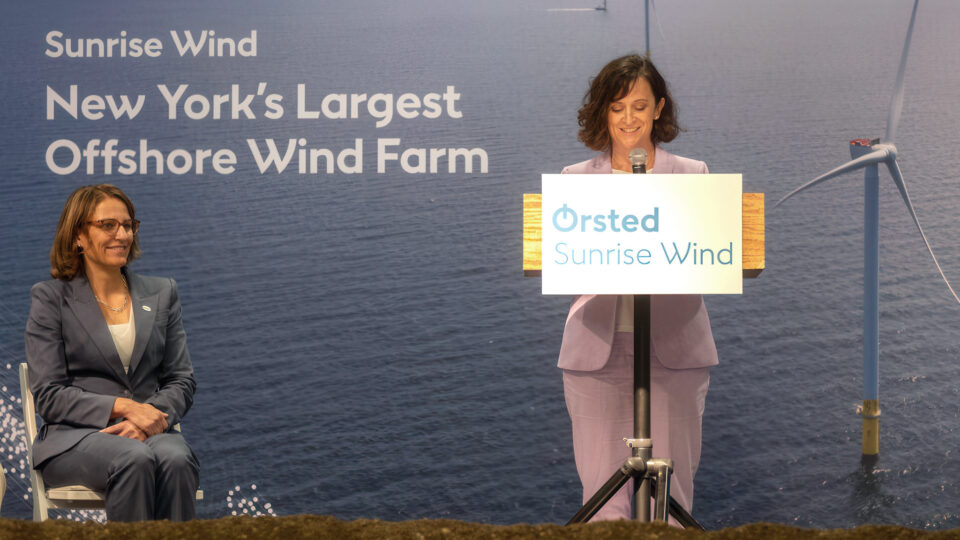
A big year for battery storage

January 29, 2025 By EarthWise Leave a Comment

2024 was a big year for battery storage

A decade ago, the ability of utilities to store large amounts of electricity in batteries was basically nonexistent.  In the past several years, growth in battery storage systems has exploded.  As of the end of November, the US had about 24 gigawatt-hours of storage capacity in place.  This is 71% more than just a year ago.  Nearly half of the battery storage in the US is located in California.  Texas, Arizona, and Nevada are also leaders in deploying battery storage.

Battery storage allows solar and wind generating plants to keep operating when there is reduced demand for their output and have the electricity that they produce be available later when demand rises.  Storing this excess electricity essentially extends the hours of the day when clean energy can be used.

Equally important, the existence of battery storage reduces the need for peaker plants, the fossil-fueled power plants that only turn on at times of peak demand, such as during hot afternoons.

There are 1,000 peaker plants in the US and they are generally heavily polluting, inefficient, and expensive to operate.  Some 63 million people live within a three-mile radius of one of them and are exposed to harmful pollutants like nitrogen oxides and sulfur dioxide.  Peaker plants also release more greenhouse gases than other power plants do for every unit of electricity they generate.

Many battery storage facilities are co-located with, or otherwise support, solar energy plants.  The amount of solar energy in the US is growing rapidly and surpassed the 100-gigawatt mark in 2024.  As solar power continues to expand, so will battery energy storage.

**********

Web Links

Battery projects soared again in 2024

Photo, posted August 3, 2024, courtesy of the Bureau of Ocean Energy Management via Flickr.

Earth Wise is a production of WAMC Northeast Public Radio
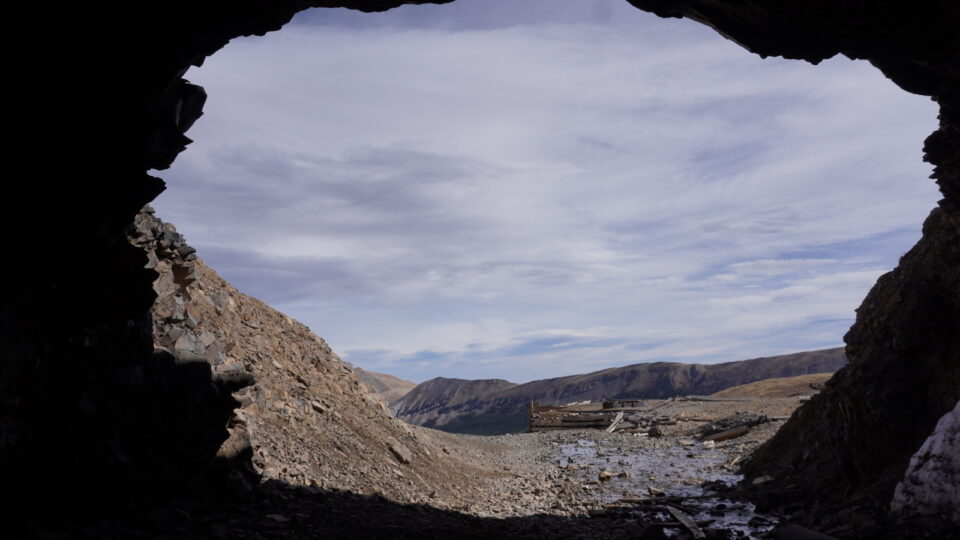
Storing Energy In Abandoned Mines | Earth Wise

October 10, 2023 By EarthWise Leave a Comment

Using abandoned mines to store energy

An international study led by researchers from Austria has developed a novel way to store energy by transporting sand into abandoned underground mines.  The technique is called Underground Gravity Energy Storage or UGES.

As the world deploys growing amounts of wind and solar energy, it is increasingly important to find ways to accessibly and efficiently store that energy to eliminate the inherent variability of the generation.  There are many ways to store energy on a short-term basis – most commonly in batteries – but cost-effective long-term storage is still in its early stages.

The UGES technique generates electricity by lowering sand into an underground mine thereby converting the potential energy of the sand into electricity by the same regenerative braking effect used in hybrid and electric cars.  The lowering sand operates a generator.   Storing energy is accomplished by lifting the sand from the mine with electric motors to an upper reservoir where it is ready for the next cycle.  By its nature, this storage technique has an indefinite duration, unlike batteries, for example, which lose energy to self-discharge.

The main components of UGES are the mineshaft, motor/generator, sand storage sites, and mining equipment.  The deeper and broader the mineshaft, the more power can be extracted from the plant, and the larger the mine, the more energy can be stored. Mines generally already have the basic infrastructure needed and are connected to the power grid.  The researchers estimate that there is global potential of 7 to 70 TWh of storage. Total global generating capacity is currently at the lower end of that range.

**********

Web Links

Turning abandoned mines into batteries

Photo, posted October 21, 2020, courtesy of Christine Warner-Morin via Flickr.

Earth Wise is a production of WAMC Northeast Public Radio

Primary Sidebar

Recent Episodes

  • An uninsurable future
  • Clean energy and jobs
  • Insect declines in remote regions
  • Fossil fuel producing nations ignoring climate goals
  • Trouble for clownfishes

WAMC Northeast Public Radio

WAMC/Northeast Public Radio is a regional public radio network serving parts of seven northeastern states (more...)

Copyright © 2025 ·