• Skip to primary navigation
  • Skip to main content
  • Skip to primary sidebar

Earth Wise

A look at our changing environment.

  • Home
  • About Earth Wise
  • Where to Listen
  • All Articles
  • Show Search
Hide Search
You are here: Home / Archives for sperm

sperm

Hope for white rhinos

February 28, 2024 By EarthWise Leave a Comment

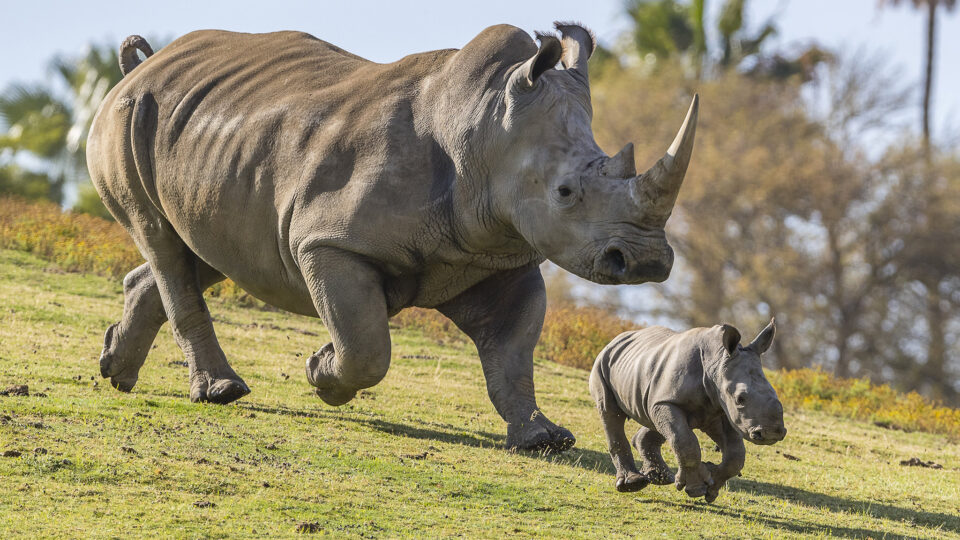
New hope for the northern white rhinos

There are only two northern white rhinos left in the world, and both of them are female.  The last male died in 2018. Northern white rhinos live to about 40 and one of the two remaining is 35 and the other 24.  The clock is ticking for the species.

Recently, scientists with the BioRescue consortium successfully used in vitro fertilization to impregnate a southern white rhino.  It was the world’s first IVF rhino pregnancy.

There is now some hope that IVF could be used to produce more northern white rhinos.  For various medical reasons, neither of the remaining two female rhinos can serve as a surrogate mother.  But there is a plan B.

For a number of years, BioRescue has been creating northern white rhino embryos with eggs from the remaining females and sperm that was collected from males before they died.  There are now 30 northern white rhino embryos in cold storage, and they are continuing to produce more.

The recent success with the southern white rhino IVF provides hope that southern white rhino females can act as surrogate mothers with implanted northern white rhino embryos.  The species are similar enough that it should work.

The plan is to select surrogates and implant them.  This should happen this year.  A rhino pregnancy lasts 16 months.  If this is successful, there could be northern white rhino babies in two or three years.  The scientists want the offspring to live with the surviving northern whites for years to learn the social behavior of its kind.

It is possible that these gentle, hulking creatures may get a new lease on life.

**********

Web Links

Just two northern white rhinos are left on Earth. A new breakthrough offers hope

Photo, posted September 16, 2017, courtesy of San Diego Zoo Safari Park via Flickr.

Earth Wise is a production of WAMC Northeast Public Radio

Cryopreserving Corals | Earth Wise

October 3, 2023 By EarthWise Leave a Comment

Cryopreserving corals

Recent climate models estimate that if the effects of climate change are not mitigated soon enough, 95% of the world’s corals could die by the mid 2030s.  Given the current rate of greenhouse gas emissions, this is an increasingly likely outcome.  Coral reefs are estimated to have a $10 trillion economic value apart from their essential role in marine ecosystems.

Researchers at the University of Hawaii at Manoa have demonstrated a successful technique for cryopreserving entire coral fragments; in other words, preserving coral using cold temperatures and successfully reviving them.

Existing coral cryopreservation techniques rely on freezing sperm and larvae, which can only be collected during spawning events, which occur only a few days each year for coral species.  This makes it logistically very challenging for researchers and conservationists.

The Hawaiian researchers focused on a process called isochoric vitrification, which is a method of freezing with liquid nitrogen that prevents the formation of ice crystals.  They tested the technique with thumbnail-sized fragments of coral, freezing them in small aluminum chambers which restrict the growth of ice crystals that would otherwise damage delicate polyp tissues.  Once the chambers were warmed, the fragments were transferred to seawater and allowed to recover.  They found that the revived corals behaved the same as those that were never cooled.

The process holds great promise to conserve the biodiversity and genetic diversity of coral.  If the process can be scaled up, it may be possible to preserve as many species of coral as possible by 2030, when it may no longer be viable for them to survive in the warming and acidifying oceans.

**********

Web Links

Cryopreservation breakthrough could save coral reefs

Photo, posted June 2, 2023, courtesy of USFWS – Pacific Region via Flickr.

Earth Wise is a production of WAMC Northeast Public Radio
Saving The Sumatran Rhino | Earth Wise

January 2, 2023 By EarthWise Leave a Comment

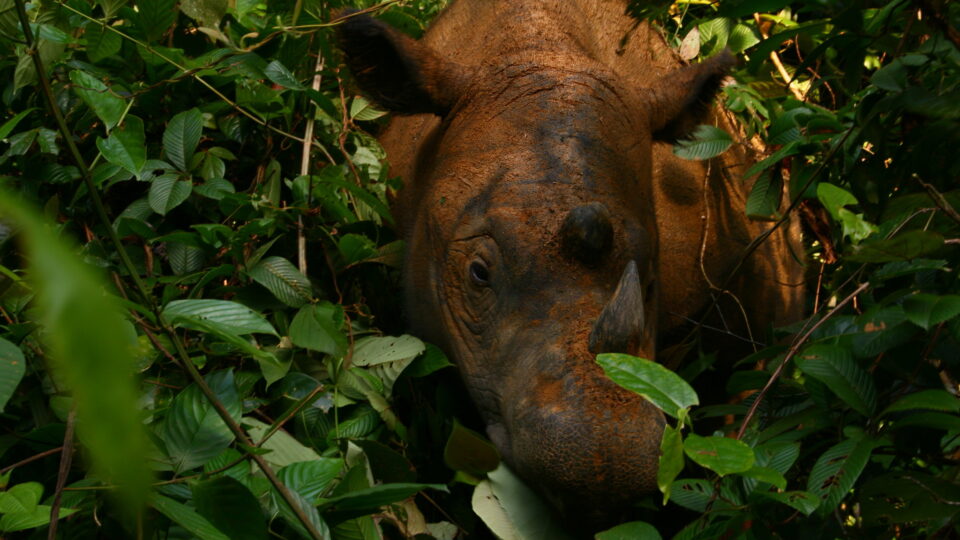
The Sumatran rhinoceros is the smallest and most ancient rhino species and is the only surviving species with hair.  It is critically endangered.  Because of poaching and habitat destruction, there are fewer than 50 of them left in the wild and those are scattered in the rainforests of Sumatra and the Indonesian part of Borneo.  Mating encounters between surviving males and females are increasingly rare.

The last male Sumatran rhino in Malaysia died in 2019 but cell samples from that individual are the basis of an ambitious effort in bioengineering.

Researchers from the Max Delbruck Center in Germany are taking skin cells from the deceased rhino and turning them into stem cells.  The hope is to use these stem cells to derive egg and sperm cells to be the basis of assisted reproduction.  Fertilization would take place in a petri dish.  The resultant embryos would then be carried to term by surrogate rhino mothers.

The researchers have reported success generating induced pluripotent stem cells or IPS cells from the rhino skin samples.  IPS cells are able to divide indefinitely and can transform into any cell type in the body.

The next step is to try to cultivate primordial germ cells – the precursors of eggs and sperm.

This work is going on because it is increasingly difficult to preserve the Sumatran rhino population by gathering together remaining individuals in wildlife Reserves.  Females that have not been pregnant for a long time often become infertile because of cyst growth on their reproductive organs, and some are just too old to bear young.

It may take extraordinary efforts like these to save these animals from extinction.

**********

Web Links

A second chance for the Sumatran rhino

Photo, posted April 30, 2008, courtesy of Willem V. Strien via Flickr.

Earth Wise is a production of WAMC Northeast Public Radio

Primary Sidebar

Recent Episodes

  • An uninsurable future
  • Clean energy and jobs
  • Insect declines in remote regions
  • Fossil fuel producing nations ignoring climate goals
  • Trouble for clownfishes

WAMC Northeast Public Radio

WAMC/Northeast Public Radio is a regional public radio network serving parts of seven northeastern states (more...)

Copyright © 2026 ·