• Skip to primary navigation
  • Skip to main content
  • Skip to primary sidebar

Earth Wise

A look at our changing environment.

  • Home
  • About Earth Wise
  • Where to Listen
  • All Articles
  • Show Search
Hide Search
You are here: Home / Archives for sorbent materials

sorbent materials

Carbon capture with plastic waste

October 7, 2025 By EarthWise Leave a Comment

Polyethylene Terephthalate (otherwise known as PET plastic) is a clear, strong, lightweight plastic used for food and beverage containers, textiles, and many other things.  It is one of the most pervasive forms of plastic piling up in the world’s oceans, in landfills, and elsewhere.  Getting rid of it is a real challenge.

Scientists at the University of Copenhagen in Denmark have found a way to make use of waste PET plastic to address the pervasive problem of carbon dioxide emissions.  There are a variety of methods in use for capturing the carbon dioxide in the exhaust from industrial facilities.  They make use of various chemicals and sorbent materials that soak up the CO2 from the gas stream.  Some are expensive, or unstable at higher temperatures, or require hard-to-get ingredients.

The Copenhagen researchers have developed a way to break down PET plastic by adding a chemical called ethylenediamine.  The result is a new material they call BAETA, which is very effective in pulling carbon dioxide out of the air and binding it.

BAETA is a powdery substance that can be pelletized.  In an industrial plant, exhaust would be transmitted through BAETA-containing units, which would cleanse it of CO2.  The BAETA eventually gets saturated and then would be heated up in a chamber where the carbon dioxide would be collected and either stored underground or used for various purposes.

This cutting-edge invention is an example where one man’s trash could become another man’s treasure.  It just might be a way to get rid of lots of waste plastic and carbon dioxide at the same time.

**********

Web Links

Scientists transform plastic waste into efficient CO2 capture materials

Photo, posted June 8, 2021, courtesy of Ivan Radic via Flickr.

Earth Wise is a production of WAMC Northeast Public Radio
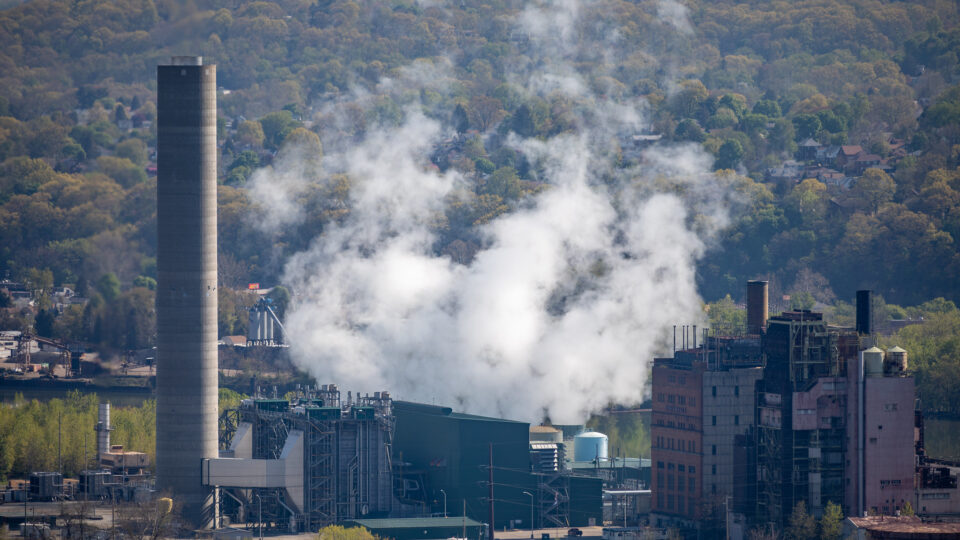
Moisture swing carbon capture

November 10, 2023 By EarthWise Leave a Comment

As the world grapples with limiting the amount of carbon dioxide in the atmosphere, there is a growing need to capture the carbon dioxide that is emitted as well as preventing it from being emitted in the first place.  Carbon capture can be accomplished at the source of emissions (such as power plants) or it can be done by taking it out of the atmosphere.  The latter is called “direct air capture”.

It is not at all clear whether direct air capture can be accomplished on a scale that would really make a difference and at an acceptable cost either in dollars or energy expended.  But if it can be done that way, it would be a major tool in combatting climate change.

Direct air capture technology generally makes use of sorbent materials whose capacity to capture carbon dioxide and later release it is a function of temperature.  The process requires significant amounts of energy to release the carbon dioxide that has been captured. 

New research from Northwestern University makes use of the “moisture-swing” technique which uses materials whose ability to capture and release carbon dioxide depends on humidity rather than temperature.  While it takes some amount of energy to humidify the volume of air containing the sorbent material, it is very small compared to temperature-driven systems. 

There are many groups working with moisture-swing technology, but the Northwestern Group has identified a number of new sorbent materials with superior properties.

The fundamental questions of scalability and cost remain, but moisture-swing is a promising approach to direct air capture.  If carbon dioxide can be pulled out of the atmosphere in large volumes, it can be concentrated and stored or converted into useful products.

*********

Web Links

Pulling carbon dioxide right out of the air

Photo, posted May 15, 2020, courtesy of James Watt via Flickr.

Earth Wise is a production of WAMC Northeast Public Radio

Primary Sidebar

Recent Episodes

  • An uninsurable future
  • Clean energy and jobs
  • Insect declines in remote regions
  • Fossil fuel producing nations ignoring climate goals
  • Trouble for clownfishes

WAMC Northeast Public Radio

WAMC/Northeast Public Radio is a regional public radio network serving parts of seven northeastern states (more...)

Copyright © 2025 ·