• Skip to primary navigation
  • Skip to main content
  • Skip to primary sidebar

Earth Wise

A look at our changing environment.

  • Home
  • About Earth Wise
  • Where to Listen
  • All Articles
  • Show Search
Hide Search
You are here: Home / Archives for simple

simple

Reducing emissions from ocean shipping

August 13, 2025 By EarthWise Leave a Comment

A new process could help reduce emissions from ocean shipping

Ocean shipping is a significant contributor to global carbon emissions, accounting for about 3% of the total.  It is a key part of international trade, moving goods like electronics, automobiles, and oil.  It relies on fossil fuels, and, without significant changes, shipping’s emissions could more than double by 2050.  Ocean shipping is one of the world’s most difficult to decarbonize industrial sectors.

Scientists at the University of Southern California and Caltech, collaborating with a startup company called Calcarea, have developed a shipboard system that could remove up to half of the carbon dioxide emitted by shipping vessels. The system is fairly simple and scalable.

The process mimics a natural chemical reaction that takes place in the ocean.  As a cargo ship moves through seawater, the CO2 from the ship’s exhaust is absorbed into water that is pumped onboard.  This makes the water more acidic.  The treated water is then passed through a bed of limestone, where it reacts with the rock to form bicarbonate, which is a stable compound that already exists naturally in seawater.  The treated seawater, now stripped of the carbon dioxide, is dumped back into the ocean.

Sophisticated ocean modeling examined what would happen when the bicarbonate-rich water is released back into the sea over a hypothetical 10-year period.  The model showed a negligible impact on ocean pH and chemistry.

The researchers estimate that widespread adoption of the technique could reduce shipping-related carbon dioxide emissions by 50%.  The startup company Calcarea is working to bring the technology to market and is in early discussions with commercial shippers.

**********

Web Links

USC technology may reduce shipping emissions by half

Photo, posted November 14, 2017, courtesy of Bernard Spragg via Flickr.

Earth Wise is a production of WAMC Northeast Public Radio

Vegetation and climate change

May 20, 2025 By EarthWise Leave a Comment

More urban vegetation could prevent many heat-related deaths around the world

Temperatures have been steadily rising around the world as a result of the increased greenhouse gas emissions from human activities.  This warming trend has led to more frequent and intense heat waves, droughts, and other extreme weather events.  Rising temperatures are also impacting human health, leading to increased risks of heat-related illnesses and a higher number of fatalities during extreme heat events.

One simple but effective way to reduce the health risks from extreme heat is to increase urban vegetation.  According to new research led by scientists from Monash University in Australia, increasing urban vegetation by 30% could save more than one-third of all heat-related deaths.  The study, which was recently published in The Lancet Planetary Health, examined more than 11,000 urban areas and found that increasing greenery could have saved up to 1.16 million lives worldwide between 2000 and 2019.

The impact of increasing urban vegetation on heat-related deaths varies by climate, greenness, socioeconomic, and demographic factors, with the greatest benefits seen in Southern Asia, Eastern Europe, and Eastern Asia. 

Vegetation has a cooling effect on temperature.  Vegetation helps regulate the Earth’s climate by absorbing carbon dioxide during photosynthesis, which helps to reduce greenhouse gases in the atmosphere. Vegetation also cools the environment through shading, moisture release, and evapotranspiration, which reduces temperatures and mitigates heat-related health risks.

Incorporating more vegetation into urban areas is a powerful solution to mitigate the impacts of climate change and protect human health.

**********

Web Links

Increasing urban vegetation could have saved over 1.1m lives in two decades

Photo, posted July 1, 2023, courtesy of Lauri via Flickr.

Earth Wise is a production of WAMC Northeast Public Radio
Are today’s refrigerants safe?

March 21, 2025 By EarthWise Leave a Comment

The refrigerants being used today may not be safe

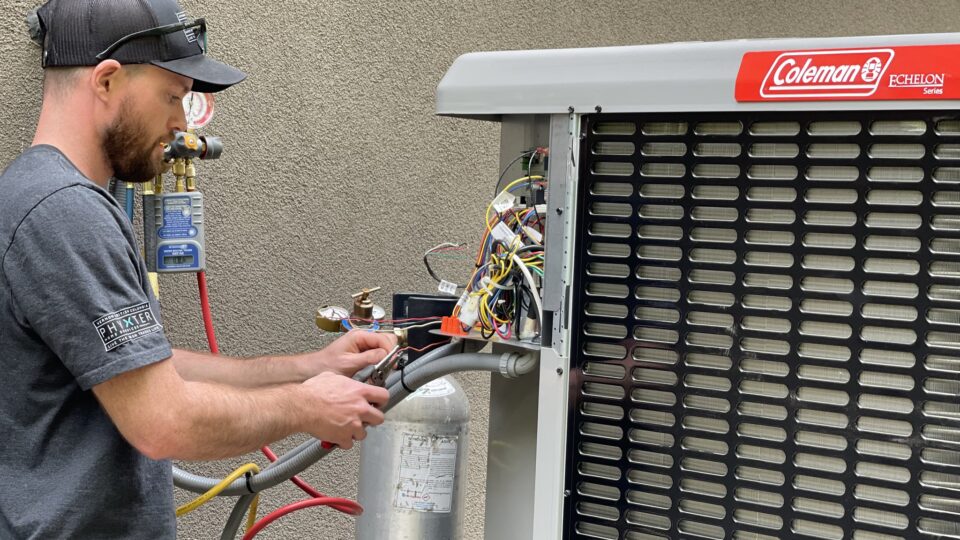
Refrigeration is based on heat transfer mediums that absorb heat from the area being cooled and transfer it to the outside environment.

The earliest refrigerants were dangerous substances like ammonia.  In the 1930s, chlorofluorocarbons (CFCs) like Freon became the standard refrigerant for use in refrigeration systems and even in aerosol cans.  When these substances were found to be depleting the earth’s ozone layer, the Montreal Protocol dictated their phaseout and by the mid-1990s, CFCs were largely replaced by hydrofluorocarbons (HFCs).

HFCs don’t deplete the ozone layer, but they were eventually determined to be potent greenhouse gases, thousands of times more planet-warming than carbon dioxide.   As a result, the global phaseout of HFCs began in 2016, and have been increasingly replaced by hydrofluoroolefins (HFOs), which are considered a more environmentally-friendly alternative to all their predecessors.

Trying to not be surprised by additional unpleasant discoveries about refrigerants, researchers are studying the potential environmental impacts of HFOs.  Researchers at the University of New South Wales in Australia have found that HFOs can break down in the atmosphere and that some small amounts of the resultant products are in fact fluoroforms, which are the HFC with the greatest global warming potential and can stay in the atmosphere for up to 200 years.

That only a small amount of HFC gets into the atmosphere is good, but nevertheless it reveals that the consequences of replacing widely-used chemicals are not a simple matter to determine.

**********

Web Links

Are our refrigerants safe? The lingering questions about the chemicals keeping us cool

Photo, posted July 19, 2021, courtesy of Vernon Air Conditioning via Flickr.

Earth Wise is a production of WAMC Northeast Public Radio

Fighting fires with man-made wind

March 12, 2025 By EarthWise Leave a Comment

Fighting fires with artificial wind

Researchers at Ohio State University have developed a new portable tool that may help firefighters battle blazes more efficiently and with less risk.

Traditional firefighting methods include chemical foams – which are toxic – and the use of hydrants, which can strain water resources.  The recent fires in Southern California demonstrated the need for efficient fire suppression methods.  The new device works to suppress flames using conductive aerosols, which are small particles that can direct electricity.

The device uses vortex rings – small donut-shaped bands of air – that transform the aerosol particles into short pulses of wind that convert nearby oxygen into ozone.  This accelerated airflow generates rapid turbulence, which disrupts the natural combustion process and quickly extinguishes the target fire.

The device resembles a small bucket, attached to an arm brace.  Firefighters would aim the bucket toward the fire, and it would use bursts of compressed air to deliver aerosols in an electric arc to fight the fire.

Testing identified a coarse copper solution for the vortex ring material and simulations showed that the device would succeed in suppressing fires.  They then worked on optimizing the power and range of the device.

Depending on the size of the fire and number of firefighters, it is likely that several of the devices would be required in a real emergency.  According to the developers, the design of the vortex launcher is actually very simple and is very scalable.  The device is maneuverable in tight spaces and could be taken through doors and indoor environments.  Vortex rings can carry chemical payloads over longer distances than other methods, making firefighters safe by staying further from flames. 

**********

Web Links

New device uses electrically assisted wind to fight fires

Photo, posted November 12, 2024, courtesy of the USDA Forest Service via Flickr.

Earth Wise is a production of WAMC Northeast Public Radio

Removing Lead From Water With Beer Yeast | Earth Wise

July 14, 2022 By EarthWise Leave a Comment

An innovative solution for removing lead from freshwater

Lead and other heavy metals in water are a serious global problem that is worsening because of electronic waste and discharges from mining operations.  In the U.S., over 12,000 miles of waterways are impacted by mine-drainage water that is rich in heavy metals.

Lead in particular is highly toxic, especially to children.  The European Union established a standard for allowable lead in drinking water of only 5 parts per billion.  In the US, the EPA has declared that no level of lead at all is safe.

Researchers at MIT have recently discovered that inactive yeast can be effective as an inexpensive, abundant, and simple material for removing lead contamination from drinking water supplies.  The MIT study shows that the method works even at parts-per-billion levels of contamination.

The method is called biosorption, in which inactive biological material is used to remove heavy metals from water.  Previously, it has been studied at parts-per-million contaminant levels, but the MIT study shows that it works at much lower levels as well.

The team studied a type of yeast widely used in brewing.   The yeast cells used are inactive and desiccated and require no special care.  Such yeast is abundantly available as a waste product from beer brewing and various other fermentation-based industrial processes. 

The researchers estimate that to clean a water supply for a city the size of Boston would require about 20 tons of yeast a day, or 7,000 tons a year.  That seems like a lot, but one single brewery, the Boston Beer Company, generates 20,000 tons a year of surplus yeast that is no longer useful for fermentation.

**********

Web Links

Could used beer yeast be the solution to heavy metal contamination in water?

Photo, posted September 5, 2017, courtesy of Allagash Brewing via Flickr.

Earth Wise is a production of WAMC Northeast Public Radio.

Safe And Simple Hydrogen Peroxide

November 29, 2019 By EarthWise Leave a Comment

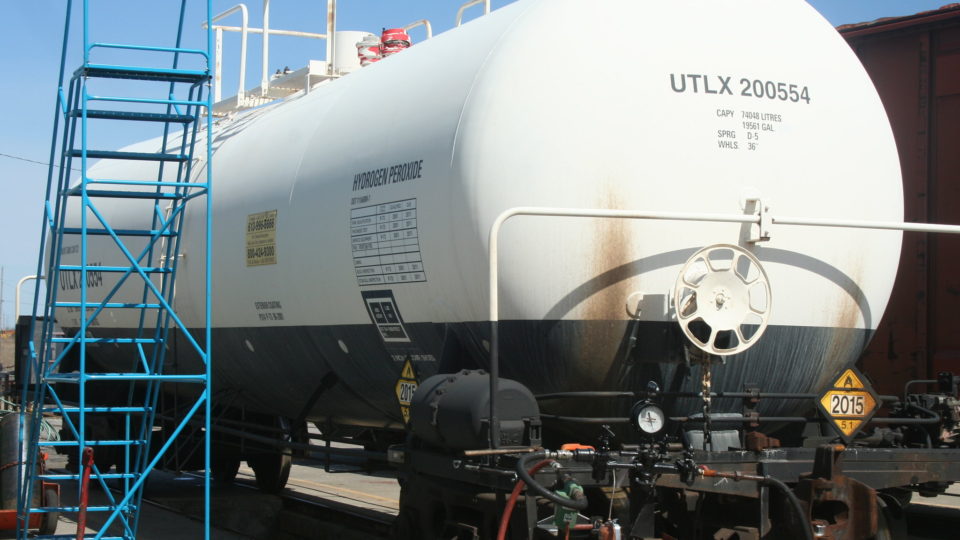
We don’t think about hydrogen peroxide very often.  Perhaps we have a bottle of it under our bathroom sink that we haven’t touched in a few years.   But it is an important product manufactured in the millions of tons each year and the basis of a $6 billion global business.

Hydrogen peroxide is widely used as an antiseptic, a detergent, in cosmetics, as a bleaching agent, in water purification, and in many other applications.  It is produced in industrial concentrations of up to 60% in solution with water in order to maximize the economics of transportation.  This makes transportation hazardous and costly because the concentrated form is unstable.  Most applications use a far more diluted form.

Researchers at Rice University have developed a new method for producing hydrogen peroxide that is much simpler and safer than the current technology, which actually dates back to the 1930s.  The Rice technique requires only air, water and electricity to produce the chemical.  The electrosynthesis process, which is detailed in the journal Science, uses an oxidized carbon nanoparticle-based catalyst.

The process could enable point-of-use production of pure hydrogen peroxide solutions, which would eliminate the need to transport the hazardous concentrated chemical.  The use of a solid electrolyte instead of the traditional liquid electrolyte eliminates the need for product separation or purification that is part of the current technology.

In the future, instead of storing containers of hydrogen peroxide, hospitals that use it as a disinfectant could turn on a spigot and get, for example a 3% solution on demand.  Instead of storing chemicals to disinfect swimming pool water, future homeowners could flick a switch and turn on their peroxide reactor to clean their pools.

**********

Web Links

Water + air + electricity = hydrogen peroxide

Photo, posted April 19, 2009, courtesy of Robert Taylor via Flickr.

Earth Wise is a production of WAMC Northeast Public Radio.

Predicting Lightning Strikes

November 19, 2019 By EarthWise Leave a Comment

Lightning is one of the most unpredictable phenomena in nature.  Approximately 100 lightning bolts strike earth’s surface every second, and each lightning bolt can contain up to one billion volts of electricity.  Lightning regularly kills both people and animals and sets homes and forests on fire.  It’s also been known to ground airplanes. 

Researchers at EPFL – a research institute and university in Switzerland – have developed a novel way to predict where and when lightning will strike.  The system relies on a combination of standard data from weather stations and artificial intelligence to predict lightning strikes to the nearest 10 to 30 minutes and within a radius of less than 20 miles.  The simple and inexpensive system was outlined in a research paper recently published in Climate and Atmospheric Science, a Nature partner journal.   

According to researchers, the current systems for predicting lightning strikes are slow, expensive, and complex, relying on external data acquired by satellite and radar.  The new inexpensive system from EPFL uses real time data that can be obtained from any weather station, meaning it can cover remote regions that are out of radar and satellite range and where communication networks are lacking.  The quick predictions from the system allow alerts to be issued before a storm has even formed. 

The system uses a machine-learning algorithm that’s been trained to recognize conditions that lead to lightning.  The researchers took into account atmospheric pressure, air temperature, relative humidity, and wind speed, among other things.  After training the algorithm, the system was able to predict lightning strikes accurately nearly 80% of the time.

This system is a simple way to predict a complex phenomenon. 

**********

Web Links

Using AI to predict where and when lightning will strike

Photo, posted December 14, 2018, courtesy of Flickr.

Earth Wise is a production of WAMC Northeast Public Radio.

Primary Sidebar

Recent Episodes

  • An uninsurable future
  • Clean energy and jobs
  • Insect declines in remote regions
  • Fossil fuel producing nations ignoring climate goals
  • Trouble for clownfishes

WAMC Northeast Public Radio

WAMC/Northeast Public Radio is a regional public radio network serving parts of seven northeastern states (more...)

Copyright © 2026 ·