• Skip to primary navigation
  • Skip to main content
  • Skip to primary sidebar

Earth Wise

A look at our changing environment.

  • Home
  • About Earth Wise
  • Where to Listen
  • All Articles
  • Show Search
Hide Search
You are here: Home / Archives for shield

shield

Soda can hydrogen

August 15, 2025 By EarthWise Leave a Comment

Produce green hydrogen from soda cans

Hydrogen is an ideal climate-friendly fuel because it doesn’t release carbon dioxide when it is used.  But most hydrogen is produced in ways that result in significant carbon emissions. Thus, the search for green hydrogen goes on. 

Last year, engineers at MIT developed a new process for making hydrogen that significantly reduces the carbon footprint of its production.  The recipe uses seawater and recycled soda cans. 

Pure aluminum reacts with water, breaking up the water molecules to produce aluminum oxide and pure hydrogen.  But when aluminum is exposed to oxygen, it forms a shield-like layer that prevents the reaction.

The MIT researchers found that the shield can be removed by treating aluminum with a small amount of gallium-indium alloy.  Mixing the pure aluminum with seawater not only produces hydrogen, but the salt in the seawater precipitates out the gallium-indium, making it available for reuse.

The research team carried out a “cradle-to-grave” life cycle assessment of the process, taking into account every step in using the hydrogen-production process at an industrial scale.  They found that using recycled aluminum – chopped-up soda cans – is environmentally and economically superior to using “primary” aluminum, mined from the earth. The cans would be shredded into pellet and treated with the gallium-indium alloy.  The pellets would be processed near a source of seawater where they would be combined to generate hydrogen on demand.

According to their analysis, the hydrogen produced would be at least competitive economically and environmentally with other potential methods of producing green hydrogen.

**********

Web Links

Study shows making hydrogen with soda cans and seawater is scalable and sustainable

Photo, posted July 29, 2020, courtesy of Bruce Dupree via Flickr.

Earth Wise is a production of WAMC Northeast Public Radio

Microplastics and antibiotic resistance

April 14, 2025 By EarthWise Leave a Comment

Microplastics are a real problem.  They are pretty much everywhere.  They are in our food, in the oceans, on mountains, up in the clouds, and most alarmingly, in our bodies.  All of that is already bad news, but researchers at Boston University have found that microplastics may also be contributing to antibiotic resistance in dangerous bacteria.

The researchers observed that bacteria exposed to microplastics become resistant to multiple types of antibiotics commonly used to treat infections.  Bacteria can become resistant to antibiotics for a number of reasons, including misuse and overprescribing of medications.  However, a major factor influencing antibiotic resistance is the microenvironment – the immediate surroundings of a microbe – which is where bacteria and viruses replicate.

The Boston University study tested how the common bacterium E. coli reacted to being in a closed environment with microplastics.  The plastics provide a surface that the bacteria can attach to and colonize.  When attached to a surface, bacteria create a sticky substance called a biofilm that acts like a shield, protecting the bacteria and keeping them affixed securely.  The tests showed that microplastics supercharged the biofilms so much that when antibiotics were introduced, they were unable to penetrate the shield.

Microplastics are everywhere, but they are especially prevalent in impoverished places where sanitation may be limited.  Refugees, asylum seekers, and forcibly displaced populations are already at increased risk of contracting drug-resistant infections.  The prevalence of microplastics adds another risk to the already difficult lives of these people.

**********

Web Links

Microplastics Could Be Fueling Antibiotic Resistance, BU Study Finds

Photo, posted May 15, 2021, courtesy of Felton Davis via Flickr.

Earth Wise is a production of WAMC Northeast Public Radio
Poverty And Climate Change

March 15, 2022 By EarthWise Leave a Comment

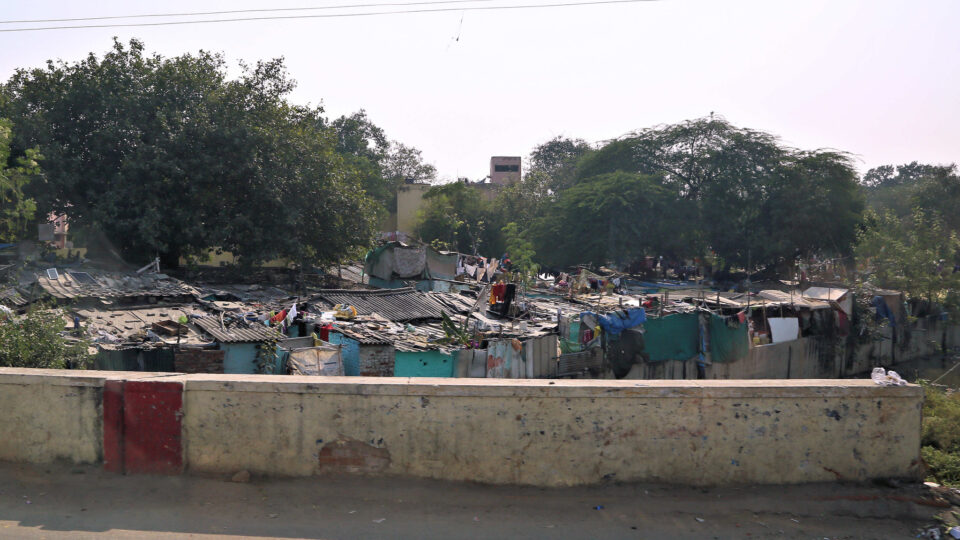
Poverty and climate change are inextricably linked

According to the World Health Organization, climate change is expected to cause approximately 250,000 extra deaths per year between 2030 and 2050.  But climate change does not affect everyone the same.  In fact, the poorest people on the planet, who are often the least to blame for climate change, typically bear the worst of the impact.

Wealthier people and countries have more resources to shield themselves from the impacts of climate change.  For example, higher incomes allow people to purchase air conditioning as temperatures rise,  food as food prices soar, and homes in safer places.  Wealthy nations can also compensate citizens when climate change harms livelihoods. 

According to new research, people with lower incomes are exposed to heat waves for longer periods of time compared to those with higher incomes due to a combination of factors including location and access to heat adaptations like air conditioning.  This inequality is expected to increase as temperatures rise. 

The study, which was published in the AGU journal Earth’s Future, found that lower income populations face a 40% higher exposure to heat waves than people with higher incomes.  By the end of the century, the poorest 25% of the global population will be exposed to heat waves at a rate equivalent to the rest of the population combined.

On the other hand, the highest-income quarter of the population will experience comparatively little change in exposure to heat waves as their ability to keep up with climate change is generally greater.

The research team hopes its findings will prompt innovations into affordable cooling solutions for the world’s most vulnerable population. 

Climate change and poverty are, and will remain, inextricably linked. 

**********

Web Links

Poorest people bear growing burden of heat waves as temperatures rise

Photo, posted October 27, 2019, courtesy of Jack via Flickr.

XXXXXXXXX

Primary Sidebar

Recent Episodes

  • An uninsurable future
  • Clean energy and jobs
  • Insect declines in remote regions
  • Fossil fuel producing nations ignoring climate goals
  • Trouble for clownfishes

WAMC Northeast Public Radio

WAMC/Northeast Public Radio is a regional public radio network serving parts of seven northeastern states (more...)

Copyright © 2026 ·