• Skip to primary navigation
  • Skip to main content
  • Skip to primary sidebar

Earth Wise

A look at our changing environment.

  • Home
  • About Earth Wise
  • Where to Listen
  • All Articles
  • Show Search
Hide Search
You are here: Home / Archives for sex

sex

Sea turtles and climate change

March 24, 2025 By EarthWise Leave a Comment

Sea turtles face threats from climate change

Life is a struggle for survival from the moment a sea turtle hatches.  In fact, only one sea turtle out of every 1,000 typically reaches adulthood as a result of natural predators and other challenges.  Those fortunate enough to make it to adulthood face serious threats from humans. For example, sea turtles are hunted for their meat, eggs, and shells in some regions. Their beach habitats get developed. Harmful marine debris and oil spills pollute their waters and beaches.

Now, climate change is exposing sea turtles to even greater threats.  Rising sea levels and stronger storms threaten to erode and destroy their nesting beaches. Warming oceans disrupt currents, potentially exposing sea turtles to new predators, and damaging the coral reefs that some depend on to survive.

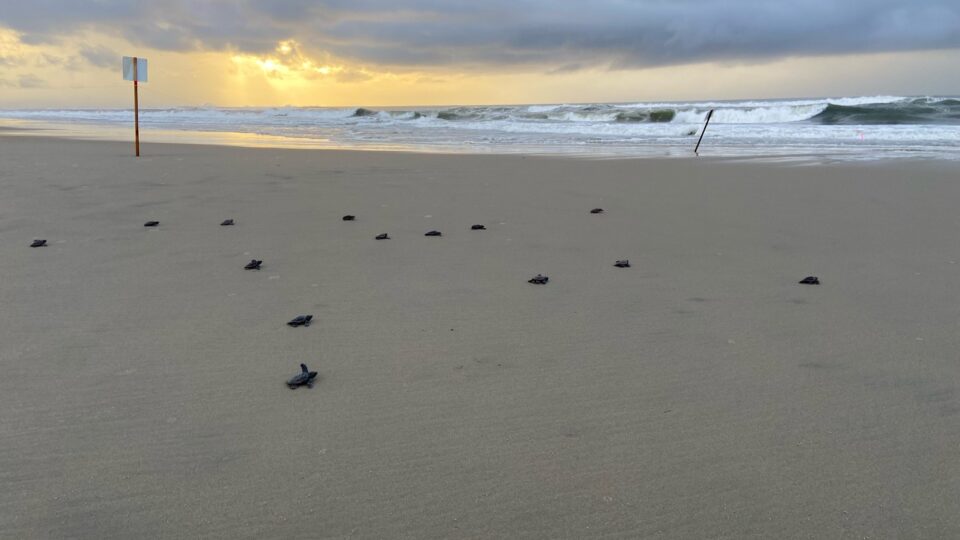
As these environmental challenges intensify, sea turtles are beginning to adapt in surprising ways.  According to a new study by researchers from the University of Exeter in England and the Society for the Protection of Turtles in Cyprus, sea turtles are responding to climate change by nesting earlier.  Researchers monitoring nesting green and loggerhead turtles in Cyprus have discovered they are returning to their regular nesting spots earlier each year to compensate for rising temperatures.

Temperature plays a crucial role in determining the biological sex of sea turtles.  Warmer nest temperatures produce more female hatchlings than males.

But at least for now, sea turtles seem to be doing enough to ensure their eggs continue to hatch by nesting earlier in more ideal temperatures.  While this is good news, there’s no guarantee that it will continue. 

**********

Web Links

Turtles change nesting patterns in response to climate change

Photo, posted December 20, 2021, courtesy of Cape Hatteras National Seashore via Flickr.

Earth Wise is a production of WAMC Northeast Public Radio
Lots of female turtles

November 3, 2023 By EarthWise Leave a Comment

Climate change threatening the future of green sea turtles

Green sea turtles were listed under the Endangered Species Act in 1978.  Since that time, there have been conservation measures put in place in many locations.  One such place is Florida, where restrictions on beachfront development and careful monitoring of turtle nests has helped to get hatchlings safely into the water.  A gill net ban in 1995 sharply reduced the number of young turtles killed by fishing gear.

All of this has resulted in what is described as an explosion in turtle populations in Florida.  Volunteers monitoring the 2023 nesting season on Florida’s beaches have counted more than 74,000 nests.  That beats the previous record – set in 2017 – by an incredible 40%.

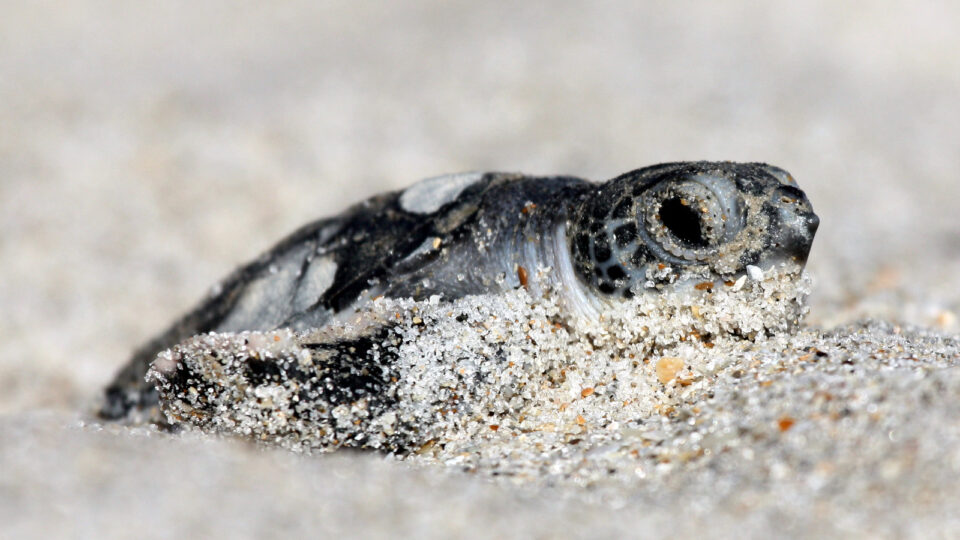
Unfortunately, this does not represent a guaranteed great future for the species.  Sea turtles are particularly sensitive to the warming climate.  The sex of a baby sea turtle is not determined by DNA, but rather by the temperature of the sand in which its egg develops.  Cooler temperatures mean more males; warmer ones mean more females.

In recent years, the proportion of male green sea turtles has dwindled substantially.  In the past few seasons, between 87 percent and 100 percent of the hatchlings tested in Florida have been female.

In the short term, the skewed sex ratio might be a boon for the species.  Lots of females laying lots of eggs means lots of turtles.  Sea turtles don’t reach sexual maturity until their twenties or thirties.  So, for the next few decades, there are likely to be growing numbers of turtle nests.  But down the line, there is going to be a real problem.  Where will for all the female turtles find the mates to populate the species in the future?

**********

Web Links

Florida Turtle Nests Are Recovering. When They Hatch, Expect Mostly Girls.

Photo, posted October 5, 2011, courtesy of Keenan Adams / USFWS via Flickr.

Earth Wise is a production of WAMC Northeast Public Radio
Global Warming And Sea Turtle Births | Earth Wise

January 11, 2021 By EarthWise Leave a Comment

Climate change poses a serious threat to sea turtles

Climate change is a serious threat to species whose sex is determined by temperature.  Among these are sea turtles.  Whether marine turtles are born male or female turns out to depend on the temperature of their nest during incubation.

Sea turtle nests need to be around 84.6 degrees Fahrenheit on average to produce a 50:50 sex ratio for embryos developing in eggs.  If temperatures are higher, embryos predominantly become female.  There is a transitional range of temperatures over which both males and females are produced.  Below that range, only males are produced; above that range, only females are produced.

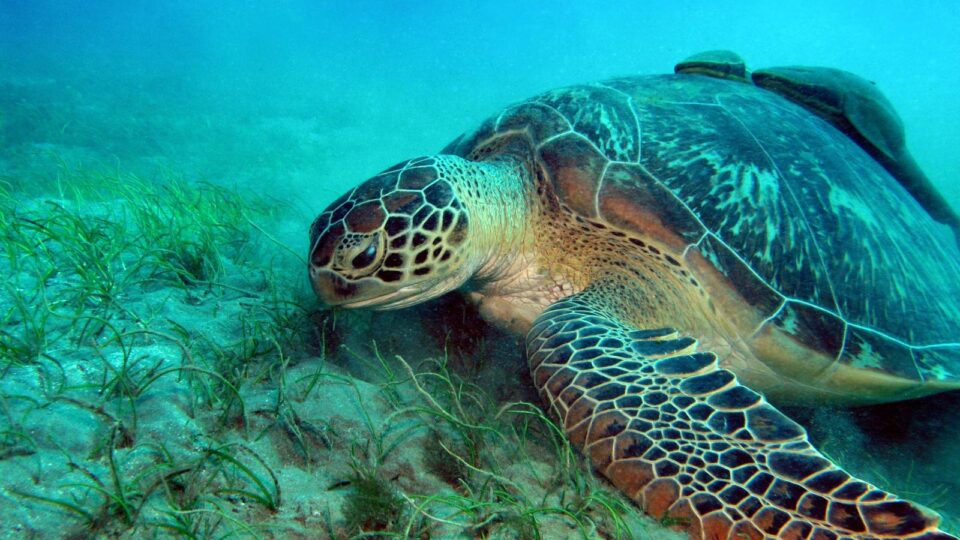
According to recent research published in the journal Conservation Science and Practice, sand temperatures along the Red Sea exceeded the 84.6-degree threshold in all but one of the sites studied.  Some sites measured nearly 96 degrees.  The Red Sea region is home to five of the world’s seven species of sea turtles, including endangered green turtles and critically endangered hawksbill turtles.

Skewing the sex distribution of a species is a serious threat to the future survival of the population.

The Red Sea findings are similar to observations around the world.  In Florida, sea turtle hatchlings were born 100% female in seven out the past 10 years, and in the other three years, males only made up 10-20% of the brood.  In Australia’s Raine Island, the largest green turtle nesting ground in the Pacific Ocean, the ratio of female to male turtle hatchlings in 2018 was 116:1.

Marine turtles have been around since the late Triassic period and have adapted to previous climate shifts.  But the rapid pace of human-driven climate change is threatening the future survival of these creatures.

**********

Web Links

Rising Temperatures Driving a Shift to All-Female Sea Turtle Populations

Photo, posted in October, 2005, courtesy of Frank_am_Main via Flickr.

Earth Wise is a production of WAMC Northeast Public Radio.

The Microplastic Diet

July 29, 2019 By EarthWise Leave a Comment

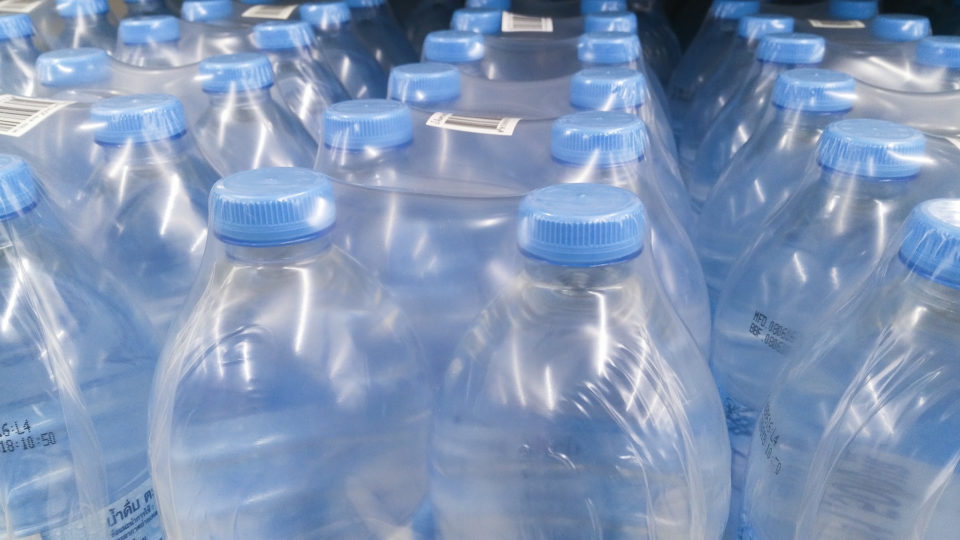
According to a new study published in the journal Environmental Science & Technology, Americans consume more than 70,000 microplastic particles every year from the food they eat, the water they drink, and the air they breathe.

While the health impacts of ingesting these tiny particles are largely unknown, there is the potential for the plastic to enter human tissues and cause an immune response or perhaps release toxic chemicals into the body.

The analysis by biologists at the University of Victoria in Canada examined data from 26 previous studies on microplastic contamination.  It found that Americans eat and drink an estimated 39,000 to 52,000 microplastic particles each year, depending on their age and sex.  The numbers jump to 74,000 to 121,000 when inhalation of microplastics is included.

Americans who drink water solely from plastic bottles consume an additional 90,000 particles annually, compared to only 4,000 particles for people who only drink tap water.

The researchers warn that their findings are likely to be drastic underestimates of the problem.  Several major U.S. food groups – including poultry, beef, dairy, grains, and vegetables – have not been studied for their microplastic contamination.  Thus, the estimate of microparticle ingestion is associated with only 15% of an average person’s caloric intake.  Furthermore, there is no assessment currently available for how much plastic might be entering our bodies from food packaging.

The report’s findings suggest that microplastics will continue to be found in the majority if not all items intended for human consumption.  Realistically, the only way to reduce the human consumption of microplastics will be to reduce the production and use of plastics.

**********

Web Links

Americans Consume Tens of Thousands of Microplastic Particles Every Year

Photo, posted June 18, 2016, courtesy of Sirirat Kornsongkaew via Flickr.

Earth Wise is a production of WAMC Northeast Public Radio.

Primary Sidebar

Recent Episodes

  • An uninsurable future
  • Clean energy and jobs
  • Insect declines in remote regions
  • Fossil fuel producing nations ignoring climate goals
  • Trouble for clownfishes

WAMC Northeast Public Radio

WAMC/Northeast Public Radio is a regional public radio network serving parts of seven northeastern states (more...)

Copyright © 2026 ·