• Skip to primary navigation
  • Skip to main content
  • Skip to primary sidebar

Earth Wise

A look at our changing environment.

  • Home
  • About Earth Wise
  • Where to Listen
  • All Articles
  • Show Search
Hide Search
You are here: Home / Archives for seagrass meadows

seagrass meadows

Redefining the perfect beach

April 30, 2025 By EarthWise Leave a Comment

Resort developers are rethinking what constitutes a perfect beach

The iconic image of the “perfect” tropical beach is fine white sand, a few coconut palm trees, a gently sloping beach, and unobstructed views of the blue sea.  This image came about to a great extent from fascination with Polynesian scenery at the time of World War II.   And because of this imagery, beach resorts around the world have tried to achieve this look, often by reengineering and altering natural ecosystems to meet this artificial standard of perfection.

But natural tropical and subtropical beaches with their mangrove forests and seagrass meadows are complex ecosystems that support biodiversity, provide protection from storms, and capture carbon in significant amounts from the atmosphere.

With all this relandscaping of beaches, by the end of the 20th century, 35% of the world’s mangrove forests and 29% of its seagrasses were gone.  Mangroves sequester 10 times more carbon than mature tropical forests and sea grass can pull in up to 15 times as much.

In recent years, some resort developers are starting to embrace having beachscapes in their more natural states.  They are planting or preserving native vegetation and allowing sea grass to flourish.  The Six Senses Laamu resort in the Maldives, a major luxury tourist destination, was a trendsetter in this way. 

Coconut palms do little to prevent sand erosion, block wind, or even provide much shade.  In a warming world with increasingly powerful storms, they offer little protection for the world’s beaches.  They are not even native to the Caribbean, where they are now ubiquitous, having been introduced by Europeans.

Many resort developers are now rethinking the description of the perfect beach.

**********

Web Links

Your Resort’s ‘Perfect’ Beach Is a Lie

Photo, posted March 2, 2011, courtesy of Breezy Baldwin via Flickr.

Earth Wise is a production of WAMC Northeast Public Radio
The importance of shallow water

March 26, 2025 By EarthWise Leave a Comment

Shallow water habitats are disappearing around the world

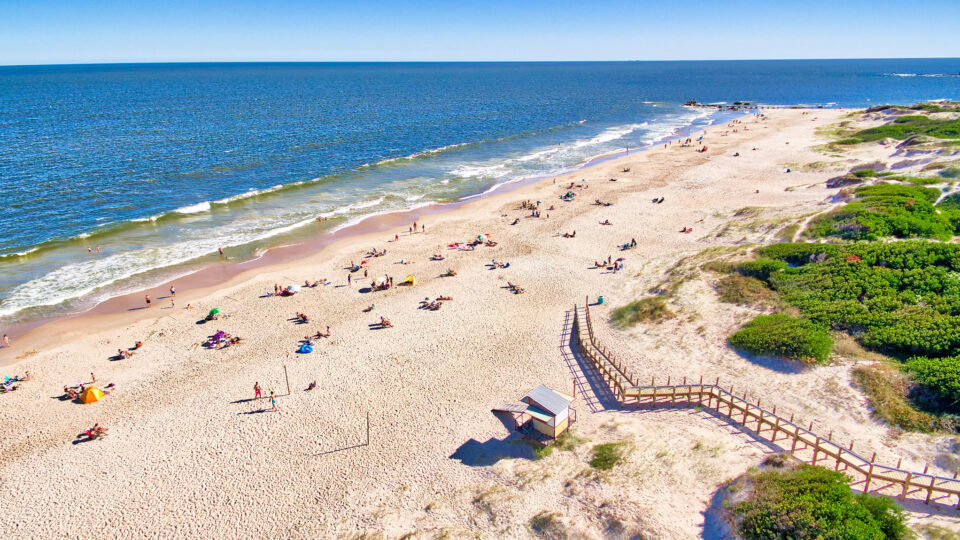
Vacationers love beaches with shallow water.  They are great for families with small kids and for less confident swimmers.  Such beaches often attract intense coastal development.  However, they are also fragile habitats that are disappearing around the world.

A new study led by the University of South Florida highlights the need to protect these marine ecosystems.  Shallow coastal waters are known as tidal flats, and they are critical to global seafood supplies, local economies, and overall marine health.  Shallow water ecosystems are interlinked with other marine habitats and are vital for the lifecycle of marine species far from shore.

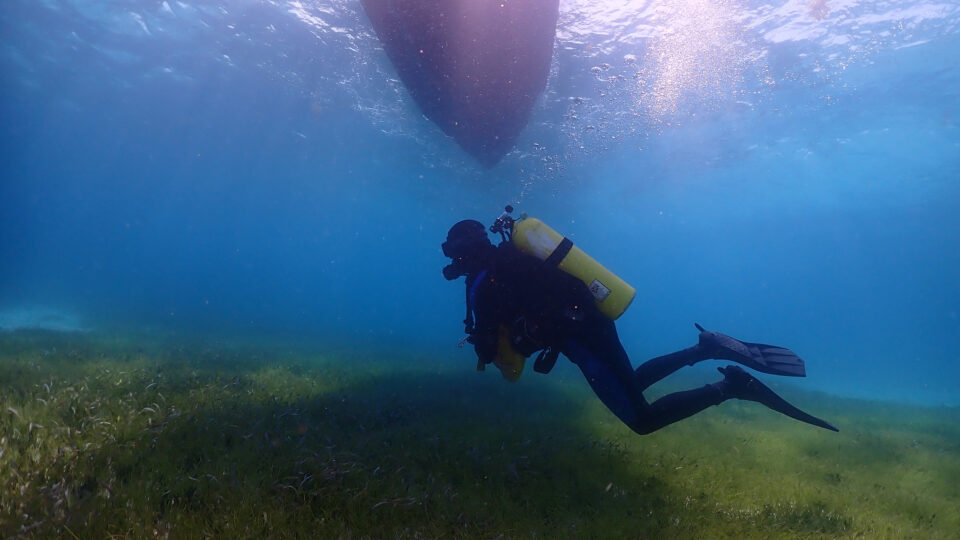
Shallow water ecosystems are at risk not only from coastal development, but from harmful algal blooms triggered by human activity, from marine heatwaves, and from boats operating in sensitive habitats such as seagrass meadows. These habitats contribute millions of dollars to local economies such as those in Florida but there is not much direct habitat managements in place to protect these ecosystems.

The University of South Florida study, published in the journal Fisheries, enumerated ten core strategies that boaters, anglers, wildlife managers, and policymakers can adopt to prioritize and preserve shallow marine ecosystems from humans and from increasingly powerful weather events.  Foremost among these efforts are the protection of key fish species, such as tarpon, whose protection would benefit additional species that use the same habitats.

Habitat management and restoration should be essential concerns for coastal communities to provide long-term benefits for both themselves and for the marine life that depends on shallow-water habitats.

**********

Web Links

Why shallow water at the beach is more important than you might realize

Photo, posted February 14, 2018, courtesy of Marcelo Campi via Flickr.

Earth Wise is a production of WAMC Northeast Public Radio
The Value Of Seagrass | Earth Wise

August 7, 2023 By EarthWise Leave a Comment

Seagrasses provide enormous amounts of value to society each year

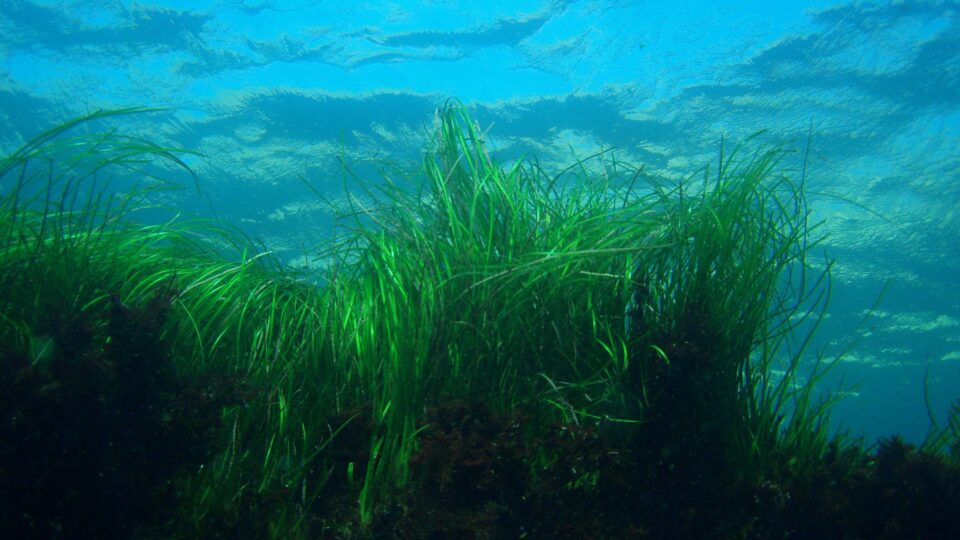
Seagrasses are found in shallow salty and brackish waters in many places around the world, from the tropics to the Arctic Circle.  They get their name from their long green, grass-like leaves.  They are not seaweeds at all but are more closely related to flowering plants on land. 

We hear a lot about threatened ocean ecosystems and most of the attention is on coral reefs and coastal mangrove forests.  Seagrass meadows get much less press, but they in fact provide wide-ranging services to society and store a great deal of carbon.

A new study by the University of Michigan demonstrates that seagrass ecosystems should be high up on the global conservation agenda.  The study puts a dollar value on the many services – which include storm protection, fish habitat, and carbon storage – provided by seagrasses in the Caribbean.  The numbers are enormous.

The researchers estimate that the Caribbean holds up to half of the world’s seagrass meadows by surface area, and it contains about a third of the global carbon storage by seagrasses.  They calculated that the Caribbean seagrasses provide about $255 billion in services to society each year, which includes $88 billion in carbon storage.

In the Bahamas alone, ecosystems services provided by seagrasses are valued at more than 15 times the country’s 2020 gross domestic product.

Blue carbon is the name used to describe carbon stored in coastal and open-ocean ecosystems.  The idea of selling blue carbon offset credits, which monetize the carbon stored in this way, is gaining traction.  For many Caribbean nations, this is likely to provide impetus for protecting seagrass ecosystems from human impacts, including nutrient pollution and overfishing.

**********

Web Links

Caribbean seagrasses provide services worth $255B annually, including vast carbon storage, study shows

Photo, posted June 27, 2023, courtesy of Daniel Eidsmoe via Flickr.

Earth Wise is a production of WAMC Northeast Public Radio
Blue Carbon Credits | Earth Wise

June 4, 2021 By EarthWise Leave a Comment

Blue carbon credits and the fight against climate change

Carbon credits have been around since the late 1990s.  The idea is to offset carbon emissions from some carbon emitting activity – anything from a wedding in California to a factory operating in Minnesota – by buying carbon credits earned from a carbon-absorbing activity, such as planting trees in the Amazon.

Blue carbon credits are credits earned by increasing the carbon stored in coastal and marine ecosystems. Coastal ecosystems such as mangroves, tidal marshes, and seagrass meadows in fact sequester and store more carbon per unit area than terrestrial forests and are increasingly being recognized for their important role in mitigating climate change. 

Blue carbon credit awards have to date been relatively few and far between and have mostly been granted for mangrove restoration efforts.  But mangrove projects are now ramping up dramatically in scope.  Scientists are working hard to analyze the amount of carbon in other ecosystem types – seagrasses, salt marshes, seaweeds, and seafloor sediments – so that these systems can also enter the carbon credit market.

Over the past 20 years, conservation scientists have spread over 70 million seeds in the bays of Virginia to restore over 9,000 acres of seagrass meadows that were devastated by disease in the 1930s.  The restored meadows are absorbing nearly half a ton of CO2 per acre. 

The rules to allow for blue carbon credits are recent and evolving, which is a big deal. The market may currently be small, but it is growing exponentially.  But as important as carbon credits are, it is still paramount to decarbonize before turning to offsets for existing emissions.

**********

Web Links

Why the Market for ‘Blue Carbon’ Credits May Be Poised to Take Off

Photo, posted July 2, 2009, courtesy of Nicolas Raymond via Flickr.

Earth Wise is a production of WAMC Northeast Public Radio.

Seagrasses And Ocean Acidification | Earth Wise

May 13, 2021 By EarthWise Leave a Comment

Seagrass can buffer ocean acidification

Seagrasses are the basis of important marine ecosystems.   Sea turtles, bat rays, leopard sharks, fish, and harbor seals are just some of the marine creatures that visit seagrass ecosystems for the food and habitat they provide.  They are nursery grounds for many aquatic animals and many birds visit seagrass meadows to dine on what lives within them.  They may seem like slimy grasses that we walk through along some shorelines, but they are important.

These marine forests are valuable for many different reasons including climate mitigation and erosion control.  A third of the carbon dioxide emitted across the globe is absorbed by the ocean and seagrass meadows are an important carbon sink.

A new study, recently published in the journal Global Change Biology, investigated how seagrasses can buffer ocean acidification.  The six-year-long study found that these ecosystems can alleviate low ocean pH – that is, more acidic – conditions for extended periods of time, even at night in the absence of photosynthesis. 

In some places, the pH buffering from the seagrasses brings the local environments back to preindustrial pH conditions, like what the ocean might have experienced around the year 1750.

Seagrasses naturally absorb carbon as they photosynthesize when the sun is out, which drives the buffering ability.  The study found the surprising result that the effects of pH buffering even persisted during the night, when there is no photosynthesis.

The study has implications for aquaculture management as well as climate change mitigation, and conservation and restoration efforts.  Globally, seagrass ecosystems are in decline.  These results show how important it is to help them survive and prosper.

**********

Web Links

Seagrasses Turn Back the Clock on Ocean Acidification

Photo, posted October 13, 2010, courtesy of Claire Fackler, CINMS, NOAA via Flickr.

Earth Wise is a production of WAMC Northeast Public Radio.

Restoring Seagrass In Virginia | Earth Wise

December 10, 2020 By EarthWise Leave a Comment

Restoring seagrass in Virginia

Seagrass is found in shallow waters in many parts of the world.  They are plants with roots, stems, and leaves, and produce flowers and seeds.  They can form dense underwater meadows that constitute some of the most productive ecosystems in the world.  Seagrasses provide shelter and food to a diverse community of animals including tiny invertebrates, fish, crabs, turtles, marine mammals and birds.

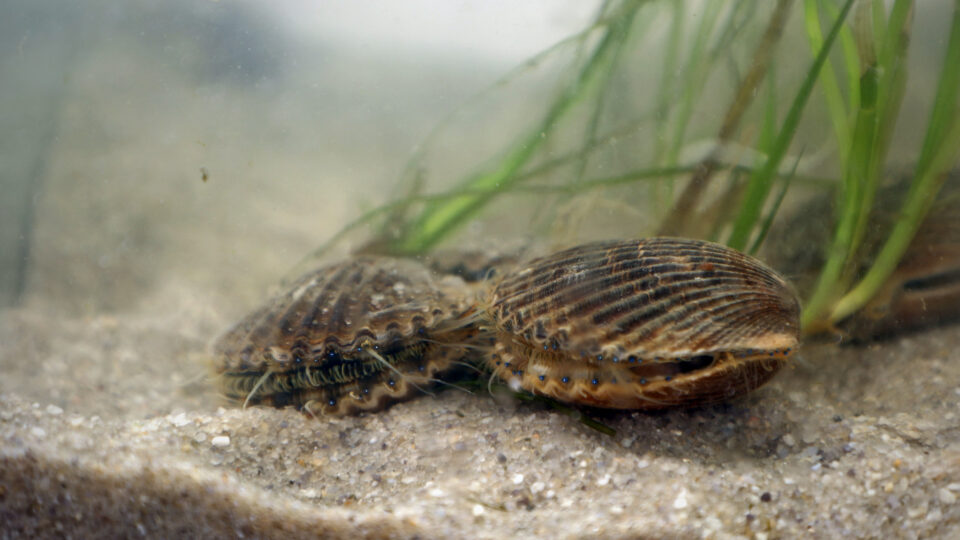
In the late 1920s, a pathogen began killing seagrasses off the coast of Virginia.  In 1933, a hurricane finished them off completely.  For nearly 70 years thereafter, the bay bottoms of the Virginia coast were muddy and barren, essentially devoid of fish, shellfish, mollusks and other creatures that inhabit seagrass meadows.  The local scallop industry was no more.

The largest seagrass restoration project ever attempted has changed all that.  During the past 21 years, scientists and volunteers have spread more than 70 million eelgrass seeds within four previously barren seaside lagoons.  This has spurred a natural propagation of meadows that have so for grown to almost 9,000 acres, the largest eelgrass habitat between North Carolina and Long Island Sound.

The long-term research conducted by the team from the University of Virginia shows that the success of the seagrass restoration project is improving water quality, substantially increasing the abundance of fish and shellfish in the bays, and capturing carbon from the water and atmosphere and storing it in the extensive root systems of the grasses and in the sediment below. 

The study shows that marine restorations are possible on scales that contribute directly to human well-being.

**********

Web Links

Some Good News: Seagrass Restored to Eastern Shore Bays is Flourishing

Photo, posted May 17, 2019, courtesy of Virginia Sea Grant via Flickr. Photo credit: Aileen Devlin | Virginia Sea Grant.

Earth Wise is a production of WAMC Northeast Public Radio.

Primary Sidebar

Recent Episodes

  • An uninsurable future
  • Clean energy and jobs
  • Insect declines in remote regions
  • Fossil fuel producing nations ignoring climate goals
  • Trouble for clownfishes

WAMC Northeast Public Radio

WAMC/Northeast Public Radio is a regional public radio network serving parts of seven northeastern states (more...)

Copyright © 2026 ·