• Skip to primary navigation
  • Skip to main content
  • Skip to primary sidebar

Earth Wise

A look at our changing environment.

  • Home
  • About Earth Wise
  • Where to Listen
  • All Articles
  • Show Search
Hide Search
You are here: Home / Archives for sea salt

sea salt

Modeling geoengineering

May 19, 2025 By EarthWise Leave a Comment

Modeling the impacts of geoengineering

As the impacts of climate change continue to mount up, there is increasing interest in radical intervention measures designed to keep a lid on rising global temperatures.  Such measures are fraught with potential dangers and unintended consequences but there is no guarantee that one or another of them might still be attempted in the future.  Increasing international interest in geoengineering as a potential strategy for mitigating climate change has created a pressing need to consider its impact before any potentially irreversible actions are taken.

The Natural Environment Research Council in the UK is funding four research projects aimed at understanding the potential consequences of solar radiation modification (SRM) being deployed in the real world.

SRM consists of methods to reflect some of the Sun’s radiation back into space instead of allowing it to reach and warm the earth. 

One approach is stratospheric aerosol intervention in which particles such as sulfates are introduced into the upper atmosphere to reflect sunlight thereby producing a dimming effect.   The idea is to mimic the effects of large volcanic eruptions, which naturally send sulfates into the atmosphere.

A second approach is marine cloud brightening, which increases the reflectivity of clouds over the ocean by spraying very small droplets of sea water into the air.  The fine particles of sea salt enhance cloud condensation nuclei, producing more cloud droplets and making clouds more reflective.

The research aims to deliver independent risk analyses to inform policymakers about the potential environmental impacts of SRM.

**********

Web Links

Scientists to model the impact of controlling Earth’s temperature by reflecting solar radiation

Photo, posted May 6, 2009, courtesy of Denys Zadorozhnyi via Flickr.

Earth Wise is a production of WAMC Northeast Public Radio

Cloud brightening

June 17, 2024 By EarthWise Leave a Comment

Solar geoengineering is a type of climate intervention:  deliberate actions designed to affect the climate.  There are several ways to try to reduce the amount of sunlight reaching the surface of the earth and all of them are controversial.  Perhaps the least controversial approach is cloud brightening.

The idea is based on something called the Twomey effect, which is that large numbers of small droplets in the atmosphere reflect more sunlight than small numbers of large droplets.  Spraying vast quantities of minuscule aerosols into the sky, thereby forming many small droplets, could change the reflective properties of clouds.  If clouds are more reflective, then less sunlight reaches the surface, and the temperature goes down.

This form of geoengineering is thought to be less risky because it can be performed on a localized basis and can use relatively benign materials such as sea salt. 

In early April, scientists from the University of Washington started testing a device that sprays tiny sea-salt particles into the air from the deck of a decommissioned aircraft carrier in Alameda, California.  The test was simply to see whether the machine propelled a mist of suitable size.

Within two weeks, Alameda officials ordered a stop to the experiment, citing potential health and environmental risks.  After a month-long investigation, Alameda ruled that the experiment does not generate a measurable risk to health, wildlife, or the environment.

But before more ambitious experiments take place, there are potential side effects of cloud brightening that need to be studied.  It may turn out to be a useful tool in fighting global warming, but in any case, such technology should not be viewed as a substitute for moving away from fossil fuels.

**********

Web Links

A Test of Cloud-Brightening Machines Poses No Health Risk, Officials Say

Photo, posted September 8, 2011, courtesy of Justin Ladia via Flickr.

Earth Wise is a production of WAMC Northeast Public Radio
Finding Plastic In Seafood | Earth Wise

September 15, 2020 By EarthWise Leave a Comment

plastic in seafood

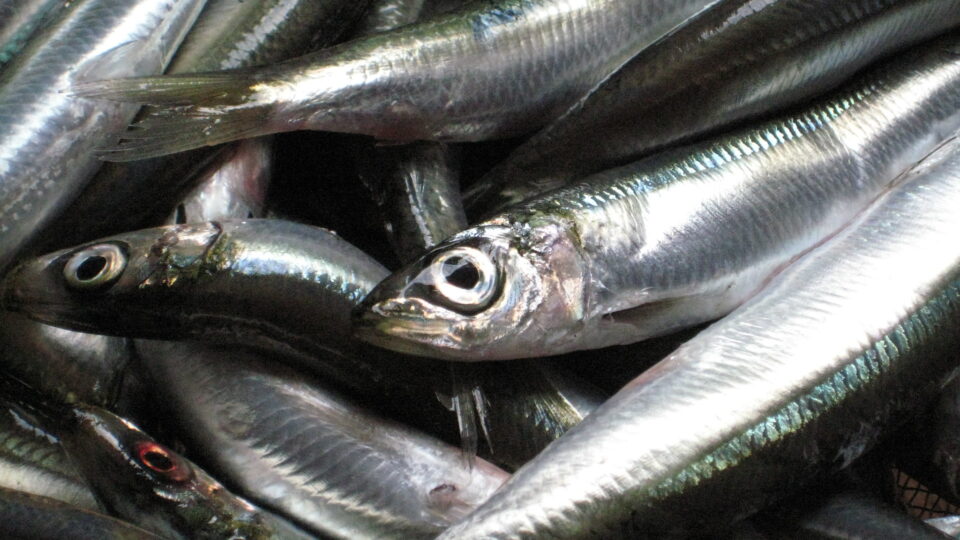
Researchers from the University of Exeter in the UK and the University of Queensland in Australia have developed a new method for identifying and measuring the presence of five different types of plastic in seafood.

The researchers purchased oysters, prawns, squid, crabs, and sardines from a market in Australia and analyzed them using the new technique.  They found plastic in every single sample.

Their findings showed that the amount of plastics present varies greatly among species and differs between individuals of the same species.  The measured plastic levels were 0.04 mg per gram of seafood in squid, 0.07 mg in prawns, 0.1 mg in oysters, 0.3 mg in crabs, and 2.9 mg in sardines. 

All the plastics are types commonly used in plastic packaging and synthetic textiles and are increasingly found in marine litter:  polystyrene, polyethylene, polyvinyl chloride, polypropylene, and polymethyl methacrylate.

The new method treats the seafood tissues with chemicals that dissolve the plastics present within them.  The resulting solution is then analyzed using a highly sensitive technique called Pyrolysis Gas Chromatography Mass Spectrometry which both identifies and quantifies the plastics.

Microplastics are an increasing source of pollution for much of the planet, including the oceans where they are eaten by all types of marine creatures ranging from planktonic organisms to large mammals.  Microplastics enter our diet not only from seafood, but also from bottled water, sea salt, beer, and honey, as well as from dust that settles on our food.

**********

Web Links

Seafood study finds plastic in all samples

Photo, posted June 23, 2007, courtesy of Flickr.

Earth Wise is a production of WAMC Northeast Public Radio.

Microplastics And Salt

December 10, 2015 By WAMC WEB

https://earthwiseradio.org/wp-content/uploads/2015/12/EW-12-10-15-Microplastics-And-Salt1.mp3

Today, thousands of personal care products – such as facial scrubs, body washes, and toothpastes – are known to contain minuscule balls of plastic called microbeads.  When we shower or brush our teeth, these microbeads are washed down the drain and travel undetected through wastewater treatment plants.  When they reach their final destination — our lakes, rivers and oceans — they mix with other sources of microplastics, including industrial waste and degraded plastic litter.    

[Read more…] about Microplastics And Salt

Primary Sidebar

Recent Episodes

  • An uninsurable future
  • Clean energy and jobs
  • Insect declines in remote regions
  • Fossil fuel producing nations ignoring climate goals
  • Trouble for clownfishes

WAMC Northeast Public Radio

WAMC/Northeast Public Radio is a regional public radio network serving parts of seven northeastern states (more...)

Copyright © 2026 ·