• Skip to primary navigation
  • Skip to main content
  • Skip to primary sidebar

Earth Wise

A look at our changing environment.

  • Home
  • About Earth Wise
  • Where to Listen
  • All Articles
  • Show Search
Hide Search
You are here: Home / Archives for schools

schools

Saving Lives With Air Conditioning | Earth Wise

August 26, 2022 By EarthWise Leave a Comment

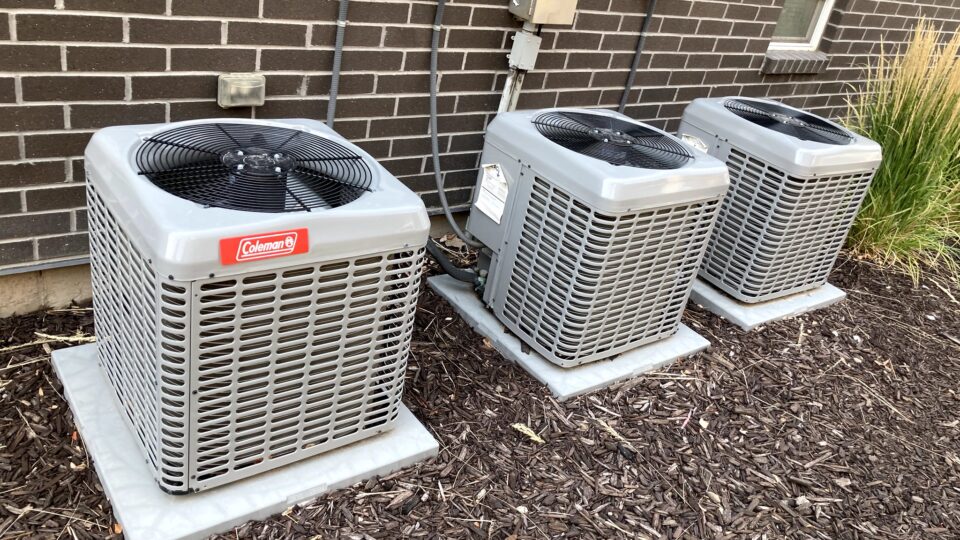
This summer, extreme heatwaves struck the United States, Europe, and Africa.  Thousands of people died as a result.  In July, the impact of extreme heat in places ill-prepared for it was evident.  In the U.K., where air conditioning is uncommon, public transportation shut down, schools and offices closed, and hospitals cancelled non-emergency procedures.

Air conditioning, which we mostly take for granted in this country, is a life-saving tool during extreme heat waves.  However, only about 8% of the 2.8 billion people living in the hottest – and often poorest – parts of the world have AC in their homes.

A new study at Harvard modeled the future demand for air conditioning as the number of days with extreme heat continues to increase across the globe.  The researchers identified a massive gap between current AC capacity and what will be needed by 2050 to save lives, particularly in low-income and developing countries.

If the rate of greenhouse gas emissions continues on its present course, the study concluded that that at least 70% of the population in several countries will require air conditioning by 2050.  The number will be even higher in equatorial countries like India and Indonesia.  At this point, even if the goals of the Paris Climate Accords are met, an average of 40-50% of the population in many of the world’s warmest countries will still require AC.

The research looked at various scenarios.  One in which emissions continue to increase leads to widespread need for air conditioning even in temperate countries.  In Germany, 92% of the population would need it, and here in the U.S., 96% would need it.

Planning for future power systems must take into account the essential needs of a warming world.

**********

Web Links

In a hotter world, air conditioning isn’t a luxury, it’s a lifesaver

Photo, posted July 24, 2021, courtesy of Phyxter Home Services via Flickr.

Earth Wise is a production of WAMC Northeast Public Radio.
Rooftop Solar Taking Off In China | Earth Wise

August 11, 2022 By EarthWise Leave a Comment

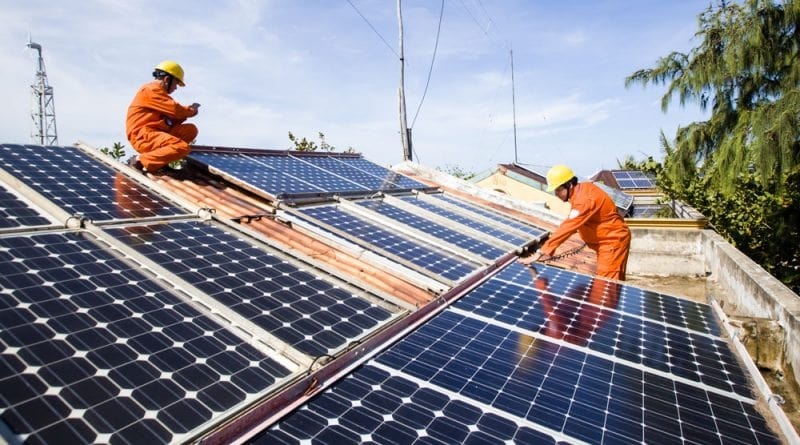
Rooftop solar is booming

The total amount of solar power generating capacity in the world has been growing rapidly.  In 2008, there was a total of only 15 gigawatts installed world-wide.  By 2012, the total was 100 gigawatts.  As of this spring, there is now 1 terawatt – that’s 1,000 gigawatts – of solar power installed in the world.   About a third of that total is in China, and solar power is really booming there.

Estimates are that China will install 108 gigawatts of solar capacity this year, which is about double the amount installed in 2021.  Much of the growth in solar in China is in the form of rooftop solar, as opposed to utility-scale solar farms.

China is aiming to have 50% of new factory rooftops carry solar installations by 2025.   By the end of next year, China’s National Energy Bureau is aiming for solar panels to cover 50% of rooftops on party and government buildings, 40% of schools, hospitals, and other public buildings, 30% of industrial and commercial buildings, and 20% of rural homes.  This new initiative will drive China’s installed solar capacity to impressive levels in the coming years.

After China, the leading installers of solar energy capacity are the European Union, the United States, and Japan. 

These figures are for generating capacity.  What ultimately matters is solar’s share of total electricity consumption.  In China and the EU, solar provides over 6% of the electricity used.  In the US, that figure is about 3.5%.  In Germany and Australia, solar power provides 10% of electricity needs.  All these numbers will continue to go up rapidly as solar installations grow.

**********

Web Links

China Sees Rooftop Solar Take Off as New Policies Bolster Growth

Photo, posted June 17, 2022, courtesy of Nguyễn Mỹ Hoa via Flickr.

Earth Wise is a production of WAMC Northeast Public Radio.

Shutting Down Pollution | Earth Wise

April 8, 2020 By EarthWise Leave a Comment

coronavirus temporarily reduces air pollution

With much of the country shut down as the coronavirus forces people to stay at home, there has naturally been a drastic reduction of traffic on roads and highways.   And with that decrease, there has been a dramatic reduction in pollution as well.

A satellite that detects emissions in the atmosphere linked to cars and trucks has observed huge declines in pollution in major metropolitan areas such as Los Angeles, Seattle, New York, Chicago, and Atlanta.

Los Angeles is infamous for its rush-hour traffic but that has pretty much ceased to exist. Similar changes can be seen in the San Francisco Bay Area, where nearly 7 million residents have been ordered to shelter in place.  New York City is less dependent on car travel than in other metro areas, but the shutdown of office buildings, schools, and restaurants has nonetheless resulted in a substantial reduction of traffic on the streets of the city.

While this sudden decline in air pollution over U.S. cities has some near-term health benefits, those benefits are likely to be fairly minor in the big picture.  When the coronavirus outbreak subsides and people are allowed to leave their homes and go back to their normal lives, air pollution will most certainly rebound to previous levels.  In any event, studies have shown that long-term exposure to air pollution has a larger impact on public health than any transient events.

Having much cleaner air for a while is certainly a good thing, but this shutdown is not a sustainable way to reduce air pollution and the long-term effects of the coronavirus crisis will certainly not be positive.

**********

Web Links

Traffic and Pollution Plummet as U.S. Cities Shut Down for Coronavirus

Photo, posted March 15, 2020, courtesy of Tom Collins via Flickr.

Earth Wise is a production of WAMC Northeast Public Radio.
Immersion In Nature Is Good for You | Earth Wise

February 20, 2020 By EarthWise Leave a Comment

Nature immersion has health benefits

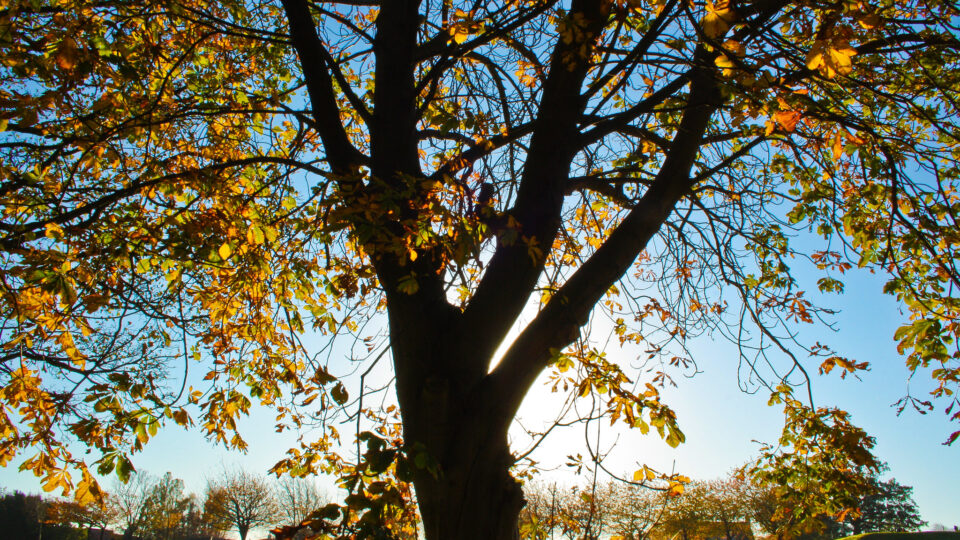
There is a growing body of research that shows that getting outdoors in nature can be good for people’s health and well-being. There are so many studies supporting this idea that policymakers, employers, and healthcare providers are increasingly considering this need for nature in how they plan and operate.

A new study of 20,000 people by researchers at the University of Exeter in the UK actually looked at how much exposure to nature was enough to make people say they feel healthy and have a sense of well-being.   The answer turned out to be 2 hours a week.  And the correlation was strong.  People who didn’t meet that threshold did not report the benefits.

Studies have shown that time in nature – as long as people feel safe where they are – is an antidote for stress.  It can lower blood pressure and stress hormone levels, reduce nervous system arousal, enhance immune system function, increase self-esteem, reduce anxiety, and improve mood.  Most of these studies are correlational rather than causal, but the results tend to be robust.

Given all this, cities are adding or enhancing parks, and schools and other institutions are being designed with large windows and access to trees and green space.  The Scandinavian tradition of “forest schools” – where learning takes place in natural settings outdoors -.is finding a home in the US.   Japanese researchers study the effects of “forest bathing”, a poetic term for walking in the woods.

With two-thirds of humanity projected to be living in cities by 2050, we are awakening to the idea that we need to be able to spend time in nature for our own wellbeing, even if it’s just a walk in a park.

**********

Web Links

Ecopsychology: How Immersion in Nature Benefits Your Health

Photo, posted November 6, 2011, courtesy of Flickr.

Earth Wise is a production of WAMC Northeast Public Radio.

Volunteer Tourism | Earth Wise

February 13, 2020 By EarthWise 1 Comment

volunteer tourism aids disaster recovery

Spending vacation time in a disaster zone seems like a crazy idea, but so-called volunteer tourism can actually be a big help to communities trying to recover from natural disasters.  It can also be a unique and rewarding experience for the volunteers.

Such volunteer tourism should not be confused with “disaster tourism”, the unfortunate practice of rushing to the scene of a calamity to gawk.  That is certainly no help to anyone.

When disaster strikes a destination usually frequented by tourists, people naturally tend to stay away, leaving communities to deal with the loss of tourism income on top of the costs of repair and recovery.

A study by UTS, a technology university in Sydney, Australia, looked at the effects of volunteer tourism in the wake of the April 2015 earthquake in Nepal.  They found that when it is done in an ethical matter than takes into account local conditions and the affected community, volunteer tourism can aid recovery and resilience.

In the months following the earthquake, most relief organizations asked international volunteers not to come unless they had specific expertise, such as medical skills, building skills, or emergency response experience.  Eventually, Nepal relaxed conditions to include volunteers to help rebuild homes and schools, to intern in hospitals, and to support NGOs and to re-establish sustainable agriculture.

According to the Nepal Association of Tour and Travel Agents, almost one third of the tours booked to Nepal in the two years after the earthquake comprised groups who combined tourism with volunteering or philanthropy.

Volunteer tourism isn’t for everyone and for every situation, but for places that rely on tourism for their economy, building volunteer tourism into the recovery process can be a good strategy.

**********

Web Links

Volunteer tourism can aid disaster recovery

Photo, posted July 2, 2015, courtesy of the World Humanitarian Summit via Flickr.

Earth Wise is a production of WAMC Northeast Public Radio.
Schools And Solar Power

June 19, 2019 By EarthWise Leave a Comment

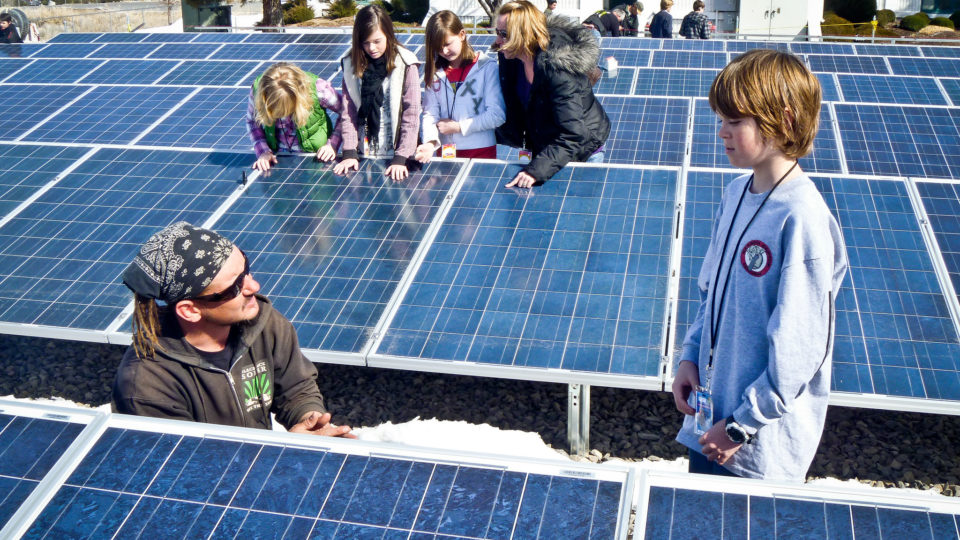
A new study from Stanford University looked at the benefits of installing solar panels on the rooftops of schools.  According to the study, taking advantage of all the viable space for solar panels could allow schools to meet up to 75% of their electricity needs and reduce the education sector’s carbon footprint by as much as 28%.

Given the long list of spending priorities for schools, solar power seems like a luxury item.  But the Department of Energy estimates that K-12 schools spend more than $6 billion a year on energy and, in many districts, energy costs are second only to salaries.  In the higher education sector, yearly energy costs add up to more than $14 billion.  In total, educational institutions account for approximately 11% of energy consumption by U.S. buildings and 4% of the nation’s carbon emissions.

The Stanford study suggests that investments in the right solar projects combined with the right incentives from states could free up much-needed money in school budgets.

To no surprise, the study finds that three large, sunny states – Texas, California, and Florida – have the greatest potential for generating electricity from solar panels on school rooftops.

Apart from measurable effects on air pollution and electricity bills, solar installations at schools can also provide new learning opportunities for students.  In fact, some schools are already using data from their on-site solar energy systems to teach students basic ideas about fractions, as an example, as well as more sophisticated concepts such how shifting solar panel angles can affect power production.

According to the study, nearly all states could reap value from school solar projects.

**********

Web Links

What happens when schools go solar?

Photo, posted February 28, 2011, courtesy of Black Rock Solar via Flickr.

Earth Wise is a production of WAMC Northeast Public Radio.

Fumes From Gas Stations

November 15, 2018 By EarthWise Leave a Comment

https://earthwiseradio.org/wp-content/uploads/2018/11/EW-11-15-18-Fumes-from-Gas-Stations.mp3

A study by environmental health scientists at Columbia University examined the release of vapors from gas station vent pipes and found that emissions were 10 times higher than the estimates used to establish setback regulations that determine how close schools, playgrounds, and parks can be to the facilities.

[Read more…] about Fumes From Gas Stations

Primary Sidebar

Recent Episodes

  • An uninsurable future
  • Clean energy and jobs
  • Insect declines in remote regions
  • Fossil fuel producing nations ignoring climate goals
  • Trouble for clownfishes

WAMC Northeast Public Radio

WAMC/Northeast Public Radio is a regional public radio network serving parts of seven northeastern states (more...)

Copyright © 2026 ·