
• Skip to primary navigation
  • Skip to main content
  • Skip to primary sidebar

Earth Wise

A look at our changing environment.

  • Home
  • About Earth Wise
  • Where to Listen
  • All Articles
  • Show Search
Hide Search
You are here: Home / Archives for scaling

scaling

Ecofriendly Glass

October 2, 2024 By EarthWise Leave a Comment

Designing and producing ecofriendly glass

Glass has been used for thousands of years to make everything from windows to bottles to microscope slides.  For all that time, most glass has been in the form of soda lime silicate glass, which is made by melting quartz sand with carbon-based ingredients – soda ash and limestone – at high melting temperatures of about 2600 degrees Fahrenheit.

The process results in substantial carbon emissions.  Worldwide, glass manufacturing produces over 86 million tons of carbon dioxide per year.  Most of that comes from burning fuel to reach the high temperatures needed to make the glass, but about a quarter of it comes from the decomposition of the carbon-based materials used.

Researchers at Penn State University have developed an entirely new type of glass that represents an alternative to soda lime glass.  The glass – that they call LionGlass – eliminates the use of carbonate batch materials and has a melting temperature 700 degrees lower than traditional glass.   The new material has the potential to cut the carbon footprint of glass manufacturing in half.  It is also 10 times more crack-resistant than ordinary glass, which would enable light weighting of glass products, lowering the emissions associated with transporting glass and glass products.

Recently, Penn state has entered into a partnership with the Italian company Bormioli, one of the world’s leading glass manufacturers that specializes in high-end packaging for fragrances, cosmetics, and tableware.  By focusing on a smaller, high-end market, the focus can be on fine-tuning the glass and determining the feasibility of scaling it up further for other uses.

**********

Web Links

Ecofriendly glass invented at Penn State secures partner for product development

Photo, posted December 26, 2005, courtesy of Lachlan Hardy via Flickr.

Earth Wise is a production of WAMC Northeast Public Radio

A New Method of Refrigeration | Earth Wise

February 10, 2023 By EarthWise Leave a Comment

A new method of refrigeration

Salting roads before winter storms is a familiar sight in the Northeast.  The purpose is to change the temperature at which ice can form on the road.  The underlying concept has formed the basis of a new method of refrigeration that has been dubbed “ionocaloric cooling.”

It is described in a paper published in the journal Science by researchers at the Lawrence Berkeley National Laboratory.  The method takes advantage of how energy in the form of heat is either stored or released when a material changes phase – such as water changing from ice to liquid and vice versa.  Melting absorbs heat from the surroundings while freezing releases heat.  An ionocaloric refrigerator makes use of this phase and temperature change using an electrical current to add or remove ions provided from a chemical salt.

The potential is to make use of this refrigeration cycle instead of the vapor compression systems in present-day refrigerators, which make use of refrigerant gases that are greenhouse gases, many of which very powerful ones.  The goal is to come up with a system that makes things cold, works efficiently, is safe, and doesn’t harm the environment. 

There are a number of alternative refrigeration systems under development that make use of a variety of mechanisms including magnetism, pressure, physical stretching, and electric fields.  Ionocaloric cooling uses ions to drive solid-to-liquid phase changes.

Apart from some very promising theoretical calculations of the system’s potential, the researchers have also demonstrated the technique experimentally.  They have received a provisional patent for the technology and are continuing to work on prototypes to demonstrate its capabilities and amenability to scaling up.

**********

Web Links

Berkeley Lab Scientists Develop a Cool New Method of Refrigeration

Photo, posted October 29, 2021, courtesy of Branden Frederick via Flickr.

Earth Wise is a production of WAMC Northeast Public Radio
An Indoor Farm In Upstate New York | Earth Wise        

March 11, 2022 By EarthWise Leave a Comment

Indoor farms to help feed the world

Vertical farming is the practice of growing crops in vertically stacked layers, generally under controlled environments and using soilless farming techniques like hydroponics, aquaponics, and aeroponics.   Vertical farms are housed in structures such as buildings, shipping containers, tunnels, and abandoned mineshafts.

The potential advantages of vertical farms are that they are very efficient in terms of the amount of land required to produce a given amount of crop, they are resistant to weather, and they allow crops to be produced in close proximity to where they will be used.

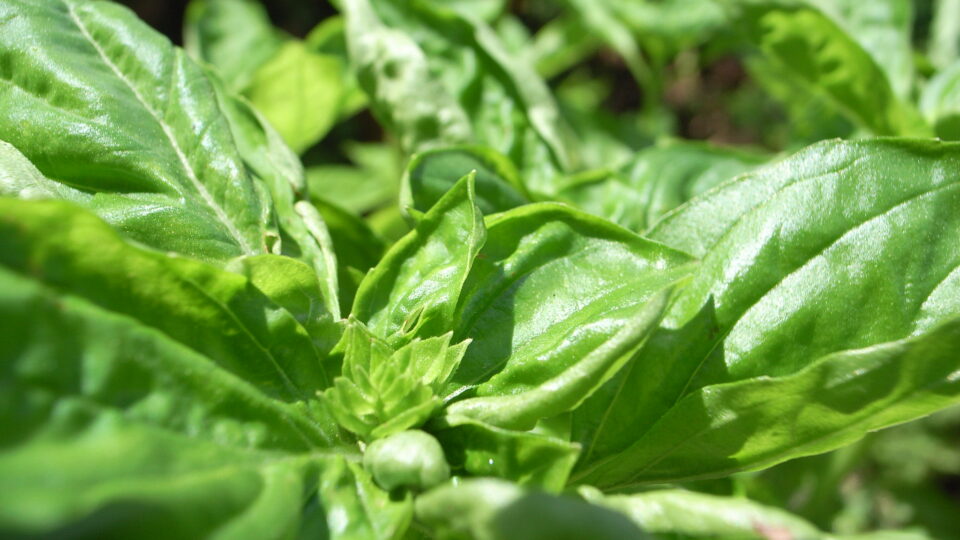
The vacant third floor of a building in downtown Glens Falls, New York is about to become the home of a small vertical farm.  The facility will be used to hydroponically grow things like fresh basil, lettuce, and fruits to be used by nearby restaurants.  In fact, the first floor of the building is a restaurant that will be a customer for the crops growing upstairs.  Other local restaurants are likely to benefit as well.

Th pilot program is being funded by a grant from the Smart Cities Innovation Partnership that the city applied for in 2020.  Glens Falls is partnering with Re-Nuble, a New York City-based renewability and sustainability firm.  Apart from the vertical farm project, Re-Nuble also advises on reduction of food waste by composting and on the selection of energy-efficient equipment.

The pilot program will run for a year and the results will be used for scaling it up to a larger vertical farm.  Vertical farms like these are not intended to replace conventional farms but can supplement the existing food stream and provide items that are hard to obtain during the year.

**********

Web Links

Glens Falls is fitting a farm inside a downtown building

Photo, posted July 15, 2007, courtesy of Toshiyuki Imai via Flickr.

Earth Wise is a production of WAMC Northeast Public Radio.

Helping Corals With Beneficial Bacteria | Earth Wise

March 31, 2021 By EarthWise Leave a Comment

Utilizing exploratory technology to help corals

A group of researchers at the King Abdullah University of Science and Technology in Saudi Arabia is exploring a novel technology to improve the health of corals.  Around the globe, corals are being stressed by pathogens, toxins, and warming waters leading to widespread bleaching events.

The new idea is to introduce beneficial bacteria to the corals, thereby boosting the strength and resilience of their symbiotic partners.  The concept is akin to the use of probiotics in plant science.  Corals rely on bacterial and algal symbionts to provide nutrients, energy (through photosynthesis), toxin regulation, and protection against pathogens.  

The researchers selected bacteria that are naturally symbiotic to specific coral species on reefs in the Red Sea, ensuring that no alien bacteria are accidentally introduced.  A probiotic cocktail comprising six bacteria strains was used in a laboratory setting.  Results in the lab have been promising so far, as they have observed dynamic and metabolic alterations to the corals that boosted their chances of survival under heat stress. 

Success in the lab will need to be translated to success in the open oceans, which is challenging.  Scaling up and seeding whole reefs might involve robots and artificial intelligence in order to deliver probiotics either into sediments or directly onto corals.

The use of beneficial microorganisms is not the solution to the global destruction of coral reefs.  Only worldwide CO2 mitigation can ultimately accomplish that.  But the probiotic approach might buy corals some time as they deal with shifting environmental pressures and try to adapt to a changing world.

**********

Web Links

Microbiome boost may help corals resist bleaching

Photo, posted March 18, 2018, courtesy of Steven dos Remedios via Flickr.

Earth Wise is a production of WAMC Northeast Public Radio.

Primary Sidebar

Recent Episodes

  • An uninsurable future
  • Clean energy and jobs
  • Insect declines in remote regions
  • Fossil fuel producing nations ignoring climate goals
  • Trouble for clownfishes

WAMC Northeast Public Radio

WAMC/Northeast Public Radio is a regional public radio network serving parts of seven northeastern states (more...)

Copyright © 2026 ·