• Skip to primary navigation
  • Skip to main content
  • Skip to primary sidebar

Earth Wise

A look at our changing environment.

  • Home
  • About Earth Wise
  • Where to Listen
  • All Articles
  • Show Search
Hide Search
You are here: Home / Archives for save lives

save lives

Wildlife crossings

October 23, 2024 By EarthWise Leave a Comment

Building more wildlife crossings to reduce collisions between cars and animals

Every year, there are one to two million collisions between motor vehicles and large animals in the U.S.  About 200 people are killed annually.  Counting smaller vertebrates, around a million animals are killed by vehicles each day.  Research has shown that global warming is triggering widespread species redistribution.  As a result, more and more animals are on the move, changing their habitats to escape warming temperatures and climate extremes.

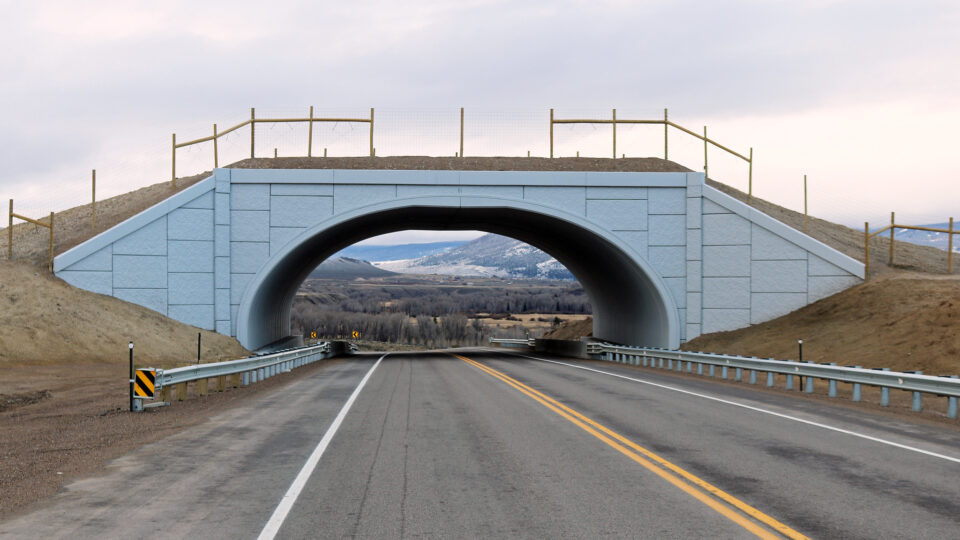
This situation has created renewed interest in creating wildlife crossings.  These are various kinds of structures that allow animals to traverse human-made barriers like highways.  They include such things as a grassy overpass that allows pronghorn to run across a highway in Wyoming and a long underpass that allows tigers to scamper beneath a highway in India.

In the U.S., there are more than 1,000 wildlife crossings and there are more being built all the time.  Data shows that they are highly effective.  A study of wildlife crossings on Highway 9 through the Blue River Valley in Colorado found that they reduced wildlife-vehicle collisions by nearly 90%. 

Wildlife crossing structures can be expensive to build, costing between $500,000 and $6 million, but research has shown that the money saved by avoiding crashes can recoup these costs in just a few years along with the fact that they potentially save lives.  Federal funding is largely distributed based on areas with the highest number of wildlife-vehicle collisions, which is crucial for addressing public safety issues.  However, a recent study suggests that future proposals need to incorporate climate-driven changes in animal behavior and habitat.

**********

Web Links

As Climate Changes Fuels Animal Movement, Will These Structures Still Help Species Cross the Road?

Photo, posted April 5, 2017, courtesy of Jeffrey Beall via Flickr.

Earth Wise is a production of WAMC Northeast Public Radio
Predicting major earthquakes

October 10, 2024 By EarthWise Leave a Comment

Researchers are exploring how to predict major earthquakes

Natural disasters continue to be major threats for people, just as they always have been.  But modern technology has greatly improved our ability to prepare for and, in many cases, escape from the worst effects of these events.  A good example is hurricane forecasting.  Nowadays, there is plenty of warning when a major hurricane is headed toward a populous area.  It is still up to people to get away from the danger zone, but at least there is the opportunity to do so.

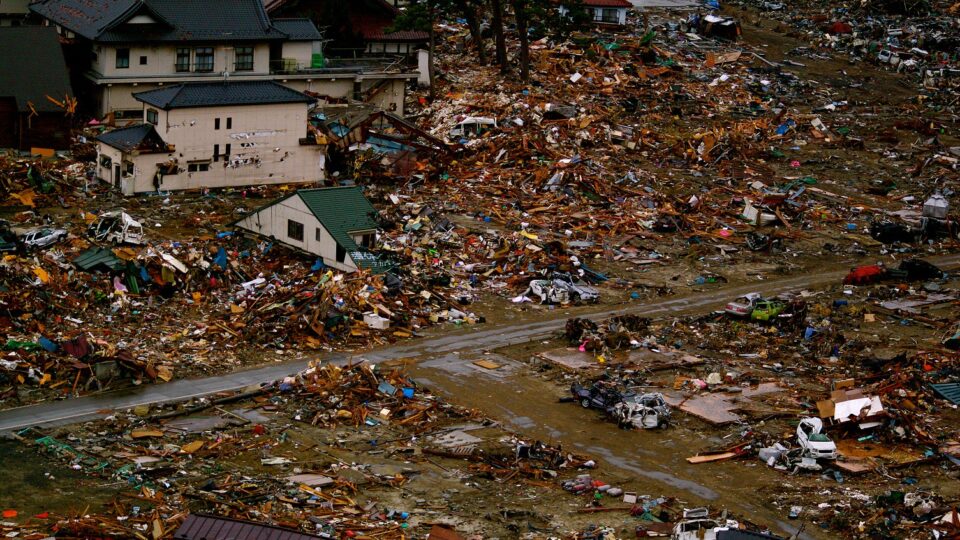
Major earthquakes are a different story.  There is generally little or no warning when one will strike.  But scientists at the University of Alaska Fairbanks and the Ludwig Maximilian University in Munich, Germany have developed a technique that may provide days or even months of warning about an impending major earthquake.

The detection method is based on machine learning and is described in a paper in the journal Nature Communications.  The researchers wrote a computer algorithm that looks for abnormal seismic activity.  Advanced statistical techniques found that approximately three months of abnormal low-magnitude regional seismicity occurred in the regions where two major earthquakes took place.  One was the magnitude 7.1 Anchorage earthquake in 2018 and the other was a similar-sized quake in Ridgecrest, California in 2019.

Considerably more testing – particularly in real-time rather than looking at historical data – is needed.  But accurate earthquake forecasting has the potential to save lives and reduce economic losses.  However, there are ethical and practical questions to answer.  False alarms could lead to unnecessary panic, economic disruption, and loss of public trust.  On the other hand, missed predictions can have catastrophic consequences.

**********

Web Links

UAF scientist’s method could give months’ warning of major earthquakes

Photo, posted January 22, 2012, courtesy of the Climate and Ecosystems Change Adaptation Research University Network via Flickr.

Earth Wise is a production of WAMC Northeast Public Radio

Primary Sidebar

Recent Episodes

  • An uninsurable future
  • Clean energy and jobs
  • Insect declines in remote regions
  • Fossil fuel producing nations ignoring climate goals
  • Trouble for clownfishes

WAMC Northeast Public Radio

WAMC/Northeast Public Radio is a regional public radio network serving parts of seven northeastern states (more...)

Copyright © 2026 ·