• Skip to primary navigation
  • Skip to main content
  • Skip to primary sidebar

Earth Wise

A look at our changing environment.

  • Home
  • About Earth Wise
  • Where to Listen
  • All Articles
  • Show Search
Hide Search
You are here: Home / Archives for rocky mountain spotted fever

rocky mountain spotted fever

Tick-Borne Pathogens In Canada | Earth Wise

December 27, 2022 By EarthWise Leave a Comment

Ticks spreading disease in Central Canada

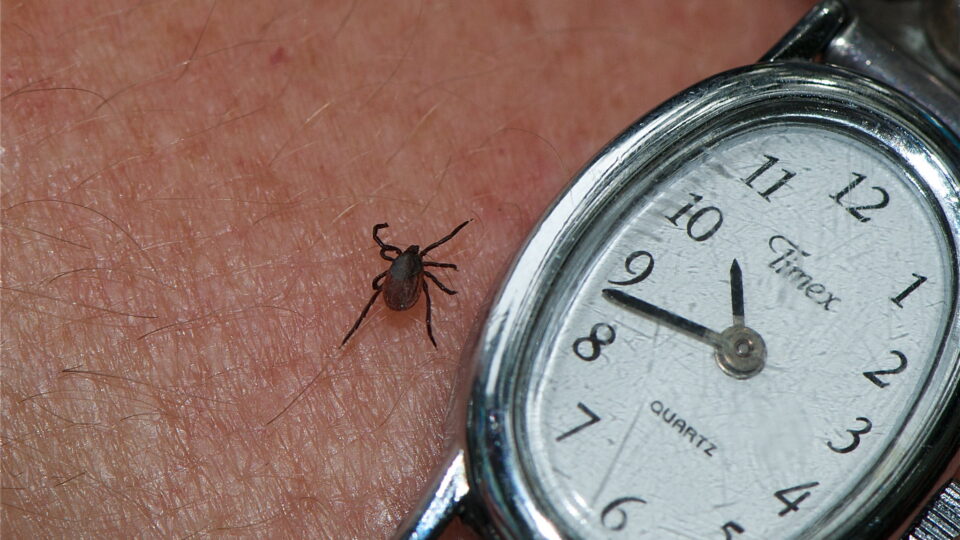
Measuring only three to five millimeters in size, tiny ticks are a big problem.  They are widely distributed in many parts of the world, especially in warm and humid climates.  Ticks are arachnids – not insects – meaning they’re more closely related to spiders than to flies or mosquitos.  They are external parasites that feast on the blood of birds, reptiles, amphibians, and mammals – including humans.

In the United States, ticks are responsible for spreading potentially life-threatening infectious diseases.  According to estimates from the Centers for Disease Control and Prevention, ticks infect more than 300,000 people with Lyme disease in the U.S. every year, and the numbers continue to rise.  Other common tick-borne diseases include anaplasmosis, babesiosis, Rocky Mountain Spotted Fever, and powassan encephalitis.

Ticks are becoming a problem in Canada as well.  According to a new study by researchers from McGill University and the University of Ottawa, tick-borne pathogens are on the rise in Central Canada – a region where ticks were never previously detected. 

In the study, the researchers collected ticks across Ontario and Quebec.  They found that five emerging pathogens were present across their study sites, including the pathogens that cause Lyme disease and babesiosis.  The researchers also found that pathogens can transmit in different ways.  Typically, pathogens are transmitted to a tick after feeding from the blood of an infected host, like a small mammal.  But the research team found evidence of pathogens that could be directly transmitted from adult female ticks to larval ticks.

According to the researchers, more comprehensive testing and tracking is needed to detect the spread and risks of tick-borne pathogens to humans and wildlife in Canada.

**********

Web Links

Tick-borne pathogens increasingly widespread in Central Canada

Photo, posted May 4, 2009, courtesy of Jerry Kirkhart via Flickr.

Earth Wise is a production of WAMC Northeast Public Radio
The United States And Ticks | Earth Wise

July 21, 2020 By EarthWise Leave a Comment

United States tick data is lagging

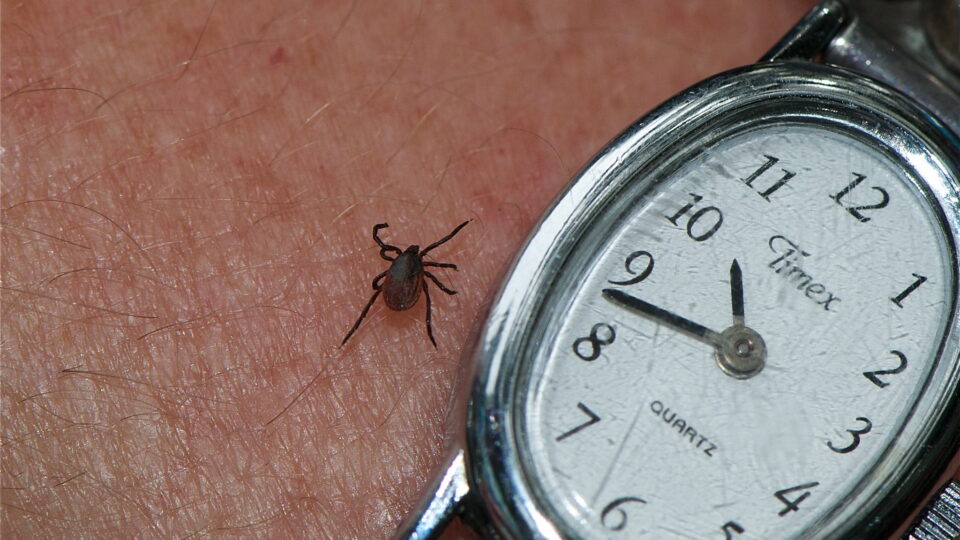
Tiny ticks are a big problem.  Measuring only three to five millimeters in size, ticks are widely distributed around the world.  They are external parasites, feasting on the blood of birds, reptiles, amphibians, and mammals – including humans.

According to estimates from the Centers for Disease Control and Prevention, ticks infect more than 300,000 people with Lyme disease in the United States every year, and the numbers continue to rise.  Other common tick-borne diseases include anaplasmosis, babesiosis, Rocky Mountain Spotted Fever, and powassan encephalitis.

But while the prevalence of tick-borne illnesses has steadily increased in the United States over the past two decades, a new study on tick surveillance and control “has revealed an inconsistent and often under-supported patchwork of programs across the country.”

The study, by university researchers at the CDC’s five Vector-Borne Disease Regional Centers of Excellence, is the first-ever examination of tick management programs in the United States.  The researchers found clear gaps in our public health infrastructure. 

According to the study, which was recently published in the Journal of Medical Entomology, less than 50% of public health and vector-control agencies conduct tick surveillance.  Only 25% test ticks for disease-causing germs.  And only 12% conduct or support tick-control efforts.  Researchers also discovered that the capacity for public tick-control efforts is low, as is the capacity for information and data sharing between agencies on ticks.    

The findings highlight the degree to which tick surveillance and control is lagging in the United States.  According to the research team, greater support for tick-management programs is critical, and they hope their findings will serve as a baseline from which to measure future improvements.  

**********

Web Links

Tick surveillance and control lagging in US

Photo, posted May 4, 2009, courtesy of Jerry Kirkhart via Flickr.

Earth Wise is a production of WAMC Northeast Public Radio.

Primary Sidebar

Recent Episodes

  • An uninsurable future
  • Clean energy and jobs
  • Insect declines in remote regions
  • Fossil fuel producing nations ignoring climate goals
  • Trouble for clownfishes

WAMC Northeast Public Radio

WAMC/Northeast Public Radio is a regional public radio network serving parts of seven northeastern states (more...)

Copyright © 2026 ·