• Skip to primary navigation
  • Skip to main content
  • Skip to primary sidebar

Earth Wise

A look at our changing environment.

  • Home
  • About Earth Wise
  • Where to Listen
  • All Articles
  • Show Search
Hide Search
You are here: Home / Archives for reverse

reverse

A recycling lottery

July 18, 2025 By EarthWise Leave a Comment

Getting people to recycle isn’t always easy.  The bottled beverages we buy at the supermarket often require a small deposit that we can get back by recycling the bottle, but often, we just don’t.

Researchers from the University of British Columbia tested the idea of giving people returning bottles a small chance of winning a big cash prize instead of a 10-cent deposit return.  The result was that people recycled 47% more bottles.

Changing how we reward recycling made a big difference.  When given a choice between a guaranteed return and a possible large reward, many chose the lottery option.  When people were randomly assigned to one type of reward or the other, those in the lottery group brought in almost three bottles for every two returned by the other group.

This isn’t a new idea.  Norway has a recycling lottery, and their bottle return rate is close to 100 percent.  The way it works there is there are reverse vending machines in grocery stores all over the country.  The revenues generated by the machines is split in four ways:  34.5% of the gross revenue goes to the Red Cross; 35% goes to the people who bring in their bottles in the form of winnings in the lottery; 9.75% goes to the stores for managing the machines and the lottery; and 10.75% goes to the operating company of the Recycling Lottery.

The Canadian experiments demonstrate that a recycling lottery could be effective in more places than Norway.  However, it shouldn’t completely replace the guaranteed refund option, since some people depend on it for income.

**********

Web Links

How lottery-style bottle returns could transform recycling

Photo, posted July 9, 2011, courtesy of Mr.TinMD via Flickr.

Earth Wise is a production of WAMC Northeast Public Radio

Geoengineering could create winners and losers

November 13, 2023 By EarthWise Leave a Comment

Geoengineering – deliberate interventions to alter the climate and curb climate change – is a controversial topic, to say the least.  Once practically considered taboo even to discuss, there in increasing interest in at least exploring various ideas about how to halt or reverse climate change through direct actions that impact global temperatures.

Putting aside the very real concerns about the risks and dangers associated with such action, there is also the issue that climate interventions may create dramatically different effects across the globe, benefitting some areas and adversely affecting others.

A recent study by scientists at Rutgers University tackled this very issue.  Published in the journal Nature Food, it described the results of computer models simulating the impacts of stratospheric aerosol intervention (SAI), which is spraying sulfur dioxide into the stratosphere, where it would partially shield the Earth from the Sun, lowering temperatures.

The study looked at 11 different SAI scenarios and found that none of them benefitted everyone.  Uncontrolled global warming favors crop production in cold, high-latitude areas such as Canada, Russia, Scandinavia, and our northern border states.  Moderate amounts of SAI favors food production in the mid-latitudes (such as in the US and Europe.)  Large amounts of intervention favors agricultural production in the tropics. 

Even if geoengineering might not have dire consequences – which is by no means certain – it would create winners and losers.  Nations may have different ideas of what constitutes an optimal global temperature.  So, who gets to decide where to set the global thermostat?  The prospects for conflict loom large. 

**********

Web Links

Climate Intervention Technologies May Create Winners and Losers in World Food Supply

Photo, posted November 18, 2021, courtesy of Conall via Flickr.

Earth Wise is a production of WAMC Northeast Public Radio
Greenhouse Gas Removal And Net Zero | Earth Wise

November 18, 2021 By EarthWise Leave a Comment

Reducing the amount of greenhouse gas emissions can slow the progress of global warming but only reaching and sustaining net zero global emissions can halt the progress of climate change.

The move to renewable power and the use of electric transport are substantial and essential ways to reduce emissions.  But even if these transitions take place on a rapid timescale, they will not eliminate all emissions.  Many industrial activities and, especially, agriculture will continue to contribute substantial greenhouse gas emissions.   There are efforts to reduce the contributions of these things, but there are no zero-emission substitutes for most of them.

As a result, actually removing CO2 from the atmosphere once it is there is essential to achieve net zero emissions.  If greenhouse gas removal can be scaled up sufficiently, it opens the option of going “net negative”, which would be the ideal way to mitigate and, better still, reverse the effects of climate change.

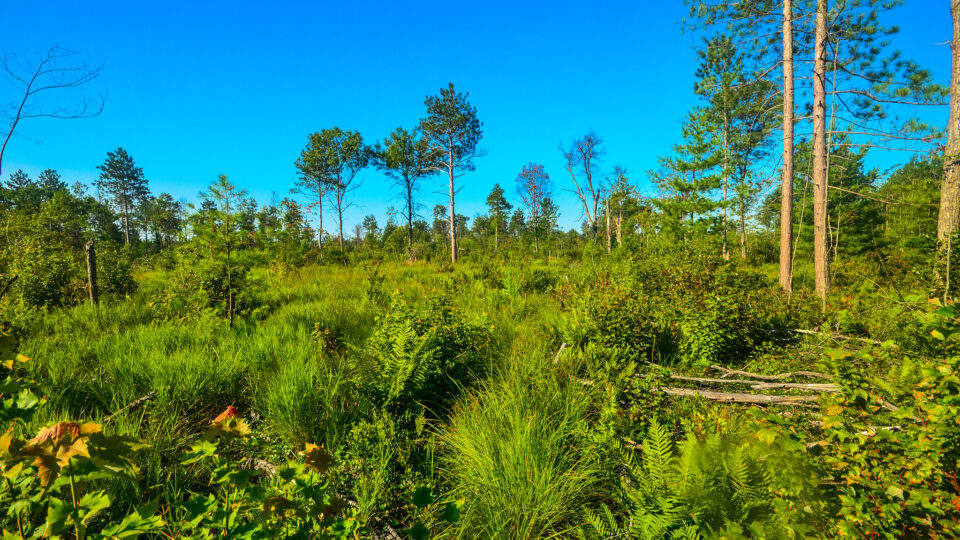
There are multiple approaches to carbon dioxide removal.  Some are natural, involving ways of capturing and storing carbon in trees, biochar, and peatlands.  Others are technological.  An example is the system that has just gone into operation in Iceland that uses fans, chemicals, and heat to capture CO2 and then mineralize it in volcanic rock.   Another is a system being tested in the UK that captures CO2 from growing biomass and pipes it to storage under the North Sea.

Much of the attention on carbon capture technology is aimed at trapping the emissions from fossil fuel power plants, but the need to remove carbon dioxide that has entered the atmosphere in other ways is ultimately far greater.

**********

Web Links

CO2 removal is essential to achieving net zero

Photo, posted August 17, 2013, courtesy of Joshua Mayer via Flickr.

Earth Wise is a production of WAMC Northeast Public Radio.

Making Coal To Fight Climate Change

April 19, 2019 By EarthWise Leave a Comment

Coal is the most harmful fossil fuel for the environment and, furthermore, for human health.  Its use has stubbornly persisted because it is so plentiful and, therefore, cheap.  As a result, a big part of efforts to fight climate change is finding a way to remove the carbon dioxide dumped into the atmosphere by the combustion of coal.

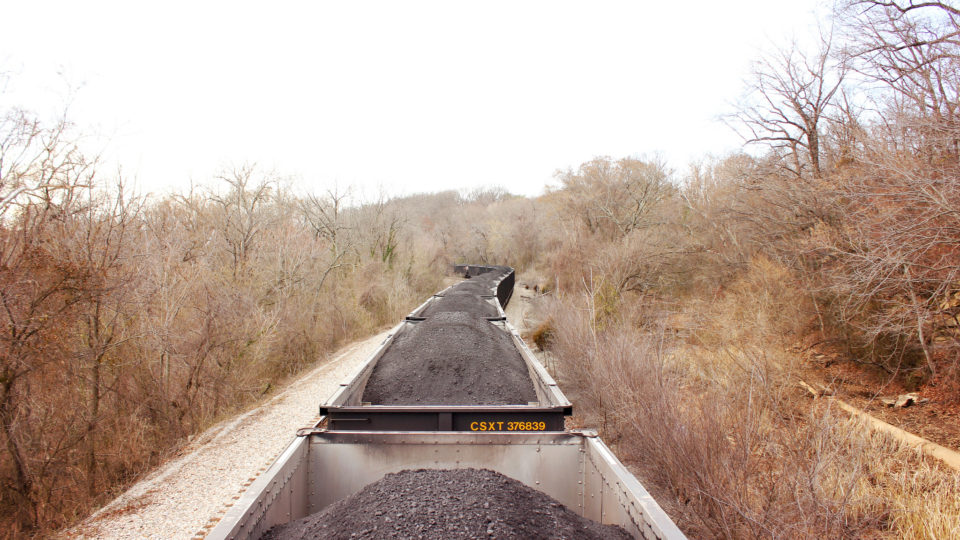
Researchers at the Royal Melbourne Institute of Technology in Australia have developed a remarkable technology that in effect reverses the process that has led to soaring CO2 levels in the atmosphere.  They have found a way to pull carbon dioxide from the atmosphere and turn it into coal, after which it can be stored cheaply and safely underground.

Most previous carbon capture and storage technologies have focused on compressing carbon dioxide gas into a liquid form and then pumping it into rock formations.  Such techniques are rather expensive, require lots of energy, and pose risks that the liquid CO2 could escape from its underground storage sites.  More recently, research on solid metal catalysts has led to the possibility of turning CO2 into solid carbon, but most of these reactions require very high temperatures and use a lot of energy.

The new technique developed at RMIT uses a new class of catalysts based on metal alloys.  With a small jolt of electricity applied at room temperature, CO2 can be converted into solid carbon – basically, coal.

If this technique can be industrialized economically, it would be like turning back the clock by taking carbon dioxide that entered the atmosphere by the combustion of coal and turning it back into coal and putting it back underground.  It seems like excellent environmental justice.

**********

Web Links

Scientists Turn Atmospheric CO2 Into Coal

Photo, posted March 16, 2015, courtesy of Will Fisher via Flickr.

Earth Wise is a production of WAMC Northeast Public Radio.

Primary Sidebar

Recent Episodes

  • An uninsurable future
  • Clean energy and jobs
  • Insect declines in remote regions
  • Fossil fuel producing nations ignoring climate goals
  • Trouble for clownfishes

WAMC Northeast Public Radio

WAMC/Northeast Public Radio is a regional public radio network serving parts of seven northeastern states (more...)

Copyright © 2026 ·